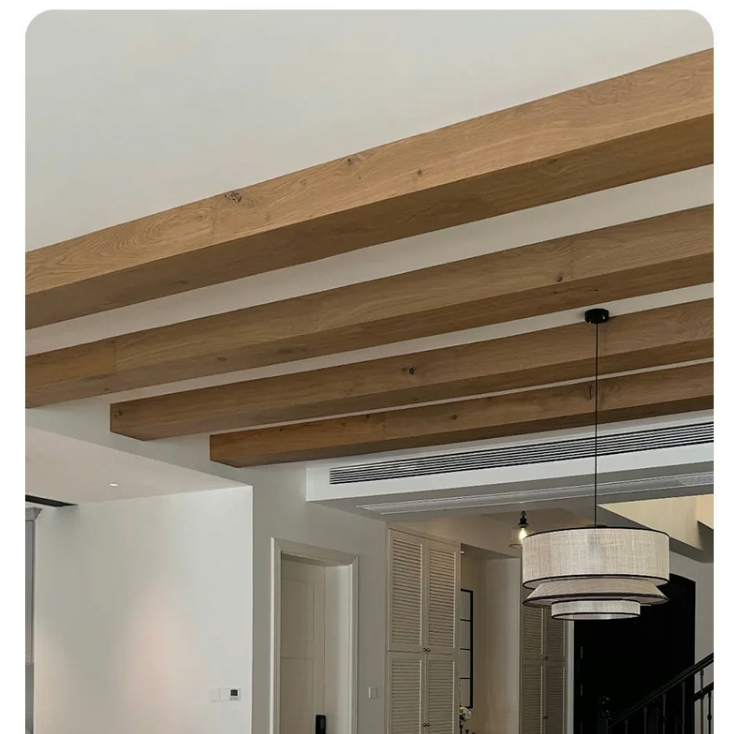
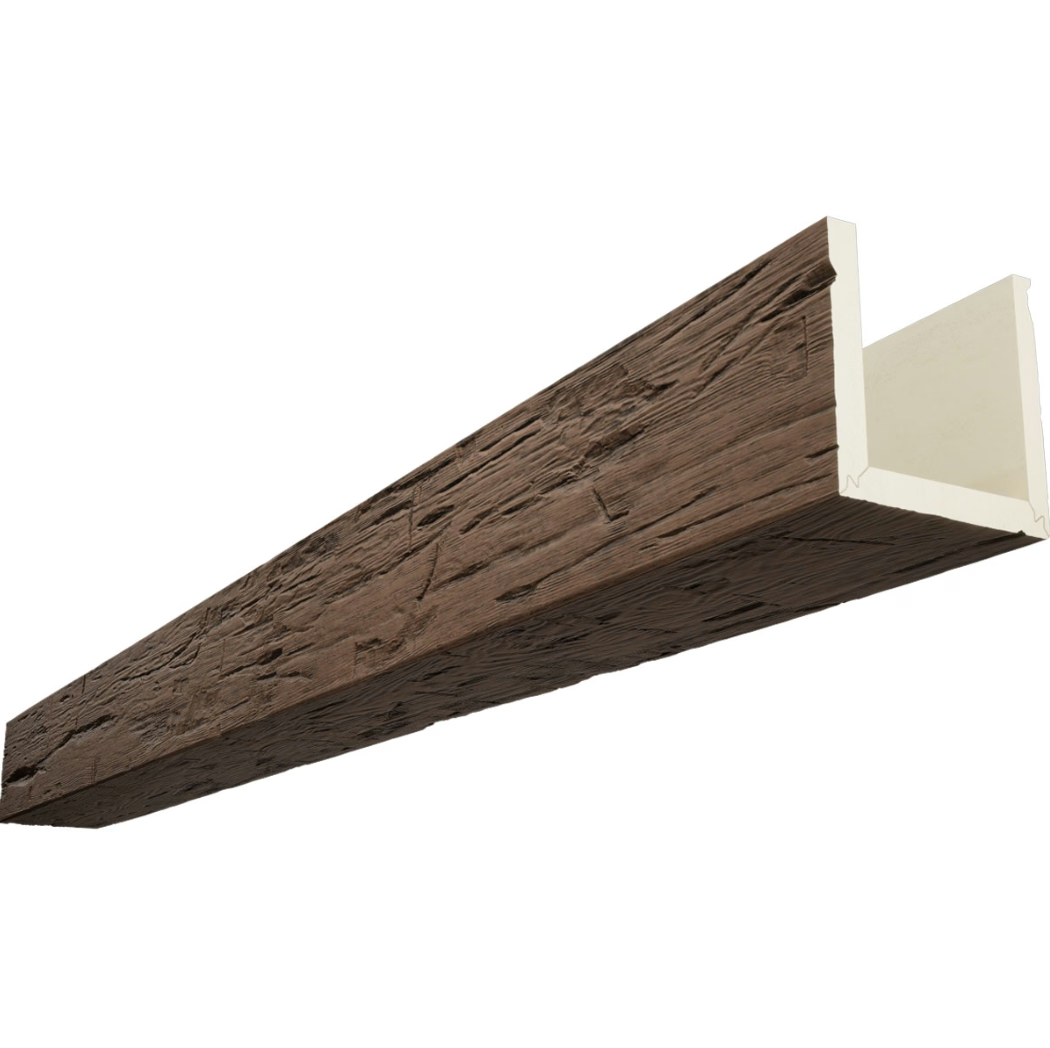
A premium polyurethane faux beam is not just a hollow shell with a wood-looking surface. The premium tier is defined by deeper grain embossing, more consistent colour across the production run, tighter dimensional tolerances, and stronger packaging that protects the finish through the long journey from factory to end user. For an international buyer building a brand around faux beams — or for a distributor who wants to stand out in a competitive market — the premium tier is where the margin lives and where the customer loyalty is built.
Sourcing premium product across international borders adds layers of complexity. The supply chain has to maintain product quality through a six-week ocean voyage, the documentation has to satisfy customs in the destination country, and the logistics has to deliver the goods on a schedule the buyer can rely on. A premium supply operation handles all of that, and does it consistently enough that the buyer can build their own business on top of it.
What Sets Premium Apart
The difference between a premium PU faux beam and a standard one is most visible to a trained eye. The grain embossing is sharper, the colour variation within a beam looks natural rather than blotchy, and the surface has a low-sheen finish that mimics freshly sanded wood. The mould seams are minimal, the edges are clean, and the end caps fit precisely.
Under the surface, premium beams have a higher density polyurethane that feels more substantial in the hand. They are less prone to denting during installation, and they hold their shape better in hot attics or unconditioned spaces. The internal structure is consistent, with a wall thickness that does not vary enough to cause weak spots.
Premium also shows up in the small things. A premium supplier will offer a wider range of finish options, more accurate colour matching for repeat orders, and the ability to produce small custom batches for buyers who need a unique profile. The packaging is upgraded, the labelling is retail-ready, and the documentation is comprehensive.
OEM and Private Label Options
For buyers who want to build their own brand, the premium supply chain typically includes OEM (original equipment manufacturing) and private label options. The buyer specifies the product, the finish, the packaging, and the labelling, and the manufacturer produces it under the buyer's brand.
OEM supply is a significant step beyond simple distribution. The buyer becomes responsible for the product specification, the marketing claims, and the regulatory compliance in the destination market. The manufacturer becomes a contracted producer rather than a branded supplier, and the relationship is governed by a formal supply agreement.
A well-run OEM operation protects both parties. The manufacturer knows exactly what to produce, when to produce it, and how it should be packaged. The buyer knows exactly what they will receive, when they will receive it, and what their exclusive rights are. The agreement should cover pricing, lead times, quality standards, intellectual property, and termination conditions.
Private label is a lighter version of OEM. The manufacturer produces a standard product, and the buyer applies their own label and packaging. This option suits buyers who want to market a faux beam under their own brand without the cost and complexity of a full OEM programme.
Quality Certifications That Matter
Premium supply chains often involve quality certifications that the standard market does not require. The most common certifications for PU faux beams are fire ratings (such as ASTM E84 Class C or Class B in the US, or the equivalent Euroclass ratings in Europe), VOC emissions compliance (such as GREENGUARD or Indoor Air Comfort), and physical property certifications that document the density, hardness, and load-bearing characteristics of the product.
For buyers selling into commercial construction, hospitality, or public building projects, these certifications are often mandatory. The project specification will call out a specific fire rating, and the product supplied must be able to demonstrate compliance through a test report from an accredited laboratory.
A premium manufacturer maintains these certifications as part of their standard product offering. They also have a system for renewing the certifications before they expire and for providing the documentation to buyers on request. A standard manufacturer may not have any certifications, or may have only the minimum required for the local market.
Logistics Built for Premium Product
Premium beams require premium logistics. The packaging is more protective, the container is often dedicated (rather than consolidated), and the routing is chosen for reliability rather than purely for cost. The transit time may be slightly longer than the cheapest option, but the goods arrive in the condition the buyer expects.
For high-value shipments, cargo insurance is not optional. The premium supply chain typically includes insurance as a standard line item in the quote, and the policy covers the full replacement value of the goods in the event of loss or damage. The cost is small relative to the value of the cargo, and the peace of mind is significant.
Building a Long-Term Supply Relationship
Premium supply is a relationship, not a transaction. The buyer and the manufacturer work together over years, refining the product, expanding the range, and improving the logistics. The manufacturer invests in capacity, in new moulds, and in quality systems that benefit the buyer's business. The buyer commits to volume, to longer-term planning, and to fair pricing that lets the manufacturer continue to invest.
The result is a supply chain that supports the buyer's growth. When the buyer's customers ask for a new finish, the manufacturer develops it. When the buyer wins a large project, the manufacturer scales up production to meet the demand. When a problem occurs — and problems occasionally do — the relationship ensures it is resolved quickly and fairly.
The Bottom Line for International Buyers
Premium PU faux beam supply is not for everyone. The price point is higher than the basic market, and the buyer has to be able to sell at a price that justifies the premium. But for buyers who are building a brand, who serve commercial or high-end residential customers, or who simply refuse to compromise on product quality, the premium supply chain is the foundation that makes the rest of the business possible.
Technical References
ASTM standards cited in every specification
Test Data
Lab results from internal testing program
Updated 2026
Reviewed against current product specs