Walk into a 200-year-old farmhouse in Pennsylvania or Vermont and the beams tell a story before anyone speaks. Each chop mark, each slightly irregular face, each place where the surface dips inward is evidence of an axe or adze worked by a builder who shaped these timbers by hand. The texture is not decorative — it is the literal fingerprint of human effort against oak, chestnut, or pine.
Replicating that texture with modern polyurethane is more challenging than most people expect. A simple grain pattern printed from a flat plate looks fake at any distance. Real hand hewn texture has three-dimensional depth, asymmetric irregularities, and the subtle randomness that wood never had before it was worked but never has after it is machine-milled. Capturing all of that requires specialized molds taken from actual historic timbers, then refined to repeat cleanly in a production environment.

What hand hewn texture actually looks like
The term "hand hewn" describes timbers that were shaped with hand tools rather than sawn by machines. Before the widespread adoption of circular saws in the late 19th century, every structural timber was either hewn from a log with broadaxes and adzes or split from the log and then hewn. The surface that resulted is recognizable.
Each chop mark is a small concave depression roughly 5 to 15 cm long, depending on the tool and the stroke. The marks often overlap or run at slight angles to each other, creating a directional rhythm across the face of the beam. Between the chop marks, the surface retains the rough character of the original log — sometimes the bark has been removed but the underlying curvature remains. The ends of the beam often show where the hewing stopped or where a tool slipped.
Modern reproduction requires capturing this surface at a resolution where every chop mark has its own depth profile, its own irregular edges, and its own contribution to the overall pattern. A mold made from a single historic timber, scanned with structured-light 3D scanning or photogrammetry, provides the source data. The mold is then refined to remove tool marks that resulted from accidents during the original hewing and to balance the density of chop marks across the pattern repeat.
How polyurethane compares to actual reclaimed timber
Reclaimed hand hewn oak and chestnut beams are available in limited quantities from building deconstruction projects, but they come with serious trade-offs that drive most buyers toward reproductions.
Weight is the first problem. A solid 8-foot section of 8x10 hand hewn oak can weigh 250 to 350 pounds. Installing such a beam requires two or more people, structural evaluation of the ceiling below, and often additional framing to support the load. A hollow polyurethane beam of the same visible dimensions weighs 12 to 25 pounds, depending on wall thickness and density. One person can carry it up a staircase and position it on a ceiling without rental equipment.
Dimensional inconsistency is the second issue with reclaimed timbers. Because they were cut to whatever size the original builder needed, finding beams of a specific cross-section is nearly impossible. Most reclaimed beams vary by an inch or more in width and depth along their length. Polyurethane beams are molded to exact dimensions that match within fractions of a millimeter across the entire run. Planning a ceiling grid or a beam-to-beam joint becomes straightforward.
Insect contamination is a third concern with old timbers. Wood boring beetles, carpenter ants, and fungal spores can travel with reclaimed wood into a finished home. Treatment costs add up and do not always eliminate the problem. Polyurethane does not support insect life and is inert to the fungi that destroy wood. The only biological concern with PU is surface mold in extremely humid conditions, which is prevented by proper topcoat formulation.
Cost is the fourth and often decisive factor. Reclaimed hand hewn oak in usable condition might cost $35 to $80 per board foot in 2026. A polyurethane beam at the same visible dimensions costs a fraction of that. For a project requiring multiple beams across a great room ceiling, the savings can fund other parts of the renovation.

Where hand hewn faux beams work especially well
Several design contexts benefit particularly from the rough character of hand hewn beams.
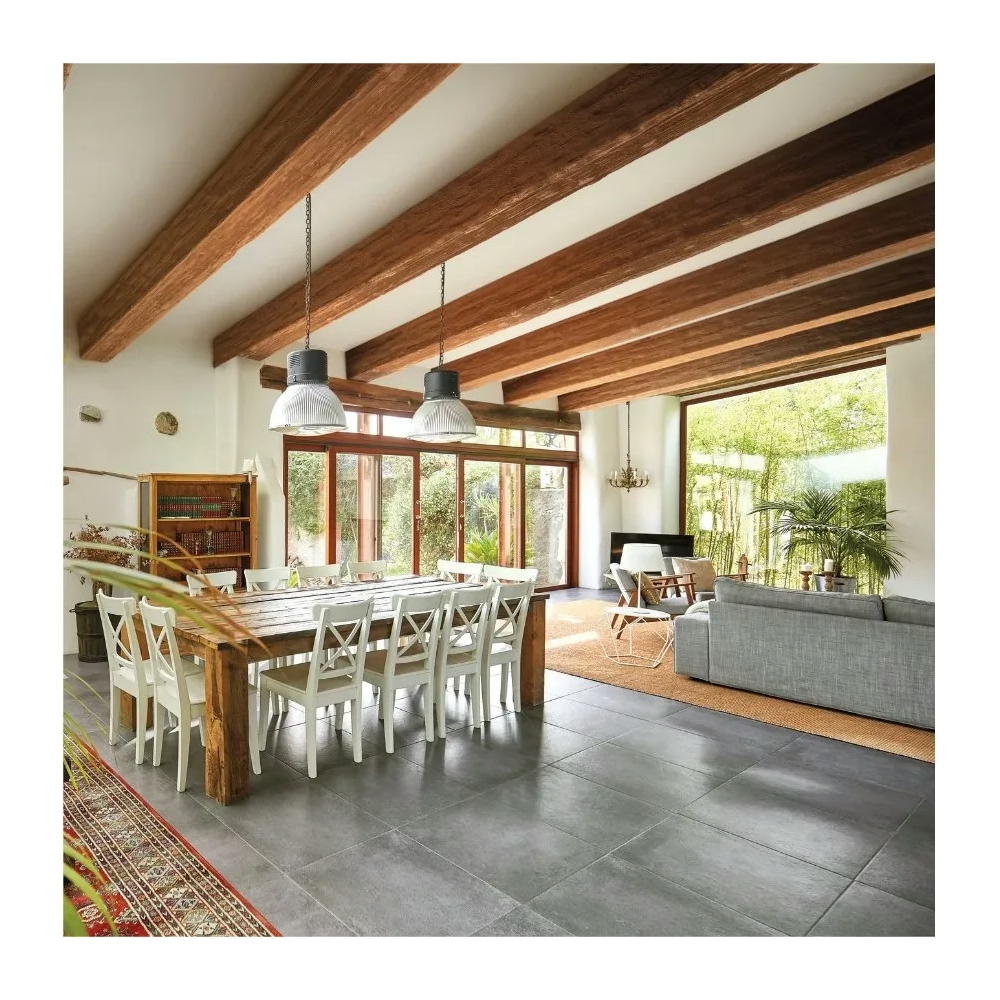
Vaulted great rooms with exposed roof structures call out for visible beams. Hand hewn polyurethane adds the craft-era visual weight that matches the scale of the room without requiring structural reinforcement of the actual roof frame. The beams can be mounted as decorative sleeves over existing rafters or as purely ornamental additions between rafters where none existed.
Restaurant interiors that want a tavern, lodge, or farmhouse feel rely heavily on ceiling beams to set the mood. Hand hewn texture carries the warmth of a real hearth-lit room into spaces that are actually climate-controlled and LED-lit. The polyurethane beams allow restaurant operators to achieve the look without the fire risk of solid timber and without the maintenance headaches of grease and smoke on real wood.
Wine cellar ceilings are a natural fit for hand hewn beams. Wine cellars need solid-looking timber overhead to feel authentic, but real wood in a humid cellar environment eventually develops mold and odors. Polyurethane with a mildew-resistant topcoat holds up to the constant humidity without compromising the wine or the visual.
Bedroom ceilings in craftsman, Tudor, or storybook-style homes call for the human-scale character of hand hewn texture. The chop marks catch morning light along their edges in a way that flat surfaces cannot, adding visual interest to an otherwise plain overhead plane.
What makes a quality hand hewn reproduction
The difference between a convincing hand hewn beam and a poor reproduction comes down to a few production details.
The mold source matters most. Molds taken from actual historic timbers have the irregular character of real hewing. Molds generated entirely by digital design — even when done by skilled 3D artists — tend toward patterns that are too regular or too symmetrical. The best manufacturers scan multiple historic beams and combine their surface details into a master mold that captures the variability of real hand work.
The texture depth should be substantial. Chop mark reproductions with depth under 2 mm look painted on. Quality hand hewn textures have chop marks ranging from 4 to 10 mm deep, with the deepest marks at the chopping impact point and tapering along the stroke. The variation in depth creates shadows that read as authentic in different lighting conditions.
The finish should follow the texture rather than sitting on top of it. Beams with a thick, glossy coating lose the tactile quality of the underlying texture and look like painted concrete. A thin, matte or satin topcoat that follows the contours of the chop marks preserves the texture while providing the durability needed for a ceiling application.
The grain pattern should complement the chop marks rather than compete with them. Real hand hewn beams often have visible grain between the chop marks where the hewing did not fully remove the original wood surface. A good reproduction shows grain in these areas and chop marks where the hewing was more aggressive. Painting heavy grain over a heavy chop mark pattern creates visual noise.
Installation considerations
Hand hewn polyurethane beams install using the same techniques as other PU beams. The heavier texture adds a small amount of weight compared to smooth beams but rarely enough to affect installation planning.
Blocking or furring strips behind the beams provide the attachment surface. Most beams come with mounting cleats or recessed pockets that accept wood screws through the back face into the blocking. Hand hewn beams can also be installed with construction adhesive plus minimal mechanical fastening in situations where blocking is impractical.
Seams where two beam sections meet require attention. The chop mark pattern rarely aligns perfectly across a joint, which is actually an advantage for hand hewn styles — the irregularity hides seams that would be visible in a smooth beam. Touch-up with color-matched filler completes the illusion.
End caps, where they are used, should match the chop mark rhythm of the beam face. The pattern is most visible at the beam ends where the texture continues around the corner, so look at how the chop marks wrap from face to face and end cap to beam body. Mismatched end caps are one of the most common errors in faux beam installation and look especially bad on hand hewn styles because the eye expects the chop marks to continue around the end.

The texture at the junction of the beam and a perpendicular rafter or cross beam shows how the chop marks relate to the overall beam length. The flow of the marks should support the visual direction of the structural layout, with longer strokes aligning with the long axis and shorter, more aggressive marks across the face.
Choosing the right color and finish
Hand hewn beams were traditionally left unpainted or finished with simple oil or wax treatments that darkened the wood without obscuring its character. Modern reproduction beams can take the same approaches or move toward more decorative finishes.
Natural wood tones from honey to deep walnut suit most farmhouse, craftsman, and rustic interiors. The chop mark shadows show clearly against mid-tone wood colors and create the depth that makes the beams read as authentic. Light, washed finishes work in coastal and Scandinavian-inspired interiors where the rustic texture is balanced by the airy color palette.
Charred or burnt finishes replicate the shou sugi ban Japanese technique and pair well with the rough character of hand hewn texture. The dark surface highlights the chop marks dramatically but requires careful lighting to show the texture without making the beam look flat black.
Whitewashed or pickled finishes soften the rustic character and move the beams toward a coastal or shabby-chic aesthetic. The white treatment fills the deeper chop marks unevenly, creating a worn patina that reads as authentic aging rather than a painted accent.
A final thought on hand hewn character
The appeal of hand hewn beams is ultimately about the human effort they represent. Even a polyurethane reproduction carries that emotional resonance because the texture comes from real historic beams and therefore connects to the same craft tradition. A ceiling with these beams feels rooted in something older and slower than the modern construction around it, and that feeling is what designers are paying for.
Technical References
ASTM standards cited in every specification
Test Data
Lab results from internal testing program
Updated 2026
Reviewed against current product specs

