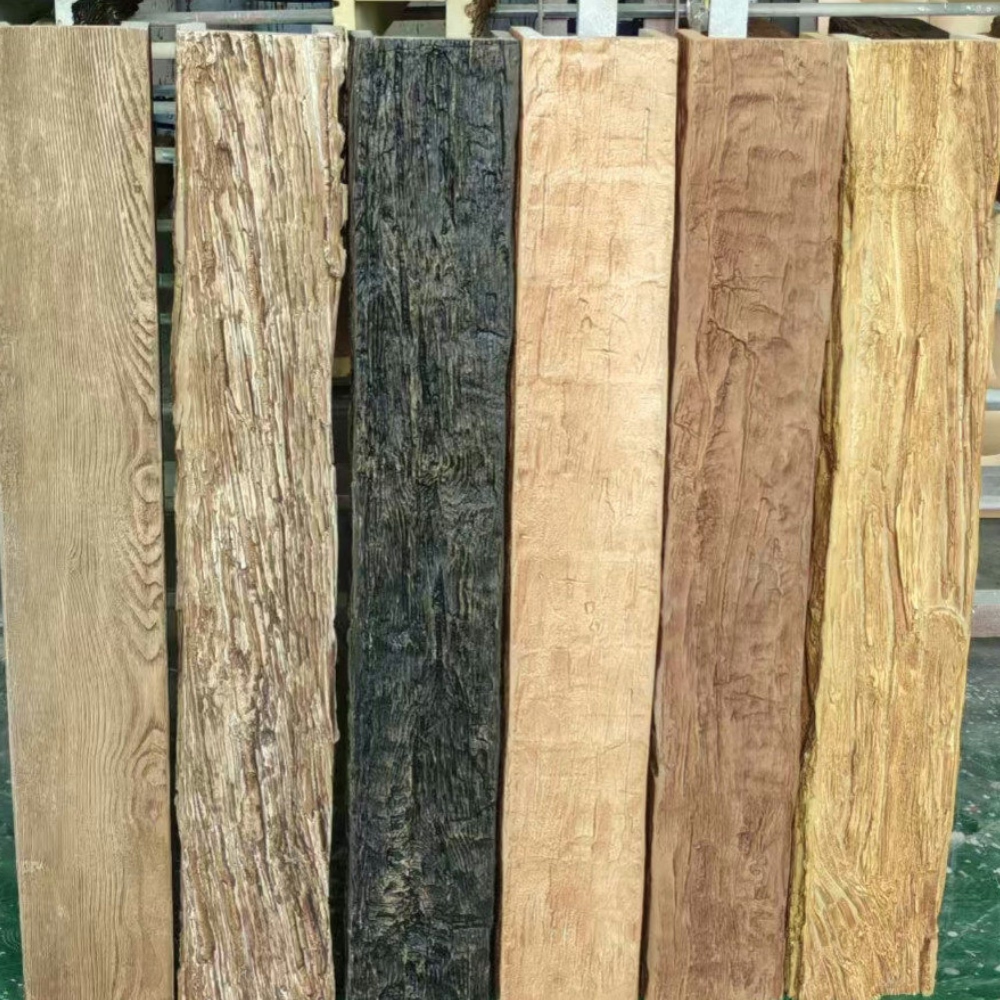
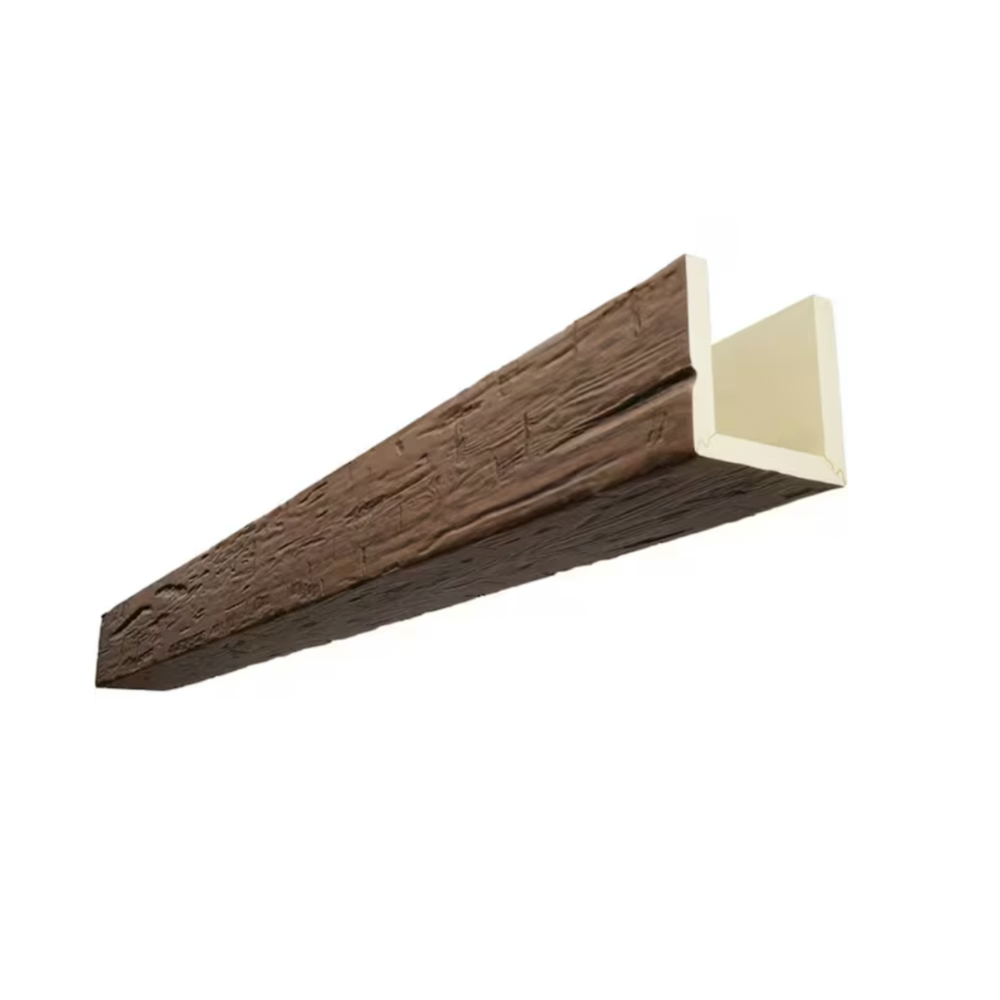
An adze is a cutting tool with a blade set perpendicular to the handle, used to shape wood by swinging the blade downward and across the surface. For centuries, before planed lumber and milled boards, an adze was the primary tool used to dress structural timbers after the initial hewing. The marks it leaves are different from any other hand tool — a series of shallow, overlapping scallops that look almost like waves frozen into the wood.
This texture was the visible signature of finished timber in barns, churches, and homes across Europe and early America. It signified that a craftsman had spent the time to dress the beam properly, smoothing the worst of the chop marks and giving the timber a continuous, slightly faceted surface. Modern faux beams with adze-marked texture carry that heritage into spaces where the original craft tradition would be impractical to recreate.

The pattern adzes leave behind
An adze swung across a timber face removes a thin shaving of wood, leaving a slightly concave impression that overlaps the previous cut. The strokes are typically 15 to 30 cm long, running parallel to the grain of the wood. With each pass, the blade removes a sliver and roughens the edge of the previous cut, creating the characteristic scalloped pattern.
The angle of the blade determines the depth of each scallop. A skilled adze operator held the blade at roughly 15 to 25 degrees to the surface, removing thin slices that left shallow, controlled marks. A heavy-handed operator, or one working with dull tools, took deeper cuts that left more aggressive scallops. Both patterns are visible in surviving historic beams because the quality of hand work varied across buildings and decades.
The result is a surface texture that catches light differently along each scallop. The cutting edges of each scallop stand slightly proud of the bottom, creating micro-shadows that shift as the viewer moves. Under raking light at the right angle, the texture becomes very visible as a wave pattern across the beam face. Under direct overhead light or diffuse light, the texture softens but remains present.
Polyurethane molds for adze-marked beams are taken from historic timbers that still show the adze pattern clearly. The scallops are scanned at sub-millimeter resolution, then normalized in the mold so that the texture repeats consistently across each beam section while preserving the irregular character of individual scallops.
What adze-marked beams look like when new versus after 200 years
Newly installed adze-marked polyurethane beams have a clean, uniform color and a crisp texture. The scallops are sharp, the edges between cuts are well defined, and the contrast between the high and low points of each scallop is at its maximum. The visual effect is of freshly planed timber with a distinctive tooling pattern.
After 200 years of aging, the same surface would have softened. The edges between scallops would have worn down from handling, weather, and the natural wear of dust across the surface. The color would have shifted, with darker tones in the recessed parts of each scallop and faded highlights on the raised edges. Some scallops would have split along the wood grain if the original timber was susceptible to checking.
High-quality reproduction beams attempt to suggest this aged character in the base finish while leaving room for the actual installed beam to continue aging naturally over years of service. Lower-quality reproductions either look too clean — appearing newly milled rather than antique — or arrive with a heavy artificial patina that looks painted on rather than developed over time.
The best approach for most projects is to start with a slightly aged-looking finish that suggests decades of wear without going overboard. The beam will continue to develop character as it accumulates dust, exposure to light, and the small marks of daily life in the room.

Design contexts where adze-marked beams shine
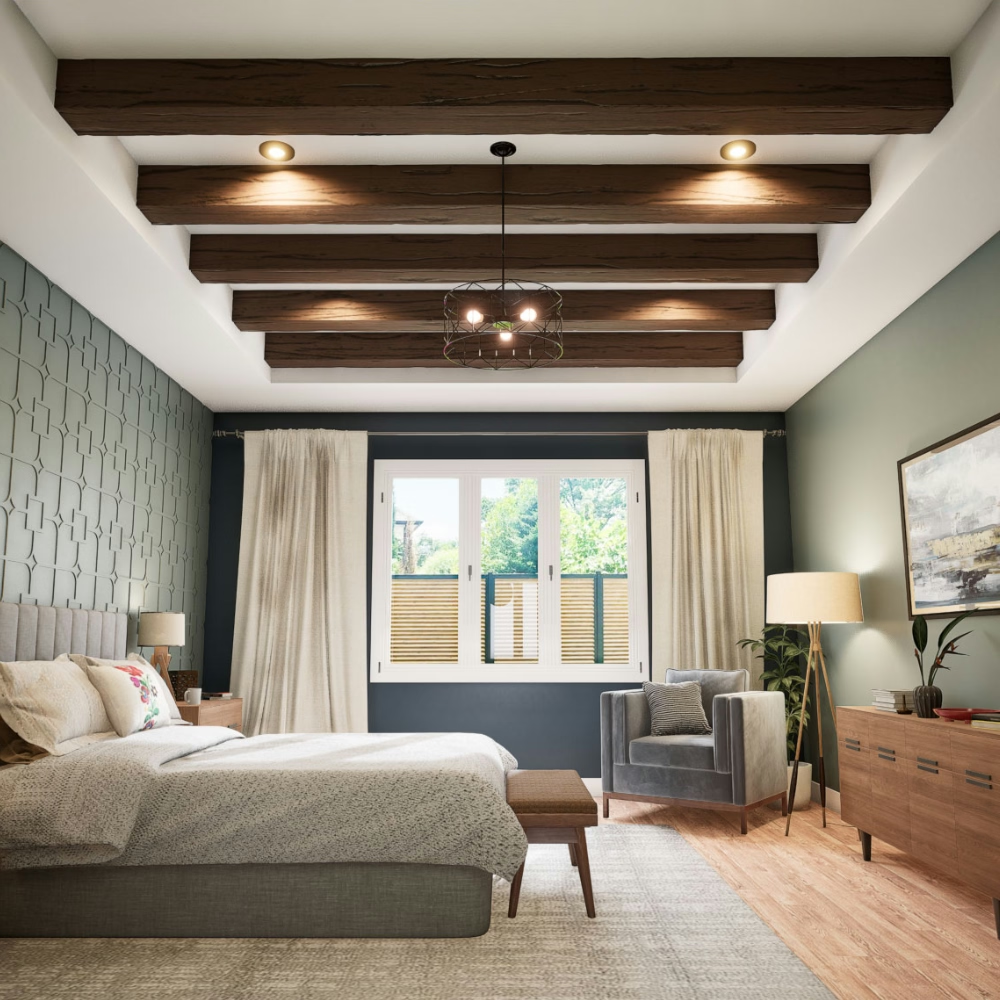
Several design traditions and building types make particularly good use of adze-marked beams.
Early American colonial reproductions benefit from the adze pattern because authentic colonial beams were almost always dressed with hand tools. A beam that looks like it was hand-finished rather than machine-planed reinforces the period character of the room.
Tudor and English cottage interiors call for the warm, irregular character of hand-tooled timber. The adze pattern reads as authentic medieval craftsmanship even though the actual age of the room may be a modern build with a few decorative touches.
Mountain lodges and ski chalets that want to feel rooted in the timber-building traditions of Austria, Switzerland, or the American West find the adze pattern especially appropriate. These buildings have always featured hand-finished timber, and the adze mark is the signature of that tradition.
Restoration projects on historic structures, where original beams may be damaged or missing and need to be supplemented with new material, benefit enormously from adze-marked reproduction beams. The match between new and old beams is much closer when the new beams carry the same tooling pattern.
How adze-marked beams compare to hand hewn beams
Hand hewn and adze-marked textures describe different stages of timber preparation. Hand hewn timber is the initial rough shaping from a log using broadaxes and adzes at heavy weights to remove large amounts of wood. Adze-marked timber is the second-stage dressing, where a finer adze smooths the rough hewn surface into a more uniform finish.
Beam faces that are hand hewn but never adzed carry the deep chop marks but lack the smoother scalloped pattern. Beam faces that are both hand hewn and adzed carry both patterns — heavier chop marks underlying the more refined scallops from the dressing stage. Modern reproductions can be made to either pattern or to a combined pattern that includes both.
For projects that want a rugged, deeply textured look, hand hewn reproduction works better. For projects that want a slightly more refined rustic look while still showing hand-tool character, adze-marked reproduction is the better choice. Many period-appropriate interiors combine both patterns across a ceiling or a building to reflect how actual historic structures were finished.
Installation and finishing notes
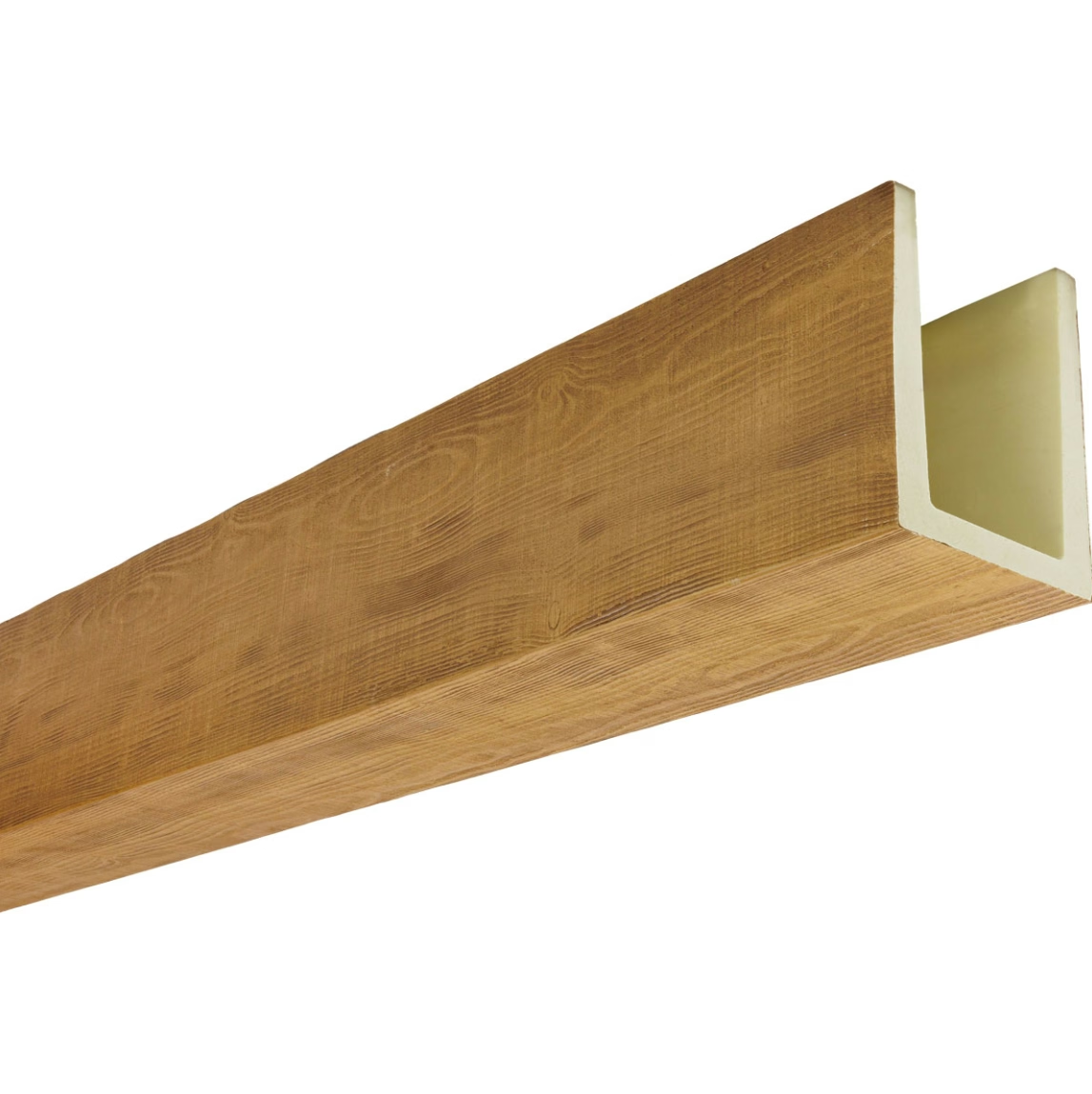
Adze-marked polyurethane beams install like other faux beam styles. The textured surface has slight implications for handling and finishing that installers should know.
The deeper portions of the scallops can collect dust over time, especially on overhead surfaces. Dusting requires either a soft brush or a vacuum with brush attachment. Smooth surfaces wipe clean with a microfiber cloth. The texture is part of the look, so aggressive cleaning that would remove the scallops is never appropriate.
Touch-up paint, when needed to cover scratches or repair damage, must be applied in a way that follows the scallop pattern. Random brush strokes across the surface break the visual continuity of the adze marks. The best touch-up technique uses a small brush to dab paint into the damaged area while preserving the surrounding scallop edges.
Seams between beam sections are less visible on adze-marked beams than on smooth or grain-only beams because the scallop pattern provides natural visual interruption. A clean butt joint between two beam sections reads as a continuation of the adze pattern rather than as a hard line.
End caps and corner blocks should match the adze pattern of the beam face. Most manufacturers offer end caps molded from the same master pattern as the beams, ensuring consistency. Custom end caps molded separately can create obvious mismatches that are immediately visible to the eye.
Common mistakes to avoid
A few recurring errors reduce the quality of installed adze-marked beam projects.
Using smooth beam ends with adze-marked beam faces creates an inconsistency that catches the eye immediately. Beam systems should use matching end caps from the same mold family or from a manufacturer that designs the end caps to coordinate with the beams.
Over-painting the surface fills the scallops and removes the texture entirely. Even a primer coat, if applied too heavily, can smooth out the adze marks. Manufacturers of polyurethane beams apply their finishes at the factory with controlled spray techniques that preserve the texture. Field finishing should be similarly careful.
Mixing adze-marked beams with smooth machine-planed faux beams in the same visible ceiling creates a visual clash. If a project calls for both patterns, they should be clearly separated by placement — for example, adze-marked beams in the living room and smooth beams in an adjacent hallway.
Improper lighting can hide or exaggerate the adze pattern unintentionally. Direct downward lighting flattens the texture. Raking light from windows or accent lighting catches the scallop edges and makes the pattern dramatic. Lighting designers working on projects with adze-marked beams should account for how the lighting reveals the texture.
Sourcing and specification
Buyers specifying adze-marked polyurethane beams should request samples that show the pattern in person rather than choosing from digital images alone. The texture reads differently in real light than on screen, and the depth of the scallops varies between manufacturers.
Specification documents should call out the tooling pattern by name — "adze-marked," "hand-adzed," or "scalloped tooled finish" — rather than the generic "rustic texture." This avoids receiving a different pattern from what was envisioned.
Lead times for custom adze-marked beams, where the manufacturer must create a new mold for a specific project, run 30 to 60 days. Stock patterns from the manufacturer's existing mold library can usually be sourced in 1 to 3 weeks depending on order quantity.
Technical References
ASTM standards cited in every specification
Test Data
Lab results from internal testing program
Updated 2026
Reviewed against current product specs