A crew of builders in the 1840s with axes, broadaxes, and adzes would have spent days shaping each timber for a single barn or house. The timber came off the log with a rough, uneven surface that reflected the broad strokes of the broadaxe and the dressing passes of the adze. Between the heaviest hewing marks, the surface showed the rough character of the original log — places where the bark had been peeled away, where knots had been cut through, where the grain swirled. That look is what gets called rough hewn.
In modern reproduction beams, rough hewn texture combines elements of hand hewn and rough sawn. The texture is more textured than rough sawn, less refined than fully adze-dressed timber. It sits in the middle of the working-wood spectrum and reads as honest, sturdy, and historic.
Where rough hewn fits in the timber texture spectrum
Timber surfaces across history fall into several recognizable categories, each with its own tools, techniques, and visual character.
Hand hewn timber shows the heaviest tool marks — deep broadaxe or adze cuts that remove large amounts of wood with each stroke. The surface has dramatic ridges and valleys, often irregular, sometimes showing the orientation of the original log. It is the most aggressive texture and reads as substantial and old.
Rough hewn timber is less aggressively worked. The initial shaping from the log removed most of the bark and most of the worst irregularities, but the dressing strokes left visible texture across the surface. The marks are smaller and more numerous than in hand hewn timber, creating a more uniform pattern that still reads as hand-worked.
Rough sawn timber comes from saws rather than hand tools but carries the saw marks that the original cutting process left. The pattern is parallel and regular, distinctly different from the irregular marks of hand tools.
Planed timber has been smoothed by a hand plane or machine planer. The surface is largely free of the original working marks but may show subtle grain texture. Most modern lumber falls into this category.
Smooth timber has been sanded and finished beyond any visible tool marks. Most decorative wood trim, modern furniture, and interior millwork is smooth timber.
Rough hewn polyurethane reproductions sit between hand hewn and rough sawn, capturing the rustic, hand-worked character without the heaviest marks or the most regular pattern. The texture is distinctive enough to be clearly identifiable but soft enough to fit into a wider range of interior styles than the most aggressive hand hewn reproductions.

What defines a quality rough hewn reproduction
Several production details determine whether a rough hewn polyurethane beam reads as authentic or as a printed imitation.
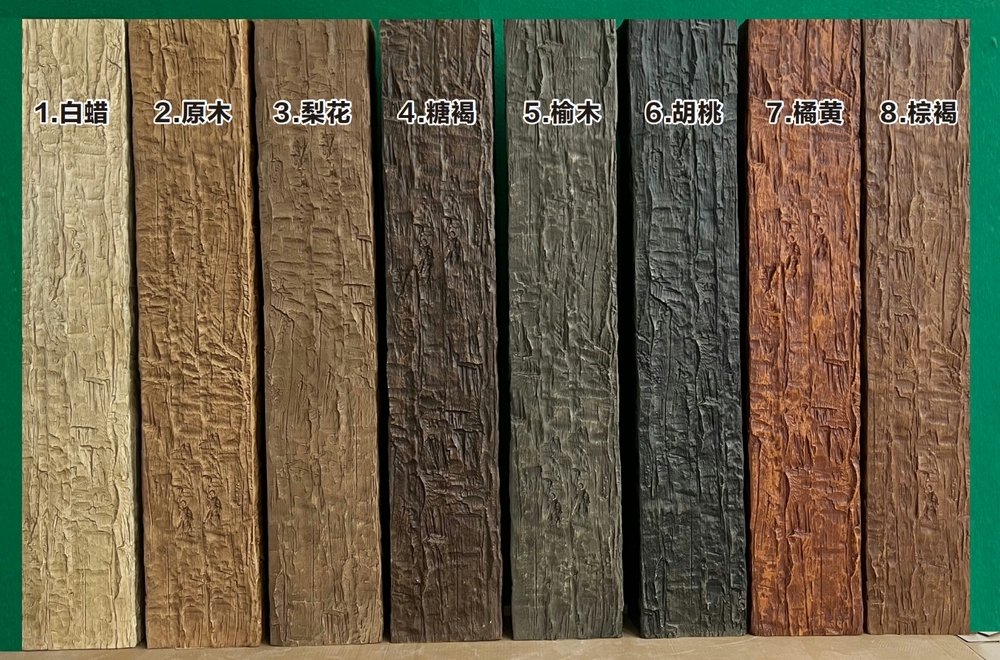
The texture depth must be substantial but not extreme. Chop marks should range from 3 to 8 mm deep, with most marks in the 4 to 6 mm range. Marks shallower than 3 mm look painted on. Marks deeper than 8 mm create visual chaos and make the beam look like it was attacked with a hatchet.
The mark density should suggest deliberate working without overcrowding. A surface covered in overlapping chop marks reads as confused. A surface with too few marks reads as smooth. The best density is roughly 60 to 80 percent of the surface covered in marks, with the remaining 20 to 40 percent showing the underlying rough timber.
The mark orientation should follow the length of the beam. Tool strokes in real timber run along the long axis of the beam because the worker was making long strokes from one end to the other. Patterns where the marks run across the beam look wrong because they violate the expected working direction.
The base surface between marks should be slightly irregular rather than flat. Real timber between tool marks has its own character — small ridges where the tool left the surface, slight depressions where the tool took deeper cuts, grain visible beneath the working. Polyurethane reproductions need to capture this irregular base for the chop marks to look like they were struck into real wood rather than pressed into a flat board.
The grain pattern should be visible but secondary. Real rough hewn timber had visible grain between the tool marks because the hewing removed some of the wood but not all of the grain character. A reproduction that shows only chop marks without underlying grain looks like punched metal. A reproduction that shows heavy grain over the chop marks looks like a grain pattern was applied on top of the texture rather than emerging from it.
Design contexts where rough hewn excels
Mountain lodges and ski chalets are the most natural fit for rough hewn beams. The interior aesthetic of these buildings traditionally uses heavy, hand-worked timber as the signature element. Rough hewn reproduction beams deliver that signature at a fraction of the cost and weight of solid timber, and the lighter weight simplifies the structural requirements of the building.
Rustic restaurants and taverns benefit from the warm, irregular character of rough hewn beams. The ceiling becomes part of the brand identity, and the texture creates an immediate impression of substance and tradition. Polyurethane beams allow multi-location restaurant brands to maintain consistent visual identity at all locations without the expense of sourcing real timber.
Lodge-style residential homes, particularly vacation properties and lake houses, often feature rough hewn beams as a major design element. The look has been popularized in design media and is associated with the cozy, retreat feel of second homes and weekend properties. Polyurethane reproductions make this aesthetic accessible to homeowners who would not consider the complexity of solid timber.
Barn conversions and agricultural-style commercial spaces — wedding venues, breweries, distillery tasting rooms, antique stores — frequently use rough hewn beams because the look reinforces the industrial-heritage narrative of the space. The beams work with exposed brick, exposed wood floors, and other industrial surfaces to build a unified aesthetic.
Practical advantages of polyurethane over solid timber
The practical advantages of polyurethane rough hewn beams go beyond the obvious weight and cost differences.
Installation flexibility is significant. Solid timber rough hewn beams typically require two to four workers for installation, structural assessment of the ceiling below, and reinforcement framing in many cases. Polyurethane rough hewn beams can be installed by a single worker with standard tools and a basic understanding of blocking and fastening. Weekend DIY projects become feasible.
Design freedom is enhanced. Polyurethane beams can be manufactured to any cross-section, length, and finish that the project requires. A room with unusual ceiling geometry can have custom beam dimensions without requiring custom timber milling. Curved or angled beams are practical because the mold process handles them as easily as straight sections.
Structural safety is improved. Solid rough hewn timber can develop hidden cracks along the grain, can harbor insects, and can carry significant loads without warning of impending failure. Polyurethane does not develop these failure modes and is predictable in its load-bearing capacity.
Maintenance requirements are minimal. Real timber beams need periodic inspection for cracks, insect activity, finish deterioration, and moisture damage. Polyurethane beams need occasional dusting and inspection of the finish only. The maintenance burden over a 20-year period is dramatically lower with PU.
Common specification points
When ordering rough hewn polyurethane beams, several specification details ensure the project comes out as intended.
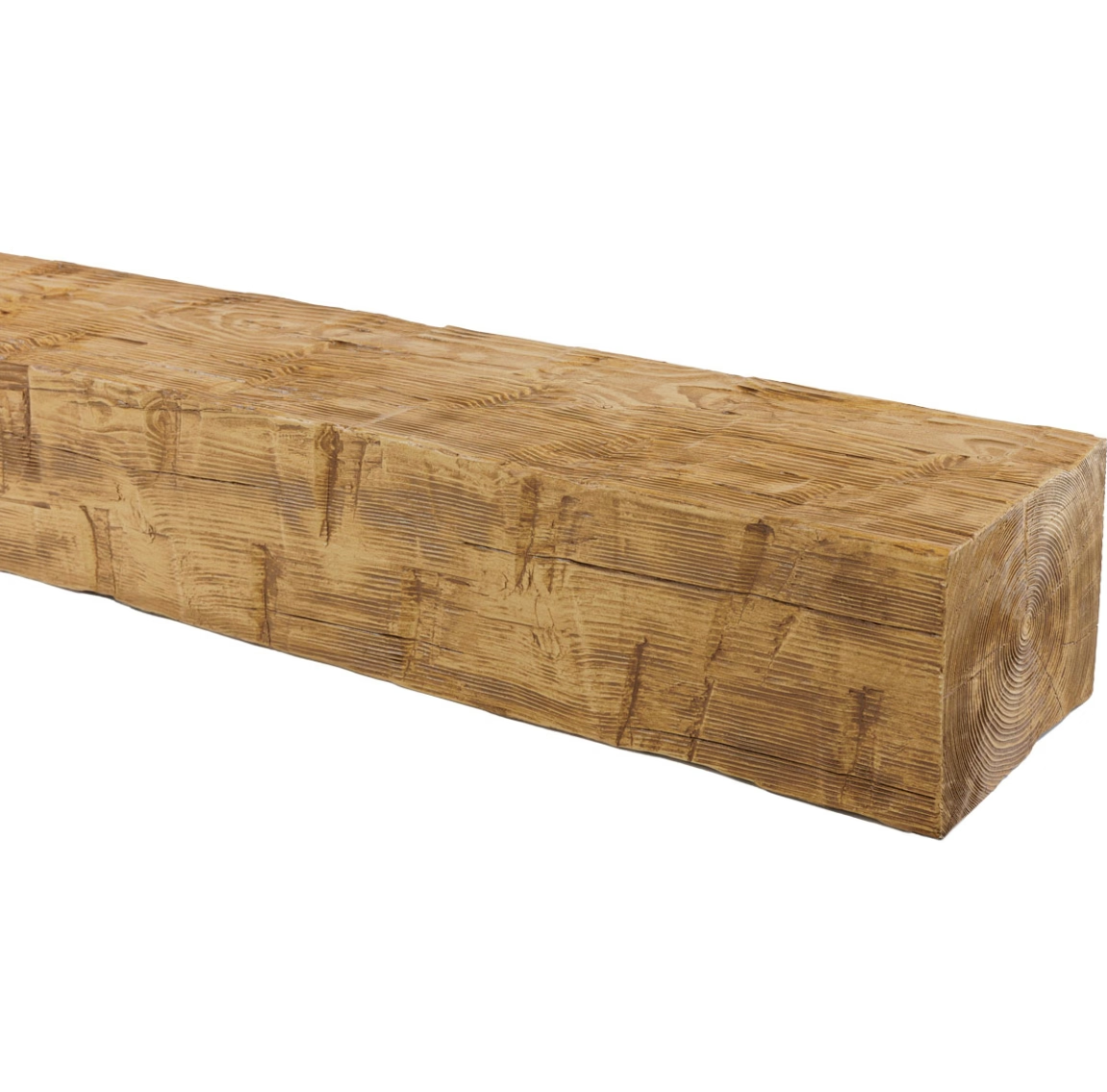
Timber species selection determines the grain pattern and the overall color. Oak, pine, fir, and reclaimed-look species are all available in rough hewn textures. The species should match the regional character of the building — oak for traditional American or English projects, pine or fir for Scandinavian or mountain lodge styles.
Color and finish selection ranges from natural raw-wood tones through aged patinas to painted or limed finishes. The finish selection should be coordinated with the surrounding millwork, flooring, and wall colors. A finish that looks fine in isolation can look out of place against the rest of the room's palette.
End cap matching is critical for rough hewn beams because the irregular surface pattern needs to continue across the joint between beam and end cap. Most manufacturers offer end caps molded from the same master pattern as the beams, which ensures a matched appearance. Custom end caps from a different source create visible mismatches that stand out from across a room.
Length tolerance and seam treatment should be specified in advance. Real rough hewn timber beams often run to one piece for the full beam length. Polyurethane beams are typically supplied in standard lengths with seams between sections. The seams should be located where they will be hidden by other architectural features or where the rough hewn texture will disguise the joint.

What rough hewn is not
It helps to understand what rough hewn polyurethane beams are not, because the look overlaps with other textures that buyers sometimes confuse.
It is not smooth grain only. Smooth polyurethane beams show only the wood grain, with no surface texture beyond the grain relief. Rough hewn beams have texture that goes beyond grain.
It is not hand hewn. Hand hewn beams have deeper, more irregular tool marks that suggest heavier working. Rough hewn beams have lighter, more uniform texture from less aggressive dressing.
It is not rough sawn. Rough sawn beams have parallel saw marks running across the grain. Rough hewn beams have tool marks running along the beam length.
It is not distressed or weathered. Distressed and weathered textures simulate aging through additional surface imperfections like wear marks, water stains, and faux checking. Rough hewn texture is about the working of the wood, not about its aging.
Designers and homeowners who understand these distinctions can specify the right texture for the project without ending up with something that is too rough, too smooth, too aged, or too distressed for the intended look.
Final considerations for installation planning
The weight advantage of polyurethane beams simplifies installation planning but does not eliminate the need for good planning.
Blocking between ceiling joists must be installed at the right locations to receive the beams. The spacing between blocking points should match the beam span requirements and the available mounting hardware. Typically, beams are supported by blocking at each end and at every 4 to 6 feet of span in between.
Sealing the seams between beam sections requires paintable, stainable caulk that matches the beam finish. The caulk should be flexible enough to accommodate the small seasonal movement of the building structure without cracking. Most manufacturers recommend a specific caulk product compatible with their finish.
Lighting coordination is important when installing rough hewn beams because the texture creates shadows that shift with lighting direction. Accent lighting that grazes the beam face will emphasize the texture but also emphasizes any seam or surface imperfection. Diffuse lighting softens the texture but provides a calmer overall appearance.
Final inspection after installation allows the installer to touch up any shipping or handling damage, verify that the beams are properly aligned, and confirm that the finish is consistent across all beam sections. A flashlight held at an angle to the beam face reveals any inconsistencies in finish or texture that should be addressed before the installer leaves the site.
Technical References
ASTM standards cited in every specification
Test Data
Lab results from internal testing program
Updated 2026
Reviewed against current product specs


