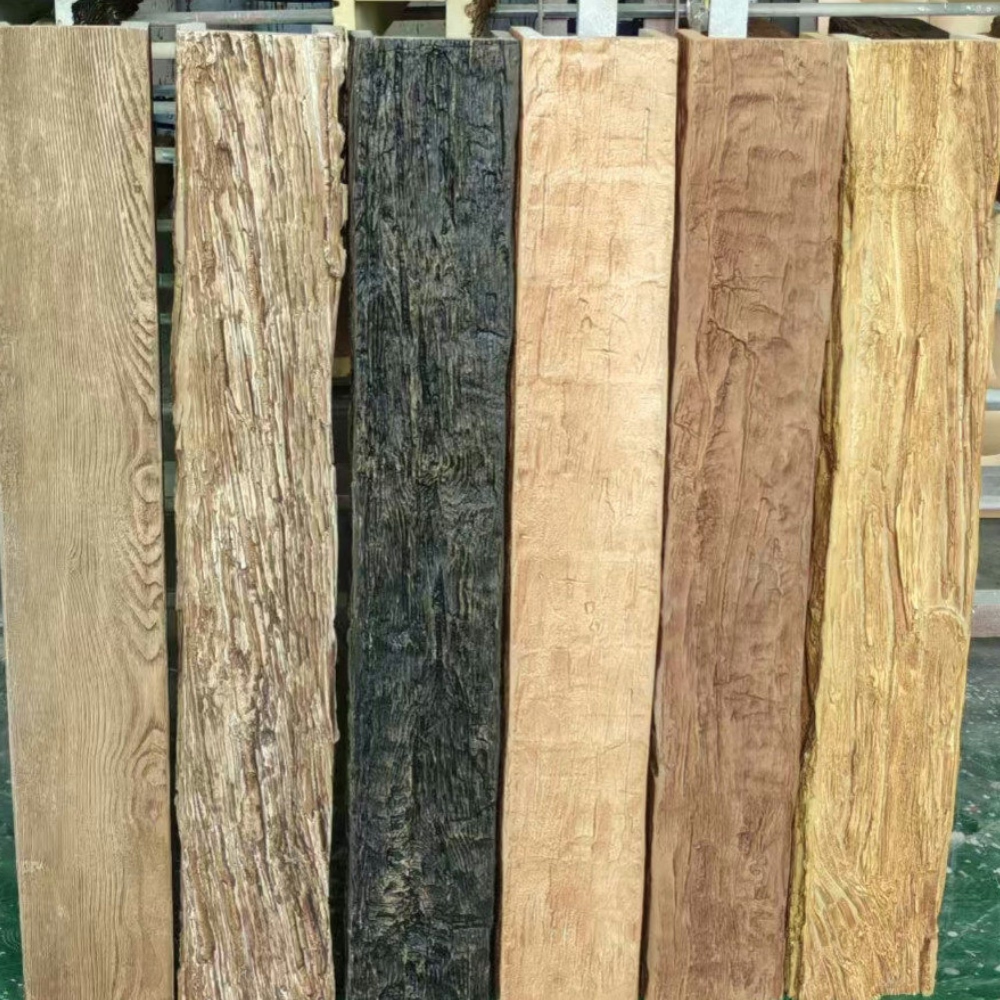
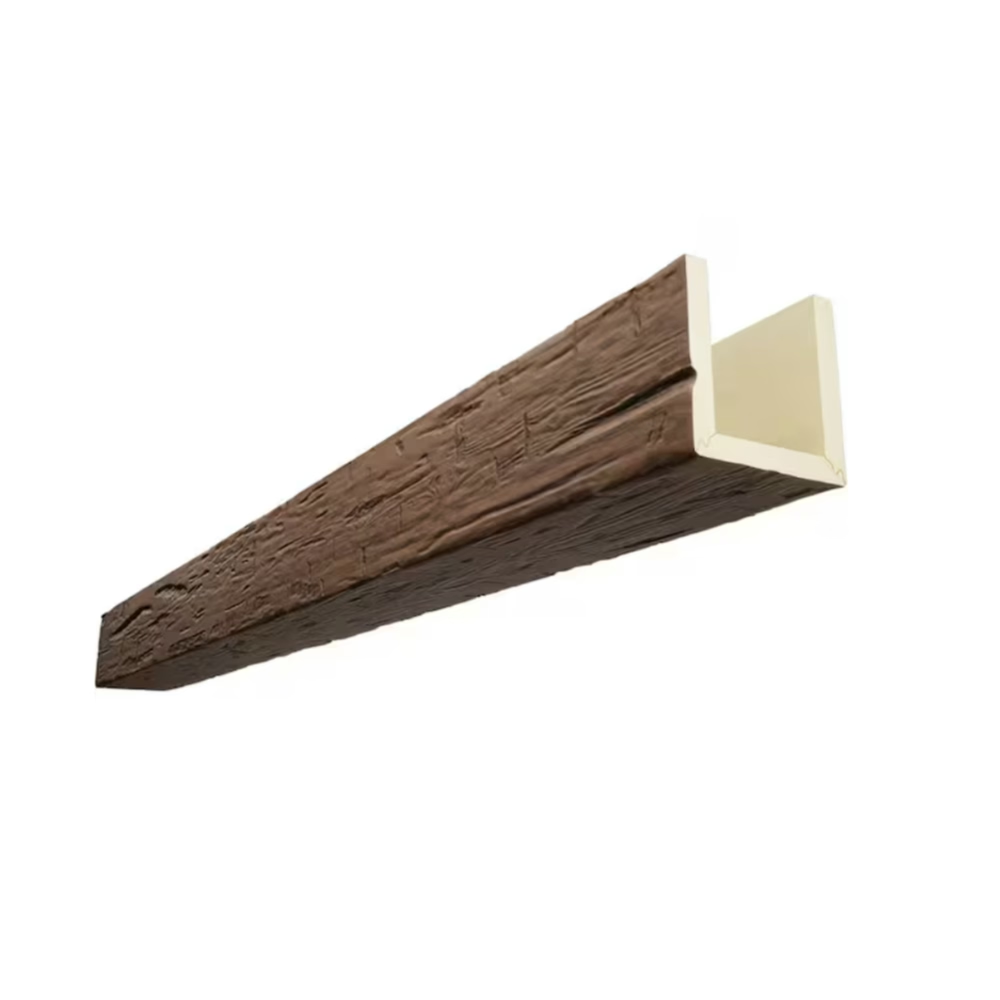
There is a moment after a beam comes off the sawmill when the surface is fresh — the grain of the wood interrupted by the parallel ridges of the saw blade, the color still raw and untreated, the texture ready to catch dust and develop character over decades of service. That fresh-cut look is what rough sawn faux beams capture. Not aged timber, not finished timber, but the working material itself.
Modern timber rarely arrives in this state. Most lumber is planed smooth within days of being cut, then kiln-dried, then planed again to standard dimensions. The rough-sawn surface that the sawmill originally produced is lost. To get it back requires either rescuing old timber from a barn deconstruction or manufacturing it as a polyurethane reproduction.

What rough sawn actually means
Rough sawn timber is wood that has been cut to size by a saw but has not been planed, sanded, or otherwise smoothed. The surface retains the tool marks from the cutting process. These marks are typically perpendicular to the grain direction because the saw cuts across the grain of the log.
The character of the marks depends on the saw. A bandsaw leaves thin, continuous parallel lines. A circular saw leaves slightly wider marks with more visible tooth geometry. A large frame saw or two-person saw leaves the deepest, most pronounced marks because the teeth are heavier and the cutting action is slower. Hand-pulled crosscut saws produce marks that are visibly irregular because the human operator cannot maintain perfect consistency.
Rough sawn was the standard for all structural timber until the late 19th century and remained common for utility lumber throughout the 20th century. Board-and-batten siding, agricultural buildings, and rustic interior paneling all used rough sawn material. Its appearance is associated with utility, with construction process visible, and with materials in their working state rather than their finished state.
Polyurethane reproductions of rough sawn surfaces need to capture the parallel, regular character of saw marks while preserving the slight irregularities that distinguish real sawing from perfect patterning. The replication must work at different scales — broad strokes for beams viewed from across a room, fine strokes for beams viewed up close.
The texture profile in polyurethane
A quality rough sawn polyurethane beam has visible saw marks at every viewing distance. The marks are typically 0.5 to 1.5 mm wide, spaced 1 to 3 mm apart, and running perpendicular to the grain of the wood.
On a beam face, the saw marks run from one long edge to the other, repeating along the entire length. The pattern is interrupted by knots, grain irregularities, and minor surface variations where the original saw encountered different densities in the wood. These interruptions are what make the surface look natural rather than mechanical.
On beam ends, the saw marks terminate at the cut line and start fresh on the adjacent face. Different faces of the same beam often show slightly different saw mark spacing because the original timber was cut on different sides by different passes through the mill. Polyurethane reproductions can match this variability or simplify it, depending on the design intent.
The depth of the saw marks is usually 1 to 3 mm, enough to create clear shadow patterns under raking light but not so deep that the marks dominate the overall appearance. Beams with deeper saw marks look distressed in a way that does not match the fresh-cut rough sawn look.
Why designers choose rough sawn
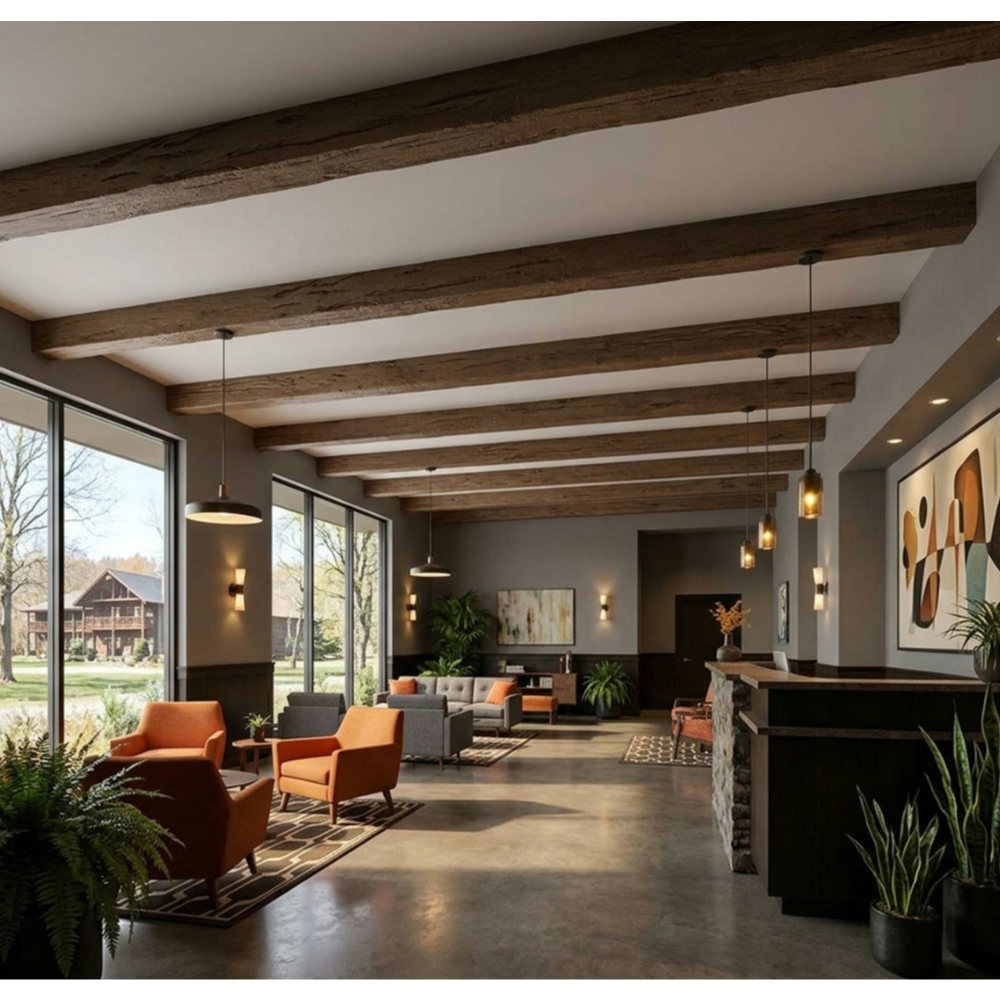
The rough sawn look has a specific aesthetic that other textures do not capture. It speaks of building materials rather than finished architecture. It feels honest, like seeing the bones of a structure rather than the polished surface. That quality is exactly what some designers want, especially in industrial, modern farmhouse, or utility-inspired interiors.
Industrial lofts often use rough sawn beams as accent pieces in ceilings where the surrounding structure is exposed steel and concrete. The visual contrast between the rough timber and the precision-machined structure creates an aesthetic tension that designers find compelling. The rough saw marks reinforce the sense of work and process, fitting with the industrial theme.
Modern farmhouse interiors have embraced rough sawn elements as a counterpoint to the cleaner lines of farmhouse-influenced millwork and cabinetry. A rough sawn ceiling beam in a kitchen with shaker cabinets and quartz countertops balances the smooth and the textured, the refined and the working.
Barnwood-look interiors lean heavily on rough sawn beams because the original barn boards came straight from the saw. The roof framing, the loft flooring, and the wall sheathing of a 19th-century barn all carried rough saw marks. Reproductions for barn-inspired interiors maintain that characteristic.
Scandinavian interiors occasionally use rough sawn beams in their larger spans because the Nordic building tradition valued the texture of unfinished timber. The look pairs well with whitewashed walls, pale wood floors, and minimalist furnishings.
Where rough sawn beams do not work
The rough sawn aesthetic is not universally appropriate. Some interior styles benefit from smoother beam surfaces.
Formal traditional interiors with elaborate millwork, crown moldings, and decorative plaster ceilings typically want smooth or finely grained beams rather than rough sawn. The rough texture clashes with the refined surfaces around it and reduces the sense of craftsmanship in the rest of the room. Heavily textured beams in formal settings read as a mistake rather than as a feature.
Modern minimalist interiors rely on clean lines and minimal texture. A rough sawn beam introduces noise that disrupts the calm visual field. Smoother grain-only or even smooth matte beams work better in these settings.
Highly detailed period interiors, such as Victorian or Art Deco, have their own surface vocabulary that rough sawn does not fit. The beams in these settings were typically either hidden behind plaster or finished smooth and decorated to match the room. Rough sawn in a Victorian interior looks like an anachronism.
Beams near reflective surfaces — high-gloss cabinetry, mirrored walls, polished stone — can compete visually with the reflections and make the room feel busy. Smoother beams let the reflective surfaces dominate without introducing additional texture.
Installation considerations specific to rough sawn
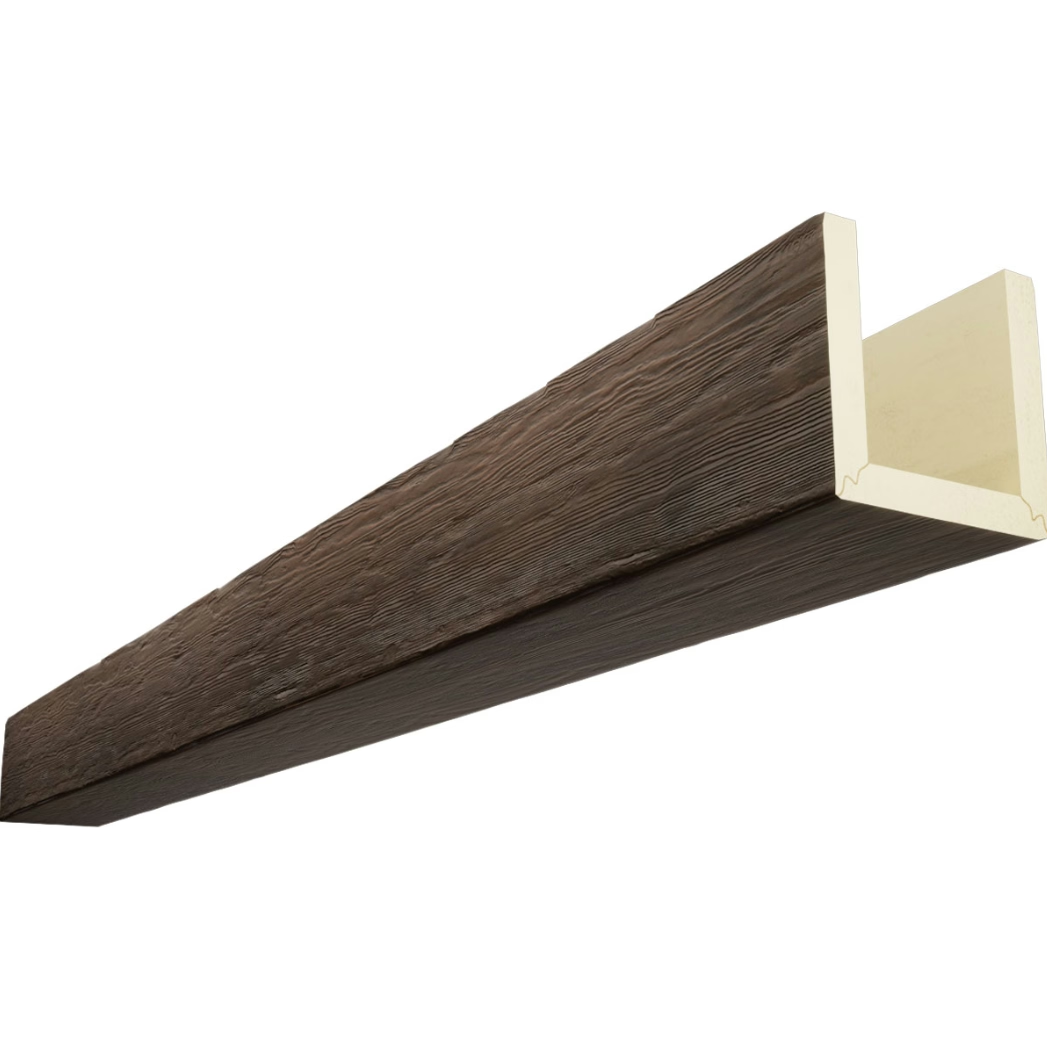
The texture of rough sawn beams affects installation in a few ways that installers should know.
Cutting beams to length on site requires blades or bits appropriate for the texture. The same saw blade used for cutting smooth PU beams works for rough sawn beams, but the blade may wear slightly faster because of the abrasive surface texture on the cut plane. Carbide-tipped blades extend blade life in production cutting.
Seam alignment between beam sections is more forgiving on rough sawn beams than on smooth beams because the saw mark pattern naturally breaks up the visible line of a joint. Seams should still be tight, but small imperfections are hidden by the texture.
Touch-up paint and finishing needs to follow the saw mark rhythm. A brush stroke that crosses multiple saw marks fills the recesses and removes the texture. The correct touch-up technique dabs paint into the damaged area without filling the surrounding grooves.
Mounting hardware visibility is a concern for rough sawn beams because the texture provides many small ledges where fasteners and brackets can be partially hidden. The eye does not pick out the fasteners as easily as it would on a smooth beam. This is an advantage for installations where the mounting hardware is not carefully concealed.

Comparing PU rough sawn to real rough sawn
Real rough sawn timber is available from lumberyards that specialize in reclaimed or new rough-sawn material. The advantages of real timber are the actual grain, weight, and aging potential. The disadvantages are the cost, weight, dimensional variability, and susceptibility to warping and cracking.
Cost is the deciding factor for most buyers. Real rough sawn oak or fir at standard beam sizes costs several times more than the polyurethane equivalent. The cost difference is partly material but mostly about the labor involved in sourcing, sorting, and transporting large irregular timber sections.
Weight is the operational factor. A solid rough sawn timber beam at 8x10 inch cross-section and 12 feet long weighs 250 to 350 pounds. A hollow PU beam at the same visible dimensions weighs 15 to 30 pounds. The lighter weight changes the installation logistics and the structural requirements of the ceiling.
Dimensional variability affects the visual outcome. Real rough sawn timber may vary in width by half an inch along its length, may warp slightly in storage, and may have knots or other features that interrupt the pattern. PU beams are uniform in dimension and pattern across the entire run, which makes installation and visual consistency easier to achieve.
Aging potential is real timbers biggest advantage. Real rough sawn timber will continue to develop character as it ages in place, taking on the patina of the specific room and the specific conditions. Polyurethane will age differently — mostly through slight yellowing or surface oxidation rather than through the rich oxidation and color shift of real wood. For projects where the aging is part of the experience, real timber has an edge. For projects where the look should remain stable and consistent over decades, PU is the better choice.
How the look ages differently on real versus PU
Real rough sawn timber continues to change dramatically over years of service. The initial mill color oxidizes to a darker tone. Dust settles into the grooves of the saw marks, deepening the shadow lines. Finish coatings, if applied, fade or yellow with UV exposure. The wood moves seasonally with humidity changes, sometimes showing hairline cracks at the ends.
Polyurethane rough sawn beams change much less. The base color shifts slightly over years, mostly through UV exposure if the beam is in direct sunlight. The texture remains sharp because the foam does not compress under handling the way that wood does. The grooves may collect light surface dust but they do not absorb it the way wood does. The beam looks essentially the same at year one and year ten, which is exactly what most projects want.
For some applications — particularly hospitality, retail, or rental properties — the stable appearance of PU is preferable. For owner-occupied homes where the aging of materials is part of the appeal, real timber may be worth the maintenance effort.
Specification tips for buyers
When ordering rough sawn polyurethane beams, several specification points prevent common misunderstandings.
Specifying the timber species is important because different species have different grain patterns. Oak shows pronounced grain with large pores. Pine has tighter grain with frequent knots. Fir, hemlock, and Douglas fir have different grain densities. The PU beam should be ordered with a texture master that matches the intended species.
Specifying the saw mark orientation matters. Standard rough sawn beams have saw marks running perpendicular to the grain of the wood. The grain direction can be along the long axis of the beam or across it, depending on whether the beam is meant to look like solid timber (grain along the length) or like laminated planks (grain across the length). Getting this right prevents an installation that looks wrong from across the room.
Specifying the surface finish determines how the texture reads under different lighting. A matte finish minimizes glare and shows the texture clearly. A satin finish adds subtle reflection that makes the texture look slightly softer. A gloss finish almost eliminates the texture visibility in direct light.
Specifying the texture depth determines the visual impact. Light texture is appropriate for subtle accents. Heavy texture creates dramatic shadow lines. Match the texture depth to the lighting conditions of the installation and to the desired visual impact.
Final thoughts on rough sawn character
Rough sawn beams make a specific statement about the materials of a building. They say that the building is honest, that the materials are shown rather than hidden, and that the construction process is part of the finished aesthetic. Polyurethane reproductions carry that statement into spaces where actual rough sawn timber would be impractical or too costly. The texture quality achievable in PU is high enough that the statement lands convincingly.
Technical References
ASTM standards cited in every specification
Test Data
Lab results from internal testing program
Updated 2026
Reviewed against current product specs