Run a hand across a piece of reclaimed pine that has spent fifty years outdoors and the surface feels like a topographic map. The harder grain lines stand proud while the softer grain between them has been worn or weathered down. That raised-grain effect is what wire brushing accelerates — and what wire brushed polyurethane faux beams reproduce without the wait.
Wire brushing is a finishing technique applied to timber, either new or aged, that uses a brush with stiff metal bristles to scrape away the softer earlywood between the harder latewood grain lines. The result is a surface where the grain pattern is dramatic and tactile. The eye sees a richer grain pattern than the wood itself shows, and the hand feels the difference between the recessed valleys and the raised ridges.
For polyurethane beams, the wire brushed texture is captured at the mold stage, with the recesses between grain lines molded into the surface at consistent depth and spacing. The result is a beam that looks and feels like wire brushed timber from every angle and under every lighting condition.
The wire brushing process on real timber
Understanding how wire brushing works on real timber clarifies what to look for in a reproduction.
Wood is built from alternating bands of earlywood and latewood. Earlywood forms during the rapid spring growth and is less dense, with larger cells and thinner walls. Latewood forms during the slower summer growth and is denser, with smaller cells and thicker walls. The contrast between these bands creates the visible grain pattern in most softwoods and in some hardwoods like oak.
Wire brushing exploits this contrast. The stiff bristles of the brush scrape the less-dense earlywood away while leaving the denser latewood standing in relief. The process removes 0.5 to 2 mm of earlywood, depending on the brush aggressiveness and the species being worked. The result is a surface where the grain lines stand proud of the recessed earlywood.
The depth and consistency of the wire brushing depends on the brush, the operator, and the wood species. A heavy-handed operator removes more earlywood and creates deeper texture. A light-handed operator creates subtle texture with minimal material removal. Different species respond differently — pine and fir with strong grain contrast take well to aggressive brushing, while maple and birch with subtle grain contrast are often brushed very lightly to avoid damaging the surface.
The wire brushed surface also accepts stain differently than a smooth surface. The recessed earlywood holds more stain than the raised latewood, creating darker valleys and lighter ridges. This staining effect is part of what makes wire brushed timber visually distinctive.
What makes wire brushed beams visually distinctive
Several visual qualities distinguish wire brushed beams from smooth or grain-only beams.
The texture is more pronounced than smooth grain. Where a smooth grain beam shows the grain pattern through subtle relief and color variation, a wire brushed beam shows the grain pattern through real three-dimensional texture. The ridges and valleys cast real shadows that shift with lighting direction.
The tactile quality is preserved or even enhanced. A wire brushed beam invites touching. The surface feels different from a smooth beam, and the touch itself delivers sensory information about the material that the eye cannot fully convey.
The grain pattern becomes a major design element rather than a background detail. In a smooth grain beam, the grain pattern is subtle and provides texture rather than dominant visual interest. In a wire brushed beam, the grain pattern is the dominant visual feature, with the overall beam color acting as a backdrop to the textured grain.
The finish application is different. Wire brushed beams take glaze and stain in the recesses between grain lines, creating depth that smooth beams cannot match. The glaze or stain pools in the valleys and feathers up the sides of the ridges, creating natural shading.

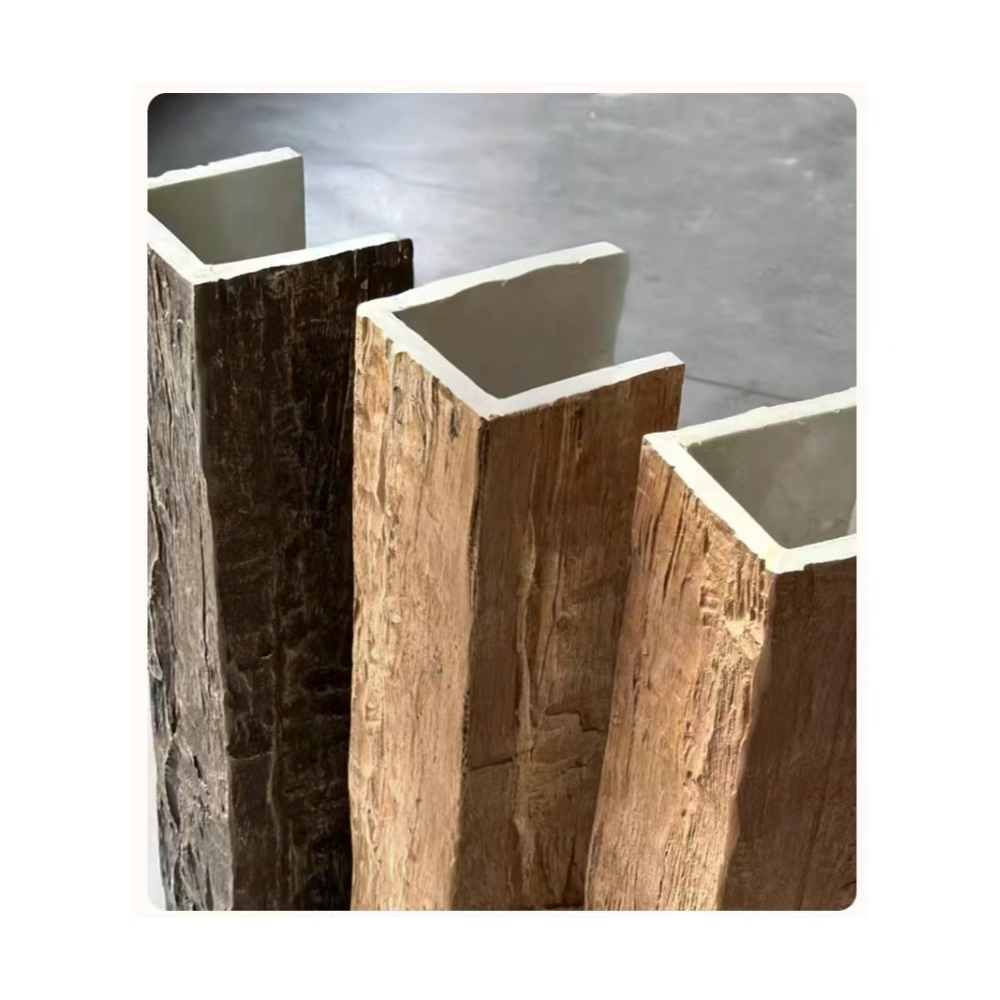
Wire brushed versus other texture types
Wire brushed texture fits into the wider landscape of beam textures, and comparing it to adjacent options helps designers choose the right one.
Wire brushed versus smooth grain — Wire brushed has more texture depth and more visual drama. Smooth grain is more subtle and reads as refined rather than rustic. Wire brushed needs lighting that rakes across the surface to show the texture; smooth grain is less lighting-dependent.
Wire brushed versus hand hewn — Hand hewn has much larger and more irregular tool marks that come from broadaxes and adzes rather than from bristles. Wire brushed has finer, more consistent texture from the brush pattern. Hand hewn reads as historical and substantial; wire brushed reads as tactile and natural.
Wire brushed versus reclaimed — Reclaimed timber has character from actual aging, including raised grain if it has been exposed to weather, plus other features like knots, cracks, and stains. Wire brushed beams are new timber (or new PU) with the texture of aged timber, but without the other signs of age. Designers sometimes combine wire brushed texture with reclaimed-style color and finish to get a fuller aged look without the cost.
Wire brushed versus distressed — Distressed is a category of textures that include gouges, dents, and other simulated damage. Wire brushed is a specific texture type focused on the grain pattern. Distressed and wire brushed can be combined on a single beam for a full character look.
Where wire brushed beams work especially well
Several design settings benefit particularly from the tactile character of wire brushed beams.
Mountain and ski resort interiors frequently feature wire brushed beams because the texture fits the casual, tactile aesthetic of these environments. The wood looks like it has been lived with and aged naturally, even in a new building. Combined with leather furniture, stone fireplaces, and natural fiber rugs, wire brushed beams contribute to the residential mountain aesthetic.
Transitional style homes — those that blend traditional and contemporary elements — use wire brushed beams as a bridge between the smooth modern surfaces of kitchens and bathrooms and the more traditional elements elsewhere. The texture provides interest without feeling too rustic or too formal.
Coastal and beach house interiors are a natural fit. The tactile, organic character of wire brushed beams echoes the natural materials of coastal settings — driftwood, weathered boards, sun-bleached shells. The texture pairs well with painted cabinetry, light floors, and bright accent colors that are typical of coastal style.
Hospitality venues that want a residential feeling — boutique hotels, farm-to-table restaurants, specialty retail — use wire brushed beams to create the perception of warmth and craftsmanship without the cost of truly hand-worked surfaces. Polyurethane makes this achievable at commercial scale and budget.
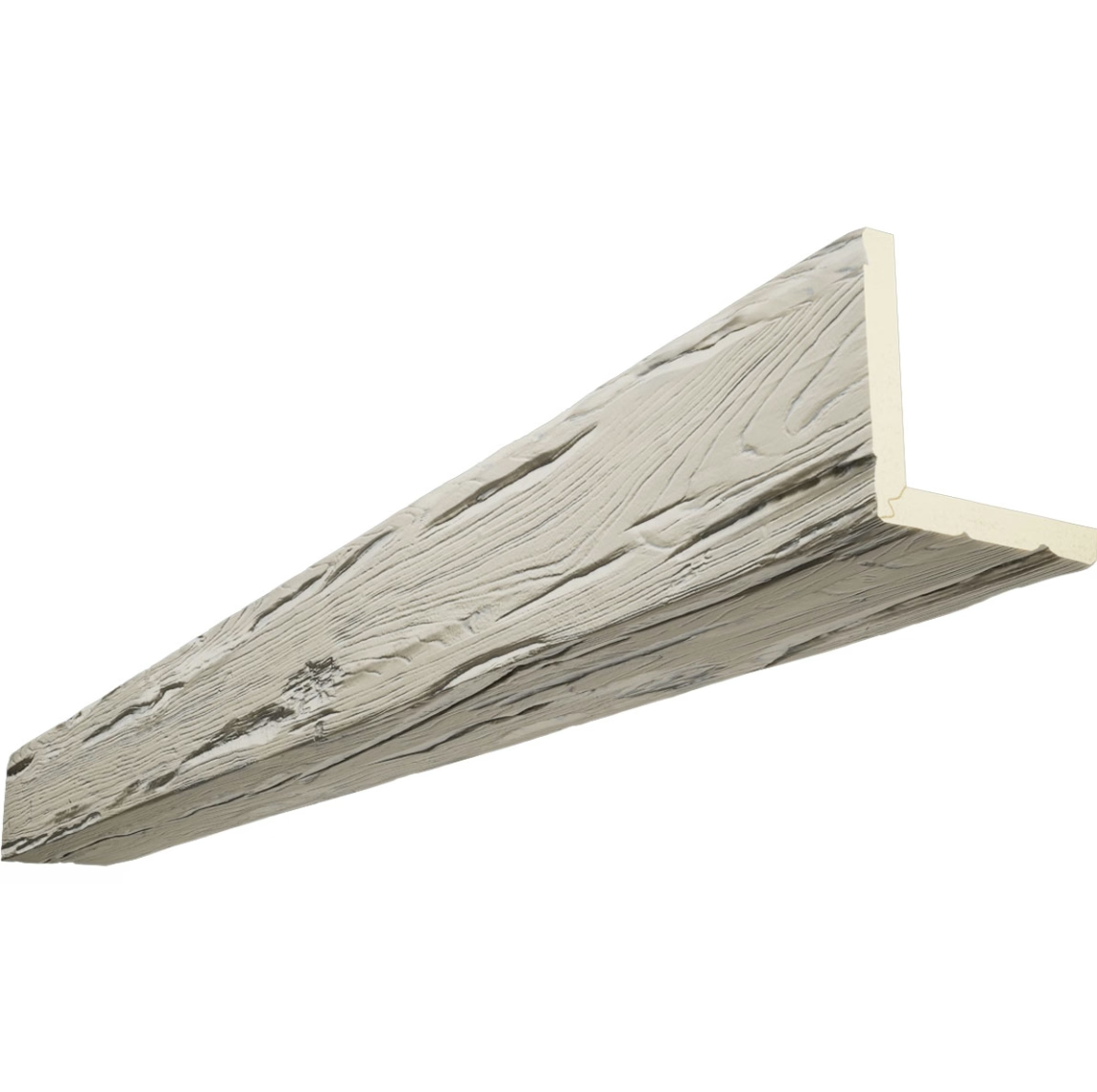
Practical benefits of polyurethane wire brushed beams
Wire brushed polyurethane beams offer advantages beyond the obvious weight reduction.
Consistency is high. Real wire brushing depends on the operator's pressure, the brush quality, and the species variation within the timber. PU beams are molded from a master pattern that captures the best of a real wire brushed surface, then reproduces that surface consistently across every beam section in every shipment. Buyers receive the same texture on beam one and beam twenty of the same order.
Customization is straightforward. The wire brushing depth, the spacing between grain lines, and the overall pattern can all be adjusted for specific projects. A deeper wire brush effect for a high-impact ceiling, a lighter effect for a subtle textural accent — both are achievable within standard production parameters.
Lead times are reasonable. Stock wire brushed patterns are available in 1 to 3 weeks. Custom patterns, where the manufacturer creates a new mold based on a specific wire brushed timber source, run 30 to 60 days. Both are faster than the time required to source and process real wire brushed timber.
Cost is far lower than real timber. Wire brushed oak at beam sizes and lengths suitable for ceiling installation costs $35 to $80 per board foot in 2026 markets. Polyurethane wire brushed beams at the same visible dimensions cost a fraction of that. The savings on large projects can be substantial.
Finishing considerations for wire brushed beams
The wire brushed texture affects finishing in ways that are not always obvious.
Glaze and stain application in the recesses creates depth. The glaze should be applied and then the excess wiped off the raised ridges, leaving more color in the valleys. This creates the natural shading that makes the wire brushed pattern look authentic.
Topcoats need to follow the surface contour. A thick topcoat fills the recesses and removes the wire brushed texture. A thin topcoat that follows the contour preserves the texture. Spray application with controlled film thickness is the standard approach. The topcoat should be tested on a sample piece to verify that it preserves the texture before full application.
Touch-up of scratches and chips should follow the grain pattern. A brush stroke across the grain fills the recesses and removes the texture. Dabbing the touch-up material with a small brush preserves the surrounding texture and matches the original finish.
Field finishing of polyurethane beams, where the contractor applies the final color or glaze coat, requires careful technique. The glossy areas of a spray or brush application can be removed with a soft cloth or steel wool to reveal more of the texture in uneven patterns. This distressing step is optional and depends on the final look the project requires.

Common installation issues with wire textured beams
Wire brushed polyurethane beams, like all textured beams, have a few installation considerations that installers should know.
Cutting beams to length leaves a clean end cut that contrasts with the textured surface. End caps or beam covers should be used to maintain the consistent texture across the visible beam. Splicing two beam sections together requires careful alignment so that the wire brushed pattern continues across the seam.
Alignment between multiple beams in a parallel run creates a visual issue if the grain patterns do not flow from beam to beam. PU beams have a defined pattern orientation and the installer should mark or plan the alignment before fixing the beams in place.
Mounting hardware visibility is similar across texture types but especially important on wire brushed beams because the eye is drawn to surface detail. Concealed mounting with blocking and screws through the back face, plus touch-up where screws emerge from the front face in exposed mount situations, preserves the clean appearance of the textured surface.
Cleaning the textured surface over time requires a soft brush or vacuum with brush attachment. Microfiber cloths ride over the texture rather than collecting dust from the recesses. Periodic gentle dusting keeps the texture looking fresh.
Sourcing tips
Buyers specifying wire brushed polyurethane beams should request physical samples before ordering to verify that the texture depth and pattern match expectations. Digital images of textured beams rarely convey the tactile quality accurately.
Consistent sourcing from a single manufacturer ensures that the texture remains consistent across a project, even if multiple shipments are required. Mixing textures from different manufacturers creates visible mismatches in the final installation.
Lead times should be confirmed before finalizing design schedules. Custom textures, large sections, and complex finish work all extend lead times. The supplier should provide a written schedule that accounts for mold creation, manufacturing, finishing, quality control, and shipping.
Quality control standards from the supplier should be specified in advance. The acceptable tolerances for texture depth, finish consistency, dimensional accuracy, and color match across the order should all be documented. This protects both the buyer and the supplier when questions arise about the delivered product.
Technical References
ASTM standards cited in every specification
Test Data
Lab results from internal testing program
Updated 2026
Reviewed against current product specs


