Reclaimed barn wood has a particular beauty that comes from years of weather, use, and the slow oxidation of tannins and resins. The checking, the worn edges, the uneven patina — these are the marks of time, and they cannot be manufactured easily. Genuine reclaimed timber is also expensive, increasingly scarce, and inconsistent in supply.
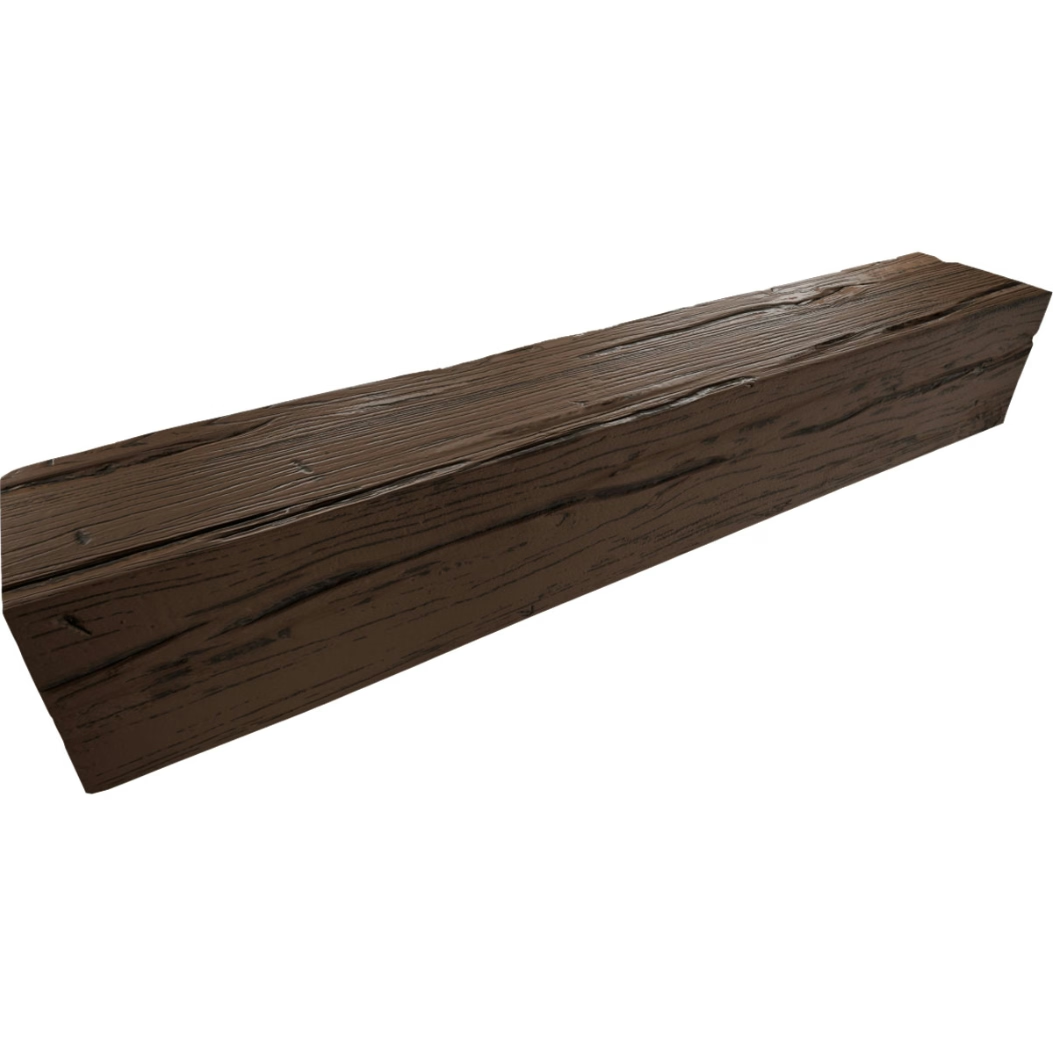
Heavily distressed polyurethane faux beams are an honest attempt to capture that aged aesthetic through deliberate craftsmanship at the mold stage. The result is not "fake distressed" — it is a controlled interpretation of how wood ages, captured in a mold and reproduced consistently across hundreds of beams. The texture work is done by hand at the prototype stage, then transferred to production tooling.
What "heavily distressed" actually means in PU manufacturing
The phrase covers a range of surface treatments, and not all of them qualify as heavily distressed. A standard residential faux beam has subtle grain texture — pleasant, but not aged. A hand-finished beam adds individual character marks. A heavily distressed beam goes further with intentional, visible signs of age.
Deep checking. Cracks along the grain that appear as wood dries and seasons over decades. In a distressed PU beam, these are molded as recessed grooves 3 to 8 mm deep, often with secondary fine checking running perpendicular to the main cracks.
Worn edges. Sharp corners soften with handling and weather. A distressed beam has rounded edges, sometimes with visible "pecking" where softer early-wood has eroded faster than the denser late-wood.
Worm tracks and insect marks. Small channels and holes that suggest long-term exposure to wood-boring insects. These are added sparingly — three or four marks per linear meter rather than a continuous pattern.
Tool marks. Hints of the original hewing or sawing process. Adze marks on a hand-hewn beam, or the slightly irregular pattern of a circular saw blade on a milled beam. These are subtle but they add authenticity.
Weathering streaks. Lighter bands where rain has washed the surface, or darker zones where moisture has accumulated in recessed areas. In a distressed beam, this is a two-tone stain application over the textured surface.
Iron stains. Dark marks where metal fasteners or hardware have reacted with the wood tannins over decades. A few subtle spots add historical authenticity without becoming cartoonish.

The mold-making process
A heavily distressed beam cannot be made from a standard mold. The texture work happens at the prototype stage and requires a different production approach.
The process starts with a reference piece of genuinely aged timber — usually a piece of reclaimed barn beam. A mold maker studies the surface, identifies the characteristic marks, and recreates them in a clay or wax master. The master is then used to create a production mold.
The mold is typically a multi-piece flexible silicone or polyurethane mold that can release the part without damaging the deep texture. For heavily distressed beams with deep checking and worn edges, the mold may have 8 to 12 separate pieces that come together during casting and release sequentially.
Each beam that comes out of the mold is essentially a reproduction of the master. Every crack, every worn edge, every tool mark is in the same place on every beam. For some buyers, this consistency is a feature — they want a uniform distressed look throughout the project. For others, it can feel repetitive if the beams are installed side by side.
To address the consistency concern, quality manufacturers produce multiple master patterns. A large project can specify beams from different masters to break up the repetition while maintaining the overall distressed aesthetic.
Color and finish work
Texture alone does not make a beam look aged. The color work is equally important.
Base stain. The base color is a warm, muted tone — aged oak, weathered pine, or sun-faded walnut depending on the desired species look. The base stain is applied to the raw foam part before any topcoat.
Glaze and accent stains. A darker glaze is worked into the recessed areas — the checks, the worn edges, the worm tracks. This creates visual depth and emphasizes the texture. A lighter highlight may be dry-brushed onto the raised areas to suggest sun-bleaching.
Two-tone effects. The most convincing distressed beams have visible variation in color across the surface. The base may be a medium brown with areas of darker weathering and lighter sun-fade. This variation is applied by hand at the finishing stage.
Topcoat. A matte or low-sheen topcoat is used. High-gloss finishes look wrong on distressed beams — aged wood has lost its surface reflectivity. The topcoat is typically a water-based polyurethane or acrylic with UV inhibitors.
The finishing work is the most labor-intensive part of producing a heavily distressed beam. Quality manufacturers do this by hand for each beam, which is why these products command a premium over standard faux beams.
Where heavily distressed beams work best
The aesthetic is specific. It suits certain design styles and clashes with others.
Restoration and period renovations. Farmhouse restorations, colonial revivals, and craftsman bungalow renovations all benefit from the look of aged timber. A distressed faux beam delivers the aesthetic without the cost and inconsistency of genuine reclaimed wood.
Hospitality and themed commercial spaces. Restaurants, brewpubs, and wine bars that lean into the rustic aesthetic. The distressed beam communicates "old" and "established" in a way that a clean new beam does not.
Cabin and lodge interiors. Mountain homes and lake houses where the rustic timber look is part of the design language.
Photography and retail display. Showrooms and concept stores where the vintage aesthetic is part of the brand.
Not ideal for:
- Modern minimalist interiors where the heavy texture feels out of place
- Contemporary commercial spaces with clean lines
- Coastal and tropical designs where the weathered look conflicts with the bright aesthetic
Installation considerations
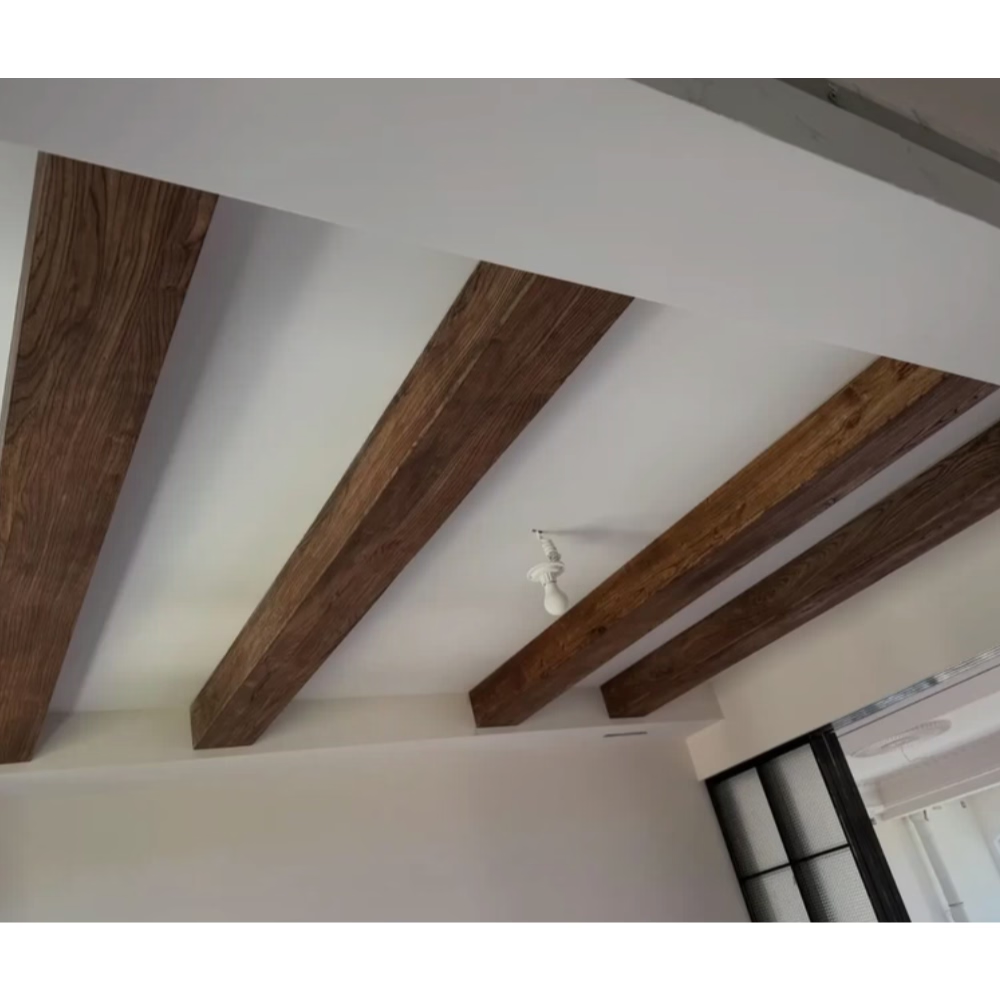
Heavily distressed beams install the same way as standard faux beams. The texture depth does not affect the mounting method. There are a few details worth noting, however.
Dust accumulation. The deep checks and recessed texture can collect dust over time. In commercial installations, this may mean the beams need occasional vacuuming with a brush attachment. In residential applications, this is rarely an issue.
Sealing the texture. In areas where the beam might be touched frequently — above a kitchen island, near a staircase — consider a more robust topcoat application to prevent the glaze from wearing off the raised areas.
Lighting interaction. Distressed beams look dramatically different under different lighting. The texture casts shadows that read as "aged" under directional lighting but can look flat under diffuse lighting. Specify beam placement and lighting design together rather than treating them independently.
Cost versus genuine reclaimed timber
A linear foot of genuine reclaimed barn beam in a usable condition can run $80 to $250 per linear foot for the material alone, before any processing, treatment, or installation costs. Heavily distressed PU faux beams run $50 to $120 per linear foot installed.
The economic comparison is only part of the picture. Reclaimed timber requires structural verification, treatment for insects and mold, and often reinforcement with hidden steel. Genuine reclaimed beams are heavy — installation requires a crew and sometimes a crane. The PU beam is light enough for two people to install.
The aesthetic comparison is more nuanced. Genuine reclaimed timber has the authenticity of being genuinely old. A heavily distressed PU beam has the consistency and predictability of a manufactured product. For many projects, the manufactured consistency is actually preferable — you know exactly what you are getting.
When the distressed look is not enough
There are projects where neither genuine reclaimed timber nor a distressed faux beam is the right answer. Highly contemporary designs, formal commercial spaces, and minimalist interiors all benefit from a clean, smooth beam that does not call attention to itself with aggressive texture.
The aesthetic should match the design intent. A distressed beam is a deliberate choice that communicates history, age, and rustic warmth. Where that message is the goal, a quality heavily distressed PU beam delivers the look at a fraction of the cost and complexity of genuine reclaimed timber.
Technical References
ASTM standards cited in every specification
Test Data
Lab results from internal testing program
Updated 2026
Reviewed against current product specs


