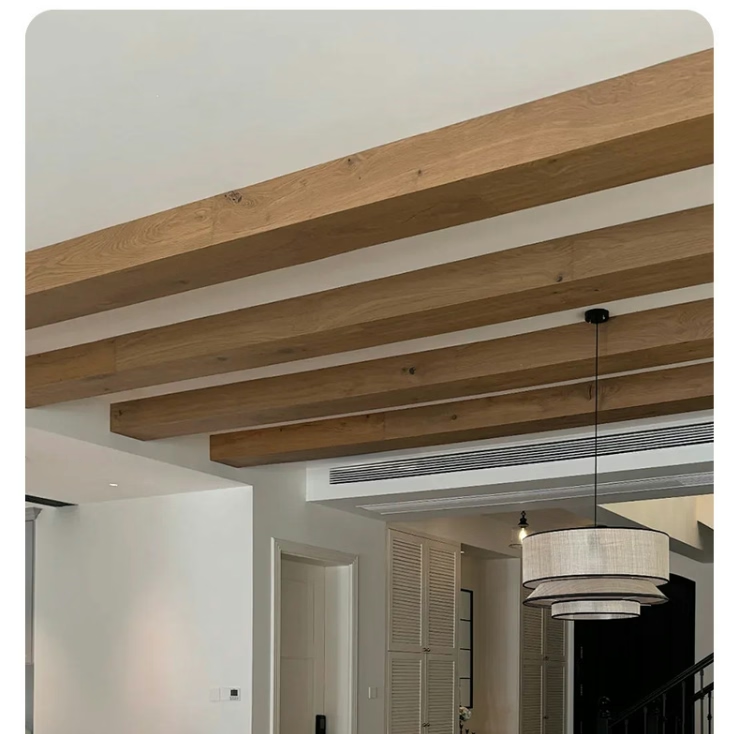
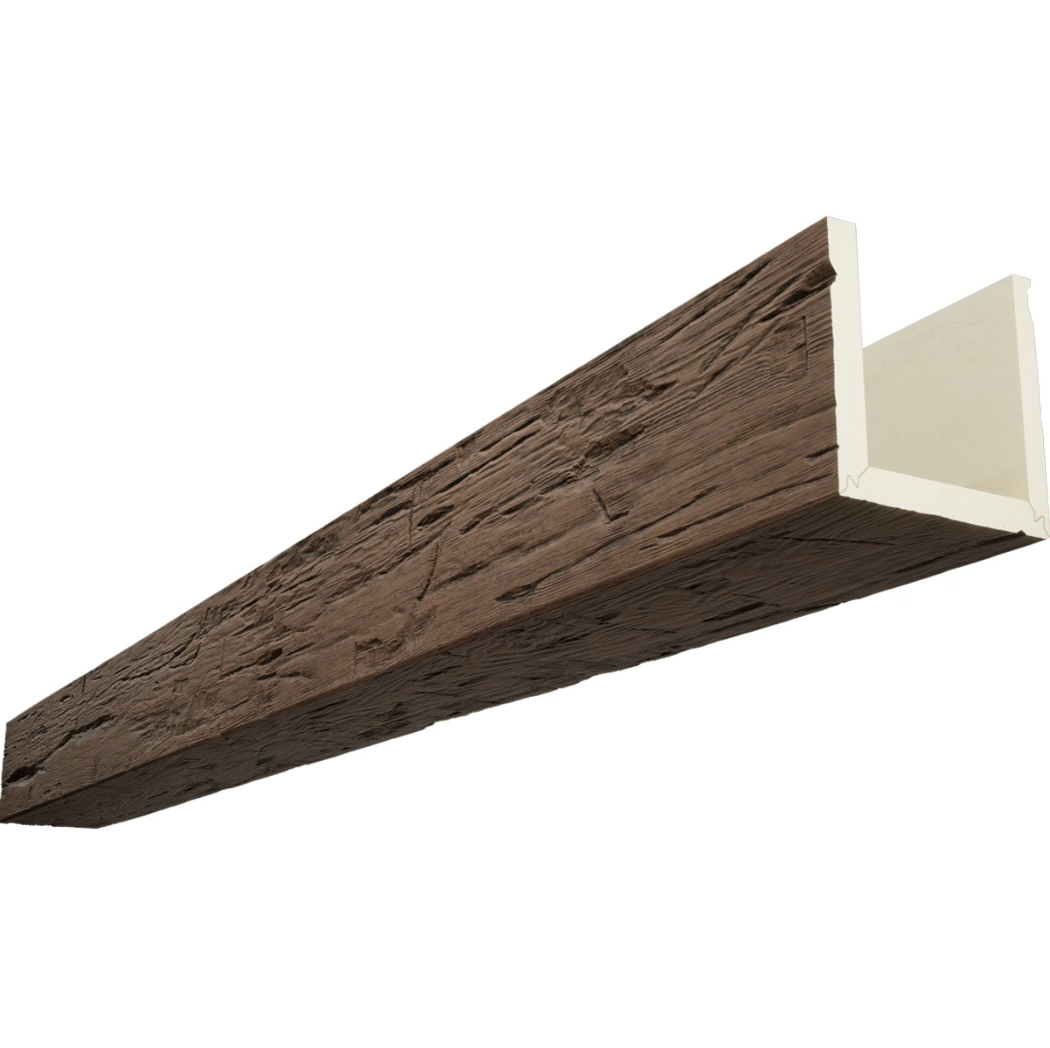
A business renovation moves fast. The lease has a possession date. The contractor has a schedule. The brand has an opening date that the marketing team has already announced. Anything that slows the timeline costs money, and anything that fails inspection shuts the project down.
Polyurethane faux beams are popular in this environment for a simple reason — they install faster than almost any other decorative ceiling treatment, they meet code requirements when properly specified, and they deliver the design aesthetic without the weight, the lead time, or the cost of solid timber.
The "heavy-duty commercial grade" specification adds a layer of durability and documentation that standard residential products do not provide. For business applications where the beam will be touched, bumped, or subjected to commercial cleaning, the heavy-duty specification is the right choice.
What "commercial grade" means in PU beam manufacturing
The term covers several specific attributes that separate a commercial-grade beam from a residential product.
Higher foam density. Commercial-grade beams typically use a 280 to 350 kg/m³ closed-cell foam density, compared to 200 to 240 kg/m³ for residential products. The higher density means better impact resistance, less surface deformation under load, and longer service life under commercial use conditions.
Thicker topcoat system. Residential topcoats are typically 2 to 4 mils dry film thickness. Commercial-grade topcoats are 6 to 10 mils, often a two-part aliphatic polyurethane with ceramic particles or other reinforcement. The thicker topcoat resists abrasion from cleaning, contact, and general commercial use.
Reinforced mounting hardware. Standard residential mounting uses a wood cleat and finish screws. Commercial-grade installations use powder-coated steel brackets with structural screws into blocking or joists. The hardware is specified for the rated load plus safety margin.
Fire-rated documentation. Commercial projects typically require ASTM E84 documentation showing the flame spread index and smoke developed index. Quality commercial-grade beams ship with this documentation as a standard submittal item, not as a special order.
Warranty. Residential warranties typically run 5 to 10 years. Commercial-grade warranties run 10 to 25 years depending on the application environment and the manufacturer.
These differences add cost — commercial-grade beams run 20 to 50 percent more than residential equivalents — but the cost is justified by the durability, the documentation, and the longer service life.

Common business renovation applications
Several business categories use faux beams heavily, each with specific requirements.
Restaurants and brewpubs. The design aesthetic is rustic, industrial, or modern-farmhouse. The beams need to handle grease vapor, occasional impacts from staff or equipment, and frequent cleaning. Fire rating is mandatory in most jurisdictions.
Retail stores. Brand-driven design that often features exposed ceiling structure as part of the visual identity. Beams need to coordinate with lighting, signage, and the brand's color palette. Fire rating is typically required.
Office spaces. Often the most demanding in terms of code compliance, particularly in multi-tenant buildings where Class A fire rating is mandatory. The aesthetic is usually more refined — cleaner grain, less aggressive texture.
Hotels and hospitality. Mixed requirements — guest room ceilings need a residential aesthetic and feel, while public spaces (lobby, restaurant, conference center) need commercial-grade durability. The same product line often serves both with different mounting specifications.
Medical and dental offices. Code requirements are strict, and the design language is often warm and welcoming to reduce patient anxiety. Faux beams deliver the residential feel without the maintenance burden of real wood in a healthcare environment.
Showrooms and dealerships. Automotive, furniture, and appliance showrooms often feature heavy timber aesthetics in their ceiling design. The beams need to look substantial and provide visual scale to the space.
Code compliance considerations
Business renovations face a more complex code environment than residential projects.
Building permits. Most jurisdictions require a building permit for commercial renovation work, including finish materials. The permit process requires submittals that document code compliance. Faux beams that are part of the finish package need to be documented.
Fire rating. The International Building Code (IBC) sets fire rating requirements based on occupancy type and building use. Assembly spaces (restaurants, retail), educational, and healthcare occupancies typically have stricter ratings. Most quality commercial-grade PU beams test to Class A or Class B per ASTM E84.
ADA compliance. Beam placement must not interfere with ADA-required clearances. A beam that drops too low in a circulation path is a code violation. Most commercial spaces require 80 inches minimum head clearance in circulation paths and 84 inches in some occupancy types.
Seismic requirements. In seismic zones, non-structural elements may need to be braced to resist earthquake loads. The bracing requirements depend on the weight of the element and the seismic design category. A faux beam contractor should know the local seismic requirements.
Local amendments. Many jurisdictions amend the model codes with local requirements. The contractor should verify the local amendments before specifying materials.
Installation timeline and coordination
Commercial renovations work on tight schedules. The faux beam installation is one of the later activities in the sequence.
Trade coordination. Other trades — electrical, HVAC, plumbing, drywall, paint — typically need to complete their work before beams can be installed. The beam installation should be scheduled after the ceiling finishes are painted but before the final floor finish if possible, to avoid damage during installation.
Lead times. Standard commercial-grade beam profiles are typically in stock at most suppliers with 1 to 3 week lead times. Custom profiles, finishes, or sizes may require 6 to 12 weeks. The specification should be locked in early enough to avoid schedule impacts.
Installation time. A two-person crew can typically install 80 to 150 linear feet of beam per day in a commercial setting, depending on the profile, the mounting height, and the number of splices. A typical restaurant installation (40 to 80 feet of beam) takes 1 to 2 days.
Cleanup and protection. Beams should be protected from damage by other trades after installation. Many contractors schedule beam installation near the end of the project and use protective wrapping until the final walkthrough.
Working with designers and brand standards
Business renovations are usually driven by a designer or a brand standards team. The faux beam specification needs to fit within their vision.
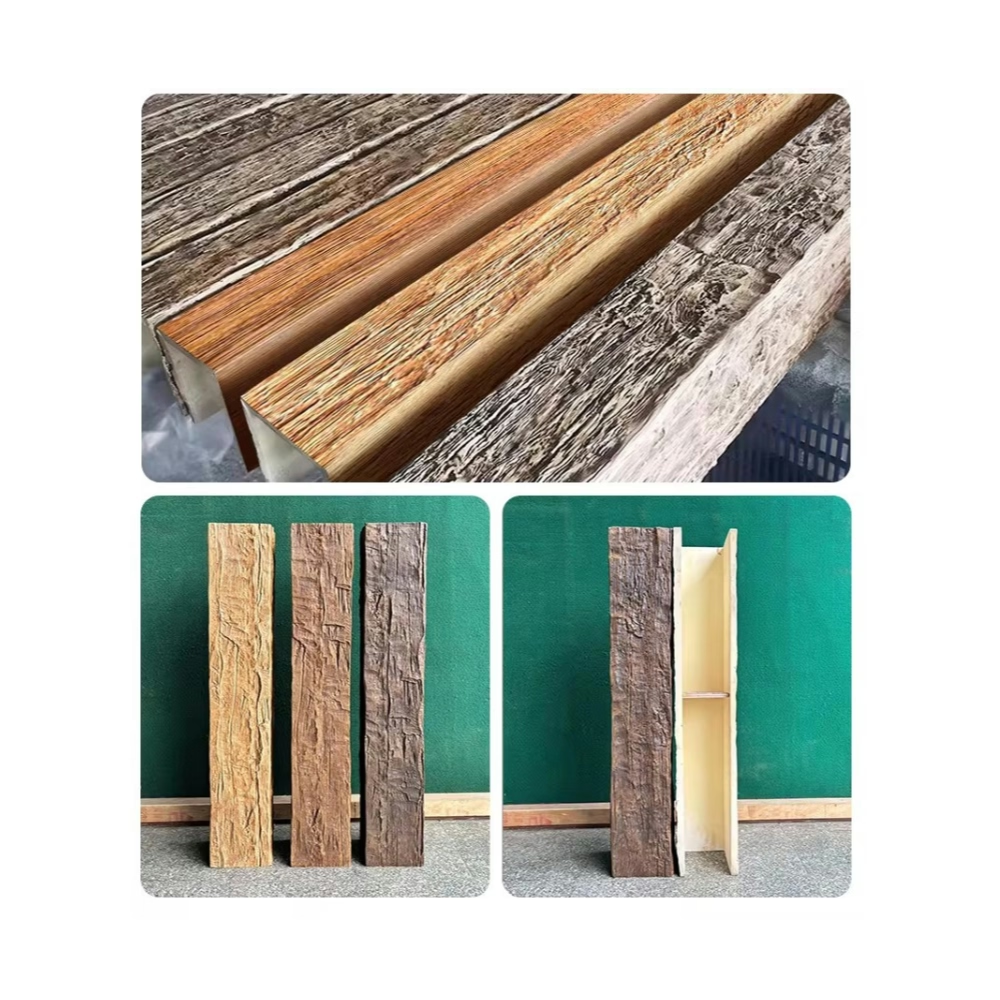
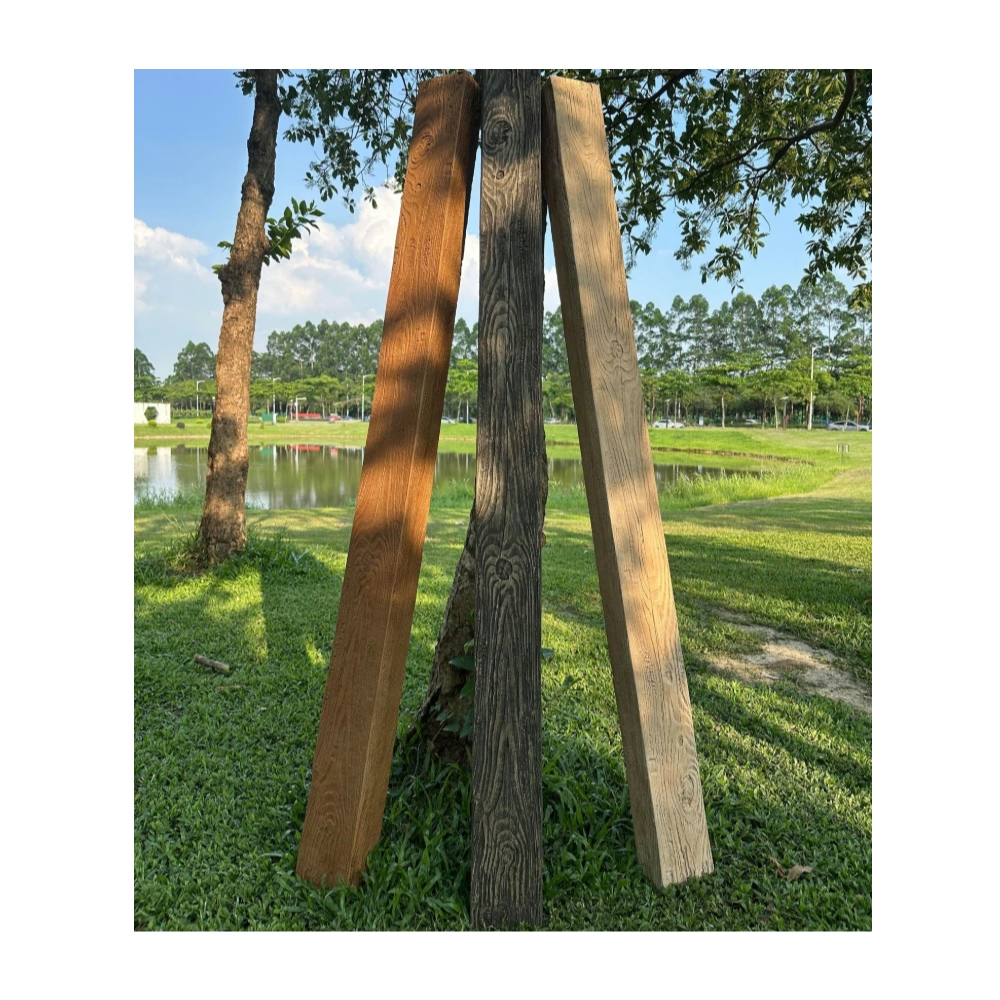
Material samples. The designer will typically want to see and touch the beam samples before specifying. Quality manufacturers provide samples with multiple finish options to support the design process.
Custom finishes. Brand-specific colors or textures may require custom finishing. Lead times for custom finishes are typically 2 to 4 weeks longer than stock finishes. The designer should know this constraint when specifying.
Profile and proportion. The beam profile must be proportional to the space. A 10-by-12 beam in a 9-foot ceiling makes the room feel oppressive. A 6-by-8 beam in a 20-foot ceiling disappears. The designer should specify the profile based on the ceiling height and the desired visual weight.
Coordination with other materials. The beam finish must coordinate with the other materials in the space — the flooring, the wall finish, the millwork, the lighting fixtures. The designer should specify the beam finish in the context of these other materials, not in isolation.
Cost considerations for business renovations
The total cost of a faux beam installation in a commercial setting includes several components.
Material cost. Commercial-grade beams run $25 to $80 per linear foot depending on profile, finish, and fire rating. Higher-profile beams with custom finishes can exceed $120 per linear foot.
Installation labor. Commercial installation runs $15 to $40 per linear foot depending on the mounting height, the access difficulty, and the regional labor market. Higher mounting heights or difficult access push the cost up.
Hardware and connectors. Splice plates, brackets, blocking, and adhesive add $5 to $15 per linear foot on average. Projects with many splices or unusual mounting conditions cost more.
Engineering and documentation. For projects that require stamped engineering, fire test reports, or other formal documentation, the cost of preparing and submitting these documents ranges from $500 to $5,000 depending on the project size and the documentation requirements.
Permits and inspections. Building permit fees vary widely by jurisdiction. The contractor should include the permit cost in the project budget.
The total cost of a typical commercial faux beam installation runs $50 to $150 per linear foot. Compared to solid timber (which runs $150 to $400 per linear foot for the same visual scale), the faux beam is significantly more affordable, particularly when installation time is factored in.
When the commercial grade specification is overkill
Not every business renovation needs commercial-grade beams. Several scenarios are well-served by standard residential-grade products.
Owner-operated small businesses. A local bakery or boutique where the owner is on-site and the beam is unlikely to be touched or abused. Standard residential beams perform well in these environments.
Short-term fit-outs. Pop-up retail, seasonal venues, leased spaces with less than five years of expected occupancy. The cost premium for commercial grade is hard to justify over a short service life.
Low-traffic back-of-house. Storage rooms, staff areas, mechanical rooms. The beams are visible but not interacted with. Standard grade is appropriate.
For the main customer-facing areas — the dining room, the retail floor, the lobby — the commercial-grade specification is worth the cost. The durability, the documentation, and the longer service life pay back over the life of the business.
Technical References
ASTM standards cited in every specification
Test Data
Lab results from internal testing program
Updated 2026
Reviewed against current product specs