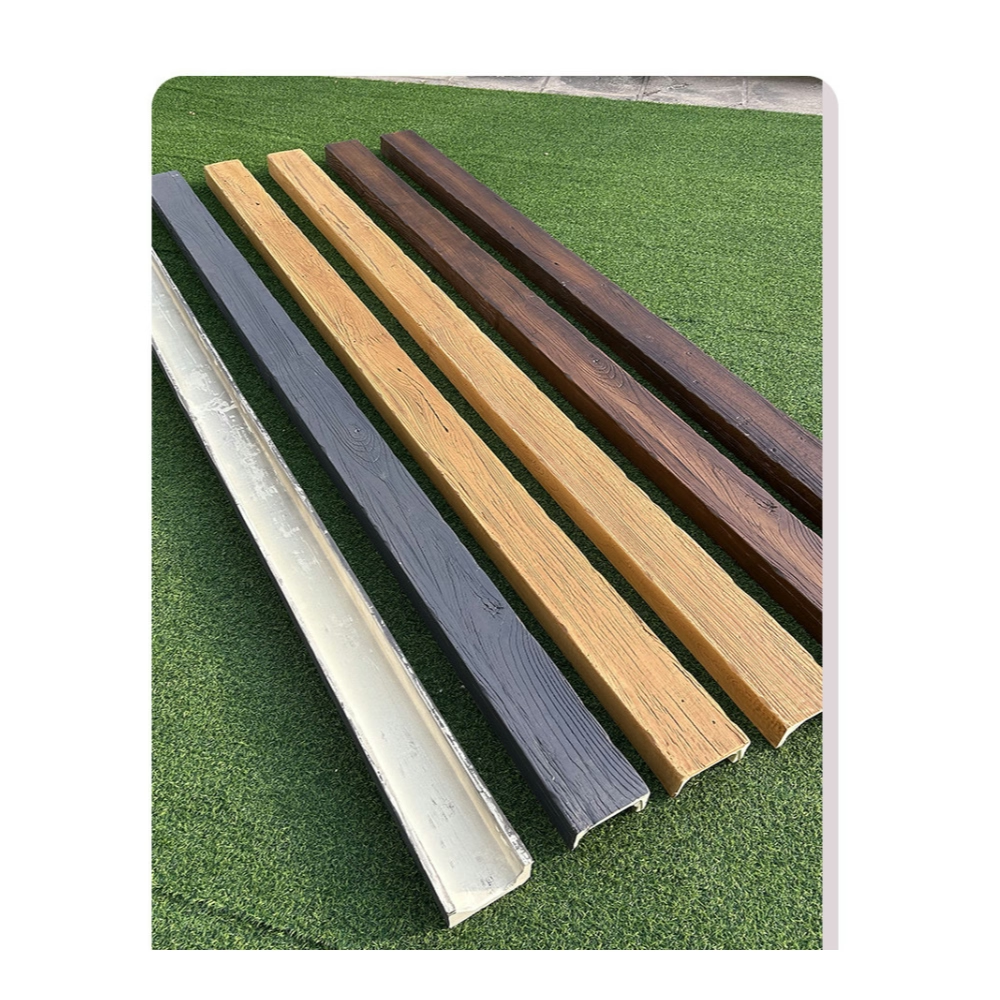
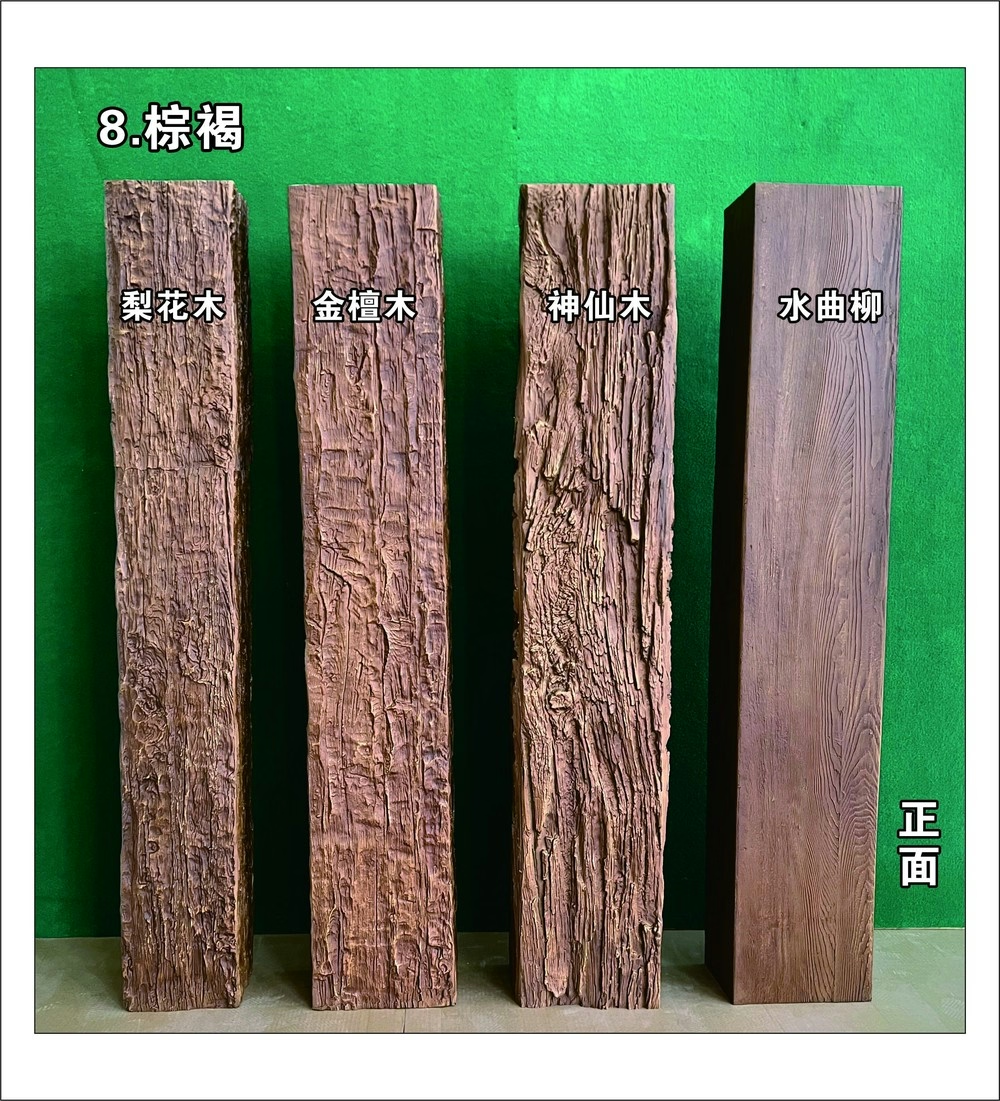
Adhesive selection is the part of a faux beam installation that often gets the least attention. The installer shows up with a caulk gun, applies some construction adhesive to the back of the beam, and presses it into place. If it sticks, the job is done.
The reality is more nuanced. The wrong adhesive can damage the foam, fail under load, or release volatile compounds that affect indoor air quality. The right adhesive creates a permanent bond that lasts the life of the beam.
For heavy-duty faux beam installations — commercial applications, large residential beams, or beams with any load requirement — adhesive selection deserves careful thought.
Why adhesive matters in faux beam installations
Faux beam installations use adhesive as a supplement to mechanical fastening, not as a replacement for it. The mechanical fasteners (cleats, brackets, screws) carry the structural load. The adhesive serves several secondary functions.
Bonds the beam to the substrate. The adhesive creates a continuous bond between the beam back and the ceiling or wall surface. This prevents the beam from shifting, flexing, or vibrating under load.
Seals gaps. The adhesive fills minor gaps between the beam and the substrate. This prevents drafts, light leaks, and insect entry at the beam edges.
Distributes load. The adhesive spreads the beam's load across the entire mounting area. Without adhesive, the load is concentrated at the mechanical fastener points.
Reduces noise. A continuously bonded beam does not creak, pop, or shift as the building moves. The adhesive dampens the small movements that would otherwise create noise.
Improves appearance. A bonded beam sits flush against the ceiling without gaps or light leaks. The visual result is cleaner.
The adhesive is doing meaningful work. The selection deserves attention.
Compatibility with polyurethane foam
The adhesive must be chemically compatible with the polyurethane foam beam. Incompatible adhesives can damage the foam in several ways.
Solvent attack. Many general-purpose construction adhesives contain solvents that soften or dissolve polyurethane foam. The solvent penetrates the foam surface, creating a sticky mess and compromising the foam structure. The damage may not be visible immediately but appears over weeks or months.
Chemical reaction. Some adhesives contain chemicals that react with the polyurethane foam, causing it to swell, discolor, or degrade. The reaction may be visible as a stain on the foam surface or as a change in the foam texture.
Inadequate adhesion. Some adhesives do not bond well to the closed-cell foam surface. The bond may be strong initially but fails over time as the adhesive cures and shrinks.
Foam damage from heat. Some adhesives cure through an exothermic reaction that generates heat. The heat can damage thin foam sections or cause surface discoloration.
The adhesive manufacturer and the beam manufacturer should both confirm compatibility. Quality beam manufacturers specify compatible adhesives in their installation guides.
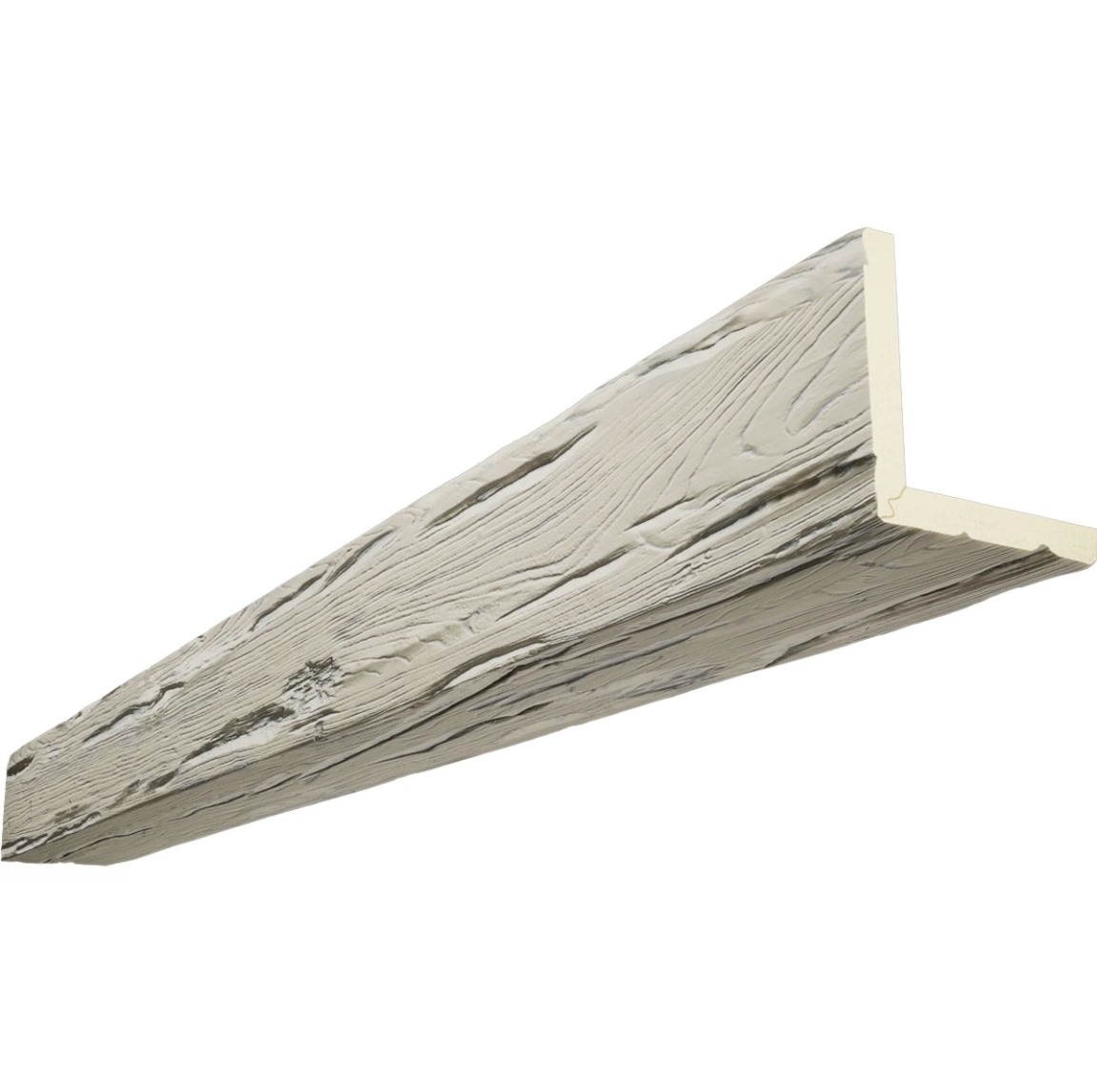
Types of compatible adhesives
Several adhesive categories work with polyurethane faux beams.
Polyurethane construction adhesive. The most common choice. Polyurethane adhesive bonds well to foam and to most building substrates (drywall, wood, concrete, metal). It is flexible when cured, which accommodates building movement. Brands like Loctite PL Premium, Titebond Heavy Duty, and 3M 5200 are standard products.
Modified polymer adhesive (MS polymer). A more recent chemistry that combines polyurethane and silicone properties. MS polymer adhesives bond to a wider range of substrates, cure faster, and have less odor than traditional polyurethane. Brands like Bostik Simson, Tremco Dymonic, and Sikaflex are common.
Acrylic latex adhesive. Water-based and low odor. Easier cleanup. Lower bond strength than polyurethane or MS polymer. Suitable for light-duty residential applications where the beam is purely decorative.
Epoxy. Very high bond strength but rigid when cured. The rigidity makes epoxy less suitable for faux beam installations where some flexibility is needed. Epoxy is reserved for specialty applications.
Cyanoacrylate (super glue) and contact adhesive. Not recommended for full beam installation. These adhesives are useful for small repairs and detail work but not for the full bond line.
For most heavy-duty faux beam installations, polyurethane construction adhesive or MS polymer adhesive is the right choice. The specific product depends on the substrate, the environment, and the installer preference.

Substrate considerations
The substrate — the surface the beam is being bonded to — affects the adhesive selection.
Drywall. The most common substrate in residential construction. Polyurethane and MS polymer adhesives bond well to drywall. The drywall must be painted or primed — adhesive does not bond well to bare paper-faced drywall.
Plywood or OSB. Excellent substrate for adhesive bonding. The wood surface provides good mechanical adhesion. Polyurethane and MS polymer both work well.
Plaster. Older homes may have plaster ceilings. Plaster is a good substrate for adhesive if it is sound and well-bonded to the lath. Loose or cracking plaster must be repaired before beam installation.
Concrete. Common in commercial construction and in basement ceilings. Concrete must be clean and sound. Some adhesives require a primer on concrete. Polyurethane and MS polymer both bond well to properly prepared concrete.
Metal. Steel framing or ceiling grid. Metal is a challenging substrate — most adhesives need a primer or a specialty formulation. MS polymer adhesives generally bond better to metal than polyurethane.
Existing ceiling tiles or grid. Acoustic ceiling tiles do not provide a sound substrate for adhesive bonding. The beam must be mechanically fastened to the grid or to the structure above, not to the tiles.
The substrate should be identified before adhesive selection. Some substrates require primer or surface preparation that the installer must account for.

Application technique
The adhesive application affects bond strength and final appearance.
Bead pattern. A continuous bead around the perimeter of the beam back, with additional beads in the field. The pattern should provide at least 60 percent coverage of the contact area when the beam is pressed into place.
Bead size. A 3/8 inch bead is standard for most residential applications. Larger beads (1/2 inch) for heavy commercial beams or rough substrates. Smaller beads (1/4 inch) for smooth substrates and light beams.
Application temperature. Most adhesives have a minimum application temperature, typically 40°F (4°C) for polyurethane and 32°F (0°C) for MS polymer. Cold adhesive does not wet the substrate properly and the bond is compromised.
Open time. The adhesive has a working time before it skins over and the bond is reduced. The beam must be positioned before the open time expires. Polyurethane typically has 10 to 20 minutes of open time; MS polymer has 5 to 15 minutes.
Pressing and bracing. The beam must be pressed firmly into place when installed. For heavy beams, temporary bracing may be needed until the adhesive cures and the mechanical fasteners are installed.
Cleanup. Excess adhesive that squeezes out of the joint must be cleaned before it cures. Polyurethane adhesive is very difficult to remove once cured. Mineral spirits or adhesive remover works on wet polyurethane; mechanical removal is the only option for cured polyurethane.
The application technique affects the long-term bond. A properly applied adhesive creates a permanent connection. A poorly applied adhesive may fail within months.
Common adhesive failures
Several failure modes appear in faux beam adhesive installations.
Adhesive not compatible with foam. The installer uses a general-purpose construction adhesive that contains solvents. The foam is damaged and the bond fails.
Insufficient adhesive coverage. The bead pattern is too sparse. The beam is bonded only at the edges or at isolated points. The bond fails when the beam moves.
Adhesive applied to dirty or dusty substrate. Dust on the substrate prevents the adhesive from bonding. The beam releases within weeks.
Adhesive applied at wrong temperature. Cold adhesive does not bond properly. The bond is weak from the start and fails under load.
Adhesive not given time to cure. The beam is loaded before the adhesive has cured. The bond is disturbed during the curing process and never reaches full strength.
Wrong adhesive for the environment. Standard interior adhesive is used in a humid or exterior environment. The adhesive softens or fails when exposed to moisture.
Adhesive contaminated by other materials. The installer uses a caulk gun that previously held a different sealant. The residue contaminates the new adhesive and compromises the bond.
Each of these failures is preventable with proper planning and execution. The adhesive selection and application should be specified by the beam manufacturer or the installation contractor.
Heavy-duty adhesive specifications
For heavy-duty installations — commercial projects, large beams, beams with load requirements — the adhesive specification should be more demanding.
Bond strength. Minimum 200 psi tensile bond strength per ASTM D4541. Polyurethane construction adhesive typically exceeds 300 psi. MS polymer adhesive typically exceeds 250 psi.
Flexibility. Elongation at break minimum 100 percent per ASTM D412. The adhesive must accommodate building movement without cracking or releasing.
Temperature range. Service temperature from -20°F to 150°F (-29°C to 66°C) minimum. Higher temperature ratings for installations near heat sources or in unconditioned spaces.
Water resistance. Water immersion per ASTM D2247, no bond degradation after 24 hours. Higher water resistance for humid environments or exterior-adjacent installations.
VOC compliance. CDPH Standard Method v1.2 or GREENGUARD Gold certification. Required for many commercial projects.
Cure time. Full cure within 24 to 48 hours. Faster cure times for projects with tight schedules.
Documentation. Manufacturer data sheet, test reports, and compliance documentation should be part of the submittal package for commercial projects.
The heavy-duty specification ensures that the adhesive performs under the conditions of the installation. Standard residential adhesive may be sufficient for light-duty applications but not for heavy commercial work.
When adhesive alone is not enough
Adhesive is one part of the installation. It is not a substitute for proper mechanical fastening.
Heavy beams. A 10-by-12 beam that weighs 8 to 12 pounds per linear foot needs mechanical fastening in addition to adhesive. The adhesive alone will hold the beam against the substrate, but the mechanical fasteners carry the primary load.
Beams in seismic zones. Seismic loads require positive mechanical connection. Adhesive may fail under the cyclic loading of an earthquake. Mechanical fasteners with seismic-rated bracing are required.
Beams over public spaces. Public safety considerations require mechanical fastening. Adhesive alone is not an acceptable connection method for beams that could fall and injure people.
Beams with attached loads. Lighting, HVAC equipment, signage, or other loads require mechanical fastening that transfers the load to the building structure. Adhesive is not rated for these loads.
Beams in high-humidity environments. Adhesive bond strength can be affected by long-term moisture exposure. In humid environments, the mechanical connection is the primary load-bearing system, and the adhesive is secondary.
The adhesive is part of a comprehensive installation system. Mechanical fastening, adhesive bonding, and proper substrate preparation together create a permanent installation. Any one element by itself is insufficient for heavy-duty applications.
Technical References
ASTM standards cited in every specification
Test Data
Lab results from internal testing program
Updated 2026
Reviewed against current product specs