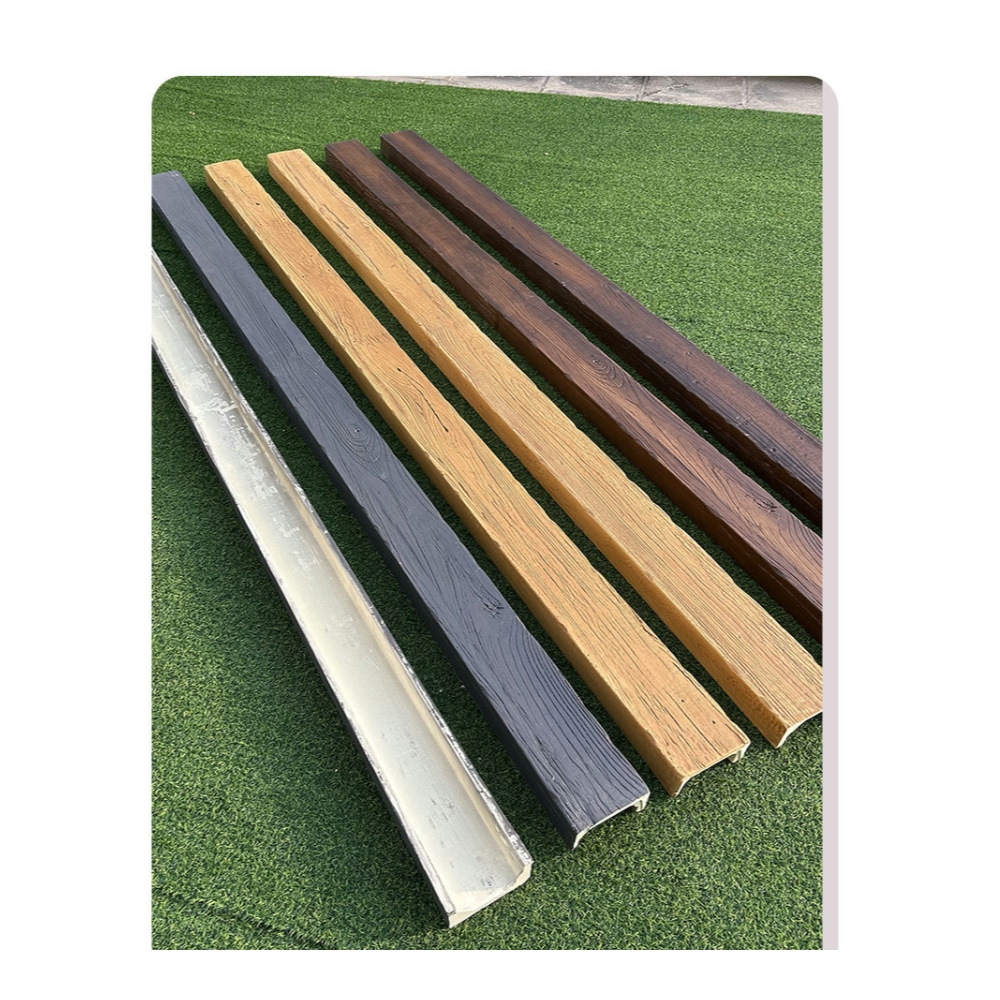
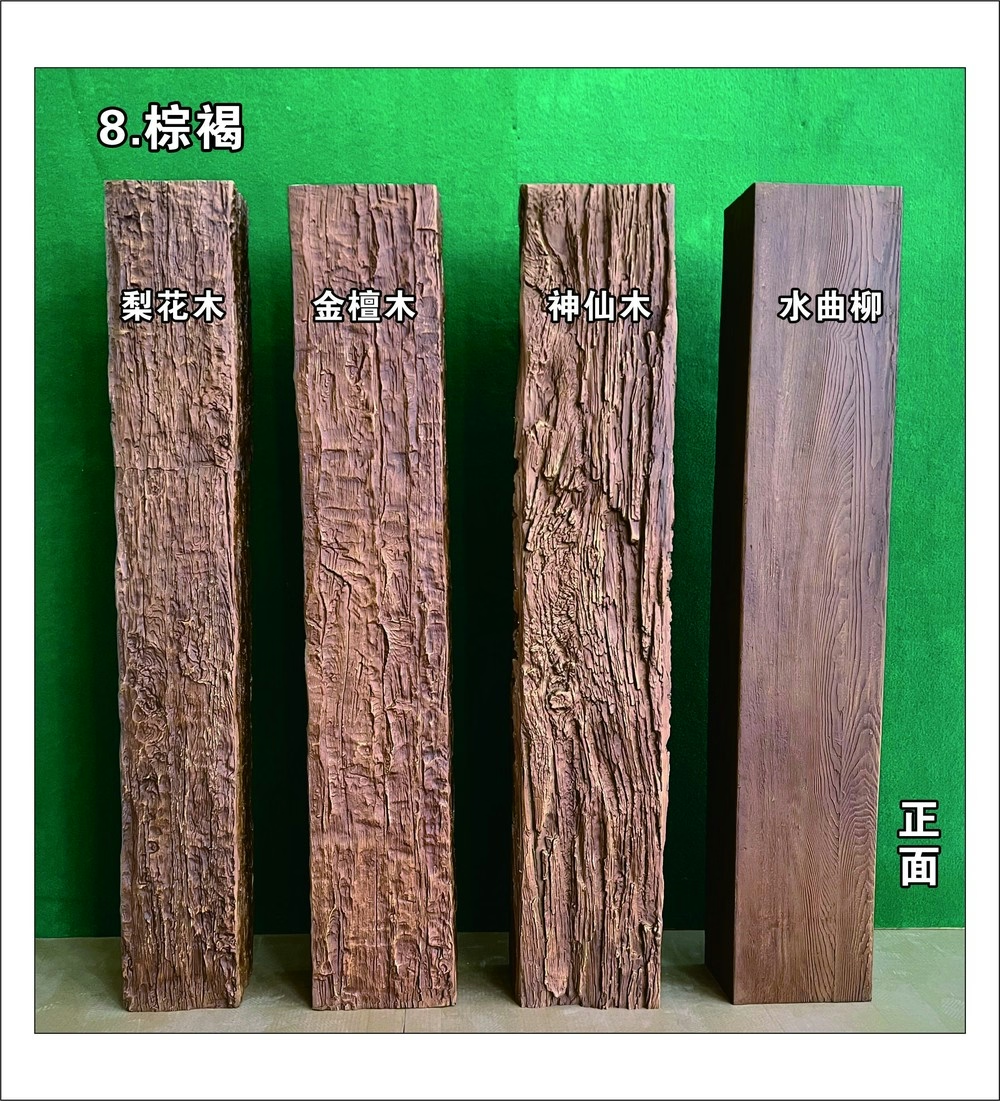
The beam left the factory in perfect condition. It was inspected, wrapped, crated, and loaded into a 40-foot container. Six weeks later, it arrived at the destination warehouse with a corner crushed and a long crack along the face.
Packaging failure is one of the most common causes of damage in international faux beam shipments. The product is fine. The packaging is inadequate for the journey. The buyer receives a damaged beam and the supplier deals with a claim.
Heavy-duty damage-resistant packaging is designed specifically for the realities of international shipping — the handling at multiple transfer points, the vibration during transit, the stacking loads in the container, the humidity swings, and the rough handling that is unfortunately common at some ports.
What damages faux beams in transit
Several specific damage modes appear repeatedly in shipping claims.
Corner and edge impact damage. Faux beams have corners and edges that are vulnerable to impact. A forklift that hits the corner of a crate, a sling that crushes the edge of a beam during loading, or a beam that shifts in transit and impacts another object — all of these can chip or crush the foam corners.
Face cracking. Long cracks along the face of a beam typically result from bending under load. If the beam is not properly supported in the crate, the weight of the beam itself (or the weight of beams stacked on top) causes the unsupported span to flex and crack.
Surface abrasion. The textured finish on a faux beam can be abraded by contact with other surfaces. Foam particles, dust, or debris between the beam and the packaging material can scratch the finish during transit.
Compression damage. Stacked beams in a container can be compressed by the weight above. The bottom beams in a stack may be deformed by the cumulative load if the packaging does not distribute the weight properly.
Water damage. Humidity and condensation in a shipping container can damage the finish, the packaging, or both. Cardboard packaging absorbs moisture and can transfer stains to the beam surface.
Pest contamination. International shipping regulations require protection against pest contamination. Wood packaging materials (pallets, crating) must be heat-treated or fumigated per ISPM 15. Non-compliant wood packaging can result in the shipment being refused at the destination port.
Each damage mode requires a specific packaging solution. A complete packaging system addresses all of them.
Heavy-duty packaging components
Several packaging elements work together to protect faux beams in transit.
Inner protection. The beam itself is wrapped in foam sheeting, bubble wrap, or polyethylene foam. The wrap protects the surface from abrasion and provides minor impact protection. The wrap should be at least 1/4 inch thick foam for standard shipments and 1/2 inch for heavy commercial shipments.
Edge protectors. Cardboard or foam edge protectors are applied to the corners and edges of the beam. The protectors absorb impact and prevent corner damage. Quality protectors are L-shaped or U-shaped and fit over the entire edge length.
Crate or container. The beam is placed in a wooden crate, a cardboard tube, or a corrugated cardboard sleeve. The container provides the structural protection. Wooden crates are standard for heavy or long shipments; cardboard is appropriate for shorter, lighter shipments.
Blocking inside the crate. Foam blocks, cardboard inserts, or air pillows fill the void between the beam and the crate. The blocking prevents the beam from shifting inside the crate during transit.
External bracing. For heavy beams, the crate includes external bracing — wooden battens across the top, metal banding around the perimeter, or reinforced corners. The bracing distributes load and resists impact.
Pallet base. For shipments that will be handled by forklift, the crate is mounted on a wooden pallet. The pallet must be ISPM 15 compliant for international shipments.

Packaging by shipment type
Different shipment types require different packaging approaches.
LCL (less than container load). LCL shipments are consolidated with other cargo in a container. The individual shipments are handled multiple times — at the origin warehouse, at the consolidation point, at the destination warehouse. Each handling is an opportunity for impact damage. LCL packaging needs to be particularly robust — wooden crates, generous blocking, and clear handling labels.
FCL (full container load). A full container is sealed at the origin and not opened until it reaches the destination. FCL shipments have less handling but still face vibration, stacking loads, and humidity changes. The packaging can be lighter than LCL but still needs to handle the in-container environment.
Air freight. Air shipments are faster but more expensive. The packaging needs to meet airline requirements for size, weight, and protection. Air freight packaging is typically cardboard with internal foam blocking. Weight is a significant cost factor in air freight, so the packaging balances protection with weight.
Courier (DHL, FedEx, UPS). Small samples and small orders ship by courier. The packaging is typically a cardboard box with internal foam. The courier handles packages more gently than ocean freight but the package goes through automated sorting systems that can be rough.
Roll-on/roll-off and breakbulk. Oversized beams that cannot fit in a standard container may ship as roll-on/roll-off or breakbulk cargo. The packaging in these cases is minimal — typically just edge protectors and strapping — but the cargo is handled with more care because it is individually loaded.
Packaging standards and certifications
Several international standards apply to packaging for faux beam shipments.
ISPM 15 (International Standards for Phytosanitary Measures No. 15). All wood packaging material used in international trade must be heat-treated or fumigated and marked with the IPPC stamp. Non-compliant wood packaging can result in the shipment being refused entry, returned to origin, or destroyed at the destination.
ISTA (International Safe Transit Association) test procedures. ISTA 3A, 3B, and 3E are testing protocols that simulate the hazards of international shipping. Packaging that has passed ISTA testing has documented performance under simulated transit conditions. Many buyers require ISTA-certified packaging for their shipments.
ASTM D4169 (Standard Practice for Performance Testing of Shipping Containers and Systems). This ASTM standard defines test methods for shipping containers. Packaging tested per ASTM D4169 has documented performance data.
FSC (Forest Stewardship Council) certification. For projects that require FSC-certified materials, the wood packaging (and possibly the wood content of the beams themselves) must be FSC certified.
Country-specific regulations. Some destination countries have specific packaging requirements. Australia, New Zealand, and some South American countries have particularly strict biosecurity requirements that go beyond ISPM 15.
The buyer should specify the required packaging standards in the purchase order. The supplier should provide documentation of compliance.
Packaging cost versus damage cost
The cost of heavy-duty packaging is real but should be compared against the cost of damage.
Heavy-duty packaging cost. Typically $5 to $20 per beam for standard packaging, depending on the size and the materials. For a 40-foot container with 100 beams, packaging adds $500 to $2,000 to the shipment cost — about $0.50 to $2.00 per linear foot of beam.
Damage cost. A damaged beam may cost $50 to $200 to repair, or may be unsalvageable. A replacement beam costs $100 to $500 plus shipping. A damaged shipment that delays the project may trigger penalty clauses or change-order costs that far exceed the value of the beams.
Insurance. Most international shipments include marine cargo insurance. The insurance covers damage in transit but requires documentation of proper packaging. Inadequate packaging can void the insurance coverage.
The economics favor heavy-duty packaging. The small additional cost per beam is far less than the cost of damage claims, project delays, or lost customer relationships.
Special packaging considerations
Several situations require special packaging beyond the standard approach.
Long beams. Beams longer than 16 feet require special handling. They may exceed the standard container length, require an oversized container, or need to be crated with internal support to prevent sagging. The crate must include a center support that prevents the beam from flexing under its own weight during transit.
Heavy beams. Dense or large-profile beams may require reinforced crating and weight-distribution features. The crate must be rated for the weight of the beam plus a safety margin.
High-finish beams. Beams with premium finishes (heavy distressing, hand-applied details, specialty topcoats) require additional surface protection. The foam wrapping should be of a type that does not imprint on the finish. Non-abrasive foam or soft bubble wrap is appropriate.
Mixed loads. A shipment that includes beams of different sizes, profiles, or finishes requires careful packaging to prevent the smaller items from shifting and damaging the larger items. Custom internal dividers or separate boxes within the main crate may be needed.
Extreme destinations. Shipments to extreme climates — high humidity, extreme cold, or harsh handling environments — require additional packaging. Desiccant packs to control humidity, insulated crates for cold destinations, and additional bracing for rough handling are all worth considering.
Working with the freight forwarder
The freight forwarder is a key partner in ensuring that packaging meets the requirements of the shipment.
Packaging specifications. Provide the freight forwarder with the packaging specifications before shipping. The forwarder can advise on any specific requirements for the destination country or the carrier.
Handling instructions. Mark the crates with clear handling instructions — "This Side Up," "Fragile," "Do Not Stack," "Keep Dry." The markings should be in English and the language of the destination country if practical.
Container loading. For FCL shipments, the container loading plan should account for the beam dimensions, the stacking pattern, and the weight distribution. The freight forwarder can advise on the optimal loading plan.
Documentation. The shipping documents should include the packaging specifications, the ISPM 15 compliance stamp, and any required certifications. The documentation supports the insurance claim if damage occurs.
The freight forwarder, the packaging supplier, and the beam manufacturer are all part of the supply chain that delivers the beam to the destination. Each has expertise that contributes to a successful shipment. The packaging is the bridge between manufacturing and installation — a successful packaging system ensures that the beam arrives in the condition it left the factory.
Technical References
ASTM standards cited in every specification
Test Data
Lab results from internal testing program
Updated 2026
Reviewed against current product specs