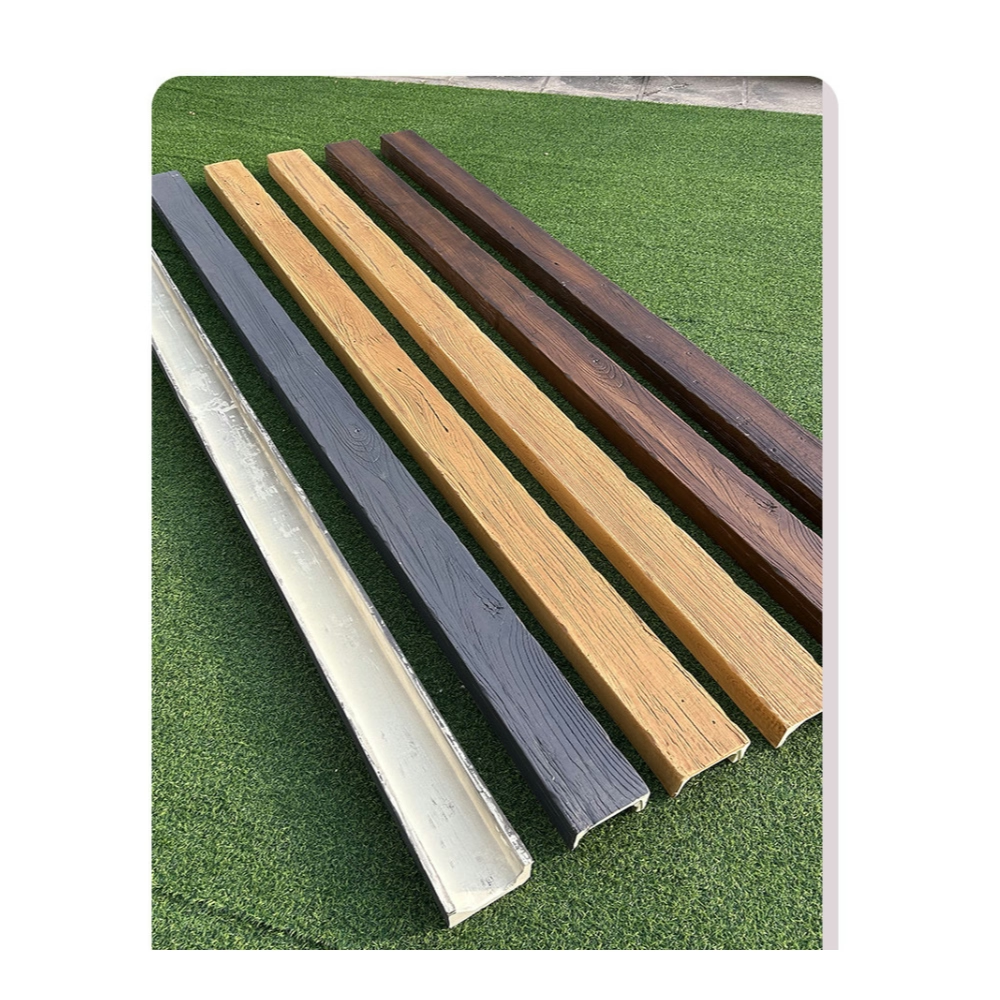
A full container of faux beams leaving a Chinese factory for a distribution warehouse in Los Angeles will spend six weeks in transit. The container will be loaded by a forklift, transported by truck to the port, lifted by a crane onto a ship, stacked six high on the deck or below in the hold, transported across the Pacific, unloaded by crane, transported by truck to the warehouse, and unloaded by forklift again. At each transfer point, the cargo is at risk of damage.
Heavy-duty export crating is designed for this journey. The crate is not just a box — it is an engineered packaging system that protects the beam from impact, vibration, compression, and environmental damage through multiple handling events and a long transit period.
The anatomy of a heavy-duty export crate
A heavy-duty export crate for faux beams has several specific design elements.
Base pallet. A standard ISPM 15-compliant wooden pallet forms the base of the crate. The pallet must be rated for the weight of the loaded crate plus a safety margin. Standard pallets are 4-way entry for forklift access.
Floor frame. Wooden framing around the base of the crate provides the structural foundation. The floor frame is typically 2x4 or 2x6 lumber, bolted or screwed to the pallet. The floor frame distributes the load across the pallet and provides mounting points for the side panels.
Side panels. The side panels are constructed of plywood or oriented strand board (OSB) over a wooden frame. The frame provides rigidity; the panel material provides the continuous surface. The side panels are screwed or nailed to the floor frame and to the top frame.
Top frame. A wooden frame at the top of the crate provides the upper structural element and the mounting points for the lid.
Lid. A plywood or OSB lid that is screwed or nailed to the top frame. The lid may be removable for inspection or fixed for security. Quality crates have a hinged or removable lid for partial access without disassembling the entire crate.
Internal blocking. Wooden blocking, foam inserts, or cardboard bracing inside the crate holds the beams in position and prevents them from shifting during transit. The blocking is custom-fit to the specific beam dimensions.
Internal wrapping. Each beam is wrapped in foam sheeting or bubble wrap before being placed in the crate. The wrap protects the surface from abrasion and provides minor impact protection.
External bracing. For heavy crates, metal banding around the perimeter or wooden battens across the top provide additional structural support. The bracing is particularly important for crates that will be stacked in the container.
Markings. Each crate is marked with handling instructions, content descriptions, weight, dimensions, and any required regulatory information. The markings should be in English and the language of the destination country if practical.
A complete crate is more than the sum of its parts. Each element addresses a specific hazard of international shipping.

Crate sizing and capacity
The crate must be sized for the specific beams being shipped.
Beam dimensions. The inside dimensions of the crate must accommodate the longest, widest, and tallest beams plus clearance for wrapping and blocking. Standard inside clearances are 1 to 2 inches on each side.
Weight capacity. The crate must support the weight of the beams plus a safety margin. A standard 4x4 foot crate can typically hold 500 to 800 pounds of beams. Larger crates (8x4 foot) can hold 1,500 to 2,500 pounds.
Crate weight. The empty crate weight is typically 30 to 80 pounds depending on the size and construction. The combined weight of crate and beams is the shipping weight.
Container optimization. Crate dimensions should be optimized for the container being used. Standard 40-foot containers have inside dimensions of approximately 40x8x8 feet. Crate dimensions should be sized to maximize the use of container space while allowing for forklift access and handling.
Stacking configuration. Crates stacked in a container create cumulative weight on the bottom crates. The bottom crates must be rated for the stacking load. Standard stacking capacity is 4 to 6 crates high in a container, depending on the weight.

Materials and construction standards
Several standards govern the materials and construction of export crates.
ISPM 15 compliance. All wood components must be heat-treated to a core temperature of 56°C for 30 minutes or fumigated with methyl bromide. The wood must be marked with the IPPC stamp indicating compliance. Non-compliant wood packaging is rejected at many international ports.
Lumber grade. Standard construction uses #2 or better softwood lumber. Higher grades are used for structural components that require higher strength. Marine-grade lumber is used for shipments that will face extreme humidity.
Plywood grade. Exterior-grade plywood (CDX or better) is standard. The plywood should be at least 1/2 inch thick for side panels and 3/4 inch for the lid and floor. Thicker plywood is used for heavy shipments.
Fastener specifications. Screws or nails should be hot-dip galvanized or stainless steel for humid environments. The fastener length should be appropriate for the material thickness — typically 2.5 to 3 times the thickness of the thinner member.
Metal hardware. Steel banding, corner brackets, and hinges should be corrosion-resistant. Galvanized or stainless steel hardware is standard.
Sealants and adhesives. Water-based adhesives are standard. Solvent-based adhesives may be restricted for air freight shipments.
The materials and construction standards should be documented in the supplier's quality procedures. The buyer can request the documentation as part of the submittal package.
Specialized crate designs
Several specialized crate designs address specific shipping challenges.
Open-top crates. For beams that are too tall for standard crates, open-top designs use a wooden frame around the perimeter with no top panel. The beams are wrapped and braced within the frame, then covered with a tarp or shrink wrap. Open-top crates are common for very long beams.
Knock-down crates. Crates that can be assembled and disassembled for return shipping. Used when the buyer will return the empty crates for reuse. Knock-down designs use bolts rather than nails and have standardized component dimensions.
Rack and pinion crates. For very heavy beams, rack-style crates have internal vertical supports that transfer the beam weight directly to the pallet. The rack design prevents the crate panels from bearing the load.
Insulated crates. For shipments to extreme climates, insulated crates with foam or rigid insulation in the walls protect the beams from temperature extremes. Insulated crates are heavier and more expensive but necessary for certain destinations.
Vented crates. For shipments where humidity control is important, vented crates allow air circulation while still providing impact protection. Vented crates are often used in combination with desiccant packs inside the crate.
The crate design should match the specific shipment requirements. A standard crate is sufficient for most shipments, but specialized designs address specific challenges.
Cost considerations
The cost of heavy-duty export crating is a meaningful part of the total shipping cost.
Crate material cost. The lumber, plywood, fasteners, and hardware for a standard crate run $30 to $80 per crate depending on the size. Specialty crates (insulated, rack-style, knock-down) cost more.
Labor cost. Crate assembly is labor-intensive. A skilled crate builder takes 1 to 2 hours to assemble a standard crate. The labor cost varies by region but is typically $20 to $50 per crate.
Internal packaging cost. Foam wrap, blocking materials, and edge protectors add $5 to $20 per crate depending on the level of protection.
Total crating cost. A complete heavy-duty export crate typically costs $50 to $150 per crate. For a 40-foot container with 20 crates, the total crating cost is $1,000 to $3,000 — about $0.10 to $0.30 per linear foot of beam.
The crating cost is small relative to the total shipment cost (ocean freight, insurance, duties) and the value of the beams being shipped. The investment in heavy-duty crating pays back many times over in reduced damage claims.
Container loading optimization
The way the crates are loaded into the container affects both protection and shipping cost.
Loading pattern. Crates should be loaded in a pattern that distributes weight evenly across the container floor. Heavy crates should be on the bottom; lighter crates on top. The pattern should also allow access to all crates for unloading at the destination.
Dunnage. Material placed between crates to prevent shifting during transit. Inflatable dunnage bags are commonly used to fill voids between crates and the container walls. The bags are inflated after loading to lock the cargo in place.
Securing straps. Ratchet straps or lashing straps are used to secure the crates to the container's anchor points. The straps prevent the crates from shifting during transit, particularly during ship motion.
Weight distribution. The total container weight must be within the container's rated capacity and properly distributed fore-and-aft and side-to-side. Improper weight distribution can cause the container to be rejected for shipping.
Documentation. The container loading plan should be documented with a loading diagram showing the position of each crate, the weight at each position, and the securing method. The documentation supports the insurance claim if damage occurs.
A well-loaded container arrives at the destination in good condition. A poorly loaded container — even with heavy-duty crates — can sustain significant damage during transit.
Working with the packaging supplier
The packaging supplier is a critical partner in the export process.
Specification development. The beam manufacturer and the packaging supplier should work together to develop a crate specification that meets the requirements of the product, the destination, and the freight terms. The specification should be documented and agreed before production begins.
Testing. New crate designs should be tested per ISTA or ASTM standards before being used for production shipments. The testing validates the design and identifies any weaknesses.
Quality control. Each crate should be inspected before loading. The inspection checks dimensions, construction quality, marking accuracy, and compliance with the specification.
Continuous improvement. Damage claims and field reports should be reviewed regularly to identify opportunities for packaging improvement. The packaging specification should evolve based on actual performance.
Compliance documentation. The packaging supplier should provide ISPM 15 documentation, lumber certifications, and any other required compliance documents. The documentation is part of the shipping file.
The packaging is the last line of defense before the beam reaches the buyer. A well-designed, well-built, well-maintained packaging system is an investment in customer satisfaction and reduced damage costs. The packaging supplier is a partner in the supply chain whose expertise contributes to the success of every shipment.
Technical References
ASTM standards cited in every specification
Test Data
Lab results from internal testing program
Updated 2026
Reviewed against current product specs