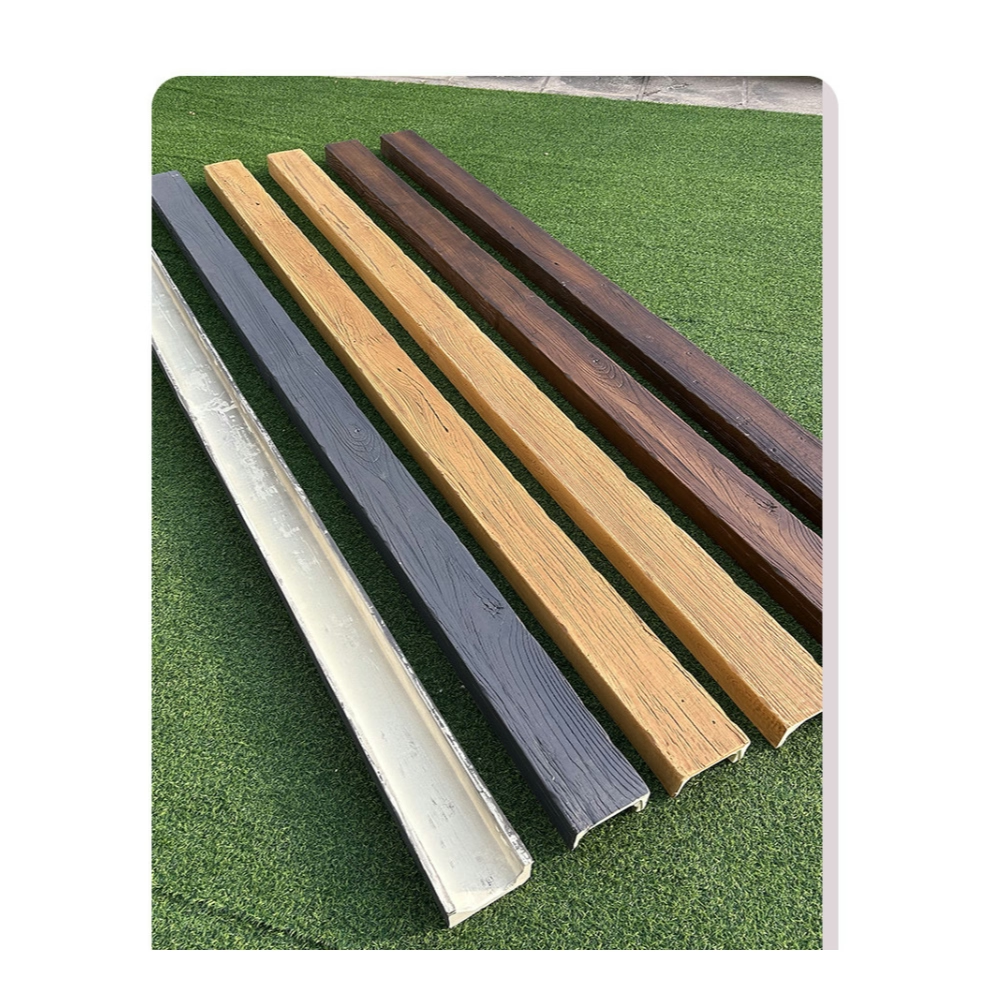
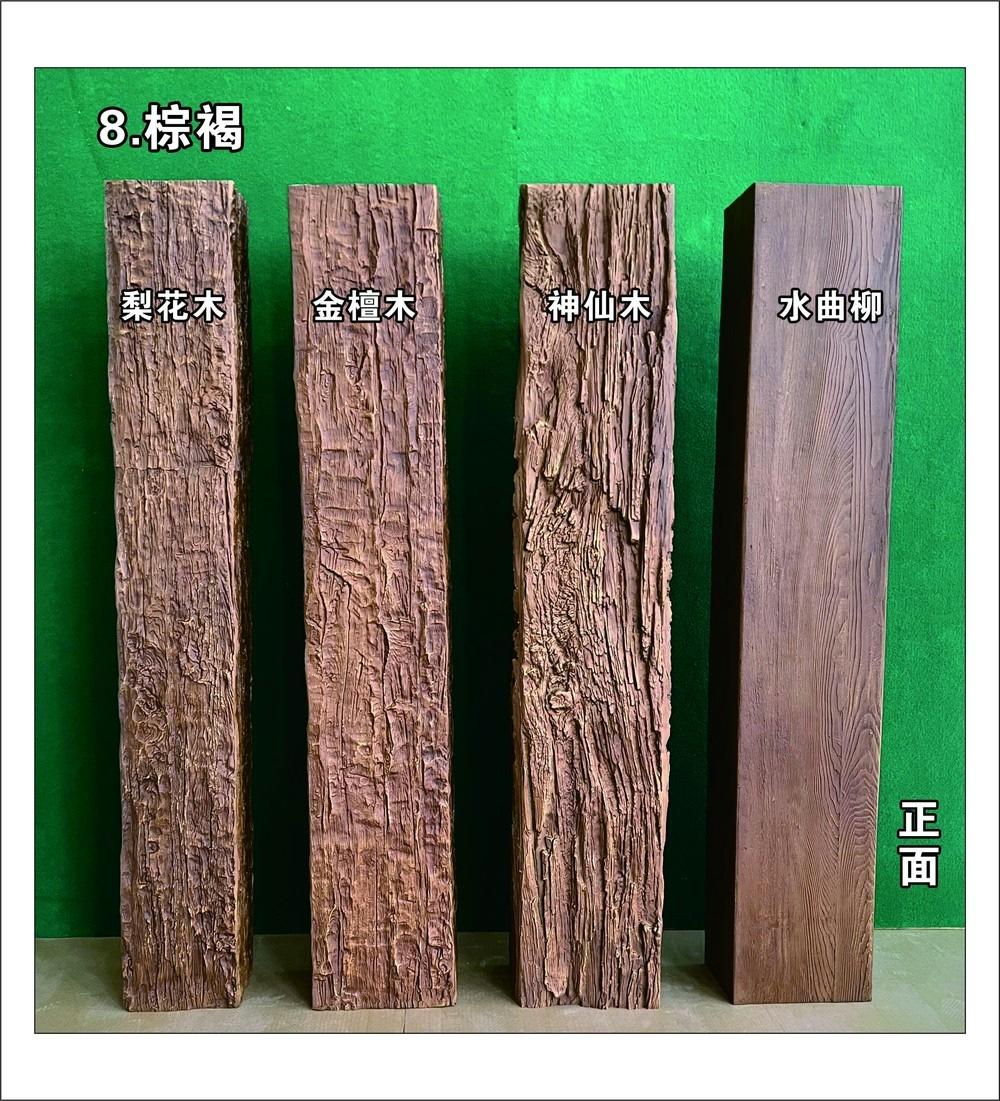
The supplier quoted the beams at $40 per linear foot. The freight forwarder quoted the ocean shipping at $8,000 for a 40-foot container. The buyer received the beams, and 15 percent were damaged. The supplier ate the cost of the damaged beams plus the freight plus the replacement shipping. The total loss was more than the profit on the original order.
The story is fictional, but the pattern is real. Damage in international shipments is one of the most expensive problems in the faux beam export business. The damage happens because the packaging is not adequate for the journey.
Heavy-duty export crating solutions are designed specifically to prevent this pattern. The crates are engineered for the realities of international shipping — the handling, the vibration, the stacking loads, the humidity, and the rough treatment that some shipments receive at transfer points.
What makes international shipment different
A faux beam shipment within a single country typically moves by truck from the factory to the warehouse or job site. The journey takes hours or days. The handling is at a few specific points — loading, unloading. The environment is controlled.
An international shipment faces very different conditions.
Longer transit time. Ocean freight takes 15 to 45 days depending on the origin and destination. Air freight takes 2 to 7 days. The longer the transit, the more cumulative exposure to vibration, temperature changes, and humidity variations.
Multiple handling points. A typical international shipment is handled 8 to 15 times — factory to truck, truck to port, port to container, container to ship, ship to port, port to truck, truck to warehouse, warehouse to truck, truck to job site. Each handling is an opportunity for impact damage.
Container environment. A shipping container is a closed steel box. Inside, the temperature can swing from -10°C to 50°C depending on the route and the season. Humidity can reach 90 percent or higher, causing condensation on the cargo. The container may be stacked below deck where vibration and impact are more severe.
Variable handling quality. Some ports and freight handlers are meticulous. Others are rough. The packaging must withstand the worst-case handling, not just the best-case.
Regulatory requirements. International shipments face import regulations including ISPM 15 for wood packaging, country-specific biosecurity requirements, and customs documentation. Non-compliant shipments can be refused entry.
A heavy-duty export crating solution addresses all of these conditions. The design is not just about protecting the beam — it is about ensuring the shipment clears customs and arrives at the destination in saleable condition.
Crating solution tiers
Different shipment requirements call for different levels of crating. Quality suppliers offer tiered solutions.
Standard export crate. Suitable for typical international shipments with normal handling. Wooden crate with plywood panels, internal blocking, foam wrapping, and ISPM 15 compliance. Standard export crates are appropriate for most shipments to developed markets with established freight infrastructure.
Heavy-duty export crate. Suitable for challenging shipments, valuable cargo, or buyers who require enhanced protection. Reinforced construction with thicker plywood, metal banding, additional internal bracing, and upgraded blocking. Heavy-duty crates are appropriate for shipments to emerging markets, fragile items, or buyers with strict quality requirements.
Premium export crate. Suitable for high-value cargo, specialty items, or extreme destinations. Engineered packaging with rack-style internal structure, foam-in-place blocking, climate control features, and documented performance testing. Premium crates are used for prototype shipments, luxury products, or shipments to extreme environments.
Custom engineered packaging. For unusual items, oversized cargo, or unique shipping requirements. Custom packaging is designed for the specific product and the specific journey. The cost is higher but the protection is optimized.
The tier selection depends on the product value, the destination, the buyer requirements, and the supplier's experience with similar shipments. Most buyers specify a minimum tier in their purchase orders.
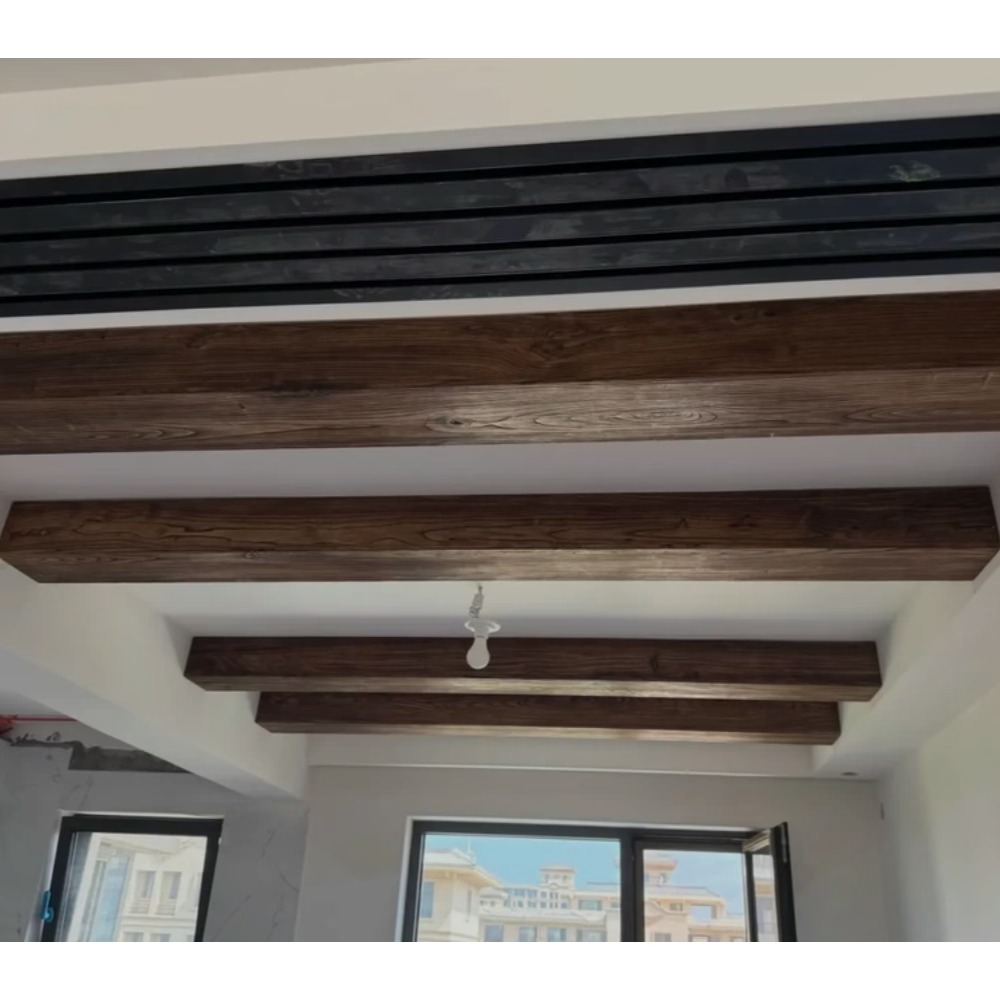
Crate design fundamentals
A well-designed export crate has several fundamental elements.
Sizing. The crate must be sized for the specific beam dimensions plus internal blocking and wrapping. Under-sized crates cause beam damage from pressure against the crate walls. Over-sized crates allow the beams to shift inside the crate.
Structural integrity. The crate must support its own weight, the beam weight, and the stacking load from other crates above it. The structural members (frame, panels, bracing) must be sized for the combined load with a safety margin.
Internal protection. The beams inside the crate must be protected from impact against the crate walls and from compression by the stacking load. Foam wrapping, edge protectors, and internal blocking provide this protection.
Moisture protection. The crate must protect the beams from humidity, condensation, and direct water exposure. Plastic wrap inside the crate, desiccant packs, and sealed seams provide moisture protection.
Ventilation. Some moisture protection requires ventilation to allow trapped humidity to escape. Vented crates balance moisture protection with air circulation.
Access. The crate must allow for inspection at transfer points without full disassembly. Hinged lids, removable panels, or access ports provide this capability.
Markings. Clear, durable markings on the crate identify the contents, the handling requirements, and the regulatory compliance. Markings should be weather-resistant and in multiple languages for international shipments.
A crate design that addresses all of these elements is comprehensive. A design that omits any element creates a vulnerability.
Common damage modes and prevention
Each common damage mode has a specific prevention strategy.
Corner and edge damage. Prevented by edge protectors on the beam corners and by clearance between the beam and the crate walls. The edge protectors absorb impact; the clearance prevents direct contact.
Face cracking. Prevented by adequate internal support along the beam length. The beam should not be allowed to flex under its own weight or the weight of stacked beams.
Surface abrasion. Prevented by foam wrapping on all beam faces and by clearance between wrapped beams in the crate. The foam provides a barrier; the clearance prevents face-to-face contact.
Compression damage. Prevented by stacking limits, weight-distribution in the container, and internal blocking that transfers stacking load directly to the pallet base.
Water damage. Prevented by moisture barriers, desiccant packs, and sealed crate construction. For shipments through humid routes, additional moisture protection may be needed.
Pest contamination. Prevented by ISPM 15 compliance, sealed construction, and pest-deterrent treatments where required by the destination country.
Loss and theft. Prevented by sealed construction, banded crates, and clear identification markings. Some high-value shipments use tamper-evident seals.
Each prevention strategy adds cost and complexity. The total prevention system addresses all credible damage modes within the budget constraints of the shipment.
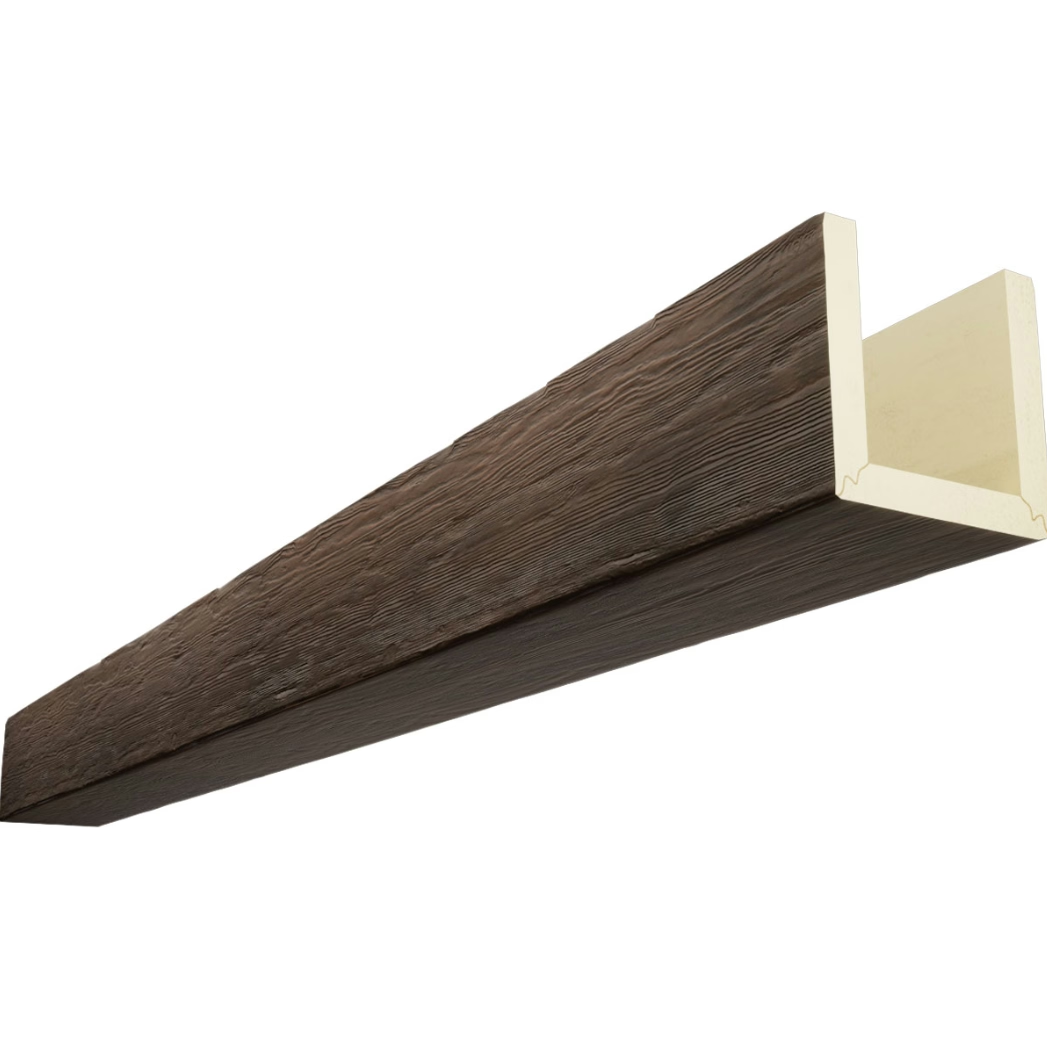
Quality control in packaging
The best crate design is worthless if it is not built to the specification. Quality control is essential.
Material inspection. Lumber, plywood, fasteners, and packaging materials should be inspected before use. Defective materials (knotted lumber, delaminated plywood, corroded fasteners) should be rejected.
Construction inspection. Each crate should be inspected during and after construction. The inspection checks dimensions, fastener patterns, structural integrity, and compliance with the specification.
Loading inspection. The beams should be inspected before being placed in the crate. Damaged or defective beams should not be shipped.
Final inspection. The loaded crate should be inspected before sealing. The inspection confirms proper beam placement, adequate blocking and wrapping, and correct markings.
Documentation. Each inspection should be documented. The documentation supports the quality control system and provides evidence of proper packaging if a damage claim arises.
Quality control is an investment that pays back in reduced damage claims and improved customer satisfaction. The cost of the quality control program is small relative to the cost of damaged shipments.
Supplier selection and partnership
The packaging supplier is a partner in the export business, not just a vendor.
Experience with similar products. The packaging supplier should have experience packaging faux beams or similar fragile architectural products. The experience translates into better packaging design and fewer surprises.
Capacity for the required volume. The packaging supplier should be able to handle the volume of crates needed for the shipment. Capacity constraints can delay shipments or force compromises in packaging quality.
Compliance expertise. The packaging supplier should understand ISPM 15, country-specific regulations, and carrier requirements. The expertise prevents compliance issues at the destination.
Communication and responsiveness. The packaging supplier should be responsive to changes in specifications, urgent requests, and problem resolution. The communication quality affects the entire export operation.
Continuous improvement. The packaging supplier should be open to feedback from damage claims and field reports. The continuous improvement process improves the packaging over time.
A long-term partnership with a reliable packaging supplier is more valuable than constantly switching suppliers based on price. The relationship builds expertise and trust that benefits both parties.
The economics of heavy-duty packaging
The cost of heavy-duty packaging is real, but the cost of damage is higher.
Direct packaging cost. Heavy-duty crates cost more than light-duty crates — typically 30 to 60 percent more. The additional cost is for better materials, more labor, and more components.
Damage cost. A damaged beam costs the supplier the replacement value plus the shipping cost plus any claim-related expenses. For a typical international shipment, a 5 percent damage rate can consume the entire profit margin on the shipment.
Customer relationship cost. A damaged shipment damages the supplier's reputation with the buyer. The buyer may switch to a competitor after a single major damage incident. The lifetime value of the customer relationship is much greater than the cost of any single shipment.
Insurance cost. Marine cargo insurance rates reflect the packaging quality. Better packaging may reduce the insurance premium. The savings are small but real.
Total cost of ownership. The total cost of ownership for a shipment includes the packaging cost, the damage cost, the insurance cost, and the relationship cost. Heavy-duty packaging typically has the lowest total cost of ownership despite the higher upfront cost.
The economics favor heavy-duty packaging for any shipment where the product value, the destination, or the buyer relationship warrants the additional protection. The investment pays back many times over the life of a long-term export business.
Technical References
ASTM standards cited in every specification
Test Data
Lab results from internal testing program
Updated 2026
Reviewed against current product specs