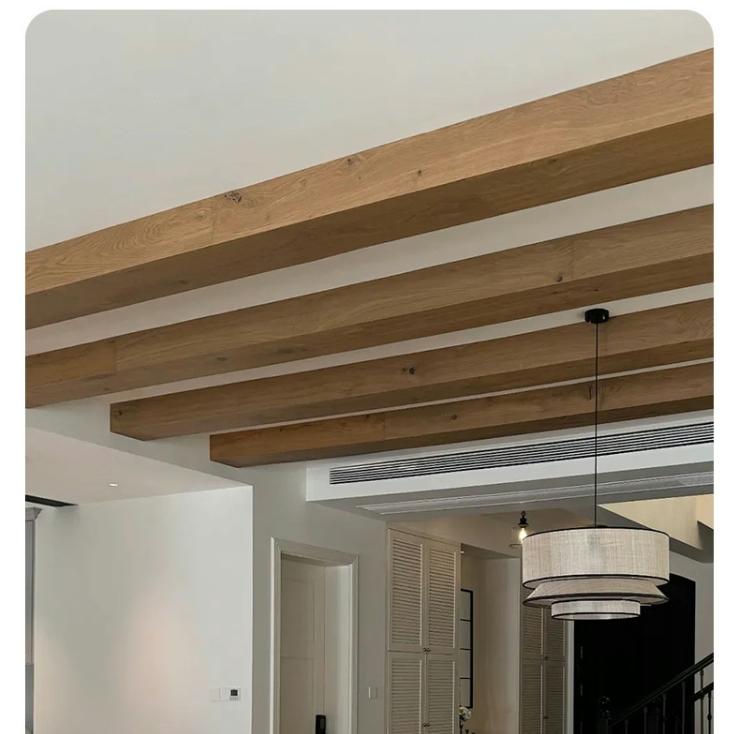
A polyurethane beam is fundamentally a foam product. The foam density — measured in kilograms per cubic meter — determines most of the physical properties that matter for commercial use: the weight, the rigidity, the impact resistance, the insulation value, the sound absorption, and the long-term durability.
Standard residential faux beams use 200 to 240 kg/m³ density foam. They are light, easy to install, and adequate for most home applications. They are not adequate for commercial projects where the beam will be touched, bumped, or subjected to frequent cleaning.
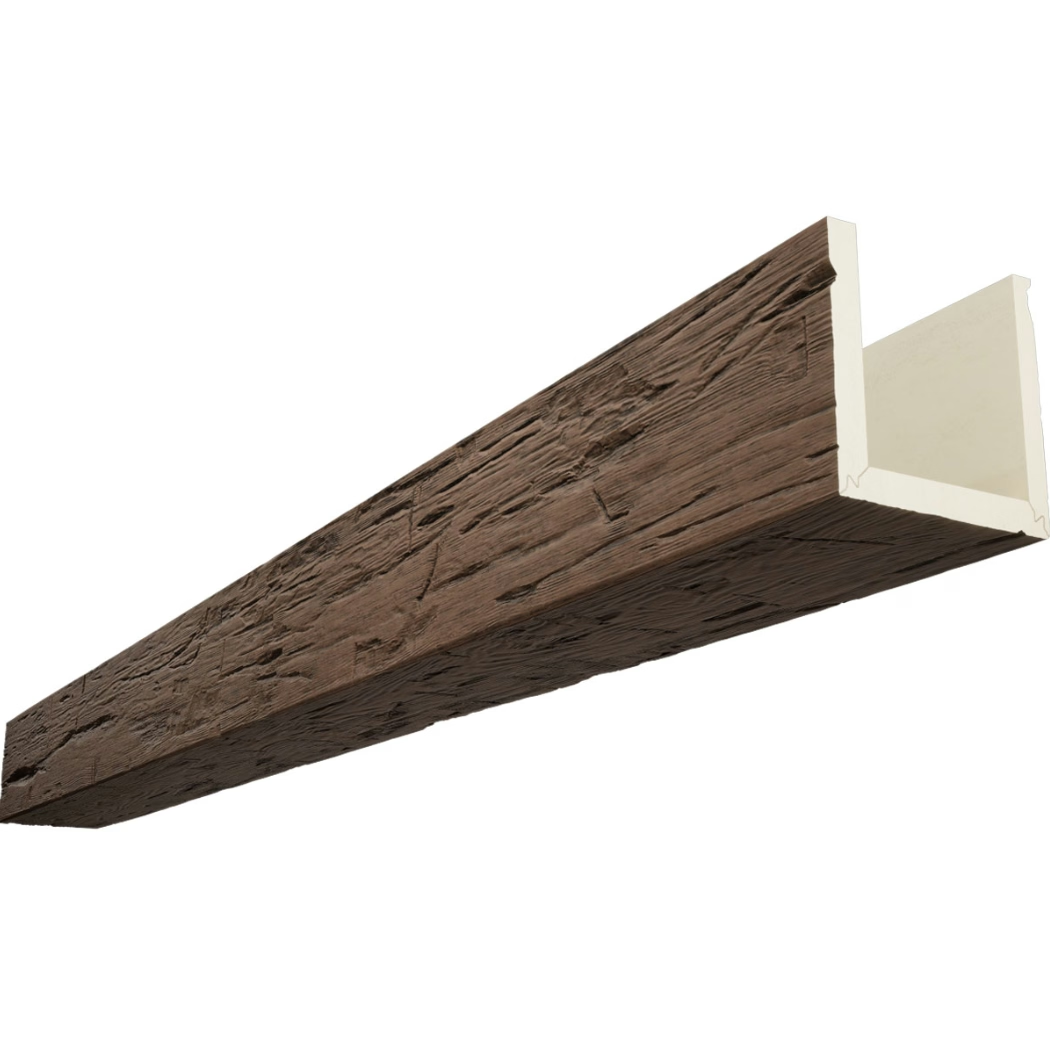
High density polyurethane faux wood beams use 320 to 400 kg/m³ foam — a 50 to 100 percent increase in density over standard product. The additional density makes the beam heavier, more rigid, more impact-resistant, and more durable. For commercial projects, the upgrade is worth the additional weight and cost.
What density means for beam performance
Foam density directly affects several beam properties.
Impact resistance. Higher density foam absorbs impact energy better and resists denting. A standard 240 kg/m³ beam will dent from a moderate bump. A 360 kg/m³ beam will resist the same bump without visible damage.
Rigidity. Higher density foam is more rigid. The beam resists flexing under load and maintains its shape over long spans. A standard beam may flex visibly when walked on (in a storage application) or when subjected to wind loads (in an exterior application).
Surface hardness. Higher density foam provides a harder substrate for the topcoat. The topcoat adheres better, resists denting, and maintains its texture under use.
Weight. Higher density foam weighs more per linear foot. A 10-by-10 hollow beam at 240 kg/m³ weighs about 4 pounds per linear foot. The same beam at 360 kg/m³ weighs about 6 pounds per linear foot. The additional weight affects handling and mounting.
Thermal insulation. Higher density foam has slightly better thermal insulation properties. The improvement is modest and not typically a primary design consideration for decorative beams.
Sound absorption. Higher density foam absorbs slightly less sound than lower density foam. The difference is rarely significant in beam applications.
Cost. Higher density foam costs more per unit volume. The additional material cost is partially offset by the improved performance and longer service life.
The density choice should match the application requirements. For commercial projects where impact resistance, rigidity, and durability matter, the high density specification is the right choice.
Density grades in commercial applications
Several density grades serve different commercial applications.
Standard commercial (240 to 280 kg/m³). Light commercial use — small offices, residential-style commercial spaces, low-traffic retail. Beams are touched occasionally and cleaned with standard methods.
Heavy commercial (280 to 320 kg/m³). Moderate commercial use — restaurants, hotel rooms, conference rooms. Beams are touched frequently and cleaned with commercial methods.
High usage commercial (320 to 360 kg/m³). Heavy commercial use — hotel lobbies, busy restaurants, retail floors. Beams are touched constantly and cleaned aggressively.
Premium commercial (360 to 400 kg/m³). Extreme commercial use — transportation hubs, healthcare facilities, high-traffic public spaces. Beams must withstand constant abuse and frequent intensive cleaning.
Specialty (400+ kg/m³). Custom applications where the requirements exceed standard product capabilities. Specialty formulations are developed for specific project needs.
The grade selection depends on the expected use level, the cleaning protocols, and the design life of the project. For most commercial projects, the heavy commercial or high usage commercial grade is appropriate.
Manufacturing high density beams
High density polyurethane beams require specialized manufacturing.
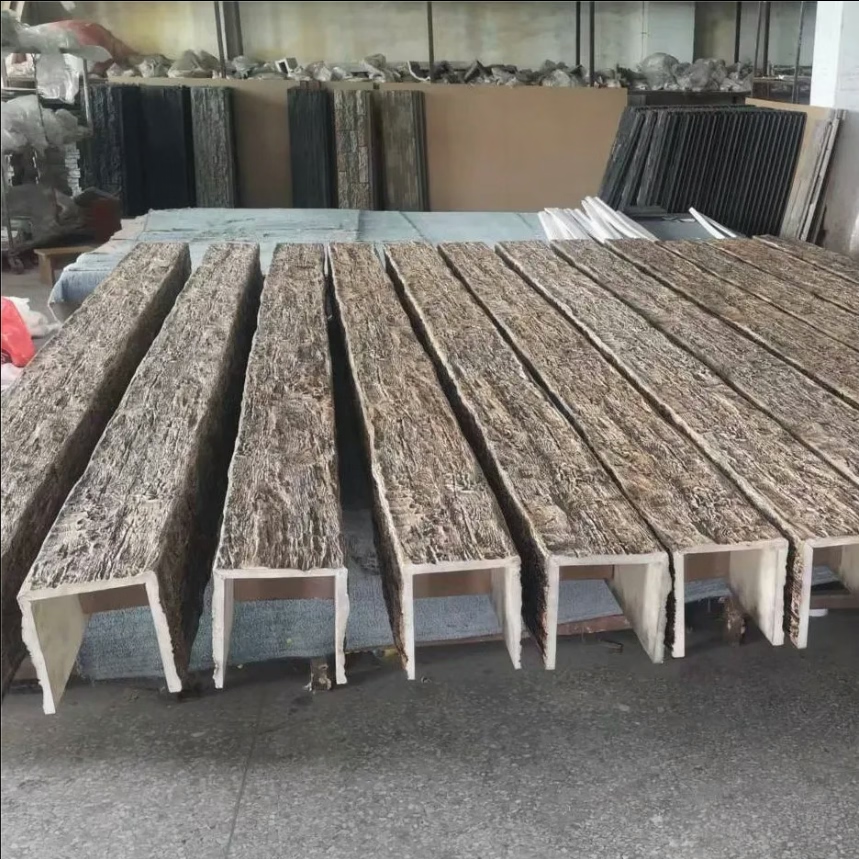
Higher pressure molding. Standard density foam can be molded at relatively low pressure. High density foam requires higher pressure during the molding process to achieve the target density throughout the part. The higher pressure demands more robust molds and more powerful molding equipment.
Chemical formulation differences. High density foam uses different polyol and isocyanate ratios than standard foam. The formulation affects the foam cell structure, the surface quality, and the curing characteristics.
Cure time. High density foam typically requires longer cure times before demolding. The longer cure allows the foam to fully develop its density and properties. The longer cycle time affects production capacity.
Quality control. High density foam requires tighter quality control to ensure consistent density throughout the part. Variations in density within a single beam can affect the performance. Quality manufacturers use density testing at multiple points on each beam.
Mold wear. The higher pressure and longer cure times associated with high density foam accelerate mold wear. Molds for high density beams have shorter service lives than molds for standard density beams, increasing the tooling cost.
The manufacturing complexity adds to the cost of high density beams. The cost is justified by the improved performance, but buyers should understand that the price reflects more than just material cost.

Topcoat system for high density beams
The topcoat system must match the foam density for optimal performance.
Topcoat adhesion. Higher density foam provides a better substrate for topcoat adhesion. The denser surface holds the topcoat more securely. Standard topcoats may underperform on lower density foam.
Topcoat thickness. High density beams can support thicker topcoats without cracking or delamination. The typical commercial topcoat thickness for high density foam is 6 to 10 mils, compared to 4 to 6 mils for standard density.
Topcoat chemistry. The topcoat chemistry should be matched to the foam density. A two-part aliphatic polyurethane topcoat is appropriate for high density beams. Single-component topcoats may not provide adequate durability for high usage applications.
Surface preparation. Higher density foam may require different surface preparation than lower density foam. The preparation affects topcoat adhesion and final appearance.
Multiple coat systems. High density beams often receive a multi-coat topcoat system — primer, base coat, and topcoat. The multi-coat system provides better protection and a more consistent appearance.
The topcoat is part of the performance system. A high density foam with a standard topcoat underperforms a standard density foam with a premium topcoat. The full system must be specified together.
Applications in commercial projects
Several commercial applications particularly benefit from high density beams.
Hotel and resort interiors. Guest rooms, lobby areas, restaurants, and public spaces all benefit from the durability of high density beams. The beams need to look good for years despite constant contact and cleaning.
Restaurant and food service. Dining rooms, bar areas, and entryways. The beams are subject to food spills, drink splashes, and constant cleaning. High density beams with proper topcoats handle these conditions.
Retail environments. Store entrances, fitting rooms, checkout areas, and display spaces. The beams may be touched constantly by customers and staff. High density beams maintain their appearance.
Office buildings. Lobbies, conference centers, executive areas. The beams are part of the corporate image and need to look professional for years.
Healthcare facilities. Hospital lobbies, waiting areas, and chapel spaces. The beams need to withstand aggressive cleaning with hospital-grade disinfectants.
Educational facilities. University student unions, lecture halls, and common areas. The beams need to handle student traffic and frequent cleaning.
Transportation. Airport terminals, train stations, and bus depots. The beams are subject to extreme traffic and must meet strict code requirements.
In each of these applications, the high density specification is appropriate. The investment in higher density foam pays back through longer service life and better appearance retention.
Comparing high density to standard product
The cost-benefit analysis for high density beams depends on the application.
Material cost premium. High density beams run 20 to 50 percent more than standard density. The exact amount depends on the density grade and the supplier.
Installation cost. The additional weight of high density beams may require additional labor for handling and mounting. Two installers may be needed where one installer could handle a standard beam.
Maintenance cost. High density beams require less frequent touch-up and refinishing. Over a 15 to 20 year service life, the maintenance savings can exceed the initial cost premium.
Replacement cost. High density beams last longer before needing replacement. The replacement cost is deferred and may be avoided entirely if the service life exceeds the design life of the building.
Reputation cost. Beams that look shabby in a commercial space damage the brand reputation. High density beams maintain their appearance longer.
Total cost of ownership. Over a typical commercial project lifecycle, high density beams have a lower total cost of ownership than standard density beams despite the higher initial cost.
The cost-benefit analysis favors high density beams for any commercial application where the beam is visible, touched, or subject to frequent cleaning.
Working with designers on commercial projects
Commercial projects are typically designed by interior design firms with sector expertise. The designer brings specific requirements.
Material specification. The designer specifies the beam by manufacturer, profile, finish, and density grade. The specification should reference the appropriate density for the application.
Sample approval. The designer reviews physical samples before specifying. The samples should include both the profile and the finish, and should represent the actual product quality.
Custom finishes. Brand-specific colors or textures may require custom finishing. The lead time for custom finishes varies based on the supplier and the complexity.
Lifecycle planning. The designer considers the lifecycle of the materials — how they will age, how they will be maintained, when they will need replacement. The beam specification should support the lifecycle plan.
Coordination with other trades. The beam installation is one of many trades on a commercial project. The designer coordinates the timing and the interface with other trades.
The designer is the supplier's partner in delivering a successful project. Communication, sample availability, and responsiveness to the designer's questions contribute to a smooth project.
Testing and certification
High density beams should be backed by appropriate testing and certification.
Density test reports. Documentation of the foam density per ASTM D1622 or equivalent. The report should show the test method, the test results, and the testing laboratory accreditation.
Fire test reports. ASTM E84 documentation showing the flame spread index and smoke developed index for the specific product configuration.
VOC documentation. CDPH Standard Method or GREENGUARD Gold certification for projects that require low-emitting materials.
Performance test reports. Documentation of impact resistance, abrasion resistance, chemical resistance, and other performance criteria relevant to the application.
Manufacturer warranty. A warranty that covers the product for the expected service life. The warranty terms should be reviewed and understood before purchase.
Reference projects. Documentation of similar projects where the same product has performed well. Reference projects provide confidence in the product's real-world performance.
The testing and certification documentation supports the specification, the submittal process, and the long-term performance of the project. Quality suppliers have this documentation readily available.
Technical References
ASTM standards cited in every specification
Test Data
Lab results from internal testing program
Updated 2026
Reviewed against current product specs