A decorative beam in a busy restaurant is a target. Guests stand on chairs to reach for something. Staff carry trays and equipment past the beam. Cleaning crews bump the beam with mops and ladders. The beam over a hotel lobby registration desk is touched by every guest who leans on the counter.
A standard faux timber beam in these conditions shows wear within months — the texture is flattened at the touch points, the finish is rubbed away, the foam is dented by impacts. Within two years, the beam looks shabby and may need replacement.
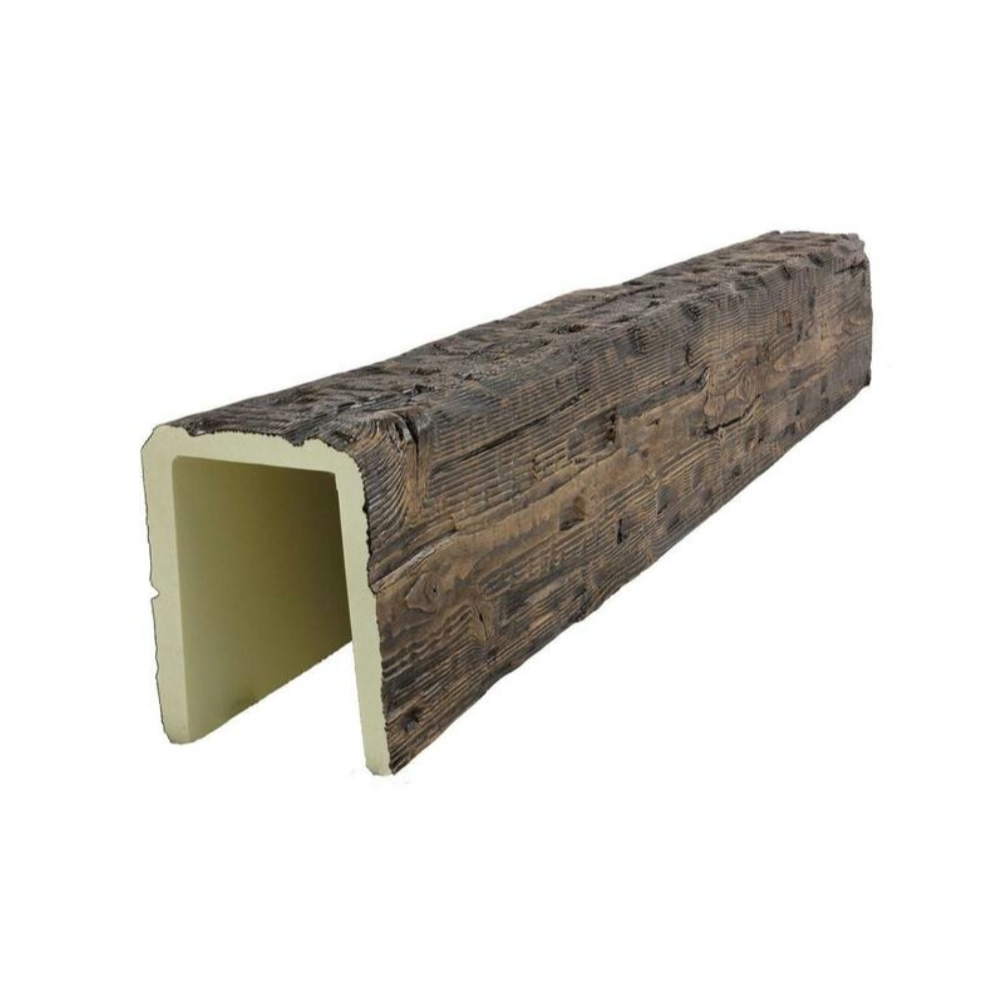
Impact-resistant decorative faux timber beams are engineered for these conditions. The foam density, the topcoat system, and the construction details all address the specific impact and wear patterns of busy environments.
What "impact-resistant" means in beam manufacturing
Several design choices contribute to impact resistance.
High density foam. Impact resistance starts with the foam. Higher density foam (320 to 400 kg/m³) absorbs impact energy better than standard foam. The beam dents less from the same impact.
Reinforced surface layer. Some impact-resistant beams have a reinforced surface layer — a higher-density skin molded into the beam face during the manufacturing process. The skin is typically 2 to 4 mm thick and provides additional impact resistance.
Fiber reinforcement. Premium impact-resistant beams may include fiber reinforcement — short fibers of glass, carbon, or aramid mixed into the foam during molding. The fibers add impact strength and crack resistance.
Topcoat with ceramic particles. The topcoat can include ceramic particles (aluminum oxide, silicon carbide, or similar) that increase surface hardness and impact resistance. The ceramic particles are invisible in the finished beam but contribute significantly to durability.
Capped edges and corners. The edges and corners of impact-resistant beams are often reinforced with additional foam density or a thicker topcoat buildup. These are the areas most likely to be impacted.
Multi-layer topcoat. A multi-layer topcoat system — primer, base coat, topcoat — provides better impact resistance than a single-layer topcoat. Each layer absorbs part of the impact energy.
The combination of these features creates a beam that can handle significant abuse while maintaining its appearance.
Quantifying impact resistance
Several standardized tests measure impact resistance.
ASTM D2794 (Falling Weight Impact). A weight is dropped onto the beam surface from increasing heights until the surface fails. The result is expressed as the impact energy in inch-pounds that the surface can absorb without failure. Standard polyurethane beams typically fail at 20 to 40 inch-pounds. Impact-resistant beams survive 60 to 100 inch-pounds.
ASTM D4226 (Impact Resistance of Rigid Polyurethane Beams). A specific test for rigid polyurethane products. The test measures the energy absorbed before cracking or penetration.
Gardner impact test. A falling dart test that measures impact resistance on thin or flexible materials. Adapted for use on polyurethane beams.
Taber abrasion (ASTM D4060). Measures surface wear from repeated abrasion. While not strictly an impact test, abrasion resistance correlates with overall surface durability.
Drop test (manufacturer specific). Many manufacturers have proprietary drop tests that simulate the specific impacts the beam may experience in service. The test results are used to qualify the product for specific applications.
The test data should be documented and available for review. The documentation supports the product specification and provides confidence in the performance.

Real-world impact scenarios
Impact-resistant beams are designed for specific real-world scenarios.
Hotel lobby guest contact. Guests leaning against beams, brushing past, or touching them while waiting. The impact is low energy but high frequency. The beam needs to handle repeated low-energy contact without showing wear.
Restaurant staff and equipment. Waitstaff carrying trays, kitchen staff moving equipment, cleaning crews with ladders and carts. The impact energy is moderate and the frequency is high. The beam needs to handle moderate impacts without denting.
Retail customer contact. Customers reaching for products, browsing, leaning on displays. The impact energy is low to moderate. The beam needs to handle the contact without showing wear patterns.
Public space abuse. In some public spaces (transit stations, public restrooms), the beam may be subject to intentional damage — kicking, hitting, graffiti. Anti-vandalism specifications may be required in addition to impact resistance.
Cleaning equipment. Carts, ladders, and cleaning equipment may bump the beam. The impact energy is moderate but the frequency may be daily.
Moving furniture and fixtures. During renovations or major cleaning, furniture and fixtures may be moved through the space and impact the beam. The impact energy can be high.
Each scenario places different demands on the beam. The impact-resistant specification should address the worst-case combination of impact energy, frequency, and location.
Topcoat chemistry for impact resistance
The topcoat is the first line of defense against impact damage.
Two-part aliphatic polyurethane. The most durable topcoat for impact resistance. The two-part chemistry creates a cross-linked film that is harder and more flexible than single-component topcoats. The aliphatic formulation resists yellowing.
Ceramic-infused polyurethane. Polyurethane with embedded ceramic particles for additional hardness. The particles are typically 5 to 50 microns in size and are uniformly distributed in the topcoat.
Fluoropolymer topcoat. Excellent chemical and stain resistance. Less impact-resistant than polyurethane but appropriate where chemical exposure is the primary concern.
Polyurea topcoat. Very fast cure, excellent impact resistance. Used in some specialty applications but less common in decorative beams due to cost.
Acrylic urethane. A hybrid chemistry that balances cost and performance. Better than straight acrylic but not as durable as two-part polyurethane.
The topcoat selection depends on the impact resistance requirements, the chemical exposure, the UV exposure, and the cost constraints. For most commercial applications, two-part aliphatic polyurethane with ceramic particles provides the best balance.
Installation considerations for impact-resistant beams
The installation method should support the impact resistance of the beam.
Secure mounting. Impact-resistant beams must be securely mounted. A beam that shifts under impact will show wear at the mounting points. The mounting hardware should be rated for the beam weight plus impact loads.
Continuous backing. Where the beam may be impacted from the side (bumped by carts, equipment), continuous backing along the beam length prevents localized damage. The backing can be a wood cleat inside the beam or a structural element behind the beam.
Reinforced mounting points. The mounting brackets should be reinforced to handle the load transferred during impact. Standard residential brackets may not be adequate.
Multiple attachment points. Beams that may be impacted should have attachment points every 12 to 18 inches, not the standard 24 to 36 inches. More attachment points distribute the load better.
Inspection schedule. Impact-resistant beams should be inspected regularly for signs of damage. Early identification of damage allows for repair before the damage becomes significant.
The installation should support the performance characteristics of the beam. A well-installed impact-resistant beam performs as specified; a poorly installed beam underperforms.
Maintenance of impact-resistant beams
Even impact-resistant beams require maintenance to maintain their appearance.
Regular cleaning. Standard commercial cleaning protocols — dusting, wiping, spot cleaning. The cleaning chemicals should be compatible with the topcoat system.
Periodic inspection. Visual inspection every 6 to 12 months. Look for signs of impact damage, wear patterns, finish deterioration, or substrate issues.
Touch-up repair. Localized damage should be repaired promptly. The repair prevents water ingress, further damage, and visible wear patterns. Touch-up kits are available from the beam manufacturer.
Refinishing. Periodically, the topcoat may need to be refreshed. The frequency depends on the environment and the use level. A fresh topcoat restores the surface protection without replacing the beam.
Replacement planning. Even impact-resistant beams eventually need replacement. The replacement should be planned as part of a broader renovation rather than as an emergency repair.
A maintenance plan developed at the time of installation helps the facility manager budget for and schedule the required work.
Cost-benefit analysis
The cost premium for impact-resistant beams varies by specification level.
Standard faux timber beam. Baseline cost per linear foot depending on profile and finish.
Heavy commercial grade. 20 to 40 percent premium over standard. Moderate impact resistance suitable for most commercial applications.
High impact commercial grade. 40 to 70 percent premium. High impact resistance for demanding applications.
Premium impact-resistant specification. 70 to 100 percent premium. Maximum impact resistance for extreme applications.
The cost premium should be compared against the lifecycle cost savings.
Maintenance savings. Impact-resistant beams require less frequent touch-up and refinishing. Over a 15 to 20 year service life, the savings can be significant.
Replacement avoidance. Impact-resistant beams last longer before needing replacement. The replacement cost is deferred or avoided entirely.
Reputation protection. Beams that maintain their appearance protect the brand reputation. The cost of brand damage from shabby beams is hard to quantify but real.
Insurance cost. Some insurance carriers offer reduced premiums for facilities with impact-resistant materials. The savings are small but real.
For commercial applications where the beam is visible, touched, or subject to impacts, the impact-resistant specification is the right choice. The cost premium pays back through reduced maintenance, longer service life, and protected reputation.
Selecting the right specification
The right specification depends on the application requirements.
Low-impact commercial applications. Offices, hotel rooms, conference rooms with limited public contact. Standard heavy commercial grade may be sufficient.
Moderate-impact commercial applications. Restaurant dining rooms, retail floors, hotel lobbies. High impact commercial grade provides the right balance of durability and cost.
High-impact commercial applications. Transportation hubs, public spaces, healthcare facilities. Premium impact-resistant specification for maximum durability.
Specialty applications. Custom requirements — extreme abuse, chemical exposure, unique design constraints. Custom specification developed with the manufacturer.
The specification should be documented with the expected use level, the testing requirements, and the performance criteria. The documentation supports the product selection and the long-term performance of the installation.
Technical References
ASTM standards cited in every specification
Test Data
Lab results from internal testing program
Updated 2026
Reviewed against current product specs


