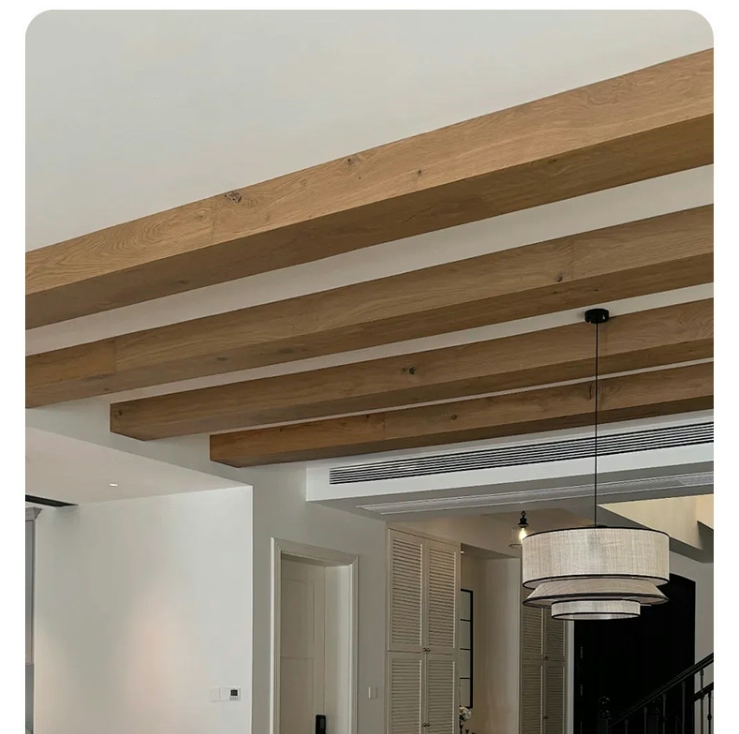
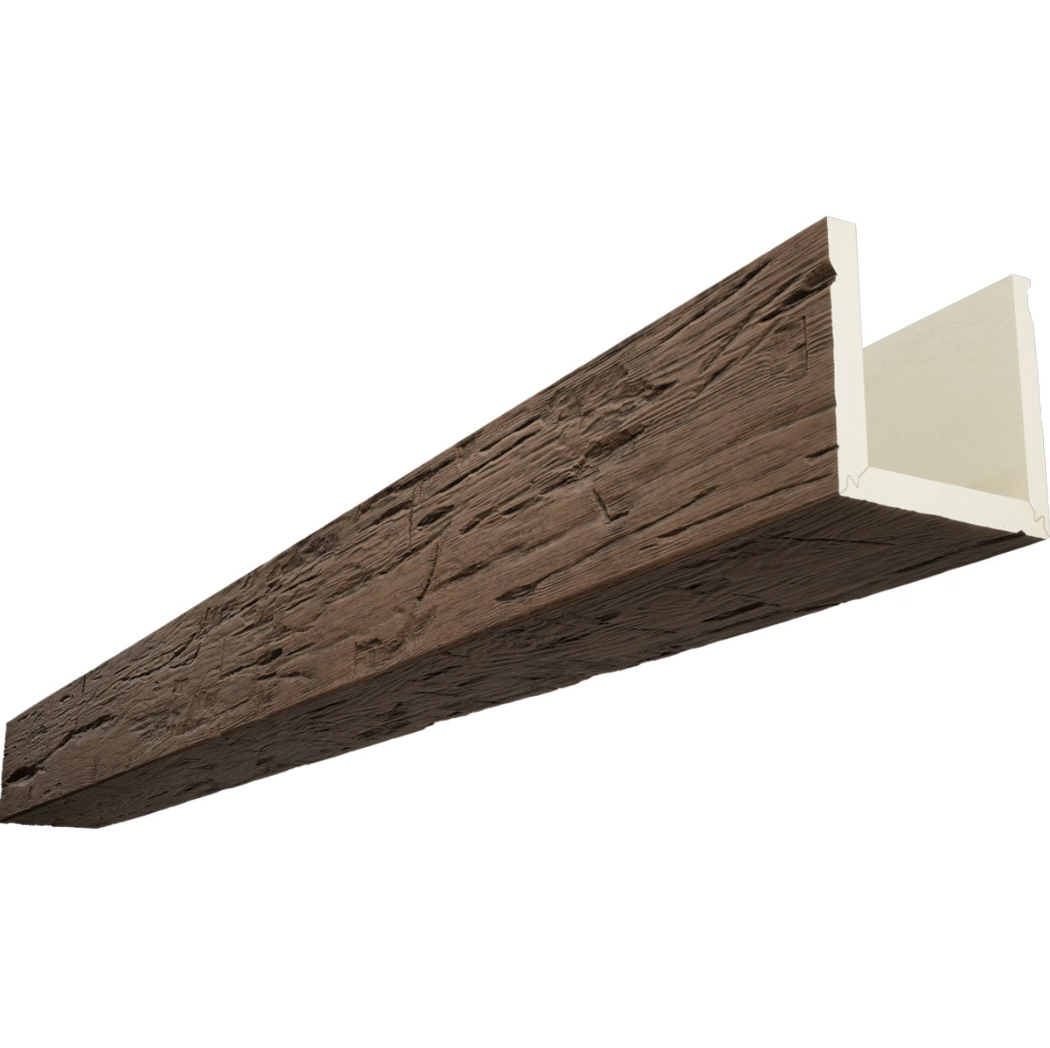
Walk onto a job site where an experienced contractor is installing a polyurethane faux beam, and the work moves differently than with traditional materials. The crew carries the beams easily, sets mounting hardware without heavy tools, and finishes the project in hours rather than days. The polyurethane construction rewards that workflow in measurable ways.
Why polyurethane specifically
The PU faux beam category exists because the material offers specific properties contractors value. It's not always the right answer — solid wood is better in certain applications, and steel is better in others — but in the use cases where PU fits, it fits very well.
The properties that matter most for contractor work include:
Weight — a hollow PU beam at 12 feet length weighs perhaps 15 pounds, where an equivalent looking solid wood beam would weigh 80 to 100 pounds. Two crew members can carry and position PU beams without machinery, which changes the install logistics considerably.
Dimensional stability — PU beams don't warp, twist, or cup with humidity changes the way solid wood does. What arrives on site stays straight and true through years of service.
Finish quality — the polyurethane surface accepts finishes that are part of the material itself rather than applied stains that fade unevenly over time.
Hollow construction — the cavity inside a PU beam is useful for running wire, hiding structural reinforcement, mounting brackets, and integrating lighting.
Predictable behavior — PU beams of the same product line behave the same way. No knots, no grain surprises, no variability between pieces to complicate installation.
The professional product line structure
Manufacturers serving the contractor market tend to structure their PU beam offerings in a specific way. A typical professional line includes:
Standard profiles in standard sizes — the most common beam dimensions and profiles as stock products that ship immediately. These cover roughly 80% of typical projects.
Standard finishes across the line — a moderate palette of wood-look finishes, each designed to match real species well enough to pass close inspection. The limited palette lets manufacturers maintain color consistency batch after batch.
Matching accessories — end caps, corbels, beam-to-corner transitions, and decorative strapping designed to integrate with the standard beam profiles. A complete package from the same supplier.
Custom capability beyond the standards — when the project calls for a profile, finish, or dimension not in the standard catalog, the manufacturer can produce custom product to order. Lead times are longer and minimum orders apply, but the capability exists.
This structure lets contractors handle most projects quickly from stock while preserving the option to handle unusual projects through the same supplier relationship.
What the contractor pays for
The price gap between professional-grade PU beams and economy PU beams reflects real differences in product. A few specific items justify the difference:
Higher-density foam cores — heavier, denser foam resists denting better and provides more consistent surface for finish adhesion.
Thicker polyurethane walls — better impact resistance, more secure fastener hold, less flex under load.
Better internal reinforcement — blocking plates, fiberglass cores, and structural ribs that aren't present in economy products.
More rigorous finishing — more coats, longer cure times, stricter quality control.
Tighter tolerances — beams that arrive within a millimeter of spec'd dimensions rather than two or three.
These aren't visible differences until they become apparent during installation or years later when the finish fades. The professional product is more expensive because it does more, not because of marketing.
How professional-grade installs differ
A contractor installing professional-grade PU beams follows a workflow that's been refined through thousands of projects. Some of those refinements are worth knowing:
Pre-project planning — measuring the exact beam positions, checking structure above, ordering with enough lead time for the right color and size to arrive without scrambling.
Crew briefing — making sure everyone on the crew knows the install sequence, the bracket system being used, and how the joinery works. Five minutes of briefing saves an hour of confusion.
Mounting hardware verification — the contractor checks the supplied mounting hardware against the ceiling type before installation day. Discovering at 10 am that the supplied brackets don't work with the existing structure is a bad day. Checking at the shop the day before is good practice.
Layout verification — chalk lines, laser lines, or string reference. Never install on eyeball alignment.
Sequential installation — end cleats first, then intermediate cleats, then beams. Don't try to install hardware and beams in mixed order.

The professional-grade product makes this workflow more reliable because the pieces fit together predictably. The contractor doesn't waste time compensating for inconsistencies.
Why contractors develop brand loyalty
Beam suppliers vary significantly in product quality, finish consistency, lead times, customer service, and problem resolution. Contractors learn quickly which suppliers make their life easier and which make every project harder.
Brand loyalty in this category is real. A contractor who finds a PU beam supplier with the right balance of product quality, service, and pricing tends to stay with that supplier across many projects and many years. Switching suppliers means relearning catalogs, finding new bracket sources, and occasionally dealing with surprises from suppliers who don't know their craft yet.
For contractors new to PU beam installation, the smart path is to find a supplier with a long track record in the contractor market and learn their product line well before committing to major projects. The initial effort of building the relationship pays back across every future project.
When professional-grade is overkill
Not every project justifies the professional-grade premium. A small residential bedroom accent beam in a single-piece install will perform identically with economy or professional product. The work hours saved by faster install are small in absolute terms, and the quality differences over decades may not matter in a room used moderately.
The professional product earns its premium on projects where multiple beams are installed, where finishes are visible across large areas, where the project timeline is tight, and where the contractor's reputation is on the line for long-term performance.
The bottom line for contractors
Choosing professional-grade PU faux beams is choosing fewer problems, faster installs, and better project outcomes. The product costs more per unit but less per project when you account for the total picture — labor, callbacks, client satisfaction, repeat business.
That's the calculation contractors actually run, not the per-piece price comparison that retail customers see.
Technical References
ASTM standards cited in every specification
Test Data
Lab results from internal testing program
Updated 2026
Reviewed against current product specs