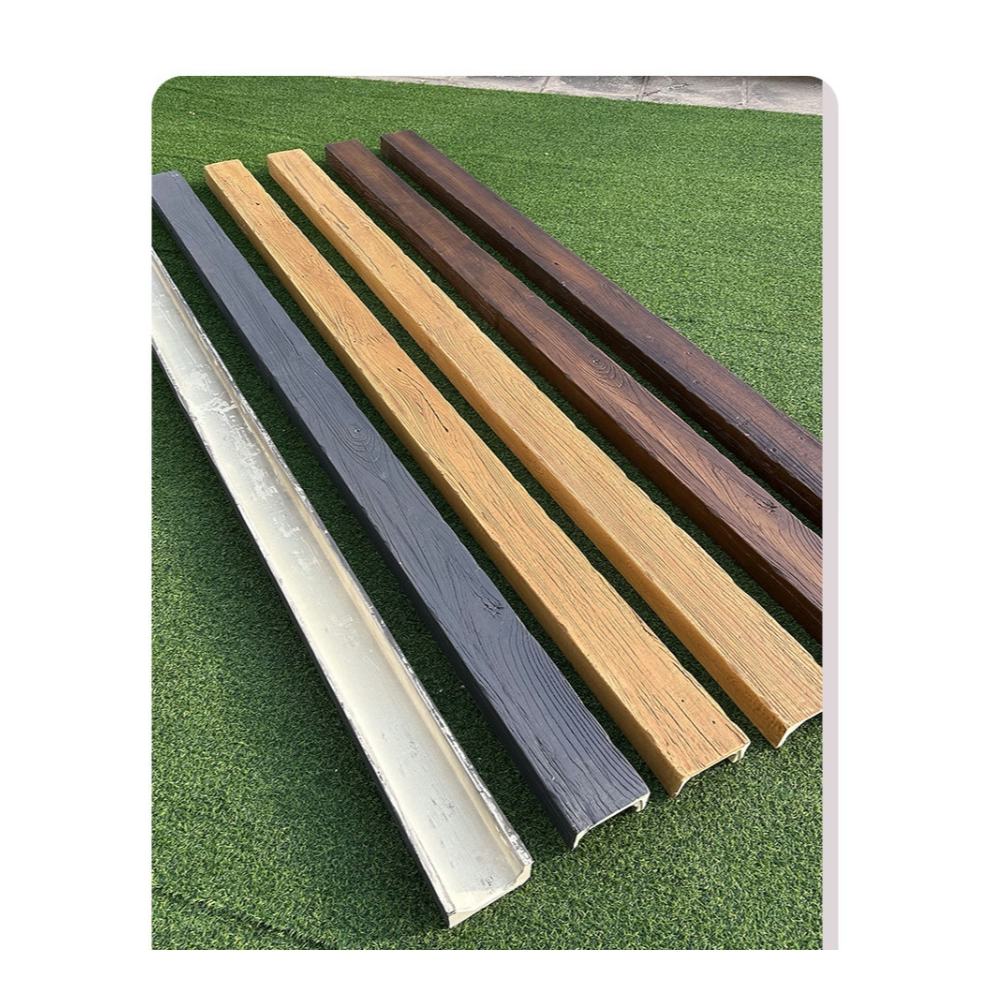
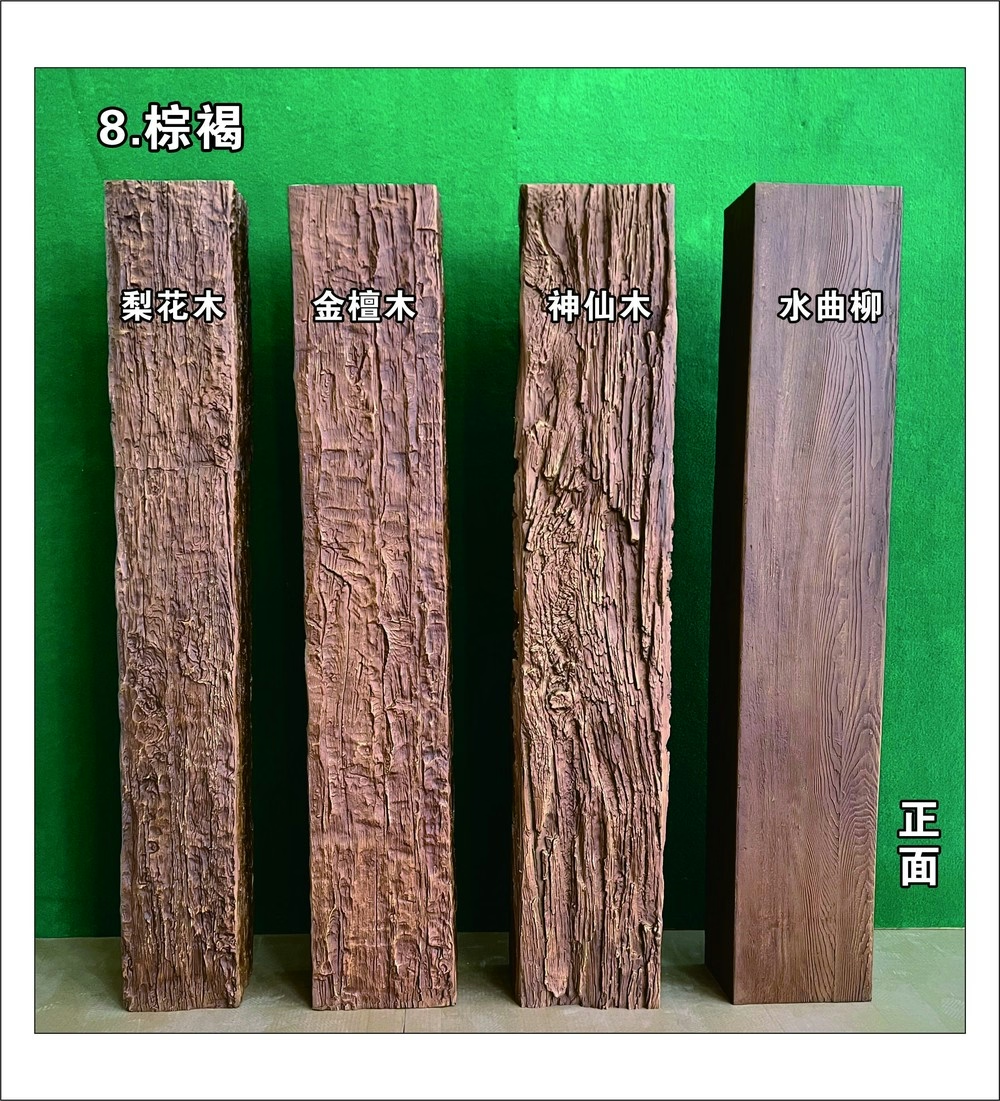
Most faux beam installations hide the brackets inside the beam cavity. The beam appears to magically hover against the ceiling or float between walls. The hardware disappears into the architectural composition.
Surface mount brackets take the opposite approach. The brackets are visible — by design. They become part of the visual conversation, often taking on the aesthetic language of forged iron, rough steel, or finished metal. Some installations rely on the bracket as much as the beam for visual impact.
The architectural role of surface mount brackets
The decision to use surface mount brackets rather than concealed hardware is fundamentally an aesthetic choice. The brackets can read as:
Industrial hardware — black iron angles, forged steel yokes, and similar heavy industrial-looking fittings. Common in commercial spaces with industrial design vocabulary — converted warehouses, modern restaurant interiors, urban lofts.
Rustic timber frame aesthetic — the bracket looks like traditional timber frame joinery, in metal rather than wood. Often paired with rough-sawn faux timber beams for an authentic timber frame look without the structural complexity.
Modern minimalist — simple flat plates or angles in clean finishes, allowing the beam to read as supported by refined hardware rather than rough brackets.
Decorative strap — long flat straps that wrap the beam at the support point, often crossing multiple sides of the beam for visual interest. The strap is more ornamental than structural but provides real mounting function.
Each of these approaches uses the bracket as part of the architectural composition. The designer is specifying the bracket appearance alongside the beam appearance.
Structural function of surface mount brackets
The structural job of a surface mount bracket is more demanding than the job of a concealed bracket. With concealed hardware, the beam carries the load and the bracket just attaches it. With surface mount brackets, the bracket itself is visible and has to look right while carrying the full load.
For heavy-duty applications, surface mount brackets are typically:
Steel plate construction — quarter-inch or thicker steel plate, laser cut or water-jet cut to shape. Welded assemblies where needed for complex geometry.
Cast iron or forged steel — traditional materials for the highest-aesthetic brackets. Significantly more expensive than plate steel.
Heavy gauge structural shapes — L-shaped brackets from structural angles, often two pieces welded into a saddle configuration that wraps the beam.
The structural analysis for these brackets is more complex than for concealed brackets because the geometry is more complex. The connection between the bracket and the wall or ceiling has to handle the full beam load. The bracket geometry has to handle the moment created by the load offset from the wall attachment points.
For seismic zones, surface mount brackets require specific engineering to handle lateral loads. The visible bracket alone often can't satisfy lateral load requirements — concealed lateral bracing behind the beam may be needed in addition to the visible bracket.
Where surface mount brackets make sense
The use cases for heavy-duty surface mount brackets include:
Commercial hospitality design — restaurants, hotels, breweries, and similar venues frequently use industrial-vintage aesthetics. Exposed brackets with substantial visual presence are part of the design language.
Industrial conversion spaces — converted warehouses and factories with high ceilings, exposed mechanical systems, and rough industrial finishes.
Rustic and mountain home design — log homes, ski chalets, mountain retreats where the design vocabulary is heavy timber and iron.
Craftsman and bungalow aesthetics — exposed rafter tails, visible beams, decorative brackets at beam-to-wall junctions.
Custom residential feature installations — accent beams at entryways, decorative beams in dining rooms, similar single-feature installations where the bracket becomes a focal point.
For these and similar aesthetics, the bracket is more than hardware — it's part of the design specification.
Bracket finishes that matter
The finish on a visible surface mount bracket is part of the architectural composition. The most common finishes include:
Matte black powder coat — the most common finish for visible beam brackets. Black recedes visually and works across many aesthetic styles.
Oil-rubbed bronze — for traditional and craftsman aesthetics. Warm tone that pairs well with timber.
Brushed or polished steel — for modern and industrial applications. Brushed is more forgiving visually; polished is more reflective and dramatic.
Hand-forged iron look — for the highest-end rustic applications. Authentic forged iron with hammer marks, variations, and patina.
Custom painted finishes — matching the bracket color to other metalwork in the space, often coordinated with cabinet hardware, plumbing fixtures, or lighting.
The finish quality matters more on a visible bracket than a hidden one because it's always in plain sight. Premium manufacturers produce finishes that look good up close and have the durability to maintain that appearance over decades.

Installation depth of surface mount brackets
The installation of surface mount brackets requires more precision than concealed brackets because the visual result is visible. The bracket position has to be exact — if it's 3 millimeters off center, that misalignment shows.
The install process typically follows:
Verification of bracket positions — every bracket location gets verified against the layout drawings before installation. Beam position depends on the bracket being in exactly the right spot.
Bracket installation — the bracket is installed first, leveled and plumbed exactly. Provisional fasteners hold it in place during adjustment. Final fasteners secure it permanently after the layout is confirmed.
Beam placement — the beam drops onto the bracket or engages with the bracket geometry. The fit should be precise but with enough tolerance to allow installation.
Final positioning — small adjustments at the beam-to-bracket interface to bring the beam to perfect position. Shims or adjustment slots in the bracket accommodate the fine adjustments.
Fastening — the beam is fastened to the bracket through visible fastening points that become part of the visual composition. Black fasteners on a black bracket disappear; bronze fasteners on a bronze bracket blend in.
Aesthetic coordination with the beam
A heavy-duty surface mount bracket and the faux timber beam it supports share the visual composition. The specifications should be coordinated:
Beam profile — the bracket should fit the beam profile cleanly. Standard profile dimensions have standard brackets. Non-standard beam profiles require custom brackets.
Beam finish — bracket finish color and the beam finish color should coordinate rather than fight each other. Very dark beams with very dark brackets can lose definition; warm wood tones with black brackets can be quite striking.
Bracket scale — the bracket should be sized in proportion to the beam and the visual weight of the space. Tiny brackets on a 12-inch deep beam look silly. Massive brackets on small beams overwhelm the beam.
Geometry relationship — the bracket lines should relate to the beam lines. Square brackets on a beam with chamfered edges create visual tension; matching character lines create harmony.
A good designer specifies the bracket and the beam together, treating them as a composed assembly rather than two independent products.
When surface mount brackets aren't the right call
For projects where the bracket would compromise the architectural intent, concealed hardware is the right approach. Most residential installations benefit from clean beam lines without visible brackets — the beam is the design element, not the bracket.
For projects where surface mount brackets add visual noise without design value, concealed brackets serve the design better. The bracket is doing a real engineering job; making it visible should be a deliberate choice that adds design value rather than just showing the hardware because the installer didn't have alternatives.
The decision between concealed and surface mount hardware depends on the project. For projects where the bracket becomes part of the design vocabulary, heavy-duty surface mount brackets are an asset. For projects where the bracket should disappear, concealed hardware is the right answer.
The quality of the bracket selection matters more in surface mount applications because the bracket is always visible. Premium surface mount brackets from specialty manufacturers deliver finishes and proportions that justify their cost. Economy brackets may structurally work but look out of place in a design-conscious installation.
For the kind of project where the bracket deserves to be a design element, the bracket specification deserves time and attention.
Technical References
ASTM standards cited in every specification
Test Data
Lab results from internal testing program
Updated 2026
Reviewed against current product specs