Pine is one of those materials that splits opinion sharply. Designers who like the rustic, country, or farmhouse aesthetic love pine for its pronounced grain, its warm color, and the visible knots that telegraph "real wood." Designers who lean toward contemporary or formal aesthetics find pine too busy, too knotty, and too prone to the visual chaos of natural defects.
Both camps have a point. Pine grain is genuinely distinctive — it tends to be wider and more pronounced than hardwood grains, with strong contrast between the early-wood and late-wood bands. Pine knots are also genuinely problematic — they shrink at a different rate than the surrounding wood, they bleed resin when warm, and they often crack or fall out entirely as the beam ages.
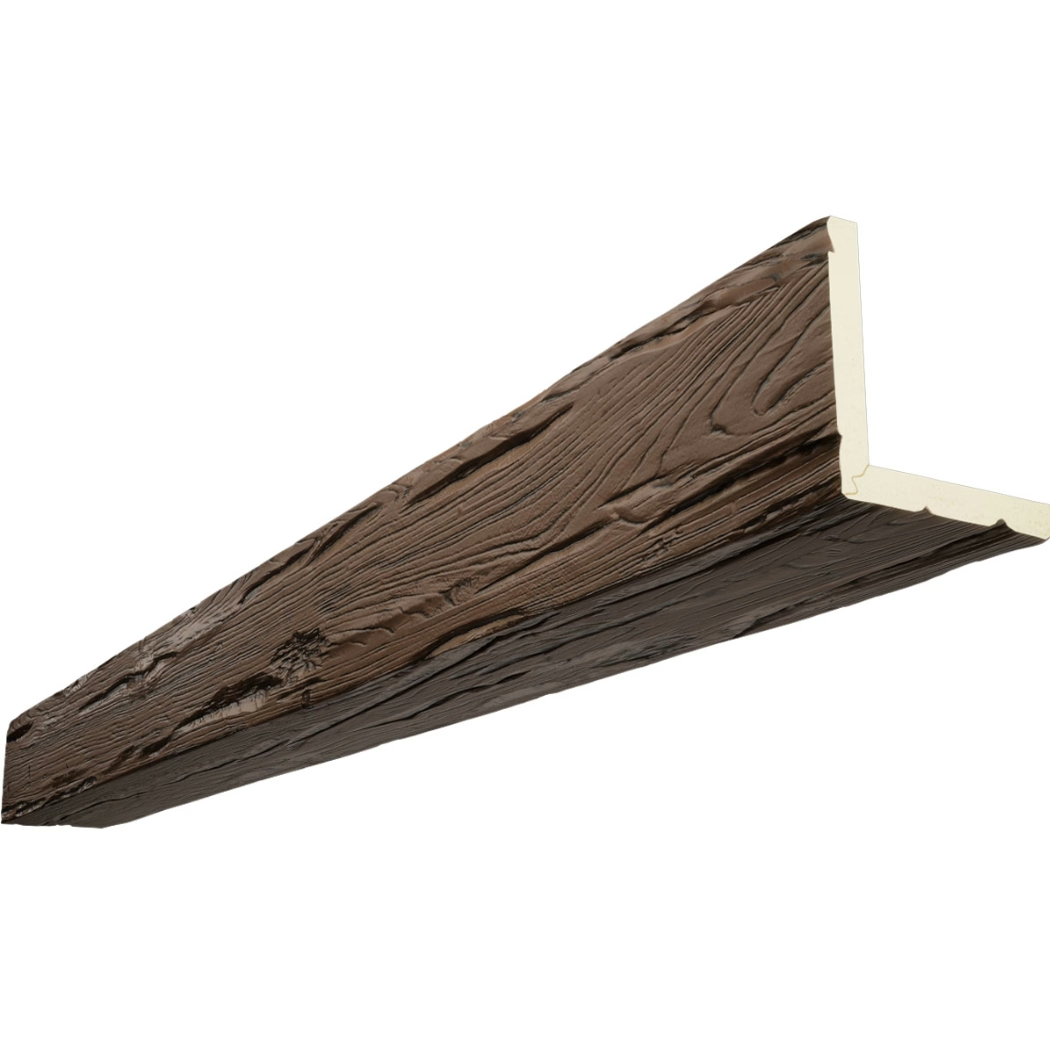
A heavy grain texture polyurethane faux beam captures the distinctive pine look in a way that solves the knot problem. The grain is reproduced faithfully — every growth ring, every transition between early-wood and late-wood, every subtle cathedral or straight-grain pattern. The knots are either omitted entirely or replaced with hand-painted details that read as knots without behaving like them.
How pine grain differs from other species
The pine aesthetic depends on specific grain characteristics that not all faux beam manufacturers replicate well.
Wide growth rings. Pine grows relatively quickly compared to hardwoods like oak or walnut. The growth rings are wider and more pronounced. A pine beam typically shows 4 to 8 rings per inch, while an oak beam shows 12 to 20. The wider rings create the strong vertical striping that defines the pine look.
Strong early-wood/late-wood contrast. Pine has a dramatic transition between the dense late-wood (the dark band at the end of each growth season) and the soft early-wood (the lighter band at the start of the next season). In a faux beam, this contrast must be visible in both the texture depth and the stain application.
Cathedral grain pattern. Flat-sawn pine shows the cathedral or flame pattern — the arched grain figure that runs across the face of the board. This is the most recognizable pine grain pattern and should be a dominant feature of the beam face.
Knots and knot clusters. Pine grows with branches, and the cross-sections of those branches appear as knots in the lumber. The size, frequency, and distribution of knots are key to a convincing pine look.
A heavy grain texture pine beam reproduces all of these features at a deeper scale than a standard pine-look beam. The grain is molded deeper, the contrast between early-wood and late-wood is more pronounced, and the figure pattern is more visible from a distance.
The manufacturing challenge
A convincing pine grain is harder to mold than it looks. Several production challenges separate a premium heavy grain pine beam from a mediocre one.
Mold detail resolution. Pine grain has fine features — the transition between growth rings is sometimes less than a millimeter. The mold must capture these fine features, and the casting process must reproduce them without filling them in.
Release agent management. Heavy texture traps release agent in the deep grain. After demolding, the release agent must be thoroughly cleaned from the surface before staining, or the stain will not adhere properly to the recessed areas. This cleaning step adds time and labor to production.
Grain orientation. Real pine boards have grain that runs in a specific direction — the longitudinal axis of the tree. A faux beam should reproduce this orientation consistently across its length. Some cheaper products have grain that wanders or reverses direction, which is immediately apparent as fake.
Variation within a beam. Real pine has subtle variation in grain density and figure pattern across its length. A single beam that is too uniform in its grain pattern reads as manufactured. Quality manufacturers introduce controlled variation — every 60 to 90 cm, the grain pattern shifts slightly to mimic the natural variation of the tree.

Working with knots — or omitting them
The knot question is the central design choice for any pine-look beam.
Heavy knotting. Some pine beams feature frequent, prominent knots — 6 to 10 visible knots per linear meter, ranging from small pin knots to large sound knots several centimeters across. This is the "character pine" or "knotty pine" look popular in rustic and farmhouse designs. The knots are real in genuine timber, but in a faux beam, they are usually molded as raised circular features or painted as darker round areas.
Select pine. A cleaner pine look with fewer knots — typically one or two small sound knots per linear meter, or none at all. This is the "select pine" or "clear pine" grade that works in more refined interiors where the pine grain is desired but the heavy knotting would be too much.
Knot-free. A pure grain-only look with no knots at all. This is harder to find in genuine pine lumber (and expensive when you do), but easy to specify in faux beams. It works well in contemporary farmhouse designs where the grain character is desired but the rustic knotting would conflict with the cleaner design language.
The faux beam advantage is that the buyer can specify exactly which look they want. Genuine pine lumber comes with whatever knots the tree had.
Staining and color work for pine
Pine is notoriously difficult to stain evenly. The early-wood absorbs stain much more readily than the late-wood, creating blotchy results. A professional finisher on real pine uses a pre-stain conditioner or a gel stain to manage the absorption.
A faux pine beam solves this at the factory. The stain application is controlled — typically a multi-step process with a base coat, a glaze worked into the recessed grain, and a highlight on the raised late-wood bands. The result is the visual of a beautifully stained pine board without the blotchiness that plagues DIY attempts on real pine.
Common pine stain tones for faux beams:
- Natural pine. A pale honey color that shows the wood character without heavy color shift
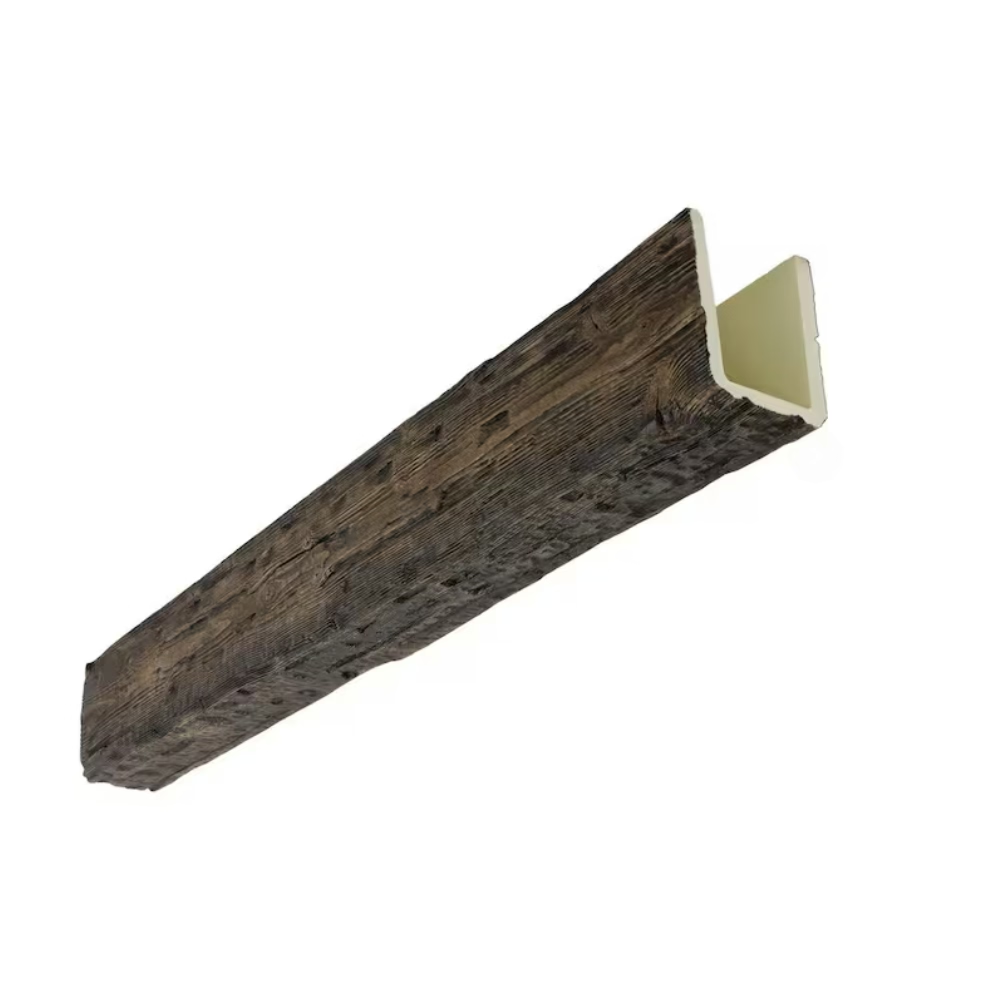
- Provincial pine. A medium brown with warm undertones, the classic country pine look
- Rustic pine. A darker amber tone with more pronounced grain emphasis
- Weathered pine. A gray-toned brown that suggests driftwood or aged barn pine
- Whitewash pine. A limed or pickled finish where whitewash sits in the recessed grain while the raised areas show the natural wood tone
Where heavy grain pine beams work best
The strong grain character makes these beams a deliberate design statement. They belong in spaces where the beam is meant to be a visible feature.
Farmhouse and country kitchens. The classic application. Pine beams across the ceiling, often paired with shiplap walls and a farmhouse sink. The pine grain ties the whole aesthetic together.
Mountain cabins and lodge interiors. Where the rustic timber look is part of the design DNA. Pine beams work well in chalets, lake houses, and ski lodge lobbies.
Restoration projects. Renovations of older homes where the original ceilings may have had plaster and the new beams should look as if they have always been there.
Brewpubs and rustic restaurants. Commercial hospitality spaces where the heavy timber look signals "established" and "traditional."
The aesthetic does not work in:
- Modern minimalist interiors
- Contemporary commercial spaces with clean lines
- Formal living rooms or libraries where the heavy grain feels too casual
- Coastal interiors where pine reads as the wrong species for the environment
Structural and installation notes
Heavy grain texture pine faux beams install identically to standard faux beams. The deeper grain does not affect the structural performance or the mounting method. Standard cleats, brackets, and adhesive work as they would for any other beam profile.
The deeper texture does mean slightly more accumulation of dust and grime over time. In commercial kitchens or other environments with airborne particulates, occasional cleaning with a soft brush attachment is worth scheduling.
For beams installed in areas where they will be touched frequently — above kitchen islands, near staircases — a more robust topcoat application is worth specifying at the factory. This protects the glaze and stain in the recessed areas from wearing off under repeated contact.
Comparing faux pine to genuine pine
The economic comparison favors faux. A genuine pine beam — heavy timber, properly dried, in the character grade most people want — runs $40 to $90 per board foot. A faux pine beam of equivalent visual scale runs $30 to $70 per linear foot installed, with no weight, no warping risk, and consistent quality.
The aesthetic comparison is more nuanced. Genuine pine has the authenticity of real wood and the variation that comes from being a natural product. Faux pine has the consistency and predictability of a manufactured product. The best faux pine beams have natural variation built into the mold and finish work that brings them close to genuine pine in visual interest.
For most residential and commercial projects where the goal is the pine aesthetic without the maintenance burden, a quality heavy grain texture faux pine beam is the right specification.
Technical References
ASTM standards cited in every specification
Test Data
Lab results from internal testing program
Updated 2026
Reviewed against current product specs


