Douglas fir earned its place in American architecture through a century of utility. The timber-framed barns of the Pacific Northwest, the great lodges of the National Parks, the post-and-beam homes of the mid-century modern movement — Douglas fir was the structural backbone of all of them. Its straight grain, its warm reddish-brown tone, and its ability to span long distances as solid sawn timbers made it the default choice for heavy timber construction.
The aesthetic carries forward. When designers specify a "Douglas fir beam" today, they are usually not asking for a structural member. They are asking for the visual — the substantial cross-section, the warm tone, the distinctive vertical grain with its occasional tight knot. They want the look of a beam that could hold up a roof, without the structural cost.
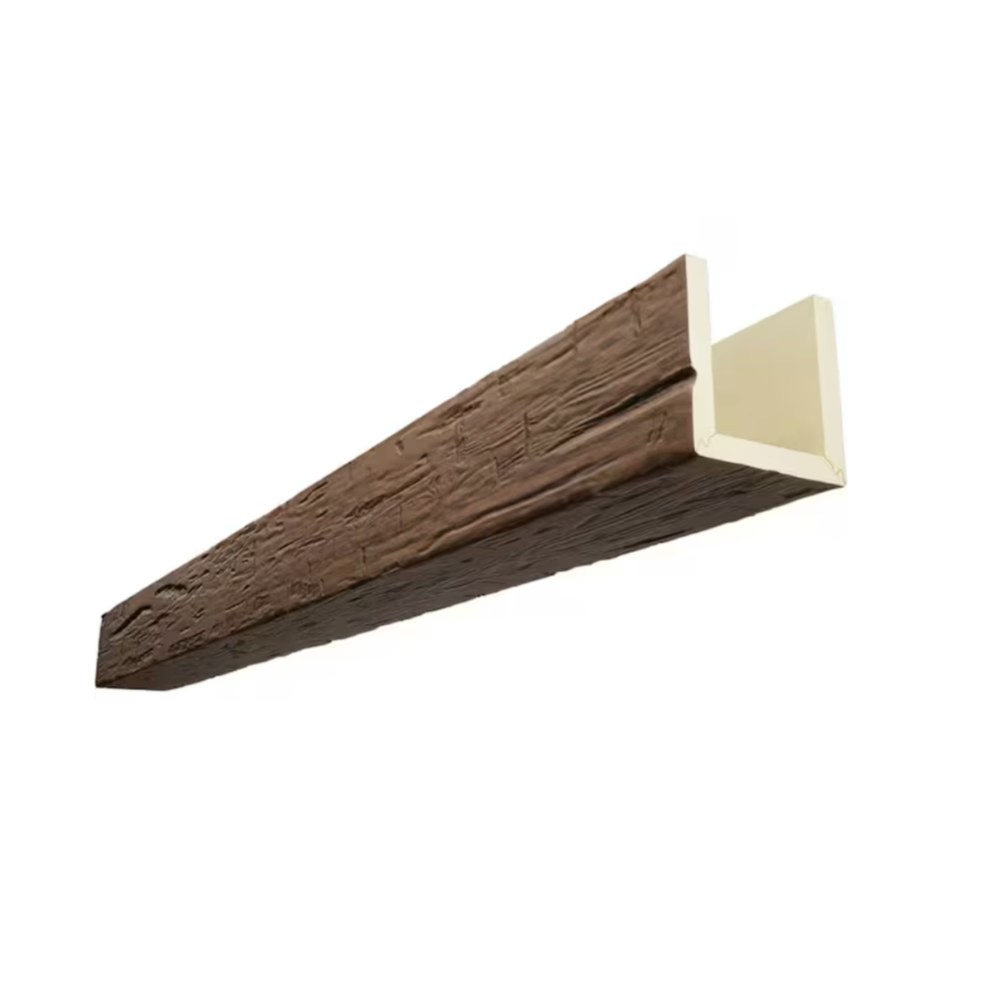
Heavy timber Douglas fir style polyurethane faux beams deliver exactly that. The profile sizes run 8 by 10, 10 by 10, 8 by 12, even 12 by 12 — the dimensions that read as "structural timber" — but the beams themselves are hollow polyurethane shells weighing a fraction of solid timber.
The visual signature of Douglas fir
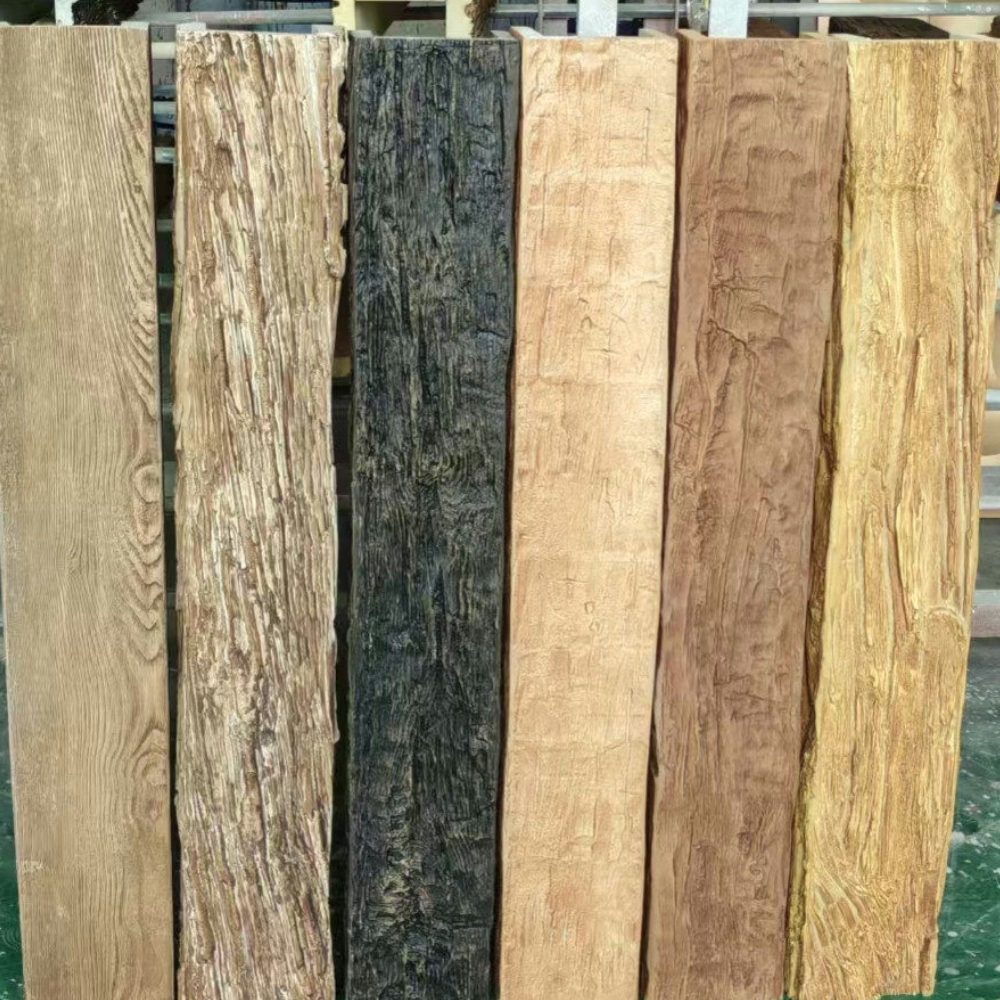
Douglas fir has a specific look that quality faux beams must capture. Several details separate a genuine Douglas fir look from a generic "wood beam" appearance.
Tight, straight grain. Douglas fir grows tall and straight with minimal branching in the lower trunk. The grain runs cleanly along the length of the beam with relatively few knots in the clear grades. The growth rings are distinct but not as wide as pine.
Warm reddish-brown tone. Fresh Douglas fir has a salmon-pink to reddish-brown color that ages to a deeper amber-brown with exposure. The warmth of the tone — the red and yellow undertones — distinguishes Douglas fir from the cooler browns of oak or the grayer tones of cedar.
Tight sound knots. In the structural grades that are most commonly used for exposed beams, knots are present but small and tight — typically 1 to 3 cm in diameter, sound (not loose), and distributed sparsely along the length. The knot pattern is part of the visual identity.
Occasional dark streaks. Mineral streaks and occasional dark resin lines run with the grain. These are subtle but they add visual depth.
Distinct transition between heartwood and sapwood. The heartwood is the warm reddish-brown; the sapwood is paler, often a creamy yellow. In a solid timber beam, both are visible in varying proportions. A faux beam can reproduce this transition for additional authenticity.
A faux beam that captures only the color but not the grain character reads as "some kind of wood" rather than Douglas fir specifically. The grain is the identifier.

Why the grand rustic interior needs substantial beams
The design category of "grand rustic" — the mountain lodge, the timber-frame estate, the great room with a two-story ceiling — depends on substantial beams for visual weight. A 6-by-8 beam in a 20-foot ceiling looks like a piece of trim. A 10-by-12 or 12-by-14 beam in the same space looks like it could hold up the roof.
The visual weight comes from three factors:
Profile dimension. A beam face that is 10 to 14 inches deep reads as structural. Anything under 8 inches reads as decorative trim in a tall space.
Length without obvious splices. A 24-foot run of beam without visible splices reads as a single solid timber. Splices break the illusion.
Color depth. Substantial beams should have visual depth in their finish — a flat color reads as painted trim, while a multi-tone stain with grain emphasis reads as substantial timber.
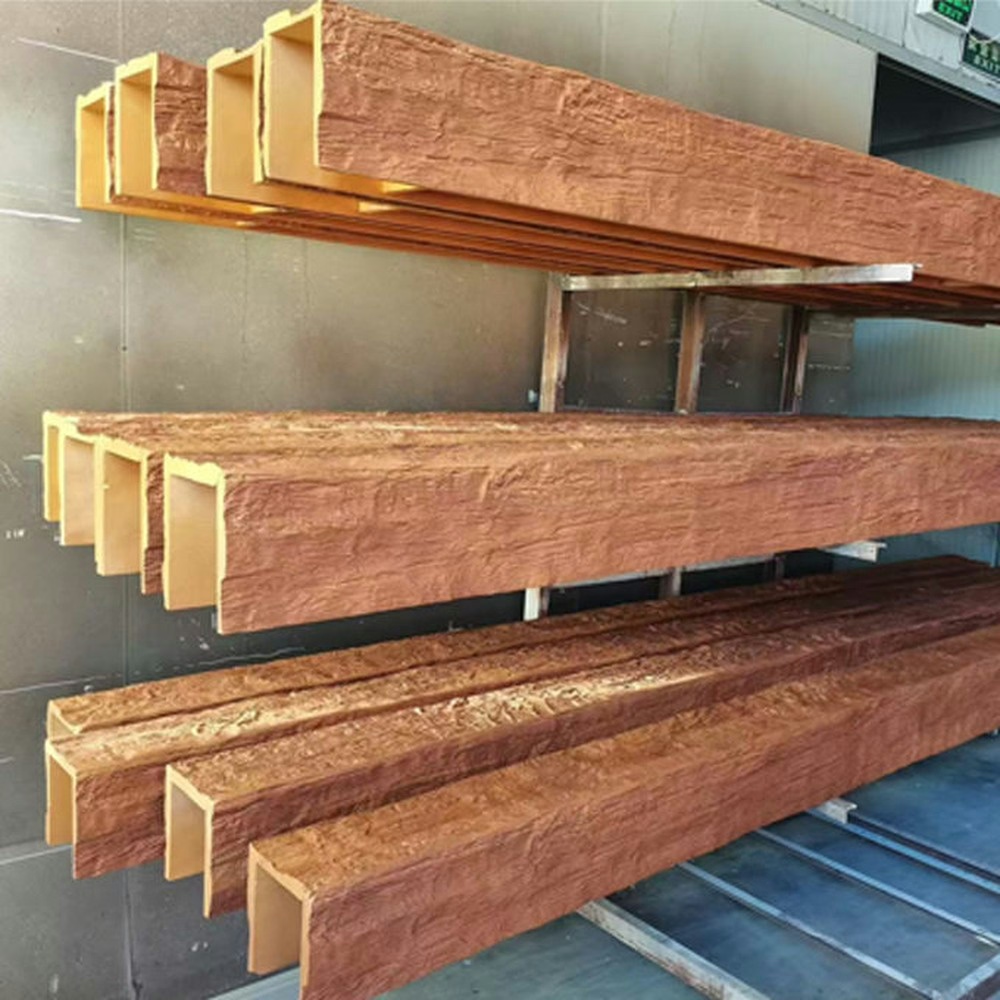
Douglas fir style faux beams are available in the profile sizes (up to 12 by 14 and even larger custom sizes) that deliver the structural visual without the structural cost. The longer lengths are achievable through scarf joint splicing or by running multiple beams end-to-end with carefully matched splice plates.
Where genuine Douglas fir beams fail in modern construction
Solid Douglas fir timbers are still available, but several practical issues have pushed designers toward faux alternatives.
Weight. A 10-by-12 solid Douglas fir beam at 20 feet weighs around 1,200 pounds. Installing it requires a crew, often a crane, and reinforced structural support in the building itself. Many modern residential ceiling systems cannot accept that load without significant structural reinforcement.
Cost. Green (unseasoned) Douglas fir timbers are relatively affordable, but they will twist, check, and shrink as they dry. Kiln-dried structural timbers that will stay stable cost $60 to $150 per board foot. A single 20-foot 10-by-12 beam runs $10,000 to $25,000 just for the material.
Availability. Large structural Douglas fir timbers in the lengths and grades needed for exposed applications are increasingly hard to source. Most commercial timber yards stock limited sizes.
Building code. In many jurisdictions, exposed timber that is claimed to be structural must be graded and stamped. Non-graded decorative timber may not be usable in certain applications, and graded structural timber requires engineering documentation.
A faux beam sidesteps all of these issues. The weight is a fraction of solid timber. The cost is dramatically lower. The sizes are consistent and available. The installation is a DIY-friendly two-person job for most residential applications.
Profile and finish options for Douglas fir style beams
Several standard profiles work well for the grand rustic interior:
10 by 10. The versatile standard for two-story great rooms. Substantial without being overwhelming.
10 by 12. Adds visual depth when the beam runs perpendicular to the ceiling joists. The deeper face shows more grain pattern.
12 by 12. The maximum dimension for most residential ceilings. Reads as truly structural.
8 by 12. Wider face, narrower depth — works well where the ceiling structure limits how far the beam can drop.
Custom sizes. Quality manufacturers produce beams up to 14 by 16 or even larger for commercial applications. Lead times and costs increase with size.
Finish options range from the natural clear Douglas fir tone to aged, weathered, or distressed variants:
- Clear vertical grain. The premium grade — minimal knots, exceptionally straight grain, the lightest natural color
- Standard structural grade. Moderate knots, more grain variation, the classic "timber frame" look
- Aged fir. A darker, more amber tone that suggests decades of exposure
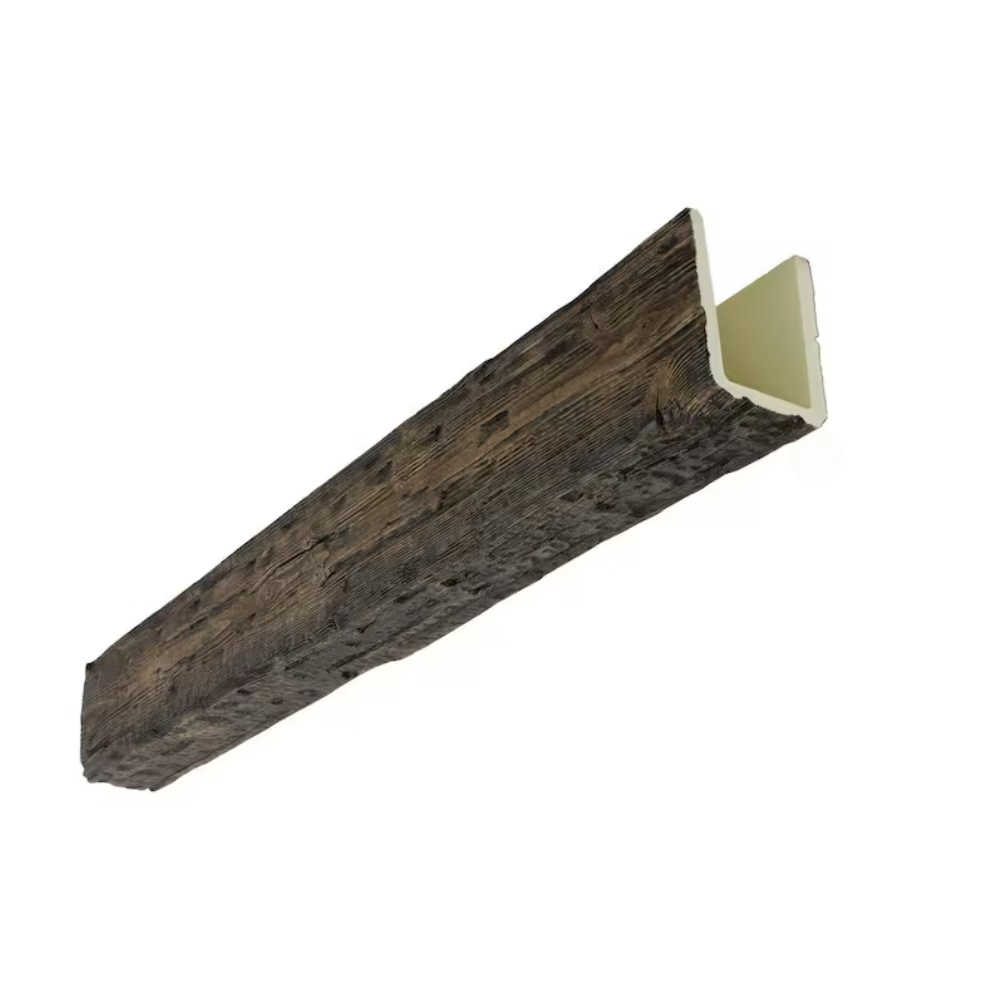
- Weathered fir. A grayed tone with darker accents in the recessed grain, popular for reclaimed-look applications
- Hand-hewn fir. A textured surface with visible adze or axe marks, for the most rustic installations
Installation considerations for heavy faux beams
The profile sizes for grand rustic applications — 10 by 10 and up — require careful planning during the design phase, even though the beam itself is light.
Mounting height. The beam drops from the ceiling by its full profile depth. In a grand rustic interior with a 20-foot ceiling, this is rarely an issue. In a room with an 8-foot ceiling, a 10-by-10 beam would dominate the space and may not be appropriate.
Splice placement. Splices should be placed over structural support or in locations where they are visually expected — typically 1/4 to 1/3 of the way along the span rather than at the midpoint. A poorly placed splice breaks the visual continuity of the beam.
Blocking in the ceiling. Even though faux beams are light, the connection to the ceiling should be solid. Standard residential construction requires blocking between joists or direct attachment to joists for a secure connection. A faux beam contractor will install the blocking before the drywall goes up, or use a surface-mounted bracket system if the ceiling is already finished.
Two-person installation. While a single 10-by-10 hollow faux beam is manageable for one person, the larger profile sizes (12 by 12 and up) become awkward. Two installers make the job faster and safer.
Comparing the faux approach to solid timber
The case for faux Douglas fir is strongest in three scenarios.
The ceiling cannot support the weight. A second-floor ceiling with conventional wood joists will not accept a 1,200-pound solid timber. A 60-pound faux beam of the same profile dimension solves the design problem without requiring structural reinforcement.
The budget is constrained. Solid Douglas fir timbers at the sizes needed for grand rustic applications are a major material investment. A faux beam of equivalent visual scale runs 1/3 to 1/5 the cost of the solid timber, even with professional installation.
The timeline is short. Solid timbers must be specified, sourced, delivered, acclimated, and installed by a specialized crew. Faux beams are in stock at most suppliers and can be installed by a general contractor or experienced DIYer.
The case for solid timber is strongest when the beam is genuinely structural — carrying roof loads or second-floor joists. In that application, the beam is structural lumber first and decorative element second. No faux beam can replace a structural member.
For the decorative application — where the beam is meant to communicate "substantial timber" without actually carrying a load — the faux Douglas fir beam is the right specification.
Technical References
ASTM standards cited in every specification
Test Data
Lab results from internal testing program
Updated 2026
Reviewed against current product specs