Popcorn ceilings — that textured acoustic finish that dominated American residential construction from the 1960s through the 1980s — are famously polarizing. Some homeowners love the texture as a period feature. Many more see it as an obstacle between the current state of their home and the modern aesthetic they'd prefer.
The traditional fix is to scrape the texture smooth, then refinish. The problem is the texture contains material that's not always safe to disturb. In homes built before the mid-1980s, popcorn ceilings may contain asbestos, requiring professional abatement before scraping. Even without asbestos, the work is messy, time-consuming, and often imperfect — the scraping doesn't always produce the smooth result that's hoped for.
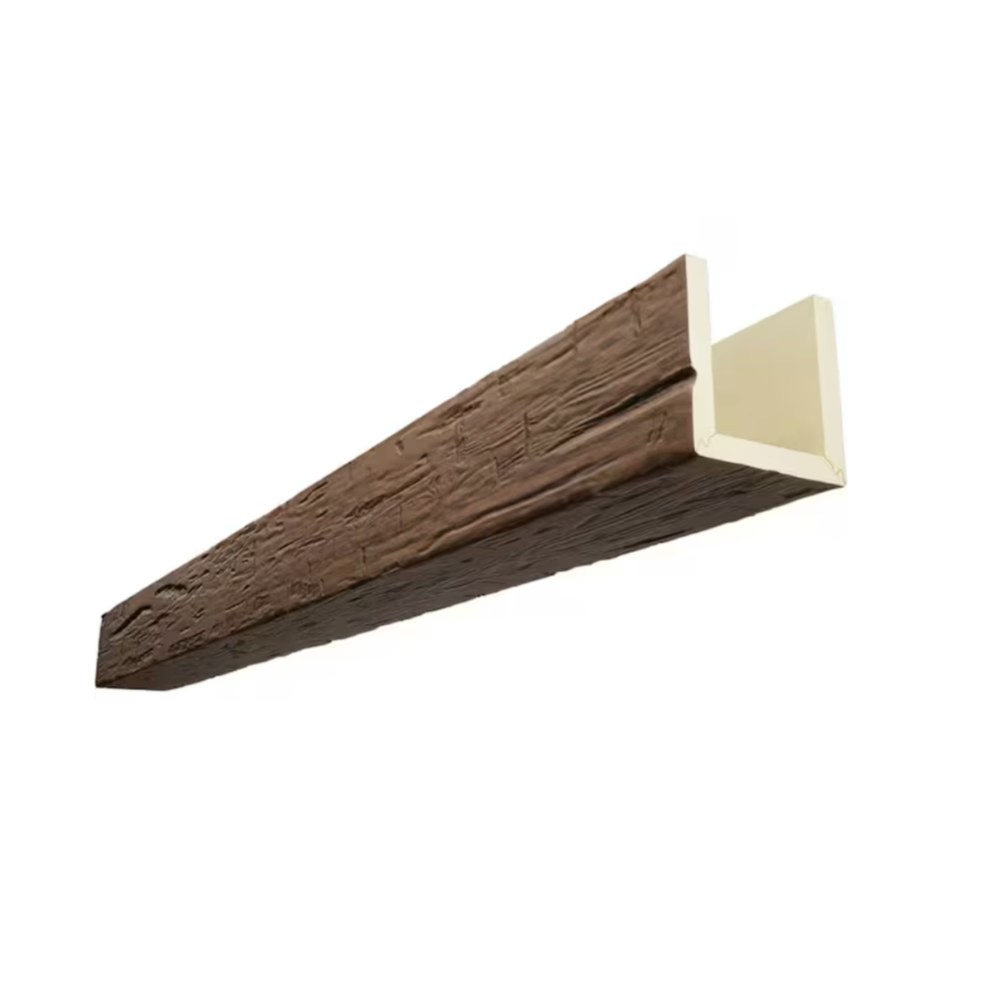
Decorative faux wood beams offer a different approach: work with the existing ceiling, draw the eye to the new design elements, and let the texture become a backdrop rather than the focal point.
The visual problem with popcorn texture
A popcorn ceiling texture scatters light and creates visual noise across the entire ceiling plane. In a room with otherwise nice finishes — good flooring, recently painted walls, attractive furniture — the ceiling becomes the loudest visual element. The eye keeps returning to it because the texture demands attention.
A flat ceiling isn't necessarily better — a flat white expanse can feel sterile and emphasizes every imperfection in the wall-to-ceiling corner. The popcorn texture at least hides those imperfections, which is one reason it became so popular originally.
The ideal solution for many homeowners is a ceiling that has texture and warmth without the dated look of popcorn. Wood beams contribute that warmth. The texture between the beams becomes intentional rather than accidental.
How beams change the visual reading
A room with popcorn ceiling and no beams is a single textured plane from edge to edge. Add beams and the room's ceiling reads as organized into sections — each section framed by the beams around it. The eye now reads those framed sections as intentional design elements rather than as a continuous texture.
This visual reorganization is significant. The same popcorn texture that looked out of place across the entire ceiling becomes a textured backdrop inside a designed ceiling composition. The change in perception is substantial.
For rooms with prominent features that the eye naturally focuses on — a fireplace, a view, a piece of art — the beam-framed ceiling composition actively supports those focal points. The popcorn texture fades into the supporting role.

Strategies that work
Several specific beam strategies produce effective results:
Coffered ceiling effect — beams arranged in a grid pattern across the ceiling, creating recessed panels within the grid. Each panel becomes a defined space with the textured ceiling as its backdrop. This is one of the most popular approaches for hiding popcorn texture.
Single accent beam pattern — one or two beams running parallel through the room, often aligned with a focal feature. The texture exists on either side of the beam but the beam adds architectural interest that distracts from the texture.
Truss pattern — decorative truss shapes installed at intervals, with smaller connecting beams in between. The pattern reads as structural and intentional. Particularly effective in rooms with high ceilings.
Perimeter frame pattern — beams around the perimeter of the ceiling with a clear center span. Common in dining rooms where the perimeter frame creates a defined zone for a chandelier and table.
Tray ceiling effect — a single beam frame inset from the room edges creating a raised center section (visually). The frame turns a flat ceiling into a designed ceiling with the textured center panel as a feature.
Each strategy works for different room shapes, sizes, and design intents. A good designer walks through the options on paper before committing.
Acoustic benefits of textured ceilings
Popcorn texture was originally specified for acoustic reasons — the texture absorbs sound and reduces echo in a room. Smooth ceilings are acoustically reflective and can make rooms feel louder.
Removing or covering the texture with a smooth finish changes the room's acoustics. Many homeowners notice the difference after a popcorn ceiling scrape and refinish — the room sounds more resonant, voices carry further, and overall noise levels feel higher.
Adding faux wood beams doesn't restore the acoustic properties of the popcorn texture on its own. The beams typically cover only a portion of the ceiling, leaving most of the popcorn texture exposed. The acoustic benefit of the texture remains.
For homeowners who scrape their popcorn ceilings specifically for acoustic reasons — rare but possible — the beam approach doesn't serve the same purpose. For homeowners who want to update the visual without changing the acoustics, the beam approach works beautifully.
Asbestos consideration
For homes built before the mid-1980s, popcorn ceilings often contain asbestos. The asbestos was used as a fiber reinforcement in the spray-on texture. Disturbing the texture releases fibers into the air, which presents documented health risks.
If the home was built in this era, the popcorn ceiling should be tested before any work that disturbs it. Testing involves taking small samples of the texture and having them analyzed by a qualified laboratory. The cost is modest; the peace of mind is substantial.
If asbestos is present, the options include:
Leave the texture undisturbed — the beam approach is ideal here because the existing ceiling stays in place. Work happens on top of the texture, not into it.
Professional abatement — asbestos removal by qualified contractors. Expensive but produces a clean ceiling that can be refinished any way desired.
Encapsulation — covering the texture with new material that contains it. Another approach that works with the beam strategy.
The beam approach often works well in conjunction with encapsulation. The beams are mounted to the existing ceiling, the texture stays put but is now framed by the new beams, and the asbestos-containing material remains undisturbed.
Installation considerations over textured ceilings
Installing faux wood beams over a popcorn ceiling is technically different from installing over a smooth ceiling:
Mounting — the popcorn texture has minor depth but doesn't substantially change mounting decisions. Standard ceiling mounting still works, just with slightly longer fasteners to account for the texture depth.
Beam-to-ceiling contact — the beam doesn't sit directly against the popcorn texture in the same way it would against a flat ceiling. Small gaps exist where the texture creates peaks against the beam back. These gaps are usually invisible from below.
Adhesion — if any adhesive is being used in addition to mechanical fasteners, the adhesive bonds to the popcorn texture rather than to clean drywall. The bond strength is generally adequate but should be confirmed with the adhesive manufacturer.
Beam weight — the additional beam weight needs to be supported by the ceiling structure, not just by the texture. Standard mounting brackets that fasten to ceiling joists work fine.
For most beam installations over popcorn ceilings, the work proceeds essentially the same as it would over a smooth ceiling. The popcorn texture is rarely a major complicating factor.
Painting and finish coordination
The faux wood beams often need to coordinate with the walls and ceiling in the room:
Painting the walls — if walls are also being repainted as part of the project, doing so before the beam installation lets any minor touch-up on the beam go cleanly. If walls aren't being repainted, the beam finish should coordinate with the existing wall color.
Painting the ceiling texture — in some projects, the popcorn texture gets painted (often called "popcorn ceiling paint"). This is a specialty painting technique that produces a more uniform look without scraping. The beam installation should happen after any texture painting, not before.
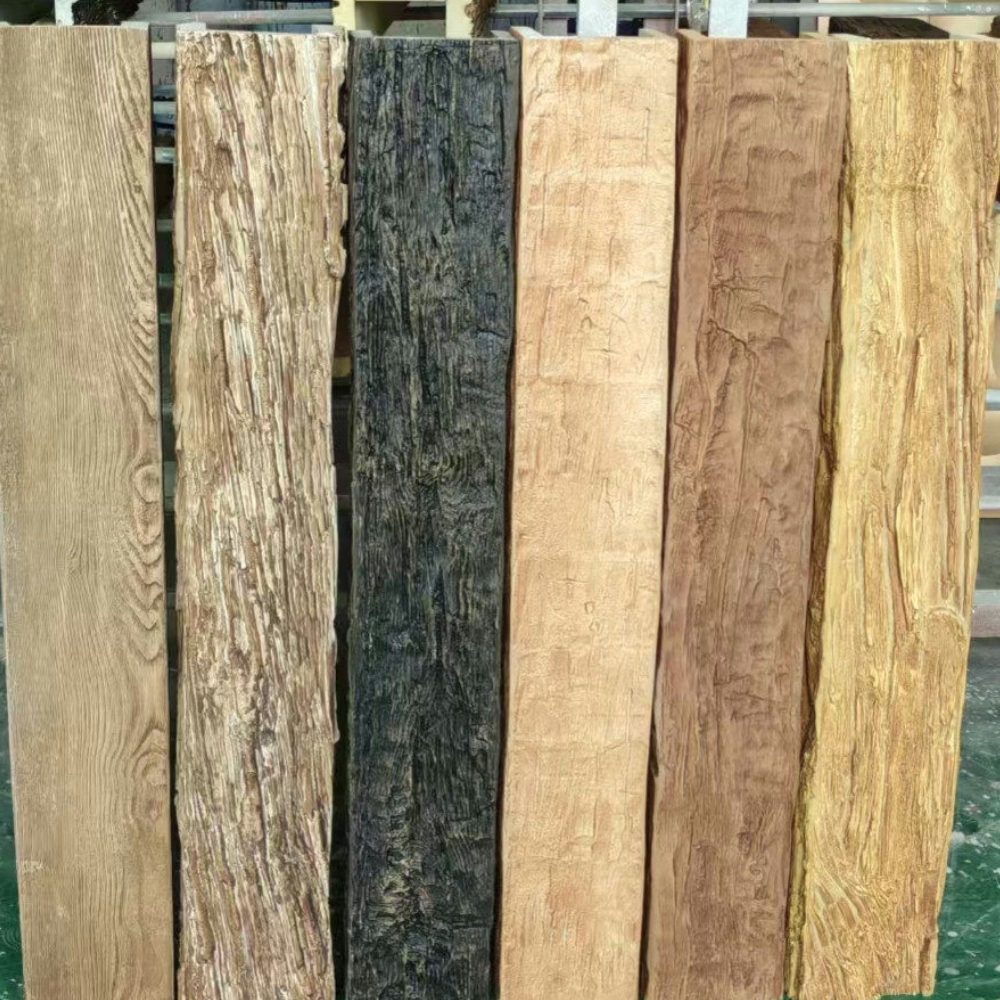
Beam finish selection — the beam color and finish should work with both the wall color and the new ceiling look. Warm wood tones typically work well across a range of wall colors.
Touch-up paint on the beam — with hidden LED integration or with surface-mount brackets, occasional touch-up paint may be needed on the beam after installation. Having touch-up paint from the beam manufacturer on hand saves time.
Long-term satisfaction
Homeowners who choose the beam approach rather than scraping the popcorn ceiling are typically very satisfied with the outcome. The work scope is smaller, the disruption to the home is less, the result looks intentional, and the original ceiling stays in place undisturbed.
The combination of warm timber accents against the textured backdrop creates a visually rich ceiling that has more character than a smooth white ceiling would provide. The result looks like it was always meant to be that way.
For homeowners on the fence between scraping and decorating, walking through a showroom or mockup of the beam approach often makes the decision clearer. Seeing the result convinces more people than describing it does.
Technical References
ASTM standards cited in every specification
Test Data
Lab results from internal testing program
Updated 2026
Reviewed against current product specs