Hotel renovation projects present unique challenges that test the limits of conventional construction methods. When a major hospitality chain undertook a multi-property redesign program requiring thousands of linear feet of decorative beams across twelve locations, traditional wood fabrication proved impractical. The solution emerged from an unexpected direction—CNC-cut polyurethane beams manufactured with tolerances measured in fractions of millimeters. This approach delivered consistent quality across geographically dispersed installations while meeting aggressive production timelines that solid timber simply could not accommodate.
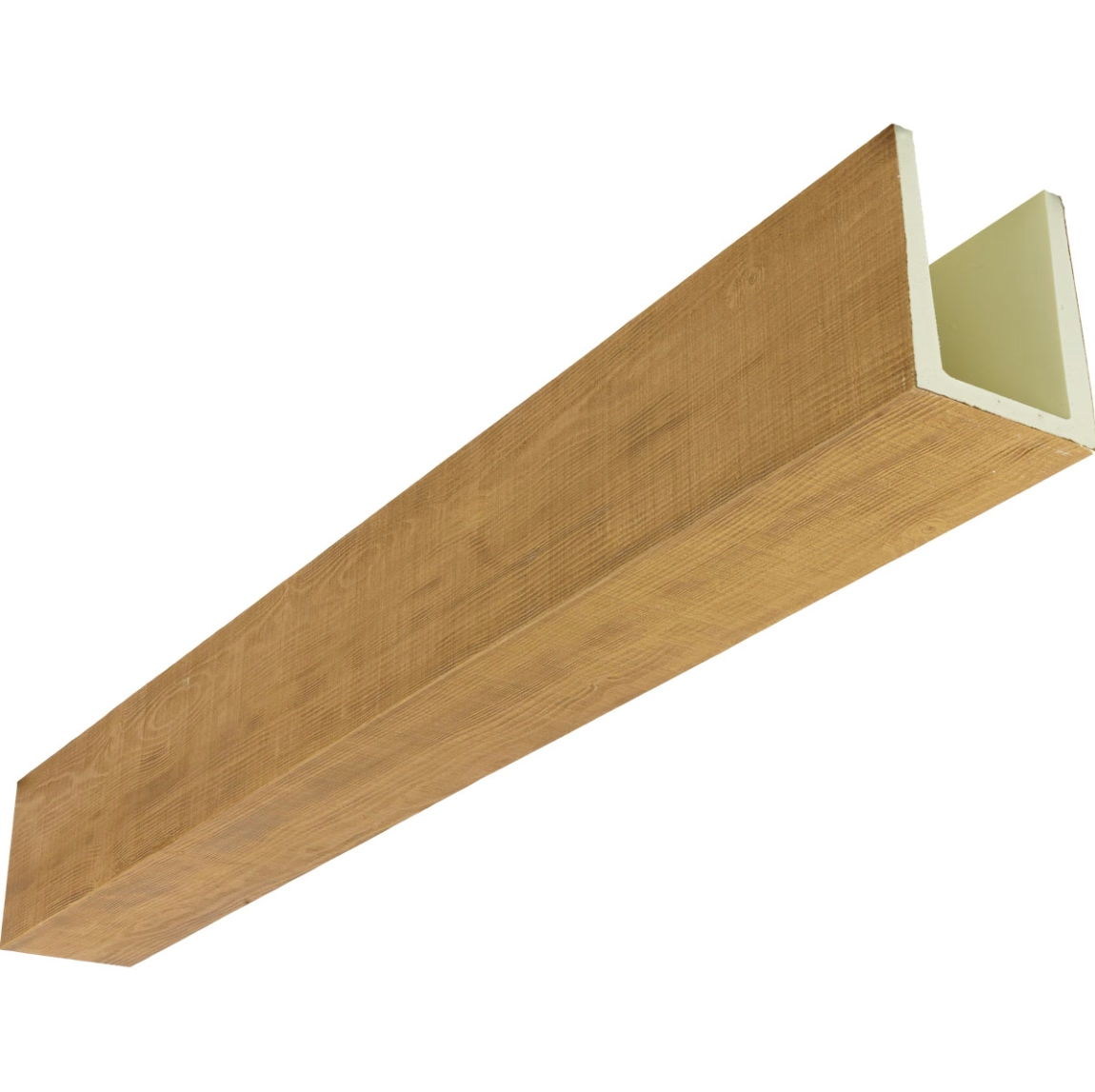
Computer numerical control fabrication transforms polyurethane beams from molded products into precision-engineered components. The technology enables complex profiles, custom profiles, and specialized configurations that would require extensive carpentry work with natural materials. Dimensional accuracy remains consistent whether producing a single sample or ten thousand identical pieces, a consistency impossible to achieve with hand-finished wood products.
The Technology Behind Precision CNC Fabrication
Modern CNC routers operate with positioning accuracy exceeding 0.001 inches, translating design specifications into physical products without the cumulative errors inherent in manual fabrication. The cutting heads follow programmed toolpaths that replicate complex mold configurations or create entirely original profiles defined by interior designers. This flexibility opens creative possibilities that traditional manufacturing methods cannot match.
Material preparation for CNC processing requires careful attention to panel sizing and feed rates. Polyurethane block stock must be precisely dimensioned before cutting operations begin, ensuring optimal tool engagement and surface quality. Skilled operators understand the material's characteristics well enough to adjust feed rates and tool selection based on profile complexity and required tolerances.
The software driving CNC operations translates designer intent into machine instructions through computer-aided design and manufacturing workflows. Three-dimensional modeling allows visualization of final products before any material is consumed, identifying potential issues and enabling refinement before committing to production. This capability proves especially valuable for custom commercial projects where revisions after manufacturing would be costly and time-consuming.
Quality control during CNC fabrication relies on both automated inspection systems and skilled operator oversight. Dimensional verification confirms that finished pieces match design specifications within acceptable tolerances. Surface quality assessment identifies any defects requiring remediation before pieces advance to finishing operations.
Advantages for Large-Scale Commercial Installations
Consistency across extensive installations distinguishes CNC-cut beams from traditional alternatives. Every piece produced during a production run exhibits identical dimensions, profile characteristics, and surface quality. This predictability simplifies installation planning, reduces on-site adjustment requirements, and accelerates completion timelines for projects with tight scheduling constraints.

Inventory management for commercial projects benefits significantly from CNC production capabilities. Rather than maintaining stockpiles of finished products with uncertain demand profiles, manufacturers can produce to order with minimal lead time. This responsiveness reduces carrying costs and eliminates obsolete inventory risks that plague distributors of commodity wood products.
Customization capabilities enable designers to develop brand-specific configurations for hospitality chains, retail environments, and corporate offices. Unique profiles, proprietary finishes, and specialized mounting systems create distinctive visual identities that reinforce brand positioning. Such differentiation would be cost-prohibitive with traditional woodworking methods that require expensive custom tooling for each unique configuration.
Speed to market represents another significant advantage of CNC-fabricated components. From design approval to installation-ready products, production timelines measured in days rather than weeks enable faster project completion. This acceleration proves valuable in hospitality applications where revenue generation depends on minimizing construction-related closures.
Specifying Beams for Commercial Applications
Building code compliance must be addressed during specification development. Fire ratings, smoke development classifications, and flame spread ratings vary by product formulation and manufacturer. Commercial applications typically require products meeting specific fire safety standards, necessitating verification of compliance documentation before material selection.
Structural considerations differ between decorative and functional beam applications. Decorative beams that attach to existing ceilings without load-bearing responsibility have simpler requirements than beams expected to support fixtures, fans, or other suspended loads. Engineers must evaluate attachment methods and fastener specifications to ensure safe installation under all expected loading conditions.
Finish requirements for commercial environments often exceed residential standards due to higher traffic volumes and more aggressive cleaning protocols. Factory-applied finishes with documented durability testing provide assurance of long-term appearance retention. Field finishing introduces variables that may compromise consistency across large installations.
Maintenance requirements and cleaning protocols should inform finish selection for commercial settings. Some polyurethane beam finishes tolerate aggressive cleaning methods while others require gentle care that conflicts with commercial maintenance practices. Aligning finish specifications with actual maintenance capabilities ensures long-term appearance satisfaction.
Project Planning and Execution Strategies
Successful commercial beam installations begin with comprehensive planning that addresses measurement, coordination, and contingency considerations. Detailed surveys of existing conditions identify obstacles, irregularities, and dimensional constraints that affect beam sizing and positioning. These surveys should occur close to installation time to capture any changes from original construction documents.
Coordination with other trades ensures that beam installations integrate properly with lighting, HVAC, fire suppression, and other ceiling-mounted systems. Early identification of conflicts enables resolution before fabrication commitments lock in dimensions that may prove incompatible with site conditions. This coordination prevents costly revisions and installation delays.
Staged delivery schedules align with construction sequencing, delivering materials when needed rather than requiring on-site storage of complete project quantities. Warehousing finished beams at manufacturing facilities until installation readiness eliminates site congestion and protects materials from damage or deterioration during extended storage periods.
Installation crews should receive detailed installation guidelines and, where possible, factory training on product-specific techniques. Manufacturer-certified installers often provide extended warranties that reward their specialized expertise. Even with trained crews, professional oversight during initial installations helps identify and resolve issues before they affect completion timelines.
Maximizing Return on Investment
Calculating return on investment for commercial beam installations requires consideration of both direct costs and indirect benefits. Direct costs include materials, installation labor, finishing supplies, and ongoing maintenance. Indirect benefits encompass aesthetic improvements that enhance customer experience, employee satisfaction, and brand perception.
Energy efficiency contributions sometimes offset installation costs through reduced heating and cooling loads. Dark-colored ceiling beams absorb radiant energy and re-radiate it, potentially reducing HVAC requirements in certain climates. This benefit varies by application and should not be overstated, but can contribute to overall project economics.
Durability advantages translate to extended replacement intervals compared to natural wood alternatives. When maintenance and replacement costs are amortized over service life, polyurethane beams frequently demonstrate favorable lifecycle costs despite higher initial investment. This analysis becomes more favorable as energy and labor costs increase over time.
Brand value enhancement through distinctive interior design supports premium positioning and customer acquisition strategies. Hospitality operators investing in memorable environments often capture market share from competitors offering commodity accommodations. The contribution of beam installations to overall brand experience may justify investment levels that pure cost analysis would not support.
Technical References
ASTM standards cited in every specification
Test Data
Lab results from internal testing program
Updated 2026
Reviewed against current product specs