The interior design industry has witnessed a quiet revolution in how decorative structural elements are specified and installed. High-rigidity polyurethane faux beams now compete directly with traditional materials across applications that once seemed exclusively the domain of solid timber or steel. This shift reflects genuine advances in polymer engineering that have produced materials capable of meeting demanding structural requirements while delivering the warm, natural aesthetics that clients consistently request.
Understanding why high-rigidity matters requires examining the actual conditions that interior beams face throughout their service lives. Buildings breathe, settle, and respond to environmental changes in ways that stress all installed elements. Temperature fluctuations, humidity variations, vibrations from building systems and occupant activity, and even minor seismic events all impose demands that purely decorative elements might not survive intact. High-rigidity materials address these conditions systematically.
The stable structural decoration concept captures the essential proposition: beams that genuinely perform structurally while appearing purely decorative. This combination delivers value that purely decorative products cannot match, because stability ensures that appearance quality persists throughout the beam's service life rather than degrading over time.
Engineering Stability Into Decorative Elements
Rigidity in structural terms relates directly to a material's resistance to deformation under load. The engineering challenge lies in achieving adequate rigidity without the weight penalties that heavy materials impose. High-rigidity polyurethane formulations solve this problem through microcellular architectures that maximize stiffness while minimizing mass. The result is beams that resist deflection and maintain their shape despite imposed loads.
The relationship between rigidity and durability proves important for long-term appearance quality. Beams that flex under load develop stress patterns that eventually manifest as visible cracks, delamination, or surface damage. High-rigidity materials resist these failure modes, maintaining their appearance and structural contribution indefinitely. This stability translates directly into reduced maintenance costs and longer service life.
Dimensional stability—the ability to maintain precise dimensions despite environmental changes—goes beyond simple rigidity. Quality polyurethane beams resist moisture absorption, thermal expansion, and the other environmental factors that cause natural materials to move and shift. This dimensional consistency ensures that joints remain tight, alignments stay true, and appearance quality persists.
Chemical formulation optimization drives rigidity improvements in modern products. Additive packages, catalyst selection, and processing parameters all influence the final material properties. Manufacturers that invest in formulation development produce products with superior performance characteristics, while those relying on commodity formulations deliver correspondingly basic results.

Applications Where Stability Determines Success
Commercial ceiling installations in high-traffic buildings expose beams to vibration, impact, and environmental stress that residential installations avoid. Office buildings, retail spaces, restaurants, and hospitality venues all present demanding conditions where material stability directly affects installation success. High-rigidity PU beams address these challenges without requiring the structural engineering that genuine timber or steel would demand.
Multi-level residential construction often includes beam elements that cross between floors or support architectural features. These applications may place functional demands on beams beyond pure decoration, requiring materials that can contribute meaningfully to the structure's performance. High-rigidity polyurethane satisfies these requirements while maintaining the aesthetic warmth that makes beam installations desirable.
Historic renovation projects frequently encounter structural challenges that complicate decorative treatment. Existing conditions often limit what materials can be used without additional reinforcement. High-rigidity beams allow beautiful beam installations where structural limitations would otherwise prevent them, opening design possibilities that conventional materials would preclude.
Spaces with unusual environmental conditions—indoor pools, spas, commercial kitchens, and similar areas—challenge natural materials severely. The combination of high humidity, temperature extremes, and chemical exposure causes timber to deteriorate rapidly. High-rigidity polyurethane resists these conditions entirely, maintaining appearance and structural contribution where natural materials would fail.
Installation Benefits of Lightweight Stability
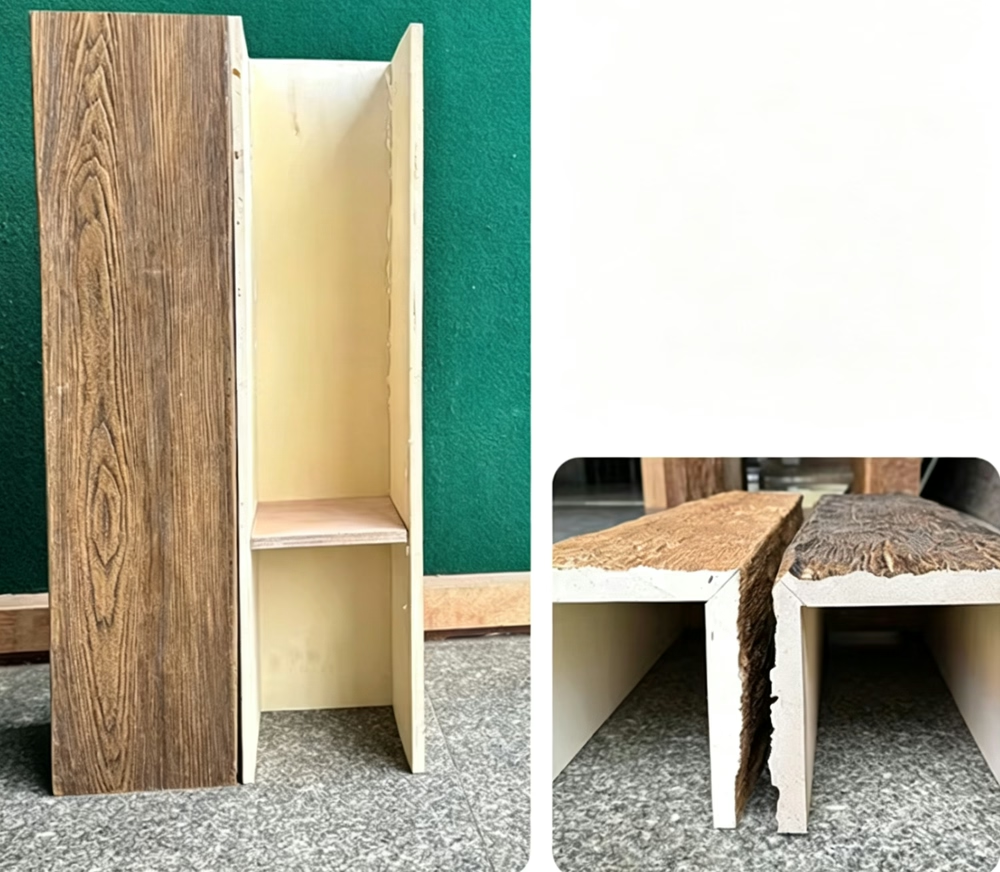
The paradoxical advantage of high-rigidity polyurethane beams lies in achieving structural performance through lightweight materials. Traditional approaches to structural stability required dense, heavy materials because available engineering options didn't provide alternatives. Modern polyurethane technology changes this equation, delivering stability through material science rather than mass.
Reduced weight simplifies every aspect of installation logistics. Shipping costs decrease, handling becomes safer and easier, mounting requirements simplify, and installation speed increases. These cascading benefits compound throughout the project timeline, often producing total cost savings that exceed the material's premium over basic alternatives.
Seismic considerations favor lightweight construction in earthquake-prone regions. Buildings with heavy structural elements experience greater forces during seismic events, while lightweight components reduce the overall dynamic loads that structures must resist. High-rigidity polyurethane beams contribute to building performance in earthquake zones without imposing the mass penalties that other structural options require.
Mounting system design benefits from the weight advantages that lightweight beams provide. Smaller brackets, fewer fasteners, and lighter support structures all become possible when the supported weight is minimized. These simplifications reduce both material costs and the visual intrusiveness of mounting hardware that might otherwise detract from the beam's appearance.
Long-Term Performance Verification
Professionals specifying high-rigidity beams for structural applications should verify performance through appropriate documentation. Manufacturer specifications, test reports, and third-party certifications provide the evidence needed to support engineering decisions and satisfy building officials who review permit applications.
Load testing establishes the actual capacity of beams under various loading conditions. Point loads, distributed loads, and combinations of different load types all merit consideration for specific applications. Documentation that includes these test results allows accurate specification without safety margins that might waste material or add unnecessary cost.
Accelerated aging tests predict long-term performance by simulating years of service in compressed timeframes. Temperature cycling, humidity exposure, UV radiation, and mechanical loading combined create test conditions more severe than actual service. Beams that survive these tests with acceptable property retention provide confidence in their long-term durability.
Warranty terms reflect manufacturer confidence in their products' long-term performance. Extended warranty coverage indicates belief that materials will perform as specified throughout the warranty period. Professional specifiers pay attention to warranty terms because they provide assurance beyond mere product claims.
Evaluating Products for Specific Applications
The high-rigidity category encompasses a range of products with varying performance characteristics. Careful evaluation ensures that selected products match application requirements without over-specification that increases costs unnecessarily. Understanding which properties matter for specific projects guides appropriate selection.
Structural applications require verified load capacity and appropriate testing documentation. Decorative applications may accept lower performance levels, but stability still matters for maintaining appearance quality over time. Matching product capabilities to actual requirements optimizes the value received from material purchases.
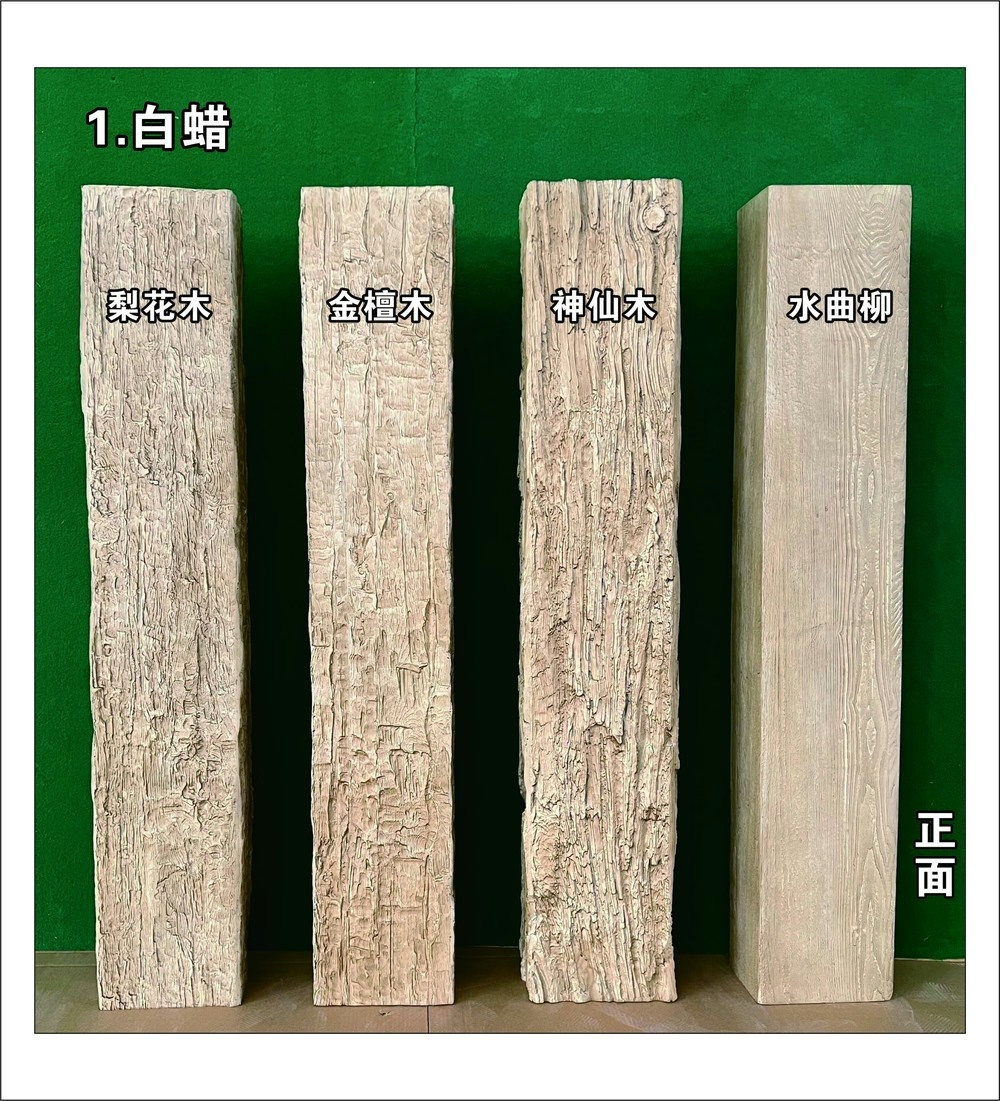
Finish quality varies significantly across manufacturers and product lines. Surface texture, color consistency, and detail reproduction all affect how finished installations appear. Professional evaluation of sample products before committing to large orders identifies quality issues before they become project problems.
Manufacturing consistency affects both appearance and structural performance across large installations. Beams from the same production batch should be identical, but different batches or manufacturing runs might vary slightly. Professional buyers verify this consistency through quality control procedures and supplier relationships that prioritize uniformity.
Technical References
ASTM standards cited in every specification
Test Data
Lab results from internal testing program
Updated 2026
Reviewed against current product specs