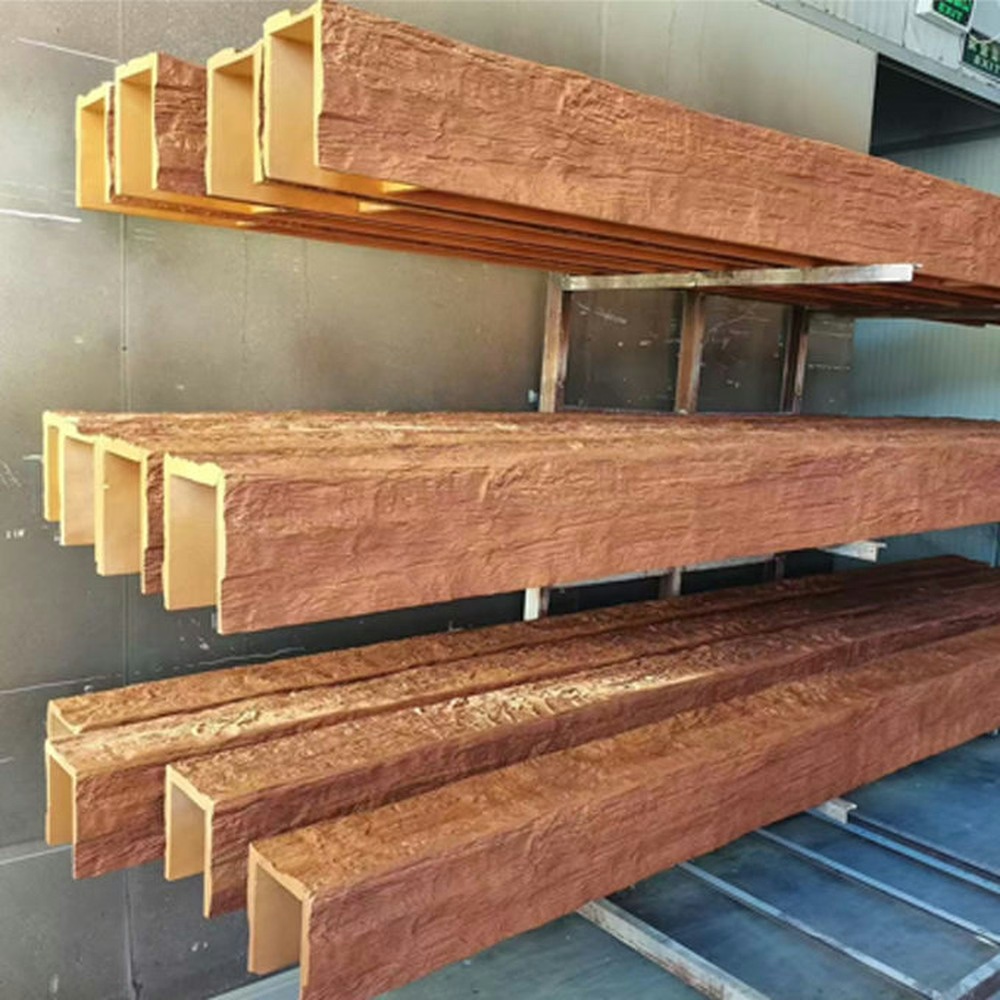
The construction industry has increasingly embraced rigid foam PU faux beams as a sophisticated solution for interior decoration that demands both aesthetic excellence and reliable performance. These products represent the convergence of materials science innovation and traditional design preferences, delivering authentic wood aesthetics through modern engineering. For architects, designers, and building professionals seeking to incorporate decorative beams into their projects, understanding these materials opens possibilities that conventional options cannot match.
Rigid foam technology in this context refers to closed-cell polyurethane formulations specifically engineered for structural applications rather than the commodity foams used in packaging or insulation. The distinction matters enormously—structural foam products undergo rigorous testing and quality control to ensure consistent performance, while general-purpose foams prioritize low cost over reliable properties. Professional applications demand the former approach.
The term "stable structural decoration" captures the essential value proposition that distinguishes quality products in this category. These are not purely decorative elements that merely suggest the appearance of structural beams. They are genuine structural elements that happen to look beautiful, combining genuine load-bearing capability with convincing timber aesthetics. This dual nature explains their growing adoption across professional projects.
The Science of Rigid Foam Performance
Rigid polyurethane foam achieves its remarkable properties through a carefully controlled cellular structure. Millions of tiny closed cells create a material that resists compression, maintains shape under load, and provides consistent properties throughout the beam's cross-section. This microstructural engineering represents decades of development that has produced increasingly capable products.
The closed-cell structure contributes to multiple performance characteristics simultaneously. Air trapped within sealed cells provides thermal insulation while the cell walls themselves provide structural rigidity. This combination means that rigid foam beams offer functional benefits beyond their aesthetic contribution, unlike purely decorative alternatives that add nothing to building performance.
Density selection during manufacturing determines where a particular product falls on the spectrum from lightweight to heavy-duty structural. Higher density formulations provide greater rigidity and load capacity at the cost of increased weight. Matching density to application requirements optimizes both performance and economy, avoiding the waste that over-specification creates.
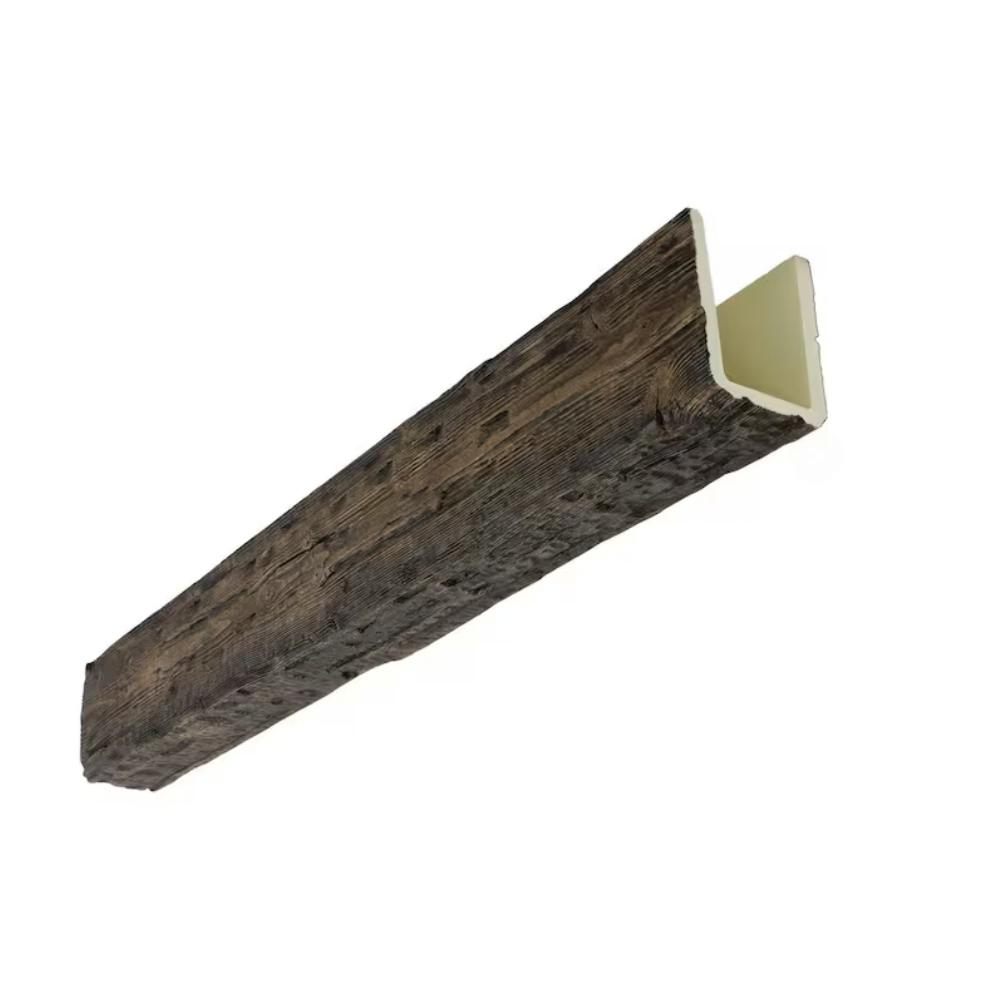
The skin that forms on beam surfaces during production differs from the foam interior in ways that contribute to overall performance. This outer layer provides a dense, smooth surface that accepts finishes beautifully and resists the minor impacts that might damage softer materials. Premium products feature consistent, defect-free skins that enhance appearance and durability alike.

Why Stability Matters for Decorative Installations
Visual stability—the consistent appearance of beams over time—directly affects how installations are perceived by building occupants and visitors. Beams that warp, crack, or separate from their neighbors become eyesores that detract from otherwise successful interiors. Materials that maintain their appearance preserve the design intent that motivated the beam installation in the first place.
Physical stability ensures that beams remain properly positioned and aligned throughout their service life. Movements, whether from thermal expansion, moisture response, or building settlement, create gaps, squeaks, and visible distortions that undermine installation quality. Rigid foam's dimensional stability resists these effects, maintaining tight joints and true alignments that contribute to professional appearance.
Structural stability—the ability to bear loads without excessive deflection or failure—separates genuinely useful products from purely decorative alternatives. Ceiling beams often support lighting, signage, HVAC components, or other elements that impose real loads. Beams that cannot handle these loads safely require alternative solutions, while those that can handle them reliably open design possibilities.
Chemical stability ensures that beams resist degradation from environmental factors encountered in service. UV exposure, humidity cycling, temperature extremes, and chemical exposure all challenge installed materials. Quality rigid foam products incorporate stabilizers and resistants that protect against these factors, extending service life significantly compared to unprotected alternatives.
Professional Applications and Requirements
Commercial interiors in hospitality, retail, and office sectors represent the largest market for rigid foam decorative beams. These applications demand materials that can withstand the demands of public spaces while maintaining appearance quality that reflects well on the businesses they serve. Rigid foam's durability makes it suitable for these challenging environments.
Corporate design projects increasingly specify rigid foam beams for executive areas, conference rooms, and public-facing spaces. The authentic timber appearance satisfies aesthetic requirements while the material's durability accommodates corporate environments that may see decades of service without renovation. This longevity supports the extended depreciation schedules that corporate real estate often requires.
Healthcare and educational facilities benefit from rigid foam's hygienic properties and easy maintenance. The non-porous surface resists bacterial growth, cleans easily, and withstands the aggressive cleaning protocols these institutions require. Fire-retardant formulations satisfy the stringent codes that govern public buildings.
Historic preservation projects sometimes turn to rigid foam beams when structural limitations preclude genuine timber. The lightweight nature reduces building loads, while the authentic appearance satisfies historic preservation requirements that might prohibit obviously modern materials. This application requires careful specification and often involves collaboration between preservation professionals and materials engineers.
Installation Excellence and Quality Assurance
Successful rigid foam beam installation begins with proper planning that accounts for the specific characteristics of the material. While rigid foam shares some handling characteristics with timber, differences in weight, cutting behavior, and fastening requirements affect installation technique. Professional installers develop familiarity with these nuances through training and experience.
Cutting rigid foam beams requires appropriate blade selection and technique. Standard woodworking blades work, but those designed for composite materials produce cleaner results with less tear-out. The material cuts easily, which means that sharp blades and controlled feed rates matter more than heavy equipment. Slower cuts through thick sections allow heat dissipation that prevents surface damage.
Fastening methods for rigid foam differ from timber installation practices. Standard nails driven at angles may split the material, while appropriate screws with carefully controlled depth prevent penetration too deep into the beam. Adhesive systems designed for polyurethane substrates create strong bonds without the chemical reactions that might attack the beam material. Manufacturer guidance provides the best starting point for technique selection.
Quality verification during installation catches problems before they become permanent. Checking alignment, joint fit, and fastening security identifies issues while correction remains possible. This attention to detail distinguishes professional installations that look excellent and perform reliably from hasty work that develops problems shortly after completion.
Maximizing Value Through Appropriate Selection
Value optimization requires matching product capabilities to actual project requirements rather than simply purchasing the most expensive available option. Understanding the performance spectrum in rigid foam beams helps professionals make selections that satisfy project needs without unnecessary expenditure on capabilities that won't be used.
For purely decorative applications, mid-range products often provide the best balance of cost and quality. These beams offer excellent appearance and adequate stability for installations where structural loads aren't a concern. Premium products make sense when genuine structural contribution is required or when long-term durability in challenging conditions justifies the investment.
Finish selection affects both initial appearance and long-term maintenance requirements. Factory-finished beams eliminate on-site finishing labor and ensure consistent quality, though custom finishing requirements might necessitate unfinished products. The total cost comparison should include labor, materials, and time when evaluating these options.
Supplier relationships influence both immediate purchase economics and long-term project success. Suppliers who provide technical support, consistent quality, and reliable delivery become partners rather than mere vendors. These relationships prove valuable when projects face challenges or when new opportunities arise that benefit from established supplier capabilities.
Technical References
ASTM standards cited in every specification
Test Data
Lab results from internal testing program
Updated 2026
Reviewed against current product specs


