Grand interior spaces have historically relied on ornate ceiling treatments to create the sense of magnificence that distinguishes significant architecture. The great halls of palaces, cathedrals, and civic buildings featured elaborate timber roof structures that served both structural and aesthetic purposes, creating the soaring, inspiring spaces that impressed visitors and conveyed institutional power. High-simulation faux wood beams now make similar effects achievable in contemporary construction where budgets, structural constraints, and practical requirements would otherwise preclude such ambitions.
The distinction between simple beams and true architectural ornamentation lies in the level of detail and the intentional communication of cultural meaning. Ornamented ceilings use visual richness to create emotional responses, guiding how occupants perceive and feel about the spaces they inhabit. Realizing this communicative purpose requires materials capable of capturing the visual complexity that ornamentation demands.
Modern polyurethane technology has advanced sufficiently to meet these demanding requirements. The combination of sophisticated surface replication, carefully developed finish systems, and attention to historical precedent produces results that honor architectural traditions while accommodating contemporary construction realities. This synthesis of old and new defines the most successful applications of faux wood ornamentation.
Historical Ornamentation Traditions and Their Modern Revival
Classical architecture established precedents for ceiling ornamentation that continue influencing design today. Coffered ceilings, decorative beams, and ornamental timber tracery created visual complexity that distinguished important spaces from ordinary ones. These traditions carried forward through Renaissance revival, Victorian eclecticism, and various revival movements that reintroduced historical forms in new contexts.
Revival periods often struggled with the expense of replicating historical ornamentation in traditional materials. Hand-crafted woodwork, plasterwork, and stone carving required skilled artisans whose services commanded premium prices. The authenticity of revival architecture sometimes suffered from budget-driven compromises that simplified elaborate details into more affordable versions.
Contemporary ornamentation can address historical precedents more fully because manufacturing technology reduces the cost of complex detail. Ornate profiles, decorative carvings, and elaborate moldings become economically practical when produced through industrial processes rather than hand craftsmanship. This economic transformation expands the range of spaces that can feature genuine architectural ornamentation.
The relationship between historical precedent and contemporary interpretation continues evolving as designers explore what ornamentation means in modern contexts. Some applications pursue strict historical accuracy, while others treat ornamentation vocabulary as source material for contemporary interpretation. Both approaches benefit from materials that can realize complex intentions economically.

Technical Approaches to Ornate Beam Design
Profile complexity in ornamental beams ranges from simple moldings to intricate sculptural forms. Each level of complexity requires appropriate manufacturing approaches and quality control procedures. Understanding how different complexity levels are achieved helps designers specify appropriate products and avoid mismatches between expectations and capabilities.
Molded ornamentation captures three-dimensional detail through careful tooling development. The mold-making process translates design intent into production tooling that can reproduce complex forms consistently. Tooling costs increase with detail complexity, but the per-unit production cost remains relatively constant regardless of profile complexity. This cost structure favors higher volumes for complex ornamentation.
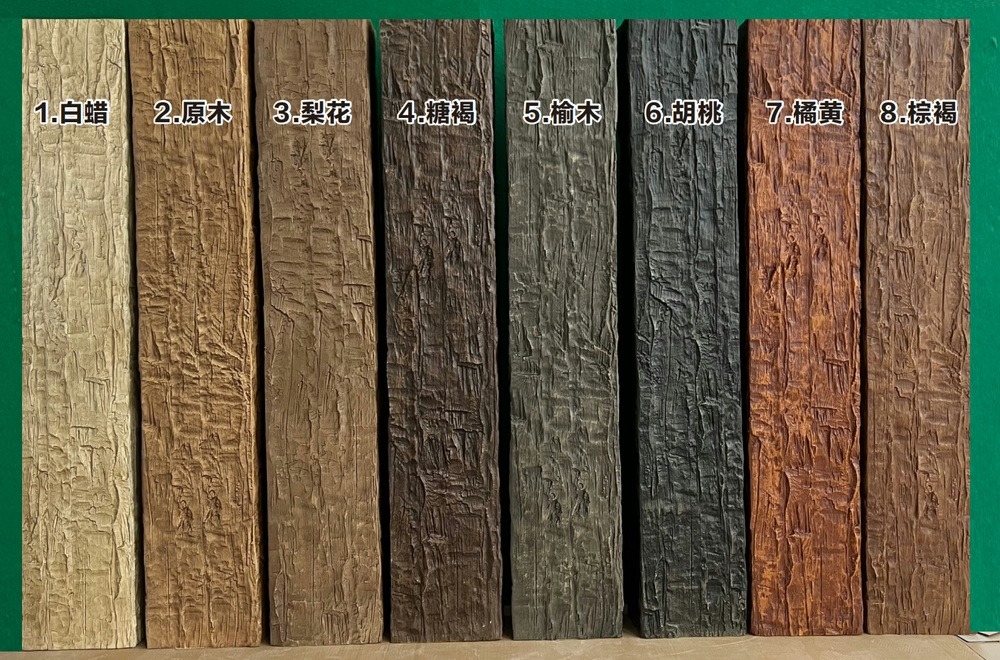
Surface finishing of ornamental beams requires techniques appropriate to the level of quality required. Simple painted finishes can be applied efficiently but may not achieve the depth and richness that elaborate ornamentation deserves. Layered finishing systems create more convincing results but require additional processing time and quality control attention.
Assembly of ornamental ceiling systems often involves multiple components that must work together visually. Main beams, secondary elements, corner treatments, and decorative accents all contribute to the overall effect. System design that coordinates these components simplifies specification and installation while ensuring cohesive visual results.
Applications Across Building Types
Religious buildings have long featured elaborate ceiling ornamentation that conveys spiritual aspiration and institutional permanence. Contemporary religious architecture can incorporate these traditions without the expense of traditional materials, making ornamental ceilings achievable for congregations with limited budgets. The durability advantages of polyurethane also benefit these often-heavily-used spaces.
Civic buildings and government facilities communicate authority and public service values through architectural quality. Ornamental ceilings in courthouses, municipal buildings, and public assembly spaces help establish the dignity that democratic institutions wish to project. Faux wood beams allow these expressions of civic pride without the maintenance demands that genuine timber would impose.
Theater, entertainment, and hospitality venues benefit from ornamental ceilings that create memorable spatial experiences. Restaurant dining rooms, hotel ballrooms, and performance spaces all use ceiling ornamentation to establish atmosphere and differentiate themselves from competitors. Faux wood technology supports these commercial objectives economically.
Private residences featuring grand spaces can incorporate ornamental ceilings that were previously reserved for the wealthiest homeowners. Homeowners undertaking significant renovation or new construction increasingly specify these treatments as expressions of personal achievement and design sophistication. The democratization of ornate ceiling options reflects broader cultural trends toward residential design ambition.
Specification and Design Development
Successful ornamental beam projects require careful attention to scale relationships and visual hierarchy. Ornamentation that overwhelms the space or competes with other design elements creates visual confusion rather than enhancement. Design development should consider how ornamental elements interact with walls, furnishings, and lighting to create cohesive environments.
Lighting design deserves particular attention in ornamental ceiling applications. The interplay between decorative beams and illumination systems determines how details are perceived and how the overall ceiling reads visually. Coffered and ornamented ceilings often incorporate concealed lighting that creates dramatic effects impossible with simpler treatments.
Custom profile development for unique applications allows architects to realize design intentions that exceed catalog capabilities. Working directly with manufacturers to develop custom tooling creates genuinely original ornamentation rather than variations on standard themes. This custom capability supports architectural innovation while maintaining the quality that professional practice demands.
Installation planning for ornamental systems should address access for handling, alignment verification, and finishing touch-up. These complex installations benefit from experienced contractors who understand both the materials and the visual requirements. The investment in qualified installation expertise protects the design investment that ornamentation represents.
Long-Term Performance and Maintenance
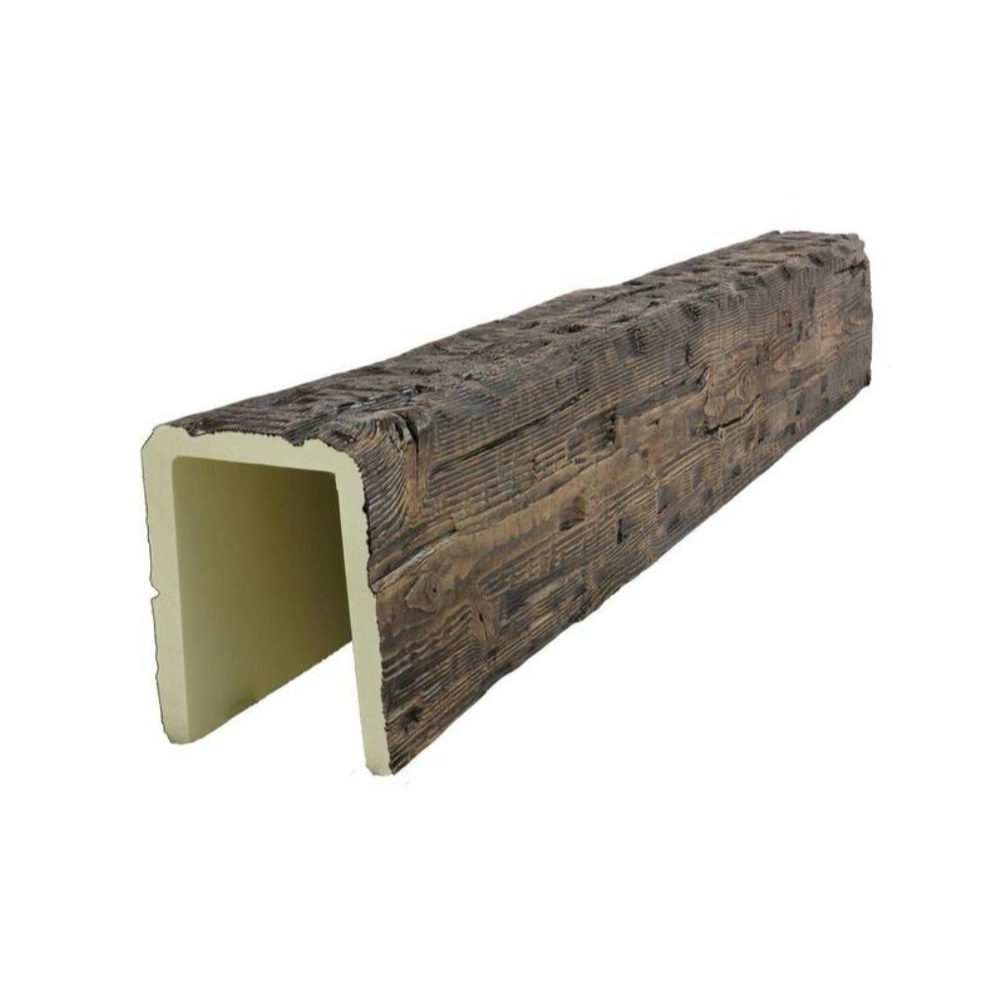
Ornamental ceiling elements require maintenance considerations that affect their long-term viability. The non-porous surface of quality polyurethane simplifies cleaning compared to natural wood or plaster alternatives. Occasional dusting and periodic cleaning maintain appearance without the refinishing that natural materials might require.
Inspection protocols for ornamental ceilings verify that connections remain secure and appearance quality persists. These inspections can be incorporated into routine building maintenance schedules without specialized expertise. Early identification of any issues allows corrective action before problems develop into significant concerns.
Environmental stability ensures that ornamental elements maintain alignment and appearance despite building movement or environmental changes. Quality polyurethane products resist the dimensional instability that affects natural materials, contributing to long-term appearance consistency that natural ornamentation struggles to match.
The lifecycle cost analysis for ornamental faux wood beams typically favors them over traditional materials when total cost is considered. Initial material and installation costs may be competitive or favor faux products, while long-term maintenance costs clearly favor polyurethane. This economic advantage supports specification decisions in budget-conscious commercial contexts.
Technical References
ASTM standards cited in every specification
Test Data
Lab results from internal testing program
Updated 2026
Reviewed against current product specs


