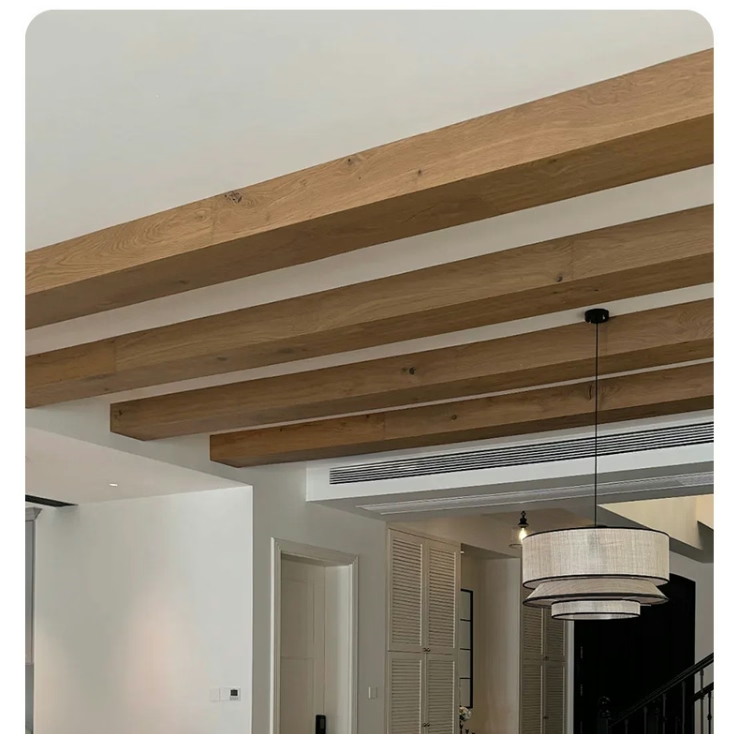
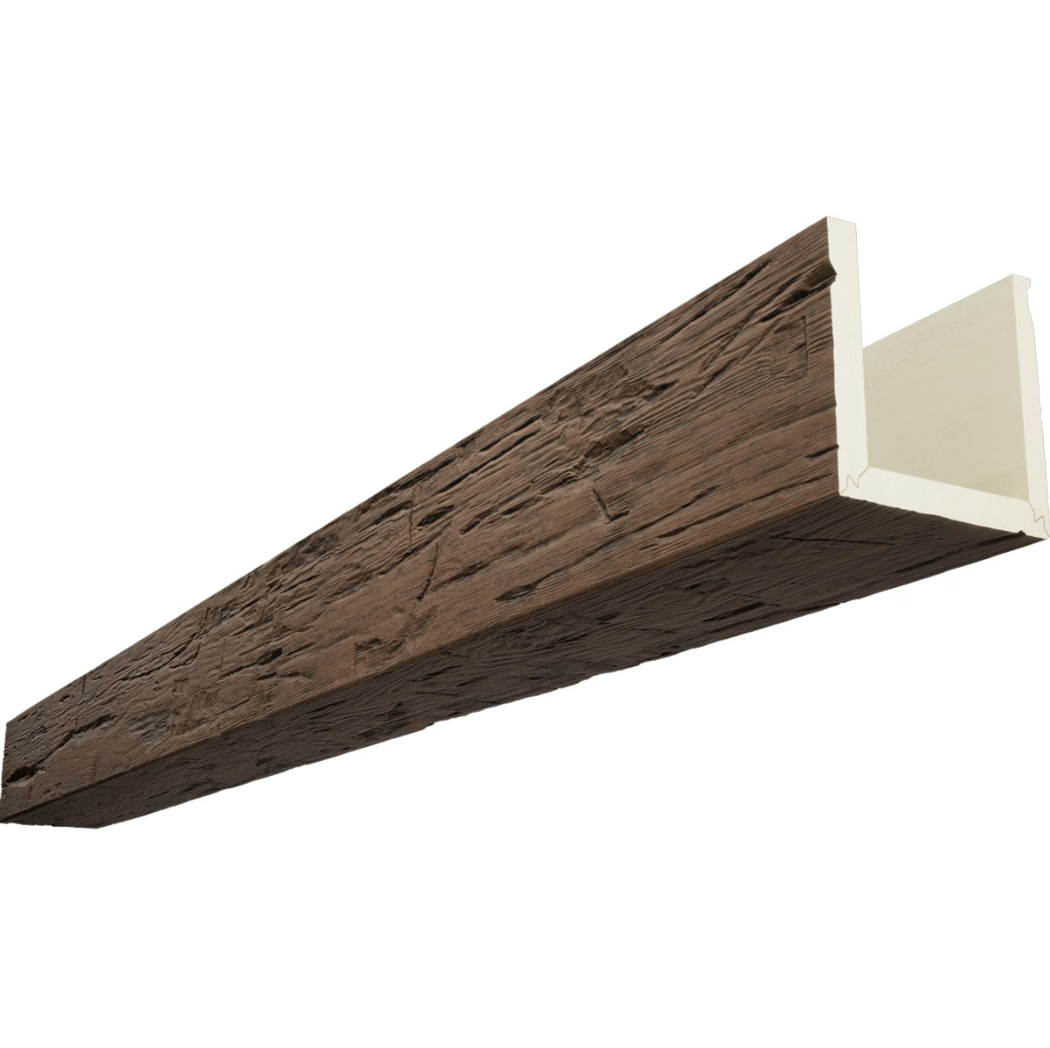
The competitive retail and hospitality landscape demands distinctive spaces that create memorable customer experiences and encourage repeat visits. Interior design significantly influences this experience, with ceiling treatment providing an often-overlooked opportunity to establish atmosphere and reinforce brand identity. Hollow faux timber beams offer cafe and shop operators an effective way to add warmth and visual interest that distinguishes their spaces from competitors while remaining practical for active commercial environments.
Renovation of operating businesses presents specific challenges that new construction does not face, primarily related to maintaining revenue flow during improvement work. The quick installation and minimal disruption that hollow faux timber beams enable address these commercial realities directly, making sophisticated ceiling treatments accessible to businesses that cannot afford extended closures. This practical advantage expands the range of operators who can benefit from quality interior design.
Creating Customer-Appealing Atmospheres
Warmth perception significantly affects how customers experience commercial spaces, with cooler environments often feeling less welcoming than warmer alternatives. Timber aesthetics tap into deep psychological associations with natural materials, creating feelings of comfort and relaxation that support extended customer visits. The visual warmth of wood-tone beams provides these benefits without the fire risks, maintenance requirements, or cost of genuine timber.
Instagram-worthy design has become an explicit objective for many hospitality operators who recognize the marketing value of shareable space photography. Distinctive ceiling treatments create visual interest that translates effectively to social media images, generating organic promotion that paid advertising cannot match. Hollow faux timber beams provide the dramatic visual element that captures attention in crowded social feeds.
Acoustic character influences customer comfort during extended visits, with excessive echo creating environments that feel harsh or institutional. The textured surfaces and complex geometry that beam installations create help diffuse sound reflection, improving acoustic quality alongside aesthetic enhancement. This dual benefit makes beam installation particularly valuable in hard-surfaced commercial spaces.
Renovation Approach for Active Businesses
Speed of installation directly affects business revenue during renovation periods, making rapid completion a priority for commercial operators. Hollow faux timber beams install significantly faster than traditional timber alternatives, with complete cafe installations achievable within days rather than weeks. This compressed timeline reduces lost revenue while enabling operators to begin benefiting from improved spaces sooner.
Dust and debris containment during installation protects merchandise, equipment, and customer areas from contamination. Modern polyurethane beam installation generates minimal particulates compared to cutting or finishing operations that natural wood would require. Temporary barriers and negative air pressure techniques further isolate work areas from customer-accessible spaces when renovation must proceed with partial business operation.
Flexible scheduling accommodates business operating hours alongside construction needs, with evening and weekend installation minimizing impact on peak sales periods. The quick-setting adhesives and efficient installation methods that hollow beams enable support this flexible scheduling approach. Building managers and operators appreciate the accommodation of commercial realities that installation contractors provide.
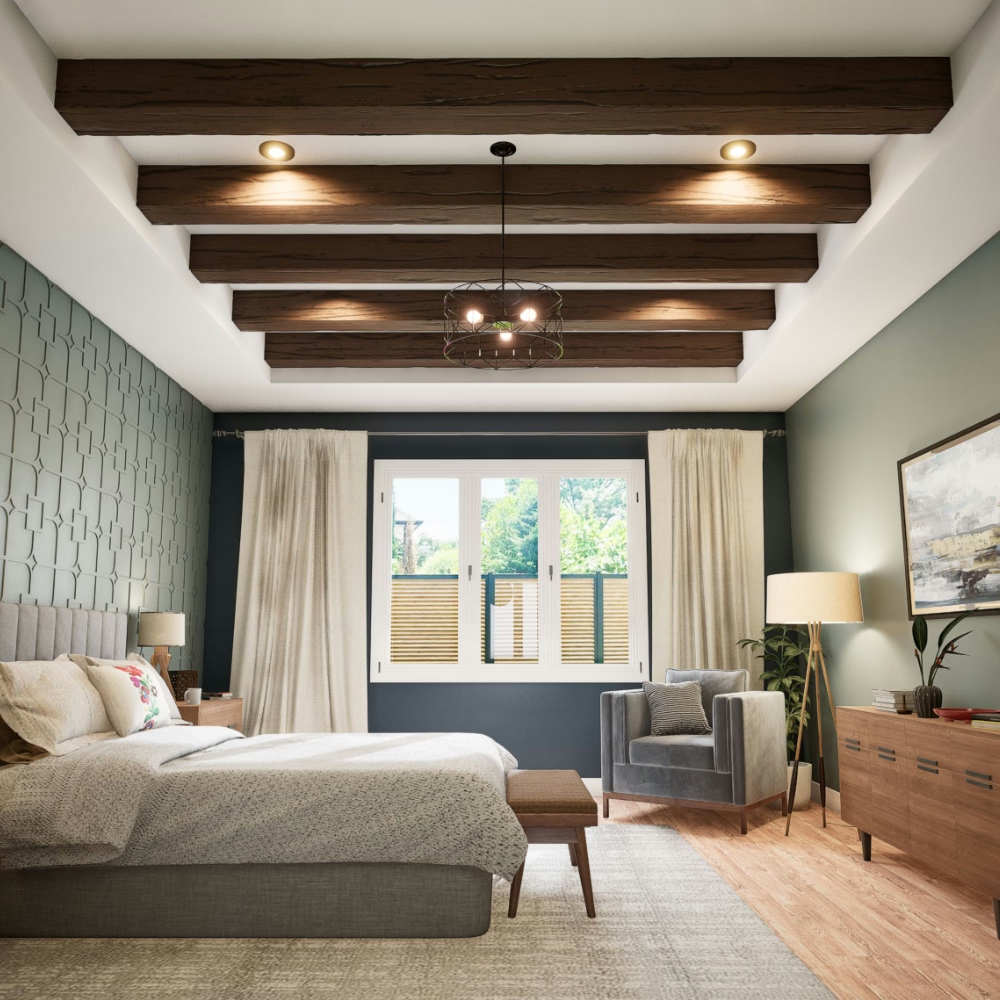
Design Styles for Different Venue Types
Coffee shop aesthetics often favor industrial-influenced designs that combine raw materials with refined details, creating spaces that feel authentic without appearing neglectful. Hollow faux timber beams complement exposed brick, metal accents, and concrete surfaces commonly found in coffee shop renovations. The organic texture that beams provide softens industrial hard materials beautifully.
Quick-service restaurants increasingly invest in design quality to compete with fast-casual and casual dining alternatives. Ceiling beams create visual interest that elevates perceived quality without the cost and complexity of extensive millwork or specialty finishes. Lighter finish options brighten spaces while darker tones add sophistication depending on the quality positioning the establishment targets.
Boutique retail spaces benefit from beam installations that create visual ceiling interest without overwhelming merchandise displays. Beams provide backdrop rather than focal point, supporting product presentation rather than competing with displayed goods. The subtle enhancement that quality ceiling treatment provides creates shopping environments that feel curated rather than generic.

Maintenance Considerations for Retail Environments
Cleaning protocols in food service and retail environments must accommodate the materials used throughout the space, including ceiling treatments. Hollow faux timber beams tolerate standard commercial cleaning products without surface damage, enabling maintenance practices that teams already know how to perform. This compatibility simplifies staff training and supply management.
Grease and humidity resistance proves essential in kitchen-adjacent areas and spaces where food preparation creates airborne moisture and oils. Polyurethane materials resist these contaminants better than natural wood, which would absorb greases and odors over time. This resistance maintains appearance quality while reducing the deep cleaning requirements that porous materials would demand.
Durability against accidental damage protects investments in commercial environments where furniture repositioning, stock handling, and customer activities create impact risks. Hollow faux timber beams withstand the routine contacts that occur in busy retail and hospitality spaces without showing the dents, scratches, or damage that would require repair. This resilience preserves the professional appearance that attracts customers.
Budget-Friendly Quality Approaches
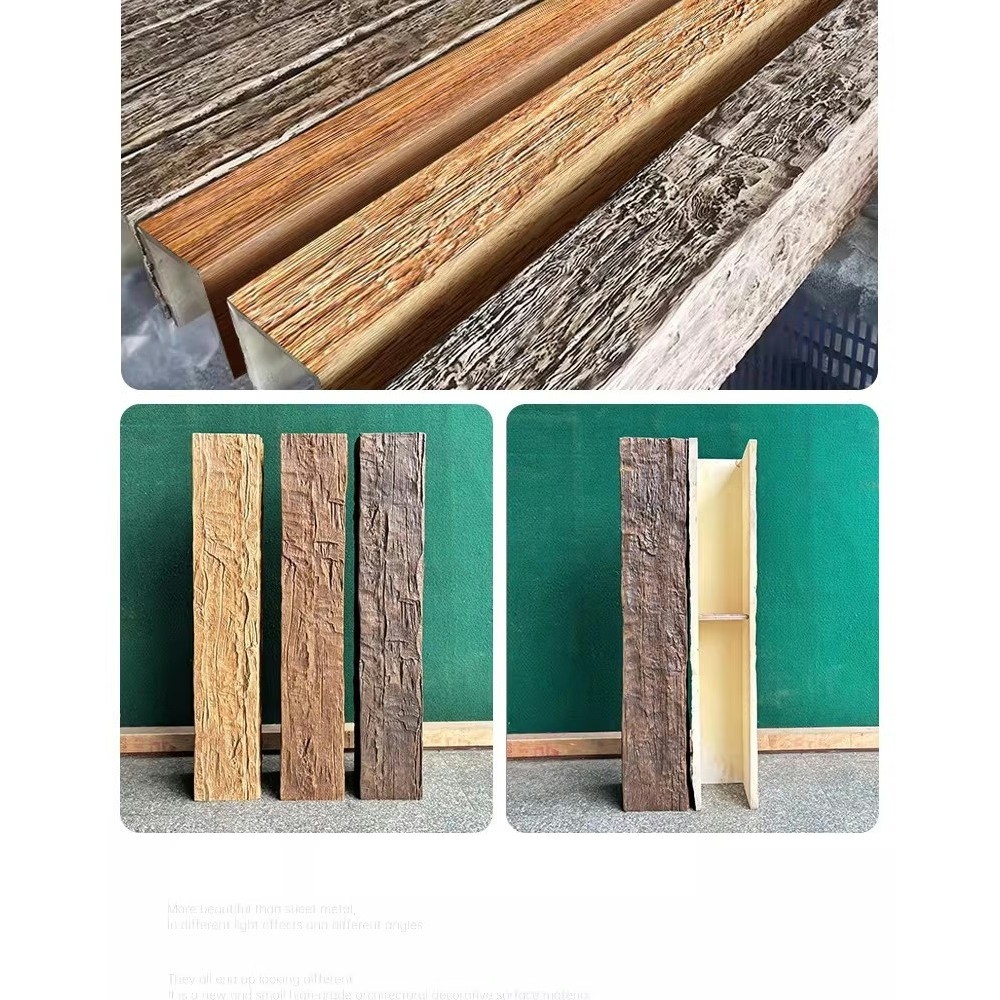
Material cost management for commercial renovations often constrains design ambitions, requiring creative solutions that achieve aesthetic objectives within limited budgets. Hollow faux timber beams provide substantial visual impact at accessible price points, enabling quality-driven design that budget constraints might otherwise prohibit. This value proposition proves particularly attractive to independent operators competing against well-funded chain competitors.
Installation cost efficiency follows from the lightweight handling and rapid completion that hollow construction enables. Labor costs for beam installation represent a smaller fraction of project totals than heavier materials would require, improving the economic case for beam treatments across more project types. This efficiency democratizes access to quality ceiling design.
Finish durability reduces the lifecycle cost of commercial beam installations by eliminating refinishing requirements that natural materials would incur. Years of cleaning, contact, and environmental exposure do not degrade premium polyurethane finishes the way they affect painted or stained wood. This durability translates directly to reduced maintenance expense over the beam service life.
Coordinating with Other Design Elements
Lighting integration with beam installations creates layered illumination that enhances atmosphere while providing functional workspace and accent lighting. Recessed fixtures positioned between beams, linear lighting tracing beam edges, or pendant fixtures suspended at varying heights all create different effects suited to different venue types. Early coordination during design ensures that beam placement supports intended lighting approaches.
HVAC and mechanical system coordination addresses ventilation, heating, and cooling requirements that commercial spaces demand. Beam placement should not obstruct supply diffusers, return air grilles, or fire suppression sprinklers. Coordination during design development identifies potential conflicts before installation commitment prevents costly modifications or compromises.
Furniture and fixture relationships with ceiling beams influence both aesthetic and functional outcomes. Tables positioned beneath prominent beams may experience lighting complications from beam shadows, while low ceiling areas may not accommodate certain beam installations without creating headroom concerns. Site-specific planning ensures that beam designs work with actual furniture and traffic patterns rather than abstract design intentions.
Seasonal and Event Adaptability
Temporary decoration accommodation enables holiday and event styling that commercial spaces require for marketing and atmosphere purposes. Beam surfaces provide mounting opportunities for temporary installations without requiring permanent hardware that would affect appearance when not in use. This flexibility supports diverse programming without compromising base design quality.
Portable fixture integration with beam elements enables flexible space reconfiguration that contemporary hospitality operations value. Pendant lighting, hanging planters, and decorative elements suspended from beams create zones and visual interest that rearrange as business needs change. The load capacity that hollow beams provide accommodates most suspended decorative elements safely.
Projection mapping and digital enhancement increasingly appear in retail and hospitality environments, creating dynamic visual experiences that replace or supplement static decoration. Beam geometry and placement influence projection effectiveness, with flat surfaces and defined shapes providing better canvases than irregular alternatives. Design consideration for future digital enhancement preserves options that static-only planning would foreclose.
Technical References
ASTM standards cited in every specification
Test Data
Lab results from internal testing program
Updated 2026
Reviewed against current product specs