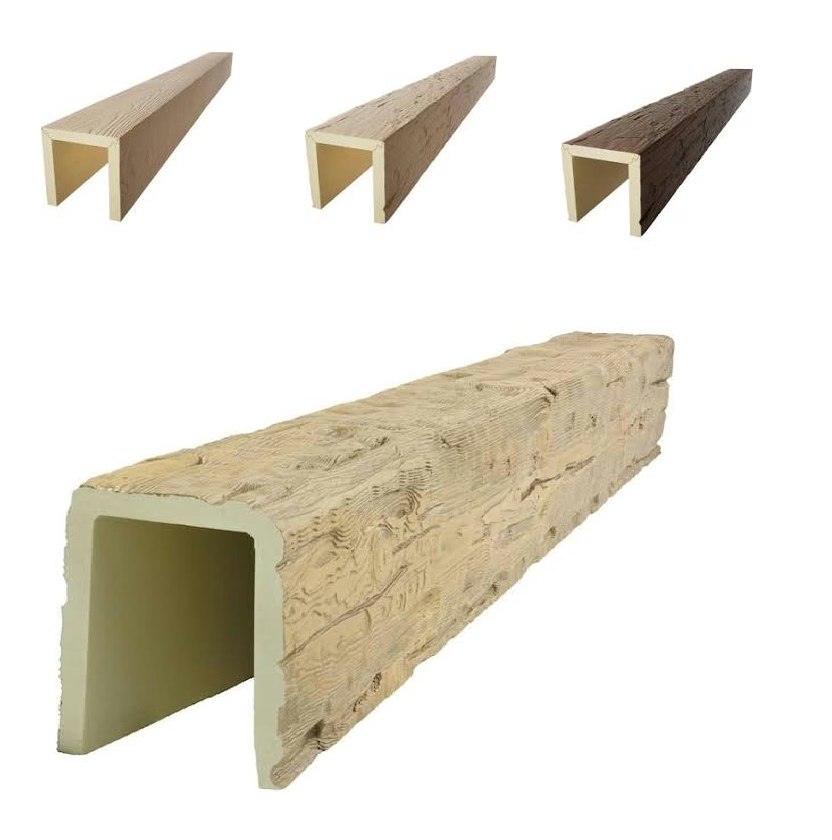
Contemporary interior design increasingly features LED lighting as a primary illumination source, valued for its energy efficiency, design flexibility, and the dramatic effects it enables. Implementing LED systems effectively requires thoughtful cable management that maintains clean appearance while accommodating the wiring that LED fixtures require. Hollow PU faux wood beams with integrated wire management provide elegant solutions for this cable routing challenge.
The wire management concept extends beyond simple cable channels to encompass the complete system for organizing, protecting, and accessing low-voltage wiring throughout LED installations. Premium wire management beams address these requirements comprehensively, enabling clean installations that perform reliably throughout their service life.
Comprehensive Wire Management Design
Cable routing pathways throughout beam lengths create organized routes for wiring from power sources to fixture locations. These pathways should accommodate expected wire quantities with adequate space for future additions or modifications. The organized approach that proper routing provides simplifies troubleshooting and future modifications significantly.
Separation between different cable types maintains appropriate electrical isolation throughout installations. Power conductors, data cables, and control wiring each have specific routing requirements that integrated management addresses. This separation capability proves particularly valuable in smart building applications where multiple systems route through common spaces.
Access points at strategic locations enable wire pulling, junction creation, and future modifications that installations inevitably require. Well-designed access points balance aesthetic concealment against functional accessibility, providing service capability without compromising appearance. The location and design of these access points deserves careful attention during specification.
Low-Voltage LED System Considerations
LED driver and transformer location affects wire routing significantly, as these components often require accessibility that beam concealment might complicate. Planning for driver placement ensures that wire lengths remain within acceptable limits while maintaining accessibility for service. Integrated wire management should accommodate these driver connections cleanly.
Voltage drop management for LED circuits requires appropriate wire gauge selection that beam channel capacity must accommodate. Longer wire runs require larger gauges to maintain acceptable voltage at fixtures, potentially affecting channel sizing requirements. Calculating voltage drop during design ensures that wire gauges and channel provisions meet system requirements.
Dimming compatibility adds complexity that wire management must accommodate, whether using forward phase, reverse phase, or 0-10V dimming methods. Each approach has specific wiring requirements that integrated management should address through appropriate channel sizing and separation provisions. Understanding dimming approaches during specification prevents limitations that later discovery would create.
Installation Best Practices
Sequencing wire installation before beam mounting enables efficient work that takes advantage of open access before beams achieve final position. Running wires through channels during this phase proves far simpler than threading through completed installations, where access limitations complicate the work considerably. This sequencing discipline significantly improves installation efficiency.
Wire protection during installation prevents damage that might compromise circuit reliability or create safety concerns. Protective bushings at entry points, appropriate wire slack at transitions, and careful handling throughout installation protects wire integrity. This protective attention ensures that wiring performs reliably after concealment.
Testing before beam closure confirms proper circuit function and identifies any issues while correction remains accessible. Continuity verification, polarity checking, and function testing should precede final beam positioning. This testing discipline prevents callbacks that concealed but non-functional wiring would require.
Organization and Labeling
Wire labeling at junction points and access locations enables future identification that simplifies troubleshooting and modification. Professional labeling practices using appropriate materials ensure that labels remain legible throughout the installation lifecycle. This organizational investment pays dividends whenever service becomes necessary.
Circuit documentation that records wire routing, junction locations, and system configuration enables future work by contractors who did not perform original installation. As-built drawings, connection schedules, and physical documentation create a complete record that supports ongoing maintenance. This documentation requirement deserves explicit attention during project closeout.
Color coding of wires by circuit provides visual identification that complements labeling and documentation. Consistent color conventions enable rapid circuit identification during service and modification work. This visual organization supplements other organizational approaches without requiring tools or reference materials.

Maintenance and Modification Access
Junction box integration within beam wire management systems provides organized connection points that facilitate service and modification. Standard junction boxes installed within accessible locations enable work without beam removal or destructive access. The integration of these junction points with beam wire management represents thoughtful engineering.
Modular connection approaches enable system additions without requiring complete wire replacement or destructive intervention. Quick-connect terminals, plug-in connections, and other modular approaches support modifications that installations require as needs evolve. This modularity proves particularly valuable in commercial applications where frequent changes occur.
Diagnostic access points at regular intervals enable testing and troubleshooting without comprehensive system disassembly. These access provisions transform maintenance from invasive procedures into straightforward diagnostic processes. The cost of incorporating diagnostic access during installation proves modest compared to the savings it enables during maintenance.
Future Technology Accommodation
Scalability provisions in wire management design accommodate system expansion that growth or technology changes might require. Extra channel capacity, additional junction provisions, and accessible routing all contribute to scalability that avoids constraining future development. This forward-looking approach proves valuable in applications where needs evolve rapidly.
Smart building integration increasingly requires network infrastructure that wire management should accommodate alongside LED power wiring. Category cable for network connectivity, control wiring for building automation, and wireless access point locations all benefit from the organized routing that integrated management provides. Planning for these requirements ensures that buildings remain adaptable.
LED technology advancement continues rapidly, with new products offering improved efficiency, better light quality, and enhanced capabilities. Wire management should accommodate these advances by providing capacity and accessibility that enables system upgrades without comprehensive renovation. This technology accommodation protects investment against obsolescence.
Technical References
ASTM standards cited in every specification
Test Data
Lab results from internal testing program
Updated 2026
Reviewed against current product specs


