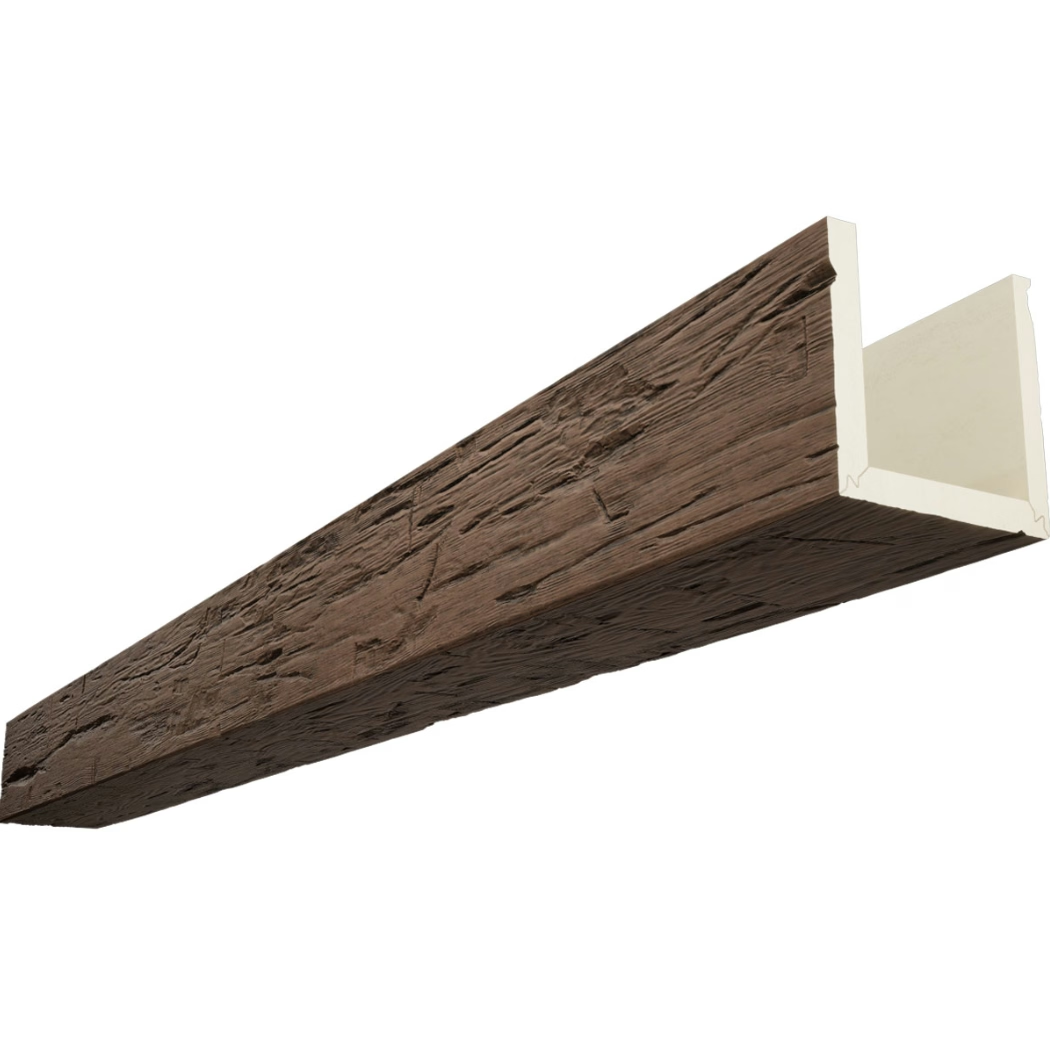
The home decor market has experienced substantial evolution as consumers increasingly undertake renovation projects that previously required professional contractor involvement. This DIY renovation trend has created demand for products that deliver professional-quality results without specialized skills or expensive tool investments. Faux wood beam products fit this market perfectly, offering dramatic visual transformations that casual users can achieve through straightforward installation processes.
Retailers recognizing this opportunity have developed merchandising approaches that communicate product benefits clearly while enabling customer self-service purchasing. The physical characteristics of faux wood beams—substantial visual presence, authentic appearance, and manageable weight—create natural opportunities for in-store displays that demonstrate these advantages effectively. Understanding how to leverage these characteristics through strategic merchandising amplifies sales potential significantly.
Understanding Consumer Motivation for Faux Beam Purchases
Consumer interest in faux wood beams typically stems from specific renovation scenarios that products can address directly. Dated ceiling appearances represent the most common motivation, with homeowners seeking to update spaces that feel old-fashioned or disconnected from contemporary design sensibilities. The warm, organic character that timber beams provide transforms stark modern spaces into inviting environments suitable for family living.
Concealing ceiling imperfections or outdated structural elements addresses another substantial consumer segment. Homes with visible ceiling beams that have accumulated paint layers, suffered water damage, or simply clash with updated interiors create natural demand for covering solutions. Faux wood beam covers provide aesthetic transformation without requiring removal of original structural elements, avoiding the expense and complexity that beam removal would involve.
Cost-conscious consumers recognize that faux wood beams deliver timber aesthetics at fractions of solid timber pricing. This value proposition resonates strongly with budget renovation projects where remaining within financial constraints while achieving design goals matters critically. The installation simplicity that polyurethane products provide further enhances their value appeal by eliminating contractor labor expenses that solid timber alternatives would require.
Display Strategies for Maximum Visual Impact

Physical displays should communicate the scale transformation that faux wood beams provide, since ceiling applications are inherently difficult to visualize from floor-level product positioning. Full-length beam samples suspended at angles that simulate ceiling appearance help customers understand how products will look in actual installation contexts. Mirror or angled display surfaces can enhance this effect while conserving valuable floor space.
Finish selection for retail displays should represent the breadth of available options while prioritizing popular choices that drive the majority of sales. Natural wood tones typically outsell neutral and specialty finishes in most retail contexts, making oak, walnut, and weathered options logical display priorities. However, maintaining inventory of specialty finishes enables retailers to serve diverse customer preferences without requiring extensive display space for rarely-purchased items.
Scale comparison displays showing faux beams alongside traditional lumber sizes help customers understand dimensional options available. Many consumers underestimate how substantial standard beam sizes appear in actual installations, potentially ordering undersized products that fail to achieve intended visual impacts. Clear dimensional labeling and visual comparisons prevent these ordering errors while building customer confidence in purchase decisions.

Technical Information That Supports Sales
Effective retail merchandising extends beyond physical displays to include supporting information that helps customers make confident purchasing decisions. Installation requirements, including mounting hardware specifications and adhesive recommendations, enable customers to assess their DIY capabilities accurately. Clear disclaimers regarding any limitations or prerequisites prevent customer disappointment when installations prove more complex than anticipated.
Care and maintenance information reassures customers that their purchases will maintain attractive appearances with minimal ongoing attention. The durability advantages of quality polyurethane products, including moisture resistance and UV stability, deserve emphasis for customers comparing faux beams against natural wood alternatives. This information helps justify premium pricing for quality products while differentiating against budget alternatives that might disappoint.
Warranty information and manufacturer support availability influence purchase decisions for higher-priced items. Customers investing substantial amounts in comprehensive ceiling transformations want assurance that product failures will receive appropriate resolution. Displaying warranty terms prominently and providing easy access to manufacturer contact information builds confidence that supports premium pricing strategies.
Wholesale and Contractor Sales Channels
Beyond retail sales, faux wood beam products serve contractor and commercial buyer segments through wholesale distribution channels. These buyers typically purchase in larger quantities for multi-unit residential developments, commercial renovation projects, or ongoing client work. Understanding their purchasing patterns and volume discount opportunities helps retailers capture this valuable market segment.
Contractor customers often prefer neutral or custom finish options that match specifications developed for specific client projects. Maintaining inventory of less-common finishes enables retailers to serve these professional customers without requiring special order lead times that might drive them to competing suppliers. Some retailers develop contractor accounts with dedicated pricing, priority availability, and delivery options that strengthen these valuable relationships.
Multi-family housing developers and commercial property managers represent additional wholesale customer segments seeking faux wood beams for new construction and renovation applications. These buyers typically require extensive documentation including fire ratings, warranty transfers, and specification compliance certifications. Retailers positioned to serve these requirements can develop substantial recurring revenue relationships that support stable business operations.
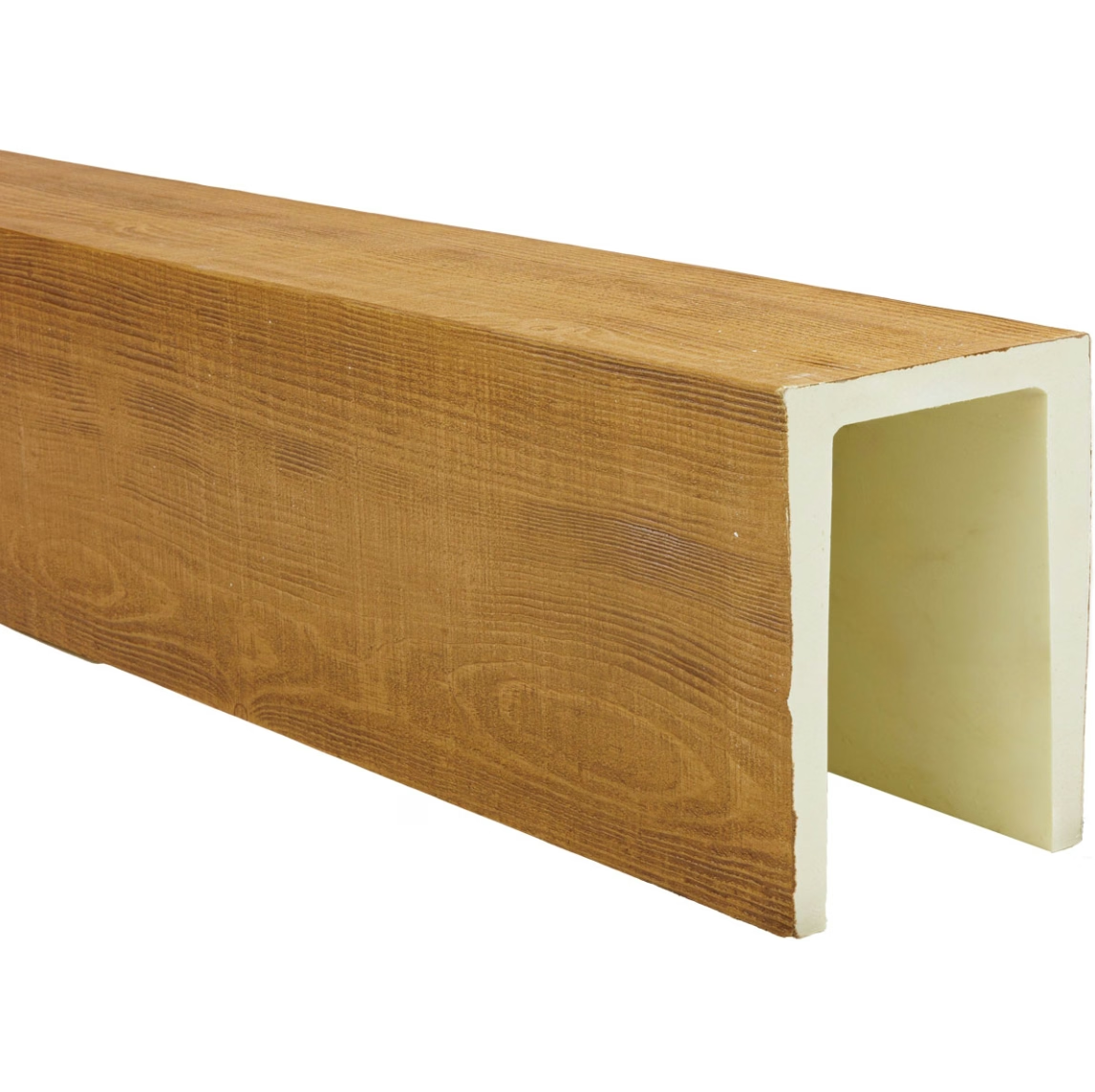
Seasonal and Promotional Considerations
Home renovation purchasing follows seasonal patterns that retailers can leverage through strategic promotional timing. Spring and early summer typically see elevated renovation activity as property owners undertake projects during favorable weather conditions. Pre-season promotional efforts capture customers planning projects before peak seasons begin, potentially trading promotional margin for volume sales during otherwise slower periods.
Holiday seasons create gift-giving opportunities for home improvement enthusiasts, particularly when retailers offer convenient sizing for instant-gift scenarios. Bundle packaging that combines beam sections with mounting hardware simplifies purchasing for gift-giving occasions while potentially increasing average transaction values. Gift wrapping services or decorative packaging further enhance these seasonal opportunities.
Digital marketing extends promotional reach beyond physical retail locations while supporting in-store sales through research that precedes store visits. Product information websites, social media presence, and search engine optimization help customers discover products and retailers during their consideration processes. Coordinating digital marketing with in-store merchandising amplifies overall effectiveness for both channels.
Home decor faux wood beam products represent strong merchandise categories that reward retailers investing in effective merchandising strategies. Their combination of consumer appeal, installation accessibility, and aesthetic impact creates ongoing demand that well-positioned retailers can capture through thoughtful product selection, effective displays, and supporting information strategies.
Technical References
ASTM standards cited in every specification
Test Data
Lab results from internal testing program
Updated 2026
Reviewed against current product specs