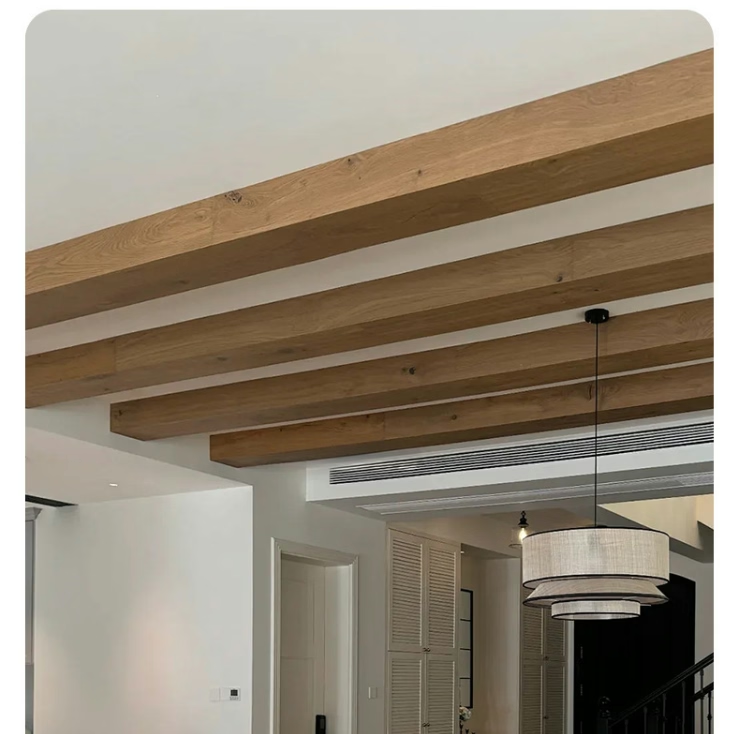
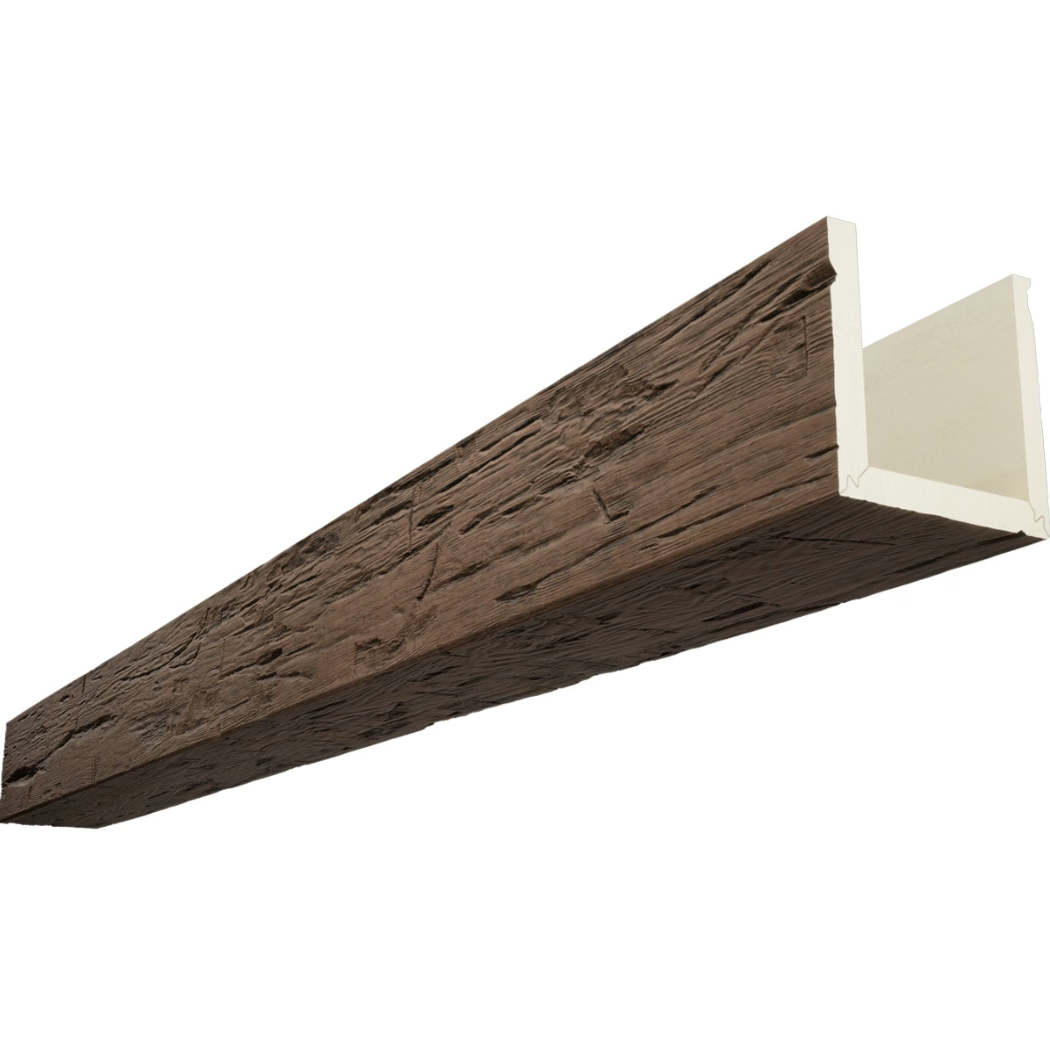
The home improvement retail sector has evolved substantially as major retailers recognized that consumers increasingly seek professional-quality products for personal installation. This market evolution created opportunities for manufacturers to develop product lines specifically designed for home center distribution, balancing quality expectations against price points appropriate for retail competition. Faux wood beams adapted readily to this distribution model, with home improvement store grade products serving both DIY homeowners and professional contractors.
Understanding what distinguishes home improvement store grade products from other market segments helps purchasers select appropriate items for specific applications. These products occupy middle ground between budget alternatives with limited quality and premium offerings designed for specialized applications. This positioning delivers meaningful value for many installation scenarios while maintaining accessibility that premium pricing would undermine.
Product Characteristics and Quality Standards
Home improvement store grade faux wood beams typically emphasize practical performance characteristics over specialized features that might appeal to narrower market segments. Standard dimensions accommodate the most common beam sizes encountered in residential construction, reducing the custom ordering requirements that premium products often involve. This standardization simplifies inventory management for retailers while ensuring customers can find appropriate products without extended wait times.
Finish quality on store-grade products balances durability requirements against pricing constraints that premium coatings would exceed. Factory-applied finishes provide attractive appearances suitable for most residential applications, with UV resistance and moisture tolerance appropriate for normal interior conditions. These finishes resist the wear patterns that quickly degrade lesser products while remaining affordable for budget-conscious purchasers.
Material formulations for store-grade products emphasize reliability over specialized performance. Impact resistance, dimensional stability, and long-term durability receive attention appropriate for typical residential applications. However, the extreme performance characteristics that commercial or specialty products might specify—such as enhanced fire ratings, commercial-grade impact resistance, or specialized chemical resistance—remain reserved for premium product categories where such features justify additional cost.
Installation Considerations for Different Skill Levels

Store-grade faux wood beams accommodate various skill levels through installation approaches that don't require specialized expertise. Basic tools suffice for mounting, with drills, levels, and measuring tapes covering most requirements. The lightweight nature of hollow polyurethane construction eliminates the heavy lifting assistance that solid timber installation would demand, enabling solo installation for many residential projects.
First-time installers benefit from clear documentation that many manufacturers provide with store-grade products. Instruction sheets outlining measurement procedures, mounting steps, and finishing recommendations help novices avoid common mistakes that might otherwise compromise results. Video tutorials available through manufacturer websites or QR codes on packaging extend this educational support into visual formats that some learners find more accessible.
Professional contractors appreciate the straightforward installation requirements that store-grade products offer for appropriate applications. These beams work well for budget-conscious clients, rental property improvements, or quick-turn renovation projects where premium products might not justify their additional costs. The ready availability through retail channels eliminates the special ordering delays that other distribution approaches might involve, supporting project timelines that contractors must meet.
Application Suitability and Limitations
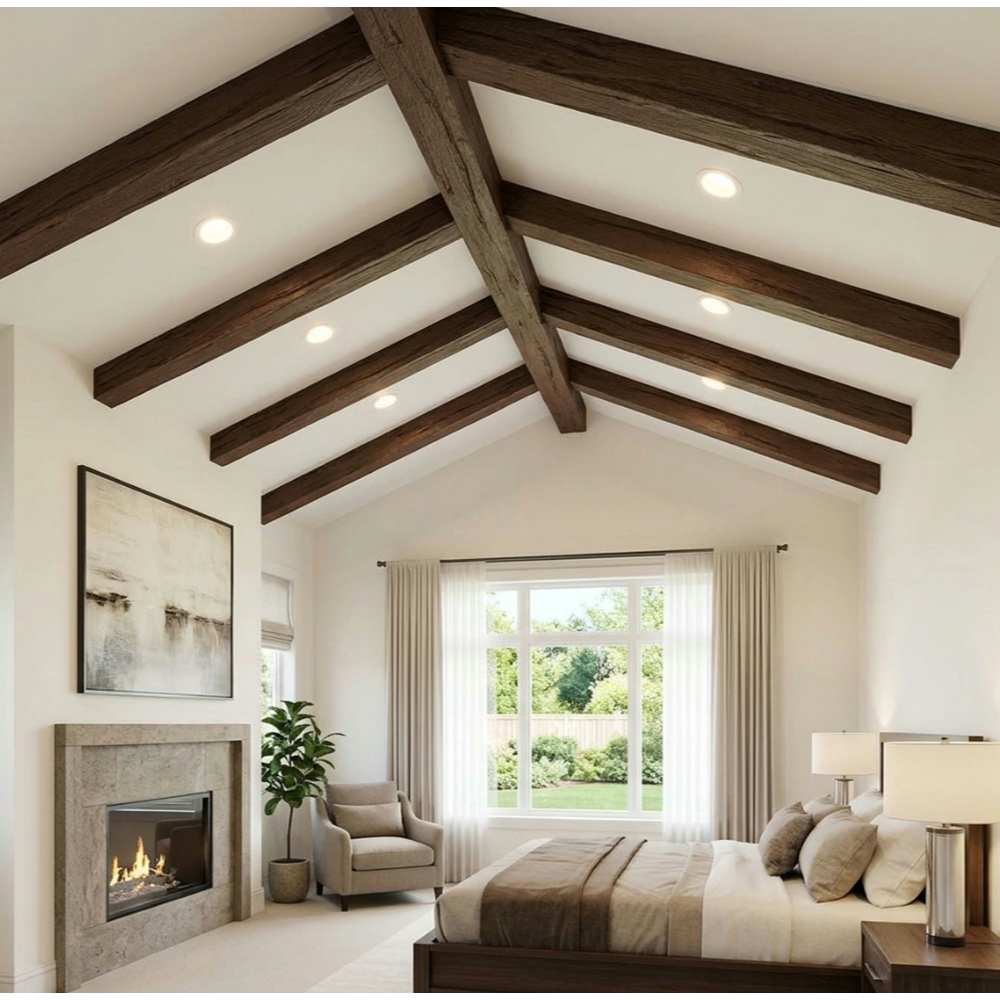
Store-grade faux wood beams perform excellently in typical residential ceiling applications where standard appearance and reasonable durability meet project requirements. Living rooms, bedrooms, dining spaces, and home offices accommodate these products without concerns that might justify premium alternatives. The aesthetic quality achieved typically exceeds what casual observers would recognize as anything other than genuine timber, satisfying the overwhelming majority of residential design goals.
Moisture-prone environments warrant closer consideration before specifying store-grade products. Bathrooms, kitchens, and other areas with elevated humidity might benefit from upgraded products with enhanced moisture resistance. While store-grade finishes tolerate normal humidity variation, sustained high-humidity exposure or direct water contact could challenge some products more than others. Consulting manufacturer specifications helps identify any application limitations that might affect performance.
Commercial applications with high traffic, frequent cleaning, or demanding environmental conditions often require upgrade to professional-grade products. Restaurant dining rooms, retail spaces, and hospitality venues subject ceiling installations to stresses that exceed typical residential conditions. The incremental cost difference between store-grade and commercial-grade products often proves worthwhile for applications where premature failure would require expensive remediation.
Cost-Benefit Analysis for Various Scenarios
Evaluating store-grade faux wood beams requires considering multiple cost factors beyond initial purchase prices. Material costs for retail-sold products typically range from thirty to eighty dollars per linear foot depending on dimensions and finish options. This pricing positions store-grade products competitively against both budget alternatives and premium offerings, enabling value-conscious purchasers to access reasonable quality without premium pricing.
Installation cost comparisons favor store-grade products substantially when professional installation becomes necessary. The straightforward mounting requirements that enable DIY installation also simplify professional work, reducing labor hours and associated costs when contractors handle installation. The lightweight handling characteristics that make solo installation possible for homeowners reduce the helper labor that heavier alternatives would require.
Long-term cost considerations include maintenance requirements and expected service life. Store-grade products with quality factory finishes typically maintain attractive appearances for fifteen to twenty years under normal residential conditions. This service life, combined with minimal maintenance requirements, produces favorable lifetime cost comparisons against natural wood alternatives that demand periodic refinishing and eventually require replacement.
Selecting Appropriate Products for Specific Projects
Project requirements should guide product selection decisions rather than price considerations alone. Identifying dimensional requirements through careful measurement prevents purchasing errors that might result in poorly fitting products. Recording beam dimensions, spacing, and any obstructions that covers must accommodate enables accurate ordering that avoids installation complications.
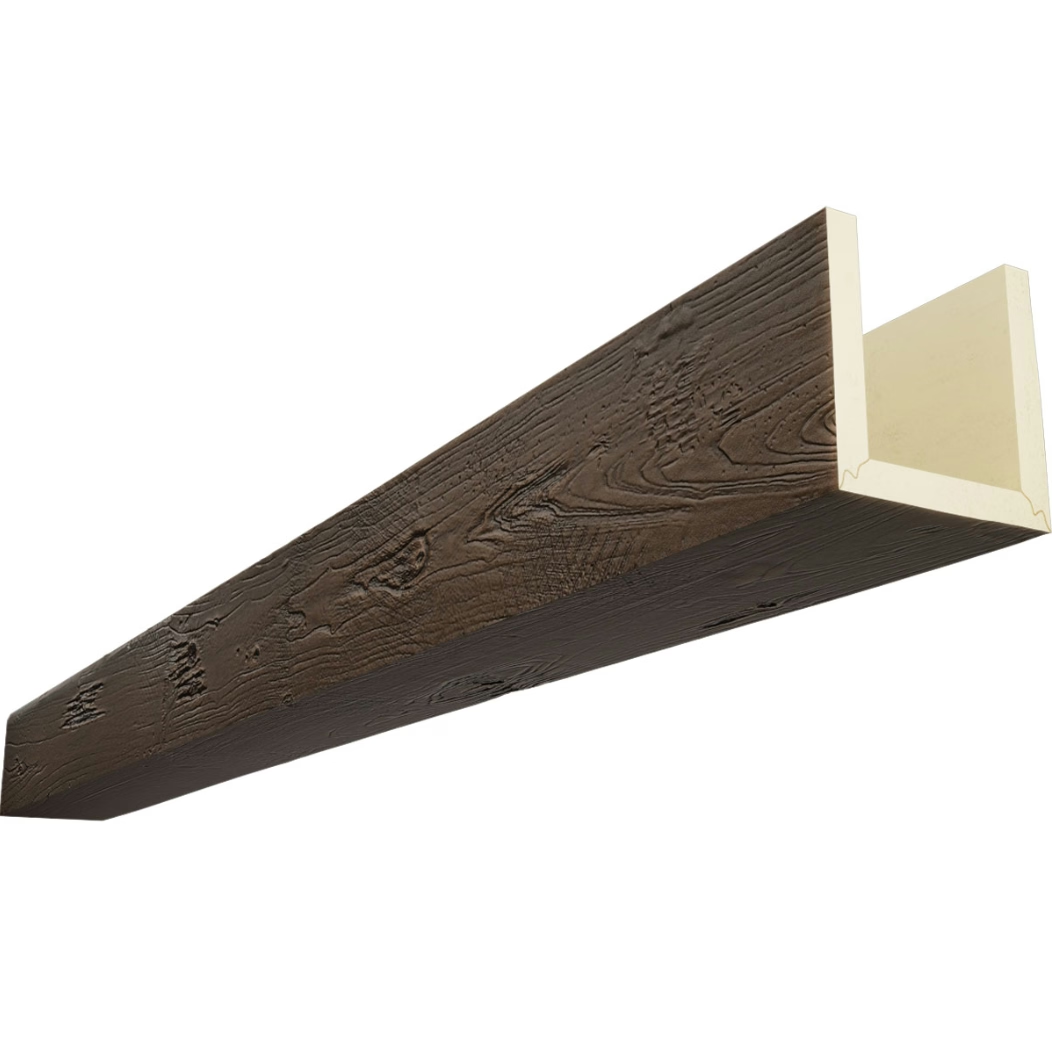
Finish selection should coordinate with existing design elements while accounting for future plans that might affect color schemes. Neutral finishes accommodate evolving design preferences more readily than bold colors might, potentially extending product service life as family tastes change. However, strong color preferences might justify more specific finish selection even if future repainting might become necessary.
Quality verification upon purchase helps identify any damage or defects before installation begins. Inspecting products for consistent dimensions, intact finishes, and complete mounting hardware ensures that problems receive resolution through normal return processes rather than discovered after installation when recourse becomes limited. Documenting any concerns with photographs facilitates communication with retailers or manufacturers when returns or exchanges become necessary.
Home improvement store grade faux wood beams serve valuable market functions by providing accessible quality for everyday applications. Their combination of appropriate performance, reasonable pricing, and broad availability has established them as foundational products for both retail distribution and contractor supply channels.
Technical References
ASTM standards cited in every specification
Test Data
Lab results from internal testing program
Updated 2026
Reviewed against current product specs