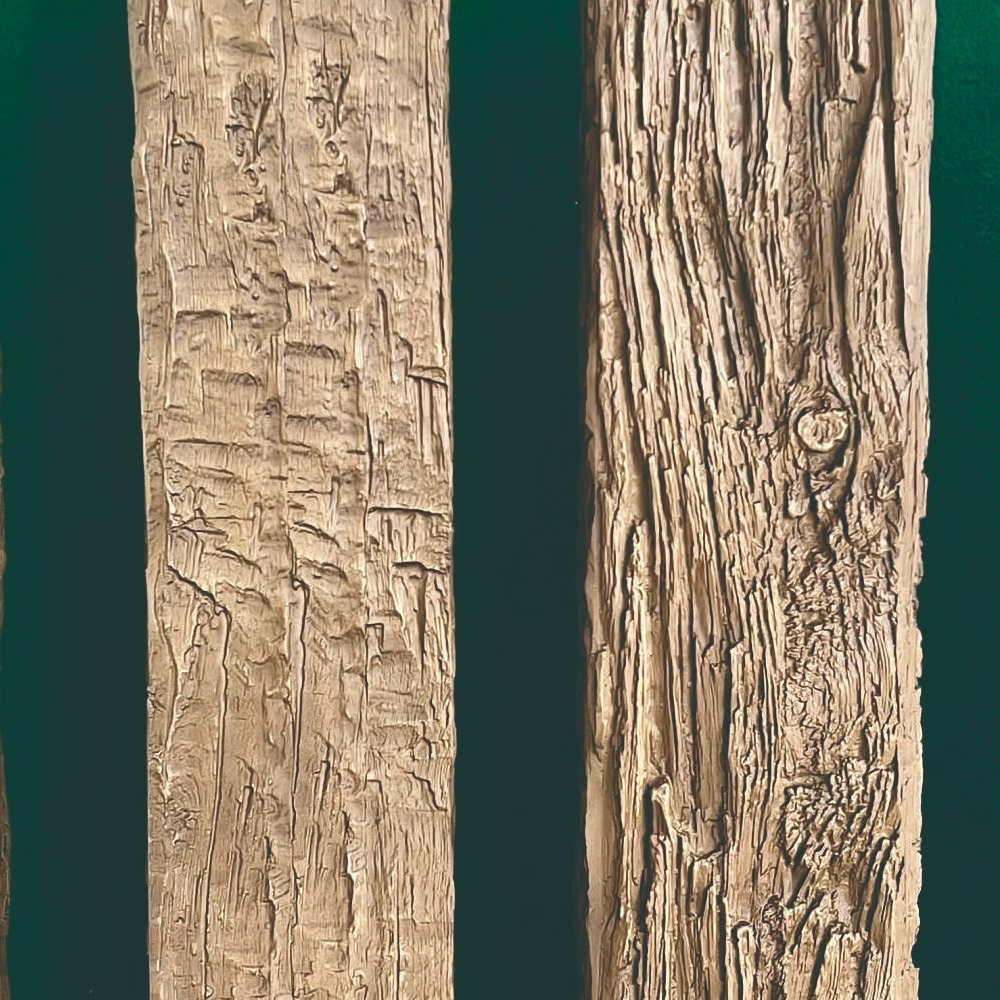
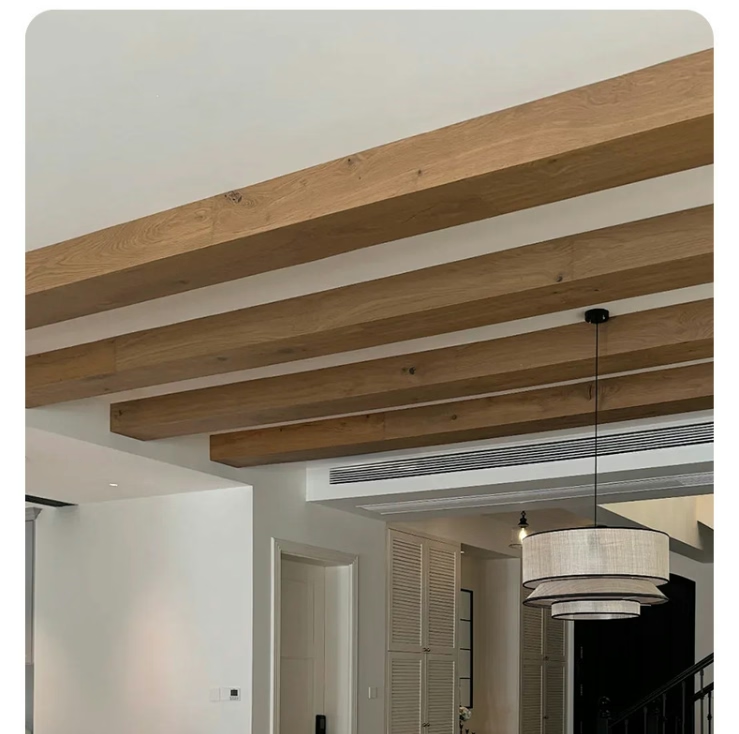
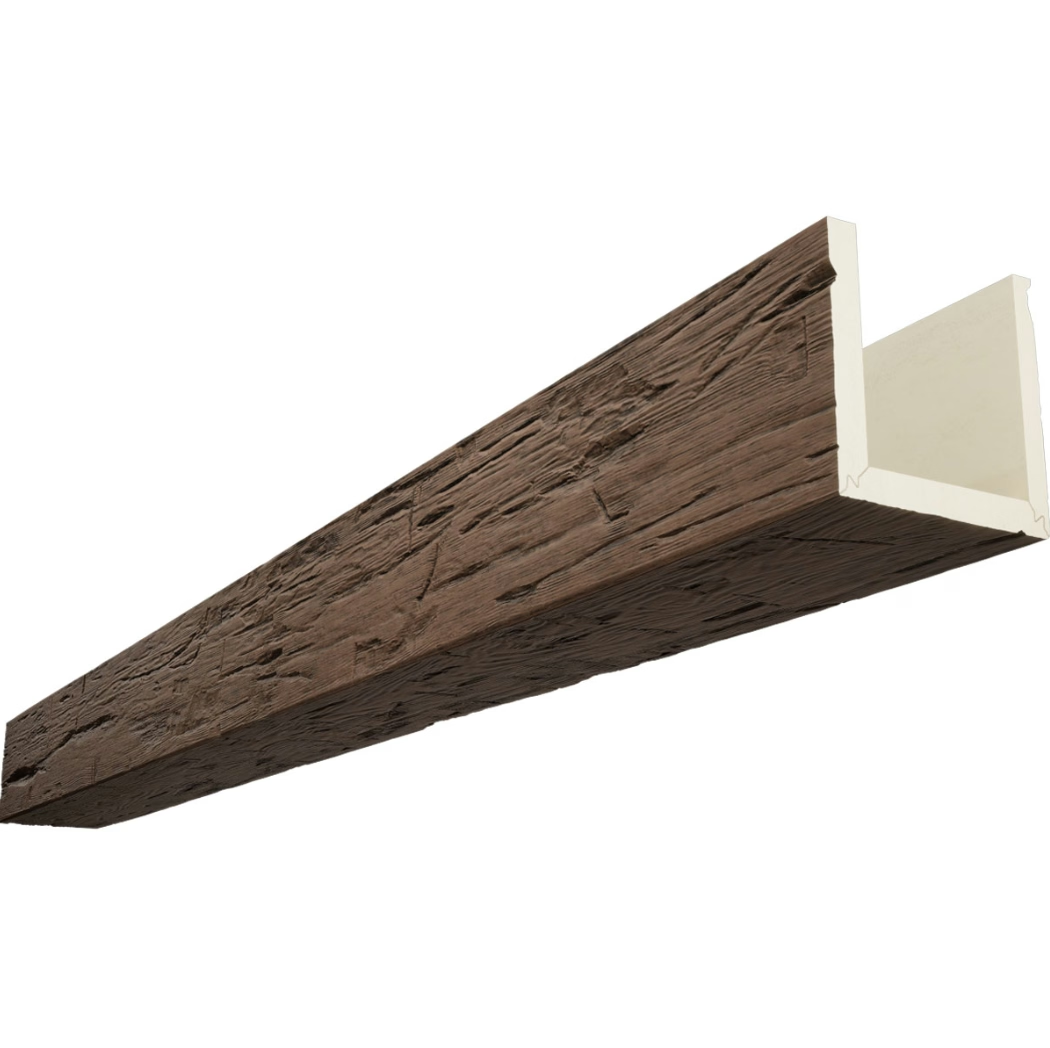
International commerce in decorative building products requires accurate tariff classification to ensure customs compliance, appropriate duty assessment, and smooth logistics through border crossings worldwide. The Harmonized Commodity Description and Coding System, administered by the World Customs Organization, provides the framework that governments use to categorize traded goods and apply import regulations. Understanding how faux wood ceiling beams fit within this classification system helps importers, exporters, and logistics providers navigate international trade requirements effectively.
The complexity of tariff classification often surprises those new to international commerce, as products that seem straightforward may fall into unexpected categories based on material composition, intended use, manufacturing process, or other characteristics that distinguish them from superficially similar goods. Faux wood ceiling beams occupy classification space that requires careful analysis of their specific properties to determine appropriate codes.
Understanding Harmonized System Structure
The Harmonized System organizes goods into twenty-one sections containing ninety-seven chapters, with codes structured as six-digit numbers that national authorities extend with additional digits for domestic tariff administration. The first six digits remain consistent across participating nations, ensuring international harmonization of trade data. The seventh and eighth digits, where used, vary by country to accommodate national policy requirements.
Product classification under the Harmonized System follows the General Rules for Interpretation, which establish logical hierarchy for determining appropriate codes when goods might fit multiple categories. These rules consider essential character, primary function, material composition, and processing methods in systematic sequence that typically yields clear classifications when applied carefully. Complex products like faux wood beams may require analysis under multiple rule applications before final determination.
Binding tariff information rulings issued by customs authorities provide advance classification certainty for uncertain products. Importers facing significant duty exposure or enforcement risk can request official classification decisions that bind customs authorities to specified treatments for defined periods. This advance certainty enables accurate cost planning and reduces the compliance risks that incorrect self-classification might create.
Primary Classification Considerations for Faux Wood Beams

Polyurethane decorative beams primarily classify under Chapter 39, which covers plastics and articles thereof, based on their polyurethane composition. Within Chapter 39, the specific subheading depends on product form, with articles of plastics typically falling under heading 3925 or 3926 depending on specific configuration and intended use. The precise subheading selection requires understanding how these headings define their scopes.
Heading 3925 covers "Builder's ware of plastics, not elsewhere specified or included," which encompasses a broad range of plastic construction articles. This category frequently accommodates decorative beam products that function as architectural finish elements rather than structural components. The specific subheading within 3925 depends on product configuration, with articles shaped for specific uses typically receiving more specific classification than general-purpose forms.
Alternative classifications might apply depending on specific product characteristics. Articles with primarily decorative rather than structural function sometimes classify under furniture or furnishing categories if those classifications prove more appropriate based on design and use. The material composition alone does not determine final classification; intended function and physical configuration equally influence appropriate code selection.
Documentation Requirements for Customs Clearance
Customs authorities worldwide require comprehensive documentation to support tariff classification claims and ensure accurate duty assessment. Commercial invoices must describe imported goods with sufficient detail to enable verification of stated classifications, including material composition, dimensions, intended use, and any relevant manufacturing processes. Vague descriptions inviting misinterpretation risk customs delays, penalties, or reclassification with duty adjustments.
Product specification sheets, technical data sheets, and material safety data sheets provide supporting evidence for classification claims when requested during customs review. These documents establish factual basis for classification arguments while demonstrating importer diligence in ensuring appropriate tariff treatment. Maintaining organized documentation archives facilitates response to post-importation audits that might question classification decisions made during original entry.
Country-specific requirements add complexity for businesses shipping to multiple destinations. The European Union, United States, Canada, Australia, and other major markets each maintain customs administration systems with particular documentation expectations, advance ruling procedures, and enforcement priorities. Developing market-specific compliance approaches ensures smooth clearance across diverse trade lanes without individual market surprises.
Duty Rates and Trade Agreement Benefits
Tariff rates applied to imported faux wood beams vary substantially across import markets based on product classification, origin country, and applicable trade agreements. Most-favored-nation duty rates under standard trade relations often differ dramatically from preferential rates available under free trade agreements, making origin determination and agreement qualification assessment valuable exercises for significant import programs.
Preferential duty rates under trade agreements like the USMCA, RCEP, or various bilateral agreements require demonstration of sufficient production in qualifying countries. The rules of origin governing these preferences typically specify minimum local content percentages or specific manufacturing processes that must occur within member territories. Understanding these requirements enables supply chain configuration that maximizes preferential treatment access.
Tariff escalation, where raw materials face lower duties than finished products, creates classification incentives that trade policy debates regularly examine. Importers of faux wood beams manufactured from imported polyurethane may benefit from examining material sourcing strategies that minimize accumulated duties across supply chains. These considerations become particularly important for high-volume import programs where small percentage differences compound into meaningful cost impacts.
Logistics and Shipping Considerations
Tariff classification influences logistics requirements beyond duty calculation, affecting documentation handling, inspection probabilities, and delivery scheduling. Products classified under construction material categories sometimes face different port handling procedures than furniture or furnishing classifications, with implications for warehouse routing and delivery timing. Understanding these procedural differences enables accurate delivery planning.
Packing requirements may vary by product classification, with some tariff categories triggering specific packaging standards or material restrictions. Wood packaging materials used in international shipping face ISPM 15 heat treatment requirements that affect packaging supplier selection and cost. Ensuring packing compliance with destination country requirements prevents shipment holds or rejections at ports of entry.
Insurance coverage and liability provisions in shipping contracts may reference classification categories, with some policies providing enhanced coverage for specific product types. Reviewing insurance terms to confirm adequate coverage for imported faux wood beam values protects against loss scenarios that might otherwise create substantial financial exposure. Commodity-specific coverage riders may be appropriate for high-value shipments.
Compliance Risk Management
Classification errors, whether deliberate or inadvertent, create compliance exposure that responsible importers must manage actively. Penalties for customs violations range from simple additional duty assessments to substantial fines or shipment seizure depending on violation severity and jurisdiction. Post-clearance audits conducted months or years after original entry can generate unexpected liability that budget contingencies should anticipate.
Internal compliance programs establishing classification procedures, review processes, and documentation standards demonstrate good faith efforts that customs authorities value when evaluating violation situations. Implementing systematic approaches to tariff classification, including consultation with customs brokers or trade attorneys for uncertain determinations, shows due diligence that may mitigate penalty assessments if problems emerge.
Classification monitoring tracks changes in tariff rates, trade agreement eligibility, and regulatory requirements across relevant markets. The Harmonized System undergoes periodic revision, with new codes or modified scope definitions occasionally affecting product classifications. Staying current with these changes enables proactive classification adjustment that maintains compliance while potentially identifying duty reduction opportunities.
Accurate HS code classification for decorative faux wood ceiling beams requires understanding of Harmonized System structure, careful analysis of product characteristics, and attention to market-specific requirements. This investment in classification expertise enables compliant international trade that moves goods smoothly across borders while managing cost and risk appropriately.
Technical References
ASTM standards cited in every specification
Test Data
Lab results from internal testing program
Updated 2026
Reviewed against current product specs