Bathroom design presents unique challenges that other room types avoid entirely, primarily stemming from the constant moisture exposure that bathroom environments generate through shower steam, sink splashing, toilet use, and general humidity variation. These moisture challenges affect material selection throughout bathrooms, with ceiling treatments representing one of the most demanding application areas given the difficulty of accessing overhead surfaces for maintenance or repair.
Traditional wood ceiling beams in bathrooms face ongoing threats from moisture absorption that causes expansion, warping, and eventual structural compromise. Even painted or sealed wood cannot fully prevent moisture penetration over time, with water vapor finding microscopic pathways through surface coatings that eventually allow damage accumulation. The warm, humid conditions that bathrooms create also promote biological growth that can stain surfaces and create health concerns.
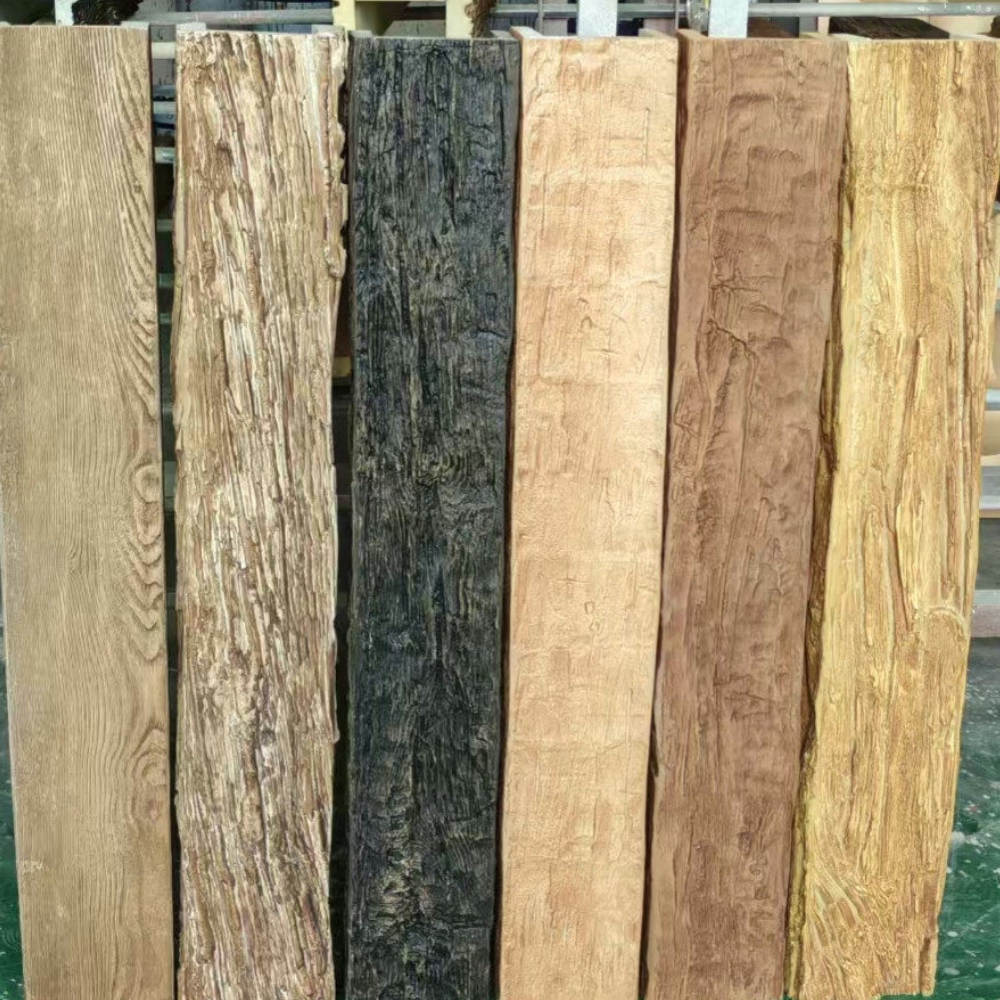
Faux wood beams manufactured from polyurethane offer compelling solutions for bathroom moisture challenges through material characteristics that natural wood cannot match. Understanding why these products perform better in humid conditions helps property owners and designers specify appropriate ceiling treatments that maintain beautiful appearances despite demanding bathroom environments.
Understanding Bathroom Moisture Challenges

Bathroom humidity levels fluctuate dramatically throughout daily use cycles, with steam showers potentially creating near-saturation conditions that persist for extended periods. This humidity fluctuation creates cycling between wet and dry conditions that stress materials through repeated expansion and contraction. Natural wood responds to these cycles by absorbing moisture during humid periods and releasing it during drying, with dimensional changes potentially affecting joint integrity and appearance over time.
Temperature variation compounds moisture challenges through condensation formation on cold surfaces. Ceiling areas above showers often maintain temperatures several degrees below ambient air temperature, particularly in bathrooms with inadequate ventilation or poor insulation. Water vapor condensing on these cooler surfaces creates liquid water contact that can penetrate surface coatings and reach underlying materials. This condensation pattern repeats with each shower use, creating cumulative moisture exposure that exceeds what simple humidity measurements suggest.
Ventilation system effectiveness dramatically influences bathroom moisture severity, with well-designed exhaust systems removing humid air before it can penetrate ceiling materials extensively. However, even effective ventilation cannot prevent all moisture exposure, and systems that fail or are under-sized create conditions far more challenging than properly ventilated bathrooms. Material selection for bathroom ceilings must account for realistic use patterns rather than optimistic assumptions about ventilation performance.
Polyurethane Moisture Resistance Properties
Polyurethane's molecular structure provides inherent moisture resistance that natural wood fundamentally cannot match. The polymer chains that create polyurethane's beneficial properties include no cellular structure that can absorb water, no nutrients that support biological growth, and no pathways for moisture penetration regardless of exposure duration or intensity. This material characteristic eliminates the吸水 mechanisms that cause wood damage, regardless of how demanding the exposure environment becomes.
Laboratory testing validates moisture resistance through standardized protocols that simulate demanding exposure conditions. Quality polyurethane faux beam products typically demonstrate negligible water absorption under extended immersion testing, with weight gains measured in fractions of percent rather than the substantial absorption percentages that natural wood exhibits. This testing confirms what material science predicts: polyurethane simply does not absorb water in meaningful quantities.
The practical implication of this moisture resistance involves long-term appearance and structural maintenance that wood products cannot achieve under equivalent exposure. Faux wood beams maintain original dimensions, surface finish integrity, and mounting security despite years of bathroom humidity exposure that would progressively damage natural wood alternatives. This performance reliability eliminates the repair cycles, refinishing requirements, and eventual replacement that wood bathroom beams inevitably face.
Steam Shower and Spa Applications
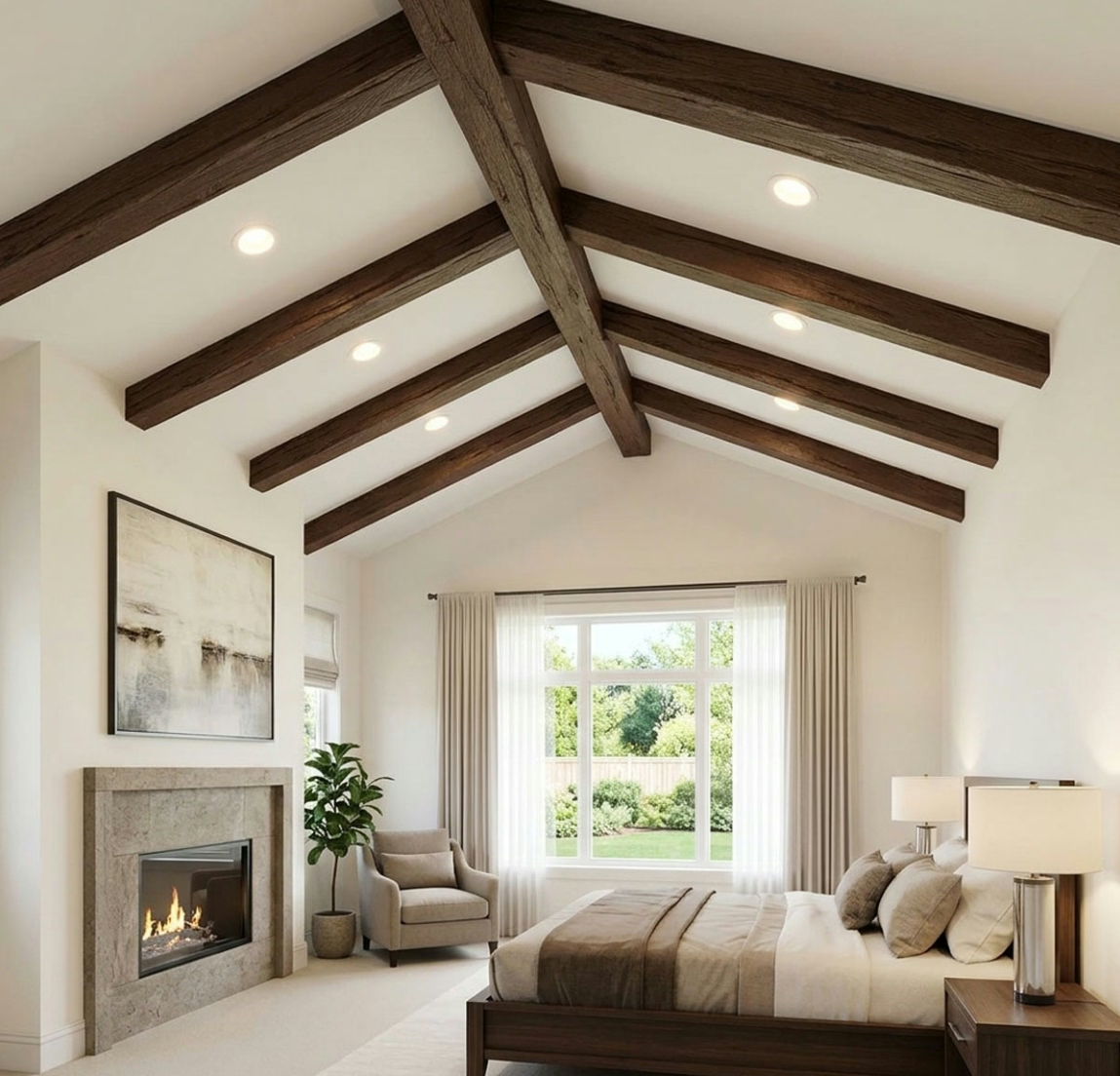
Steam shower enclosures present the most demanding bathroom ceiling environment, with humidity levels approaching one hundred percent during active steam generation. These conditions would destroy natural wood within months regardless of finish quality, making polyurethane faux beams virtually mandatory for steam shower ceiling applications. The warm, saturated atmosphere that steam showers create differs fundamentally from normal bathroom humidity, requiring material performance that wood simply cannot provide.
Luxury spa bathrooms frequently incorporate beams in designs inspired by resort and hospitality aesthetics, with warm wood tones creating contrast against stone, tile, and glass materials common to spa environments. Faux wood beams enable these design visions in residential contexts where spa-inspired aesthetics would otherwise be impractical. The humidity resistance that polyurethane provides ensures that these design ambitions remain achievable without maintenance concerns that would undermine long-term satisfaction.
Commercial spa and wellness facilities face even more demanding humidity conditions than residential settings, with higher occupancy, longer operating hours, and professional cleaning protocols that might challenge less durable materials. Quality polyurethane faux beams serve these commercial applications reliably, maintaining attractive appearances despite intensive use and maintenance that would quickly degrade natural wood finishes.
Installation Considerations for Bathroom Applications
Bathroom installation requires attention to condensation pathways that might allow moisture to reach mounting structures even when beam materials themselves resist moisture damage. Sealant application at beam edges, particularly where beams meet walls or other surfaces, prevents moisture intrusion into concealed spaces where structural damage could occur despite beam integrity. This attention to detail ensures that installation quality matches material performance.
Ventilation system coordination during installation ensures that bathroom humidity management supports beam performance throughout the product's service life. Installing beams without verifying that exhaust ventilation functions properly creates conditions where even moisture-resistant materials face unnecessary challenges. Simple verification tests confirming airflow adequacy provide confidence that bathroom environment will remain within manageable ranges.
Maintenance accessibility considerations influence beam selection and positioning for bathroom applications. While faux wood beams require minimal maintenance, positioning that allows occasional cleaning access ensures that any accumulated deposits can be addressed without complicated procedures. High ceiling bathrooms with limited access might warrant premium finish selections that resist staining more effectively than standard options.
Design Integration and Aesthetic Quality
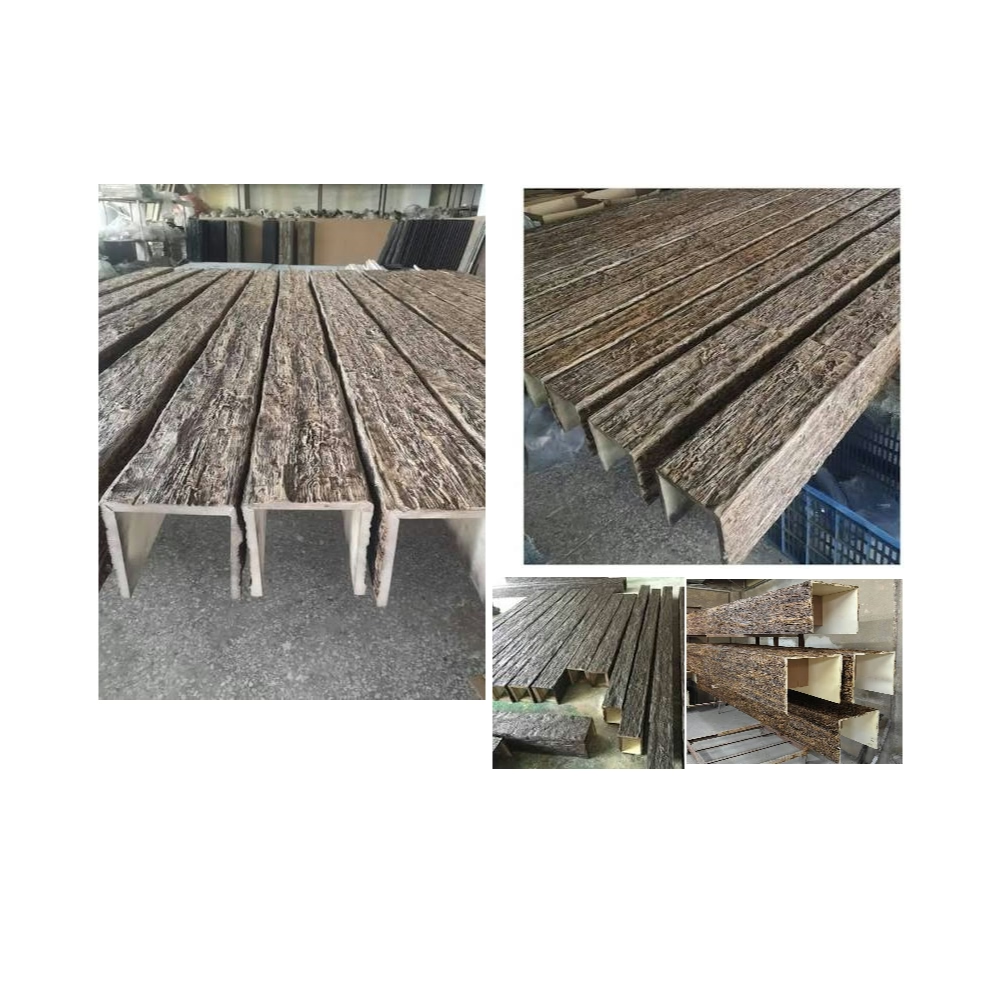
Bathroom beam design should integrate with overall material palettes and design intentions rather than appearing as arbitrary additions. Warm wood tones complement stone surfaces, ceramic tile, and natural fiber textiles that commonly populate bathroom designs. The organic texture that faux wood provides adds visual warmth that balances cooler tile and plumbing fixture materials, creating atmospheres that feel complete rather than incomplete.
Finish selection for bathroom applications should account for cleaning requirements that might affect surface appearance over time. Semi-gloss or satin finishes tolerate cleaning better than flat options, maintaining consistent appearance despite periodic washing that bathroom environments might require. Factory-applied finishes on quality products typically provide appropriate durability for bathroom cleaning protocols without special maintenance considerations.
Lighting integration affects how bathroom beams appear throughout daily use cycles, with vanity lighting, shower fixtures, and ambient illumination creating different appearances at different times. Evaluating beam samples under actual bathroom lighting conditions—rather than showroom or natural light—reveals how finished installations will actually appear during normal use. This verification prevents surprises that might emerge from inadequate pre-purchase assessment.
Long-Term Performance and Value
Bathroom faux wood beam installations deliver long-term value through moisture resistance that maintains appearances throughout extended service periods without the refinishing cycles that natural wood would require. This maintenance advantage continues indefinitely, with quality products providing decades of reliable bathroom ceiling performance that wood alternatives simply cannot match. The initial investment in quality products pays dividends through reduced lifetime costs and sustained aesthetic quality.
Property value considerations favor bathroom improvements that combine attractive appearance with practical durability. Spa-like bathrooms featuring faux wood beams may command premium valuations compared to equivalent properties with utilitarian ceiling treatments. This value contribution extends beyond mere aesthetics to encompass the practical assurance that humidity-resistant materials provide against future maintenance concerns.
The combination of aesthetic quality, moisture resistance, and maintenance simplicity has made faux wood beams increasingly popular for bathroom applications across residential and commercial contexts. Property owners discovering these benefits frequently extend faux wood applications to additional bathrooms, creating consistent design language throughout properties while maintaining practical advantages across all wet rooms.
Humidity-resistant faux wood beams have proven themselves as ideal solutions for high-moisture bathroom environments. Their ability to maintain beautiful appearances despite steam, condensation, and humidity exposure makes them uniquely appropriate for bathroom ceiling applications where natural wood would inevitably fail.
Technical References
ASTM standards cited in every specification
Test Data
Lab results from internal testing program
Updated 2026
Reviewed against current product specs