
Spaces characterized by persistent moisture exposure represent some of the most challenging environments for interior decoration, yet these spaces often benefit most from the warm, organic aesthetics that wood provides. Indoor pools, enclosed porches, pool houses, basements with moisture issues, and greenhouse-adjacent spaces all present humidity challenges that exclude natural wood from practical consideration. Humidity-resistant polyurethane faux wood beams resolve this conflict, enabling design ambitions that environmental conditions would otherwise prohibit.
Understanding the scope of moist environment applications helps property owners and designers recognize opportunities that might otherwise go unconsidered. The versatility that polyurethane provides enables distinctive decorative treatments across diverse humidity-challenged spaces, from residential indoor pools to commercial water parks, spa facilities, and hospitality venues where distinctive aesthetics differentiate customer experiences.
Range of Moist Environment Applications

Residential indoor pools and natatoriums create humidity levels that preclude most traditional finish materials, yet the desire for warm, inviting atmospheres persists throughout these spaces. Faux wood beams provide visual warmth that balances poolside tile, water features, and extensive glazing without suffering the moisture damage that would affect natural wood. The durability that polyurethane provides ensures continued attractive appearances despite constant humidity exposure that would degrade wood alternatives within months.
Enclosed porches and three-season rooms present less extreme but still challenging humidity conditions compared to indoor pools. Temperature fluctuations between day and night, seasonal variation, and occasional precipitation create moisture cycles that stress finish materials repeatedly. Faux wood beams maintain appearance integrity through these cycles, providing architectural interest without the maintenance concerns that wood alternatives would generate.
Commercial aquatic facilities—water parks, therapy pools, institutional natatoriums—face humidity conditions far exceeding residential applications, with larger water surfaces, higher occupancy, and longer operating hours creating continuous moisture challenges. Quality polyurethane beams serve these demanding applications reliably, maintaining appearances despite conditions that would quickly destroy natural wood regardless of finish quality. The commercial durability that premium polyurethane provides ensures cost-effective long-term performance in these intensive-use environments.
Material Science Behind Moisture Resistance
Polyurethane moisture resistance stems from fundamental material characteristics that distinguish it from wood and other natural materials. The cellular structure of cured polyurethane contains no open pathways for water penetration, unlike wood where cellular channels inherently absorb and release moisture in response to environmental conditions. This structural difference means that polyurethane simply cannot吸水 in the ways that wood necessarily does.
Chemical composition contributes additional moisture resistance through hydrophobic properties that actively repel water rather than merely tolerating its presence. Quality polyurethane formulations enhance these inherent characteristics through additives that improve water resistance beyond what base polymer chemistry provides. This chemical engineering explains why quality faux wood beams perform in moist environments far better than budget alternatives that might lack equivalent formulation sophistication.
Surface finishes applied to polyurethane beams provide additional moisture protection that complements underlying material characteristics. Factory-applied coatings create seamless barriers that prevent water contact with substrate materials while maintaining appearance integrity despite repeated cleaning or environmental exposure. The bond between these finishes and polyurethane substrates remains stable regardless of humidity conditions, unlike wood finishes that may delaminate as underlying wood dimensions change with moisture absorption.

Design Considerations for Moist Environments
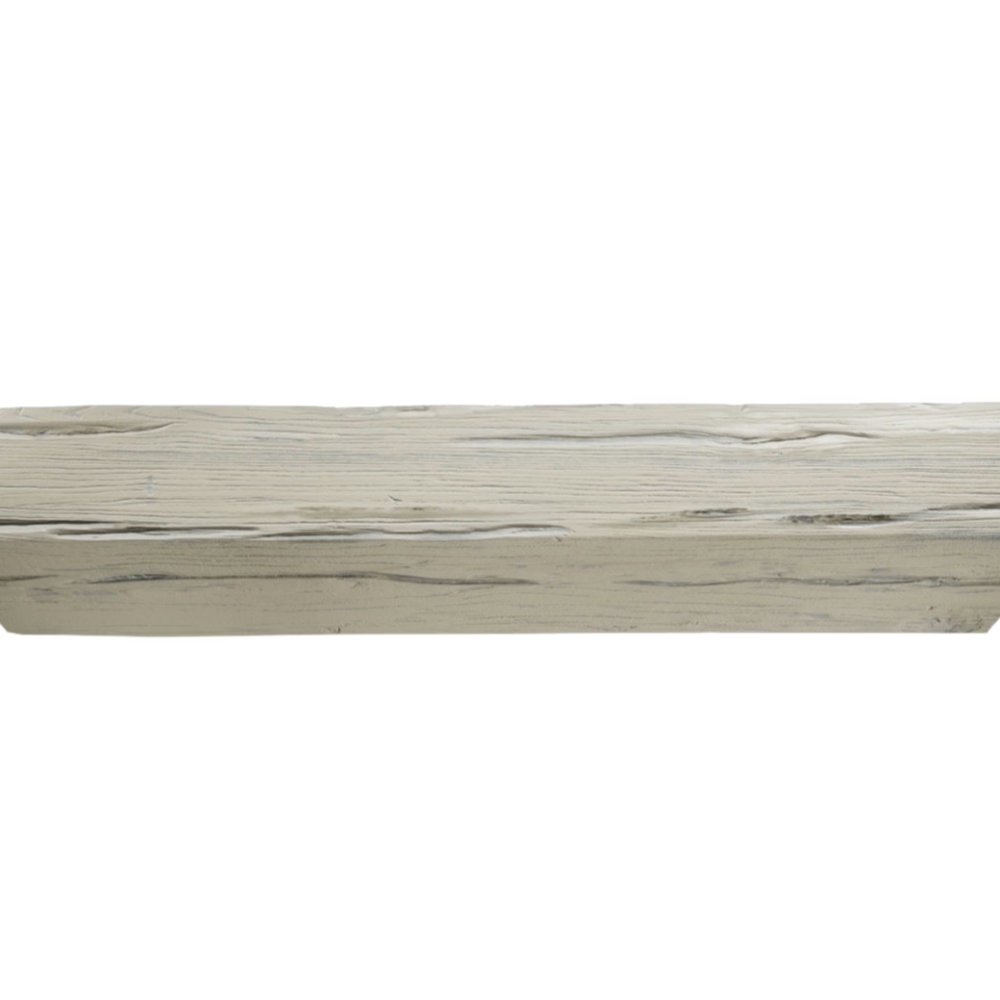
Visual warmth becomes particularly valuable in moist environment applications where tile, stone, and glass materials often dominate. The organic texture and warm color tones that faux wood beams provide create visual balance that makes these spaces comfortable for extended occupation. Without wood-tone elements, moist environments can feel clinical or institutional, whereas beam additions create atmospheres more conducive to relaxation and lingering.
Finish selection for moist environment applications should prioritize durability alongside aesthetic quality. Semi-gloss or satin finishes tolerate cleaning better than flat options while maintaining consistent appearance despite periodic washing that these environments often require. Premium finishes with enhanced chemical resistance may be appropriate for commercial applications where aggressive cleaning protocols might challenge standard coating systems.
Scale considerations differ for moist environment applications based on ceiling heights, water surface proximity, and overall spatial proportions. High ceilings in large natatoriums can accommodate substantial beams that create presence appropriate to the architectural scale, while intimate residential spaces might warrant more modestly scaled elements. Understanding proportional relationships helps specify appropriately sized beams that enhance rather than overwhelm specific spaces.
Maintenance Advantages in Moist Contexts
Routine maintenance in moist environments often involves more frequent cleaning than dry-space applications, with humidity creating conditions where dust, lint, and environmental pollutants may accumulate more readily on surfaces. Polyurethane beams tolerate aggressive cleaning protocols that would damage natural wood finishes, enabling maintenance approaches appropriate for commercial hygiene requirements without concern for finish preservation.
Mold and mildew resistance provides important maintenance advantages in persistently humid spaces where biological growth might otherwise colonize surfaces. Polyurethane provides no food source for these organisms, while the moisture resistance that prevents water absorption also prevents the surface moisture films that support biological growth. This inherent resistance eliminates the antifungal treatments and specialized cleaning that wood surfaces in similar environments would require.
Long-term maintenance costs in moist environment applications heavily favor polyurethane over wood alternatives when total cost of ownership is considered. Natural wood in these environments requires regular refinishing, potential component replacement, and ongoing monitoring for moisture damage that polyurethane installations simply do not need. The maintenance-free nature of quality polyurethane provides ongoing value that wood alternatives cannot match regardless of initial cost differential.
Environmental Performance Under Challenging Conditions
Temperature cycling in unconditioned moist environments stresses materials through repeated expansion and contraction that can fatigue coatings and compromise bonds. Polyurethane's dimensional stability under temperature fluctuation exceeds wood substantially, maintaining consistent dimensions and secure mounting despite conditions that cause wood to expand and contract noticeably. This stability contributes to long-term mounting security that wood might not maintain under equivalent conditions.
Salt exposure in coastal pool facilities or ocean-adjacent buildings creates corrosion challenges that affect metal components even when primary materials remain unaffected. Polyurethane beams contain no metal components that corrosion might compromise, eliminating this failure mode entirely. The inert nature of polyurethane extends to salt exposure tolerance that enables installation in coastal indoor pool facilities without special consideration for atmospheric salt content.
Chemical exposure from pool water treatment chemicals—chlorine, bromine, pH adjusters, and algaecides—creates surface challenges that affect some materials more than others. Quality polyurethane finishes resist these chemical exposures without degradation, maintaining appearance integrity despite routine chemical contact that might affect less resistant materials. This chemical tolerance proves valuable in pool facilities where atmospheric chemical concentrations may exceed levels that would affect materials in non-aquatic environments.
Installation Excellence for Moist Environments
Moist environment installation requires attention to details that might be less critical in dry-space applications. Sealant application at all beam edges and junctions prevents moisture intrusion into concealed spaces where structural damage could occur. This sealing detail ensures that beam performance matches material capabilities, avoiding installation-related failures that might undermine otherwise reliable products.
Ventilation system coordination becomes more critical in moist environment applications where humidity management directly affects material performance. Ensuring that exhaust systems function properly before beam installation verifies that designed ventilation performance will actually be achieved. Any ventilation deficiencies identified during pre-installation testing can be addressed before beams conceal ceiling structures where repairs would become more difficult.
Mounting hardware selection for moist environments should account for potential corrosion that might affect metal components over extended service. Stainless steel or coated fasteners provide corrosion resistance appropriate for humid conditions, ensuring that mounting systems maintain integrity throughout beam service life. This hardware attention complements beam material durability, creating complete installation packages suitable for demanding applications.
Humidity-resistant polyurethane faux wood beams have established themselves as essential design elements for moist environment decoration across residential and commercial contexts. Their unique combination of aesthetic warmth, moisture resistance, and maintenance simplicity enables design achievements that environmental conditions would otherwise prohibit entirely.
Technical References
ASTM standards cited in every specification
Test Data
Lab results from internal testing program
Updated 2026
Reviewed against current product specs

