
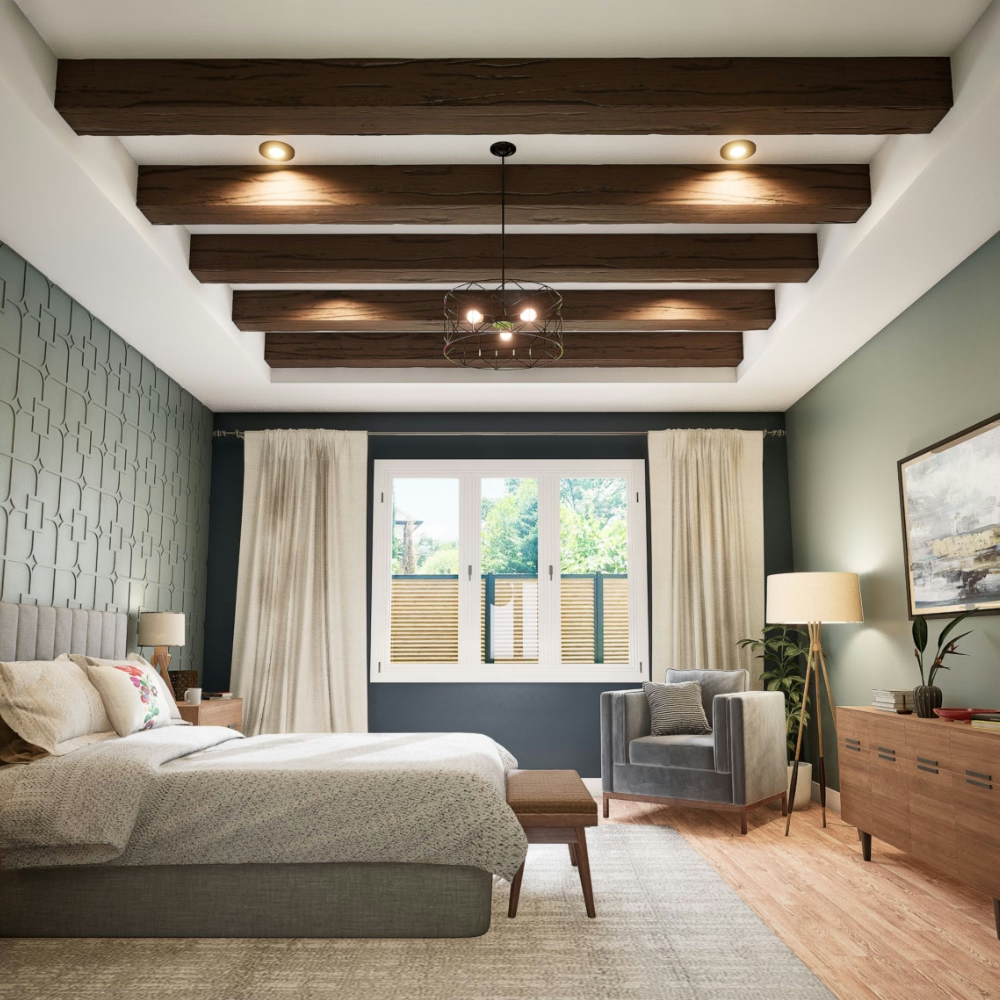
Exposed beam ceilings create design opportunities that finished ceiling treatments cannot replicate. The dimensional interest, architectural character, and visual warmth that visible beams provide distinguish ordinary spaces from memorable ones. Yet exposed beams also expose everything about the beam's construction—its profile, texture, color, and especially whether it appears to be genuine timber or synthetic imitation. U-wrap style faux timber ceiling beams address this exposure challenge directly, providing authentic wood appearance from every conceivable viewing angle.
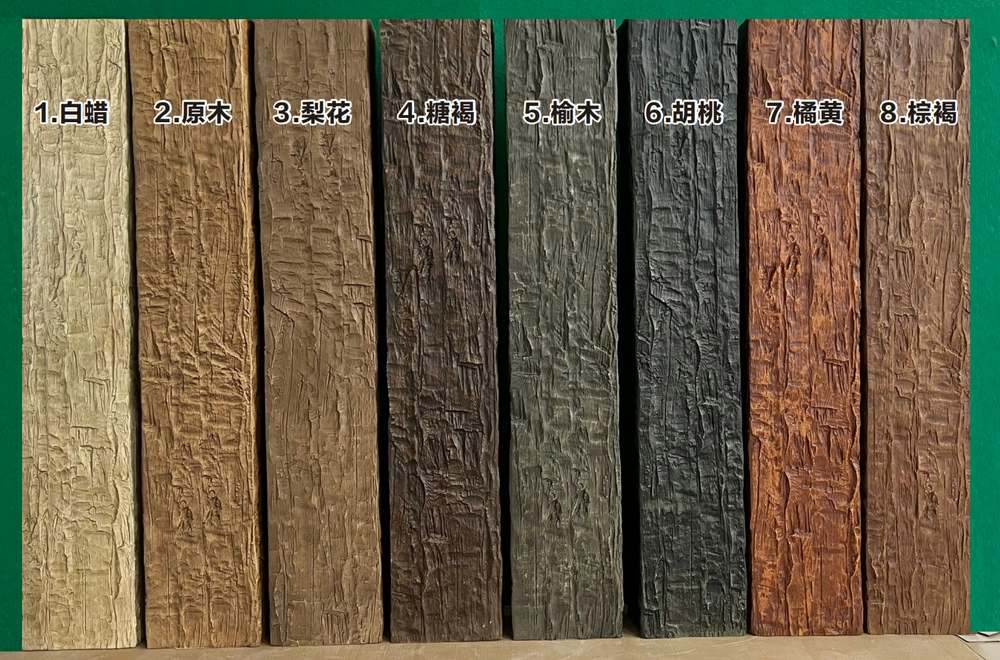
The U-wrap configuration describes beams manufactured with four complete sides of textured, colored wood-grain surface. Unlike three-sided beams that present only three visible faces while leaving the back side untextured, U-wrap beams wrap the wood-grain treatment completely around the beam's cross-section. This construction proves essential when beams will be viewed from below, above, or from elevated positions that reveal surfaces that three-sided beams leave bare.
The origin of the U-wrap terminology relates to the manufacturing process. A single piece of textured polyurethane material wraps continuously around the beam's cross-section, with the seam typically hidden on the bottom surface or along an interior corner where it won't be visible in typical installations. This continuous wrap eliminates the visual interruption that would occur with multiple pieces meeting at visible edges.
Why Four-Sided Authenticity Matters
Psychological research on wood perception reveals that human observers intuitively expect wood surfaces to continue around corners and edges. When a beam presents authentic wood texture on three faces while revealing a smooth plastic surface on the fourth, the visual incongruity triggers subconscious recognition that something is not genuine. This response occurs even when observers cannot articulate what seems wrong—they simply sense that the beam is not authentic timber.
The viewing angles that reveal the fourth side multiply in vaulted ceiling applications. Angled sightlines from below look upward to see beam bottoms and undersides simultaneously. Stairwell views from intermediate landings reveal undersides and sides that standard ceiling views never expose. Mezzanine overlooks look down on beam tops that three-sided installations typically leave unfinished. In all these situations, four-sided authenticity provides the complete illusion that three-sided products cannot achieve.
Commercial installations face particularly challenging viewing conditions. Guests and customers explore spaces from multiple angles, pausing to examine details that residential visitors might never notice. The investment in premium U-wrap products pays dividends in these environments where critical observation is likely. An imperfect imitation might escape notice in a homeowner's casual inspection but becomes immediately apparent when design professionals or detail-oriented clients examine the work.
Manufacturing Excellence in U-Wrap Production
Creating convincing U-wrap beams requires manufacturing precision that budget products cannot achieve. The wrapping process must maintain consistent texture alignment across all four faces, with grain patterns that flow naturally around corners rather than stopping and restarting at each edge. This continuity demands careful mold design and quality control throughout the production process.
Miter joints at beam corners represent critical transition points that determine overall authenticity. The wood grain must curve appropriately around the corner radius rather than simply changing direction at a hard edge. Premium manufacturers achieve this curvature through carefully sculpted mold surfaces that capture the actual behavior of wood fibers transitioning around corners in genuine timber.
Surface finishing in U-wrap production requires attention to the hidden seam that the wrap process creates. This seam, typically positioned on the beam's bottom face, must be invisible when properly installed while remaining accessible for any field repairs that might become necessary. Quality products provide precisely located seams that align with standard installation practices.
Applications Suited to U-Wrap Configuration
Vaulted and cathedral ceilings represent the most demanding U-wrap applications. The steep angles of view that characterize these designs reveal beam undersides that three-sided products cannot address. U-wrap beams maintain authenticity regardless of viewing angle, supporting the dramatic design statements that vaulted ceilings create without the maintenance concerns that genuine timber would require in these exposed locations.
Floating beam installations, where beams appear to span spaces without visible support, require complete four-sided authenticity because observers may view the beams from any angle. Suspended beam installations and beams extending beyond wall surfaces for architectural emphasis both benefit from U-wrap construction that permits these dramatic presentations.
Commercial spaces with exposed structure frequently incorporate beam elements as part of the overall design vocabulary. Restaurant dining areas, hospitality lounges, and retail environments feature beams that visitors view from varied positions as they explore the space. The four-sided authenticity of U-wrap products supports the comprehensive design approach that distinguishes premium commercial interiors.
Profile Options and Design Integration
The range of beam profiles available in U-wrap configuration spans the same options as three-sided products. Traditional profiles including parallel chord beams, tapered beams, and curved beams can all be manufactured with four-sided wrapping. Custom profile creation for unique design requirements remains possible within the U-wrap format.
Profile selection should consider the interaction between beam shape and grain texture. Some wood grain patterns appear more authentic on certain profile types. Flat surfaces that mimic planed lumber work best with subtle grain textures, while more decorative profiles accommodate bolder patterns that emphasize the wood character. Quality manufacturers can advise on texture-profile combinations that achieve specific aesthetic goals.
Scale relationships between beams and surrounding elements affect the perception of authenticity regardless of surface treatment quality. Oversized beams that dwarf the spaces they occupy, or undersized beams that appear inadequate for their spans, create visual tension that undermines the natural appearance that authentic wood grain should provide. Design professionals understand these relationships and specify beam dimensions accordingly.
Installation Considerations for U-Wrap Products
Installation technique for U-wrap beams does not differ fundamentally from standard faux beam methods, but the complete surface coverage requires attention to details that three-sided installations might overlook. The visible fourth side means that any surface damage, installation marks, or finishing inconsistencies become immediately apparent.
Support hardware should be specified and installed to avoid showing through the beam surfaces. Standard beam hangers may create visible protrusions where U-wrap beams expose all four sides. Concealed mounting systems or custom hangers finished to match beam surfaces provide the invisible support that U-wrap authenticity demands.
Field cutting and modification of U-wrap beams requires care that preserves the continuous wrap appearance. Cuts that sever the wrapped surface expose raw polyurethane edges that compromise authenticity. When field modifications are necessary, careful touch-up finishing can minimize visible evidence of the cuts.
Quality Assessment for U-Wrap Selection
Evaluating U-wrap quality begins with examining the wrap continuity at corners. The transition from one face to the next should appear smooth and natural, with grain patterns flowing around corners as they would in genuine timber. Any visible seams, color mismatches, or texture discontinuities at corners indicate manufacturing quality issues that will be visible in the installed product.
The hidden seam location should be consistent across all beams in an installation. Multiple beams with seams in different positions create visual inconsistency that observant viewers will notice. Quality manufacturers position seams precisely and consistently, making them easy to hide during installation.
The bottom surface of U-wrap beams should be identical in texture and color to the visible sides. Some budget products economize by using lower-quality finishing on the bottom face, assuming it will face upward and remain hidden. In U-wrap applications where the bottom may be visible, this assumption creates quality problems that become apparent after installation.
The Investment in Complete Authenticity
U-wrap faux timber beams represent a meaningful premium over three-sided alternatives, with the additional manufacturing complexity and material requirements contributing to higher per-linear-foot costs. This premium proves worthwhile when the installation's viewing conditions would expose the limitations of three-sided products. The complete authenticity that U-wrap provides cannot be achieved through other means.
Design professionals specify U-wrap configuration when their clients expect close scrutiny of the installation. The additional investment signals attention to detail that clients appreciate even when they cannot articulate why one beam installation looks better than another. This unspoken quality difference translates to satisfied clients and positive recommendations.
The durability advantages of polyurethane U-wrap beams complement their aesthetic benefits. Unlike genuine timber that requires ongoing maintenance to preserve appearance, the factory-finished polyurethane surface maintains its authentic appearance indefinitely. This practical benefit reinforces the aesthetic investment by ensuring that the initial appearance survives through years of service.
Technical References
ASTM standards cited in every specification
Test Data
Lab results from internal testing program
Updated 2026
Reviewed against current product specs


