
Commercial environments subject building materials to stresses that residential applications rarely encounter. The constant activity of commercial spaces—thousands of visitors, routine cleaning operations, furniture moving, equipment maintenance—creates impact and abrasion conditions that would quickly degrade lesser materials. Ceiling beams in these environments face not only these horizontal stresses but also the vibration and air movement that building systems generate. Impact and shock resistant faux timber beams address these demanding conditions while providing the aesthetic warmth that distinguishes premium commercial interiors.
The engineering of impact resistance in polyurethane materials involves understanding how the material responds to sudden force application. Unlike brittle materials that crack or shatter under impact, quality polyurethane absorbs energy through elastic deformation that distributes stress across broader areas. This energy absorption capability, measured and specified by material scientists, determines how well finished surfaces resist damage from accidental impacts.
Commercial applications also face shock loading that differs from the gradual stress applications that typical material testing addresses. The difference between a slow-growing crack and a sudden impact-induced fracture depends significantly on how materials respond to rapidly applied loads. Polyurethane's molecular structure provides excellent performance under both loading conditions, maintaining structural integrity and surface appearance through the full range of stresses that commercial environments produce.
Material Properties for Demanding Applications
The density of polyurethane foam correlates directly with impact resistance, though manufacturing economics create tradeoffs between performance and material efficiency. Higher density formulations provide better resistance to impact damage but increase product weight and raw material costs. Commercial beam specifications should identify minimum density requirements that balance performance against installation and cost considerations.
Cellular structure affects impact performance beyond simple density measurements. Closed-cell foams with uniform cell distribution provide consistent energy absorption characteristics throughout the material volume. Open-cell or irregular foams may contain weak zones that fail preferentially under impact loading. Quality manufacturers control cellular structure through process parameters that ensure consistent performance.
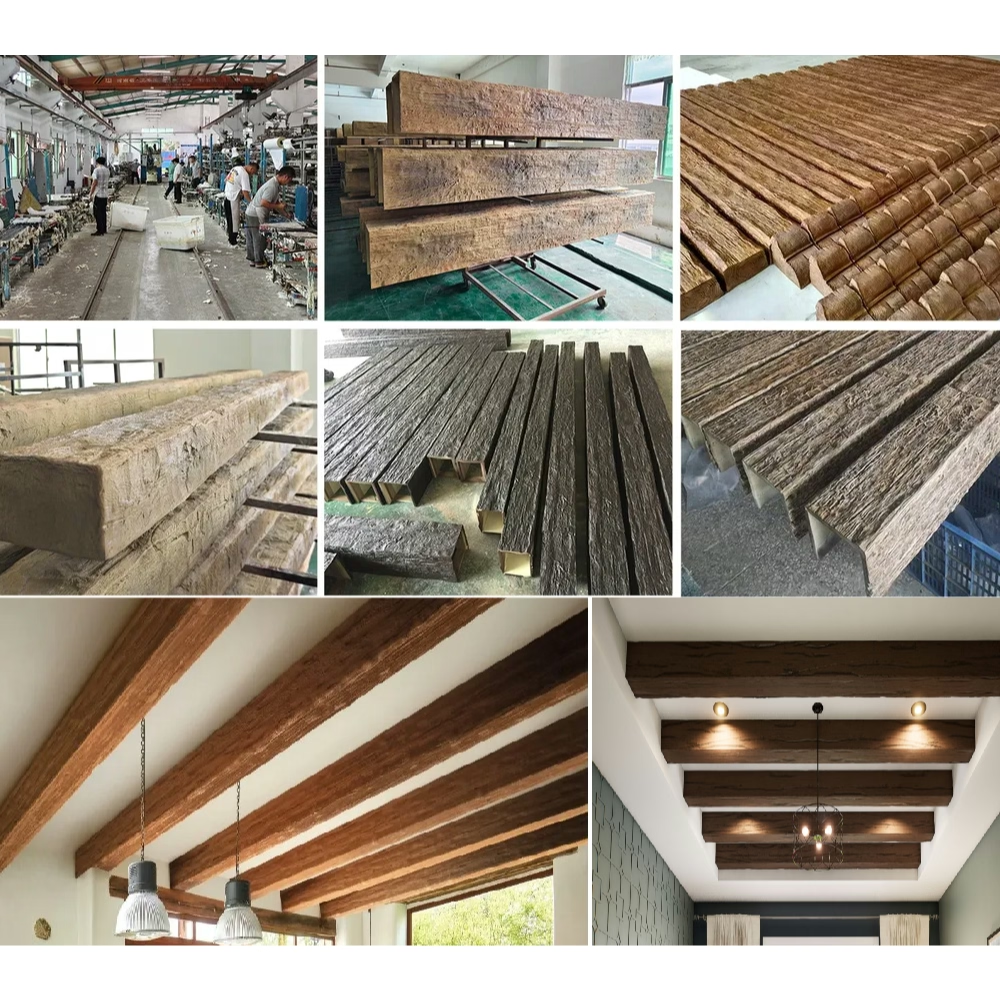
Surface hardness interacts with underlying material toughness to determine overall impact resistance. The factory-applied finishes that create authentic wood appearance typically cure to harder surfaces than the underlying polyurethane, creating thin hard shells that resist scratching while the softer substrate absorbs impact energy. This combination of hard surface and tough substrate provides protection that neither component could achieve alone.
Commercial Environment Categories
Hospitality venues including hotels, restaurants, and entertainment venues experience impact conditions that vary widely across their different zones. Guest room corridors face impacts from luggage and service carts, while ballrooms may experience forklift traffic during setup and breakdown. Lobby areas endure continuous visitor flow with associated impacts from bags, strollers, and mobility equipment. Impact resistant beams provide protection against these varied hazards.
Retail environments present challenges related to merchandise handling and display installation. Stockroom operations bring pallet jacks and hand trucks into areas with beam ceilings, while retail floor activities may involve ladder placement and overhead merchandise access. The unpredictable nature of retail activities justifies specification of beams with generous impact resistance margins.
Sports and recreation facilities create particularly demanding impact conditions. Gymnasiums and indoor courts involve flying equipment, airborne occupants, and the concentrated loads of multiple simultaneous users. Natatoriums combine impact concerns with humidity exposure. Ice rinks add thermal challenges to the impacts from pucks, skates, and hockey sticks. Beams in these environments require comprehensive resistance to the full range of stresses present.
Testing and Performance Verification
Impact resistance testing methods provide standardized approaches for comparing material performance. The Gardner impact test applies standardized weight drops from controlled heights, measuring the energy required to produce visible damage. Higher results indicate better impact resistance. Commercial beam specifications should reference minimum Gardner impact values appropriate for intended applications.
Shore hardness testing quantifies surface resistance to indentation, providing another indicator of impact performance. Higher Shore durometer readings indicate harder, more scratch-resistant surfaces. However, surface hardness must balance against impact absorption—the hardest surfaces often prove most brittle and least able to absorb energy without fracture.
Accelerated aging testing demonstrates how impact resistance evolves over the product's service life. UV exposure, temperature cycling, and humidity variation can degrade surface coatings and underlying material properties in ways that affect long-term performance. Quality manufacturers provide aging test results demonstrating that initial impact resistance persists throughout expected service life.
Design Strategies for High-Traffic Areas
Beam positioning in commercial spaces should consider the types of activity occurring beneath them. Areas with frequent overhead activity—stockrooms, maintenance areas, service corridors—benefit from beams positioned to avoid likely impact paths. When this positioning is not possible, specifying beams with higher impact resistance provides appropriate protection.
Impact protection zones in high-risk areas may justify supplemental protective measures beyond standard beam specifications. Corner guards, impact rails, and similar protective devices can protect beams from the most severe impacts in particularly demanding zones. These protective measures cost less than beam replacement and can be refreshed as needed without affecting the underlying ceiling treatment.
Damage-resistant profiles provide another design strategy. Rounded beam edges and eased corners reduce impact concentration compared to sharp-edged profiles. While sharp edges may appear more architecturally precise, the practical benefits of eased edges in commercial environments often justify the slight aesthetic compromise.
Maintenance and Repair Considerations
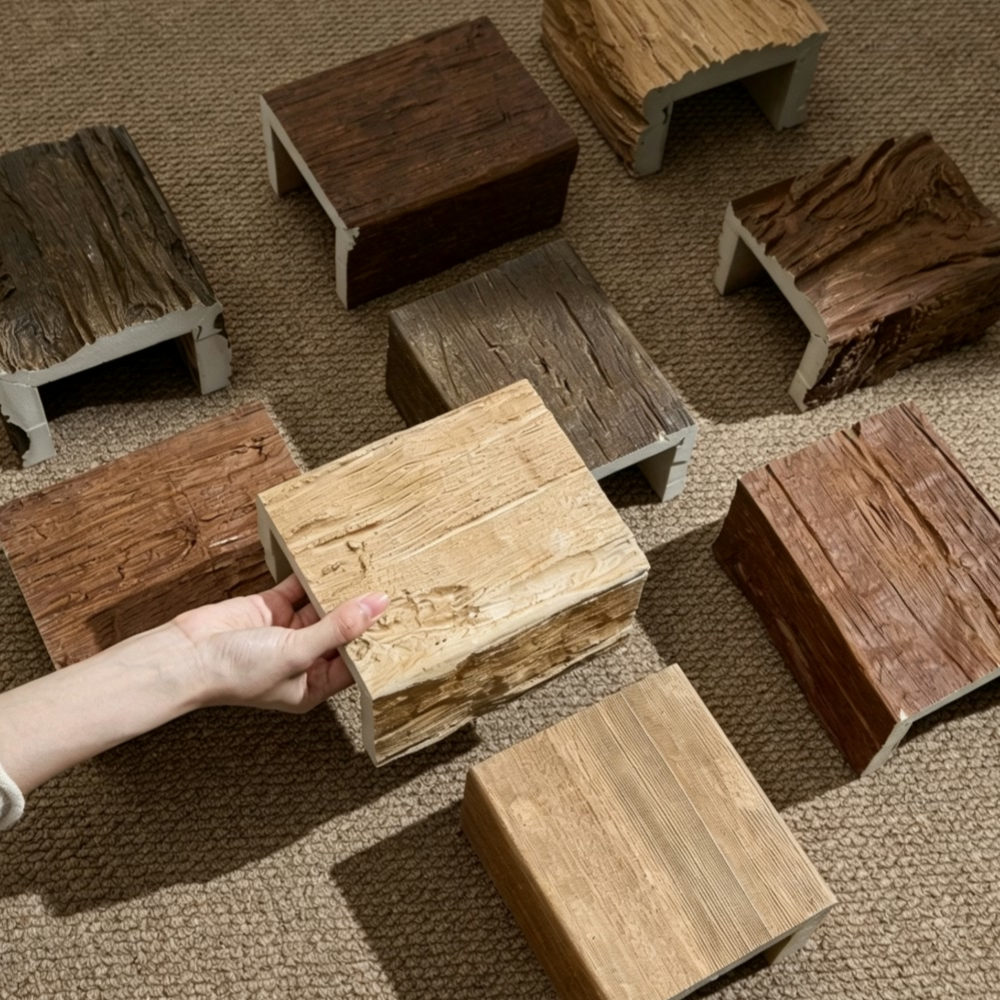
Impact damage to polyurethane beams typically manifests as dents or surface compression rather than the cracks and fractures that affect more brittle materials. This damage pattern preserves overall structural integrity while affecting appearance. Repair techniques for impact damage involve filling compressed areas with flexible compounds that restore the original surface contour.
Factory-matched repair materials ensure that repairs blend seamlessly with surrounding surfaces. Quality manufacturers provide touch-up compounds and finishing materials that match factory finishes precisely, enabling repairs that remain invisible after completion. Budget products may lack these repair options, forcing compromises between imperfect repairs and complete beam replacement.
Cleaning protocols for commercial environments should consider beam surfaces as part of the overall maintenance routine. While polyurethane resists most cleaning agents, some aggressive chemicals may affect surface finishes. Establishing appropriate cleaning protocols protects beam surfaces from the inadvertent damage that inappropriate cleaning can cause.
Lifecycle Cost Analysis
Initial costs for impact-resistant commercial beams exceed standard specifications due to enhanced material formulations and additional quality control measures. This initial premium must be evaluated against the lifecycle costs of alternative approaches including more frequent repair, earlier replacement, and the business disruption that damaged ceilings create in commercial environments.
The calculation of damage-related costs in commercial spaces should include direct repair expenses, associated downtime or customer impact, and the reputational effects of poorly maintained facilities. A single significant impact event can create damage costs that exceed the annual premium for enhanced beam specifications. Self-insuring against these events makes economic sense only when capital reserves can cover potential losses.
Maintenance contracts that include beam inspection and repair provide predictable costs for building operation budgeting. Professional maintenance services can address impact damage promptly, maintaining appearance throughout the building's service life. These contracts typically cost far less than the repairs they cover when calculated over multi-year periods.
Specification Recommendations
Working with manufacturers who understand commercial applications ensures appropriate product selection. Commercial-grade beams differ from residential products in density, surface durability, and finishing quality. Manufacturers who serve commercial markets can advise on specifications appropriate for specific venue types and activity levels.
Warranty provisions for commercial applications should address impact damage specifically. Some warranties exclude impact damage as outside normal product performance expectations, while others provide coverage that commercial users need. Understanding warranty terms before specification prevents unpleasant surprises when damage occurs.
Installation quality affects long-term performance significantly. The additional labor costs for professional installation typically prove worthwhile in commercial applications where maintenance access may be difficult and appearance standards are elevated. Professional installers understand commercial requirements and deliver installations that meet these demanding expectations.
Technical References
ASTM standards cited in every specification
Test Data
Lab results from internal testing program
Updated 2026
Reviewed against current product specs


