
The global marketplace for architectural building materials has transformed how designers and contractors source products for their projects. Where once local availability limited options, international supply chains now enable access to premium products regardless of the buyer's location. High density polyurethane faux timber beams exemplify this globalization, with manufacturing excellence concentrated in regions with established expertise while distribution networks reach every market where quality construction products are valued.
Import considerations extend beyond simple availability to encompass quality expectations, shipping logistics, and the coordination challenges that international procurement introduces. The highest density polyurethane formulations, manufactured with the most sophisticated surface texturing technologies, represent significant technical achievements that not all producers can match. International buyers who understand these quality factors can make informed sourcing decisions that balance cost, quality, and logistics considerations.
The term "importable" in this context acknowledges that not all polyurethane beam products can be economically or practically shipped internationally. Low-density products may not survive ocean transit conditions. Fragile surface treatments may degrade during container loading, transit, and unloading. Products lacking proper export packaging may arrive damaged regardless of their in-factory quality. Importable beams address these concerns through quality and packaging standards appropriate for international distribution.
Manufacturing Excellence Factors
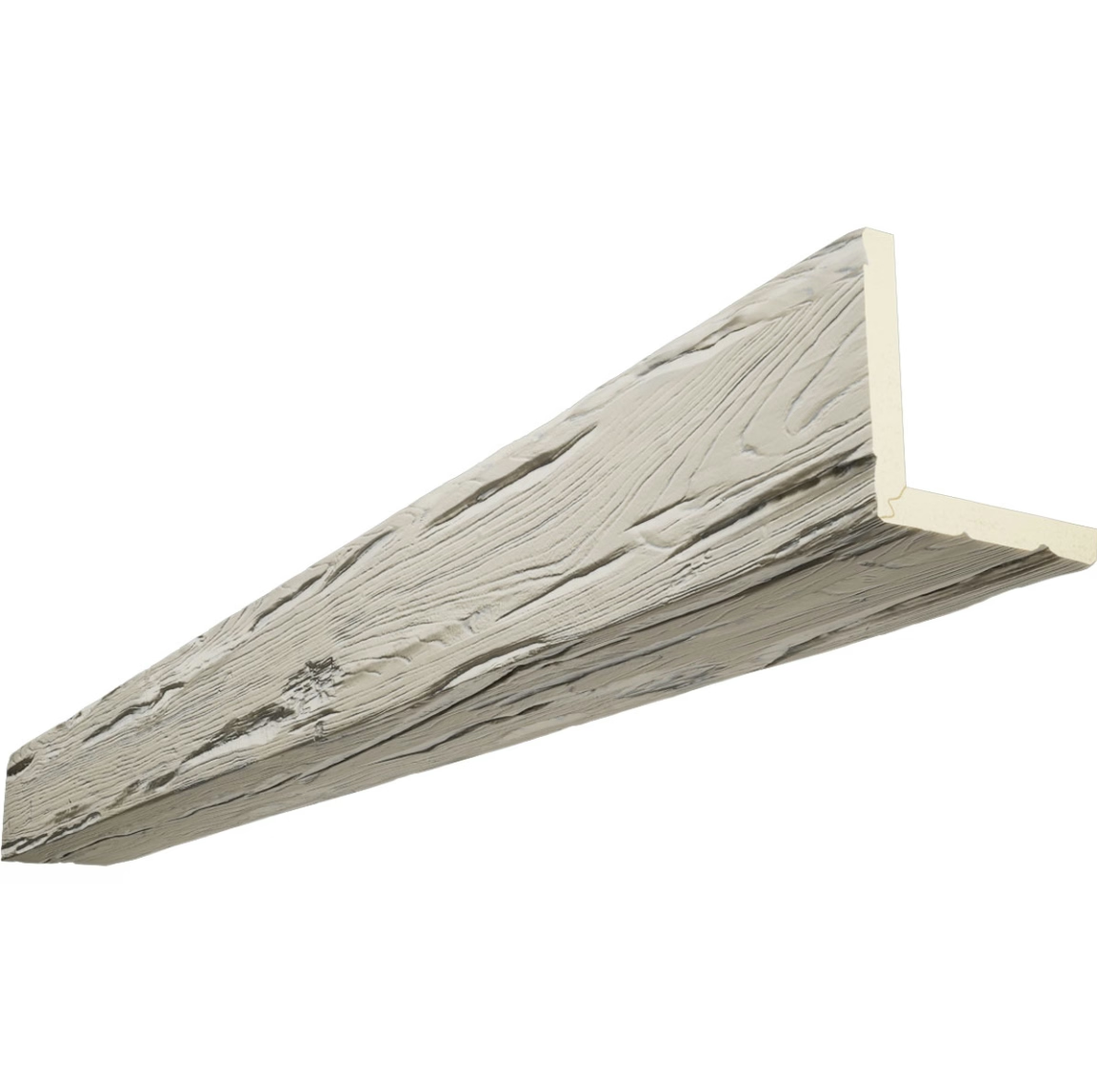
Foam density forms the foundation of polyurethane beam quality, with higher density formulations providing superior performance across multiple metrics. The density range for quality faux timber beams typically spans from 6 to 15 pounds per cubic foot, with commercial-grade products falling toward the higher end of this range. Higher density translates directly to improved impact resistance, better fastening holding power, and more authentic wood-like weight characteristics.
The foam chemistry that achieves high density while maintaining proper cell structure requires sophisticated formulation expertise. Raw material selection, mixing ratios, reaction temperatures, and processing parameters all affect the final foam characteristics. Manufacturers who have refined these parameters over years of production can consistently deliver high-density products that meet quality specifications batch after batch.
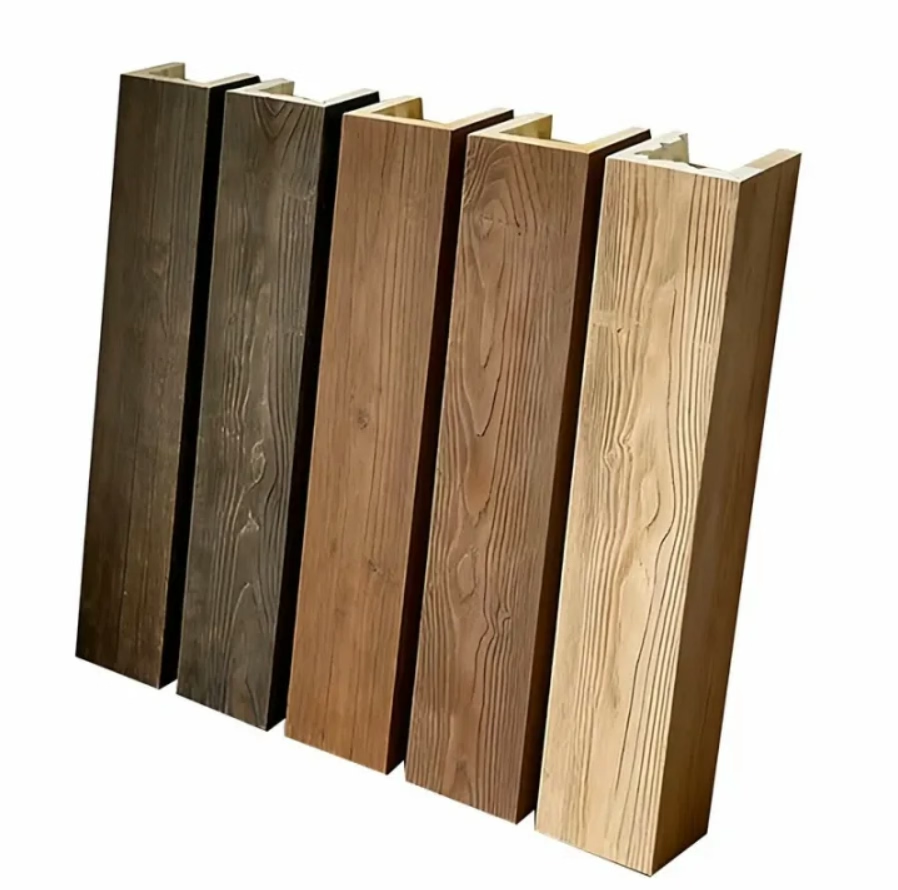
Surface texturing technology distinguishes premium manufacturers from commodity producers. The embossing plates, chemical etching processes, and finishing systems that create authentic wood grain appearance require substantial capital investment and accumulated expertise. These capabilities cannot be replicated quickly by new market entrants, creating quality gaps between established manufacturers and recent entrants that buyers should understand.
Export Packaging Standards
International shipping subjects cargo to conditions far more demanding than domestic transportation. Container loading involves mechanical equipment that can crush improperly packaged products. Ocean transit exposes cargo to salt air, condensation, and temperature extremes. Unloading at destination ports may involve multiple handlings through facilities with varying equipment quality. Export packaging must address all these stresses.
Standard export packaging for polyurethane beams involves protective wrapping, structural reinforcement, and unitization appropriate for the expected handling. Individual beam wrapping with foam or paper protection prevents surface damage during transit. Structural packaging using wooden pallets or crates distributes loads properly and enables mechanical handling throughout the logistics chain.
Moisture protection deserves particular attention for international shipments. Intercontinental transit through tropical regions exposes containers to high humidity and temperature conditions that create interior condensation. Desiccants, moisture barriers, and proper ventilation design protect beam surfaces from the moisture damage that would otherwise occur during extended ocean transit.
Quality Assurance and Testing
Factory quality control for export production typically exceeds standards applied to domestic shipments. The greater difficulty of addressing quality problems in exported goods creates strong incentives for manufacturers to prevent defects before shipment. Statistical process control, comprehensive inspection protocols, and performance testing all contribute to export quality levels.
Dimensional verification ensures that beams meet specifications consistently. Length measurements, cross-section dimensions, and weight verification confirm that production output matches order requirements. Any beams falling outside tolerance ranges should be segregated and dispositioned before packaging.
Surface quality inspection under controlled lighting conditions reveals imperfections that might escape notice in factory ambient lighting. The texturing depth, color consistency, and finish quality that distinguish premium products require careful examination to verify. Professional export manufacturers maintain inspection stations optimized for surface quality assessment.
International Sourcing Coordination
Lead time planning for imported beams must account for production scheduling, consolidation periods, and transit times that domestic procurement does not require. Standard lead times for container shipments from major manufacturing regions typically range from four to twelve weeks depending on production scheduling and shipping lane distances. Projects depending on imported beams require early order placement to accommodate these extended timelines.
Communication across time zones and language differences affects international coordination effectiveness. Professional importers establish clear communication protocols, specify requirements precisely in writing, and confirm understanding before proceeding. Ambiguities that might be clarified quickly in domestic transactions can derail international orders if not addressed explicitly.
Sample approval processes become more important for international purchases where return or replacement of defective goods proves difficult and expensive. Requesting samples before production commitments enables buyers to verify quality, surface treatments, and overall appearance. These samples also establish reference standards against which subsequent shipments can be compared.
Shipping Logistics Optimization
Container utilization affects the total cost of imported beams significantly. Standard 20-foot containers accommodate substantially less cargo than 40-foot containers, yet fixed costs per container make smaller containers economical for smaller orders. Consolidating multiple orders into single containers reduces per-unit shipping costs when order timing permits.
Stowage planning optimizes container loading for beam products. Long beams may require flat rack containers or specialized loading arrangements. Weight distribution within containers affects shipping stability and may influence container selection. Professional freight forwarders can advise on optimal containerization strategies for specific beam orders.
Shipping route selection influences transit times, costs, and risk exposure. Direct services from major manufacturing ports to major destination ports typically offer better rates and shorter transit times than transshipment routes. However, not all origin-destination pairs have direct service, requiring routing decisions that balance cost and service factors.
Customs and Import Considerations
Import duty rates for polyurethane beams vary by destination country and classification under the local tariff schedule. Researching applicable rates before ordering enables accurate landed cost calculations. Duty rate uncertainty may justify consulting with customs brokers who can provide binding tariff classification rulings.
Preferential duty rates under free trade agreements may apply when products qualify through sufficient local content or manufacturing thresholds. Documentation requirements for preferential treatment include certificates of origin and supporting manufacturing records. Buyers seeking preferential rates should confirm qualification before shipment to avoid duty payment complications at arrival.
Product compliance with destination country regulations must be verified before ordering. Building codes, fire safety requirements, chemical content restrictions, and labeling requirements vary by jurisdiction and may affect beam eligibility for specific markets. Professional manufacturers can advise on regulatory requirements for major destination markets.
Quality Verification Upon Arrival
Receiving inspection for imported beams should verify that shipped goods match order specifications and arrived in acceptable condition. Documentation review should confirm that shipping documents match order confirmations. Physical inspection should assess any visible damage from transit and verify that beam quantities and dimensions match documentation.
Damage claims against carriers or insurance policies require prompt notification and documentation. Photographs of damaged cargo, damage notation on delivery receipts, and timely claim filing protect buyer recovery rights. Failure to note damage on delivery receipts or to file claims within carrier time limits typically forfeits recovery options.
Quality disputes with international suppliers require careful documentation and professional communication. Providing specific evidence of specification failures, requesting corrective options, and documenting all communications preserves buyer rights while working toward resolution. Professional manufacturers typically stand behind their products and offer appropriate remedies for genuine quality issues.
Building International Supplier Relationships
Long-term supplier relationships benefit international buyers through consistent quality, priority scheduling, and favorable pricing. Establishing clear communication channels, maintaining regular contact, and demonstrating reliability as a customer builds relationships that serve both parties well over time.
Factory visits by serious buyers demonstrate commitment and enable deeper understanding of manufacturing capabilities. These visits also provide opportunities to discuss requirements, review quality systems, and establish personal relationships with supplier personnel who will handle ongoing orders.
Exclusive distribution arrangements in specific markets may be available for buyers committing to substantial purchase volumes. These arrangements provide market protection and technical support that benefits both parties. Negotiating such arrangements requires understanding of both parties' interests and reasonable volume commitments to justify the arrangement.
Technical References
ASTM standards cited in every specification
Test Data
Lab results from internal testing program
Updated 2026
Reviewed against current product specs


