The United States is the largest single market for decorative building materials in the world, and China has become the dominant supplier for many product categories. Faux wood beams fall squarely into this dynamic, with Chinese manufacturers offering a broad range of polyurethane beam profiles and finishes at price points that domestic producers struggle to match. For importers, project managers, and supply chain professionals, understanding the practical realities of importing faux wood beams from China can mean the difference between a successful sourcing strategy and a costly logistics headache.
Identifying and Qualifying Suppliers
The first challenge in importing from China is identifying suppliers that can consistently deliver quality products. The Chinese faux beam market is large and fragmented, with manufacturers ranging from large, vertically integrated operations producing millions of linear meters per year to small workshops handling custom orders.
Start by identifying potential suppliers through established B2B platforms, industry trade shows, and direct referrals from other importers. Canton Fair and similar trade events offer opportunities to inspect products in person and meet supplier representatives face-to-face, which is invaluable for building relationships and verifying capabilities. Many importers find that visiting factories in person, even once, dramatically reduces the risk of working with unreliable suppliers.
Once a shortlist of potential suppliers is identified, conduct thorough due diligence. Request business licenses, tax registration documents, and references from other international buyers. Verify that the supplier has actual manufacturing capability—some Chinese "manufacturers" are actually trading companies that source from various factories, which can lead to inconsistent quality and unpredictable lead times.
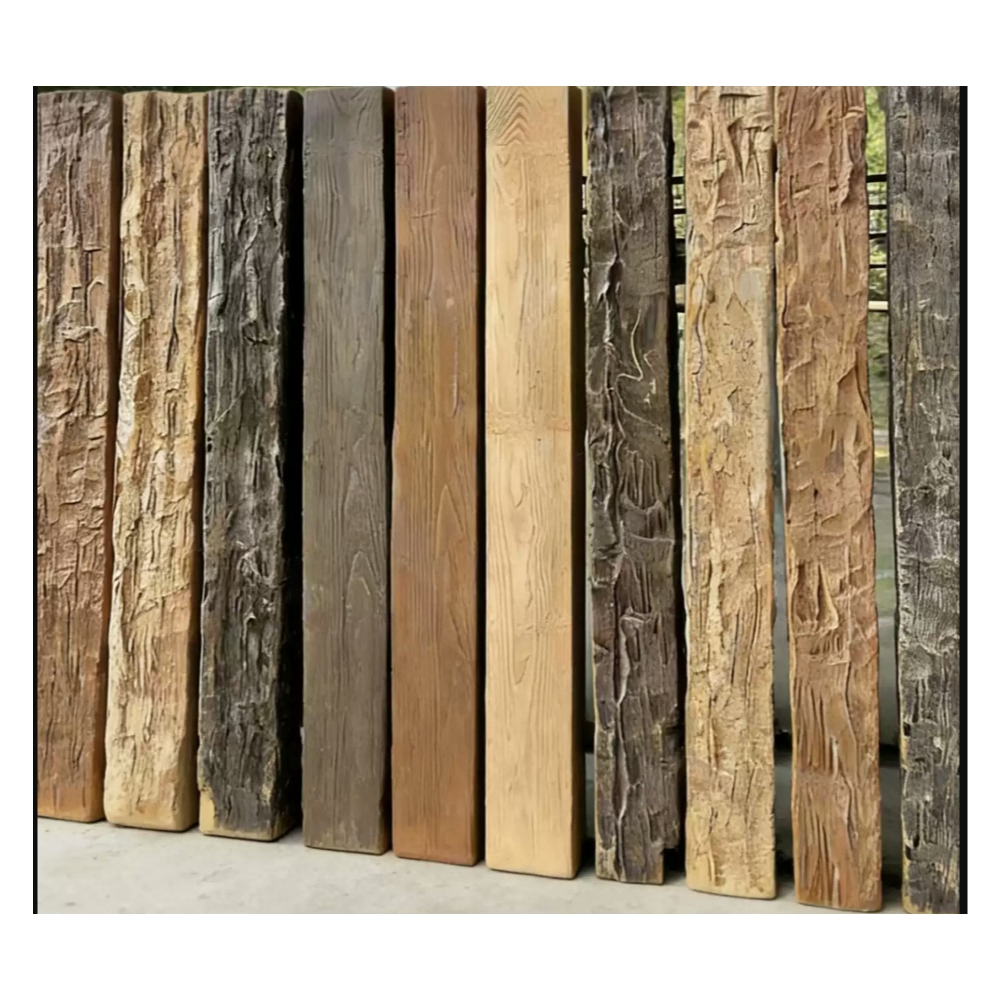
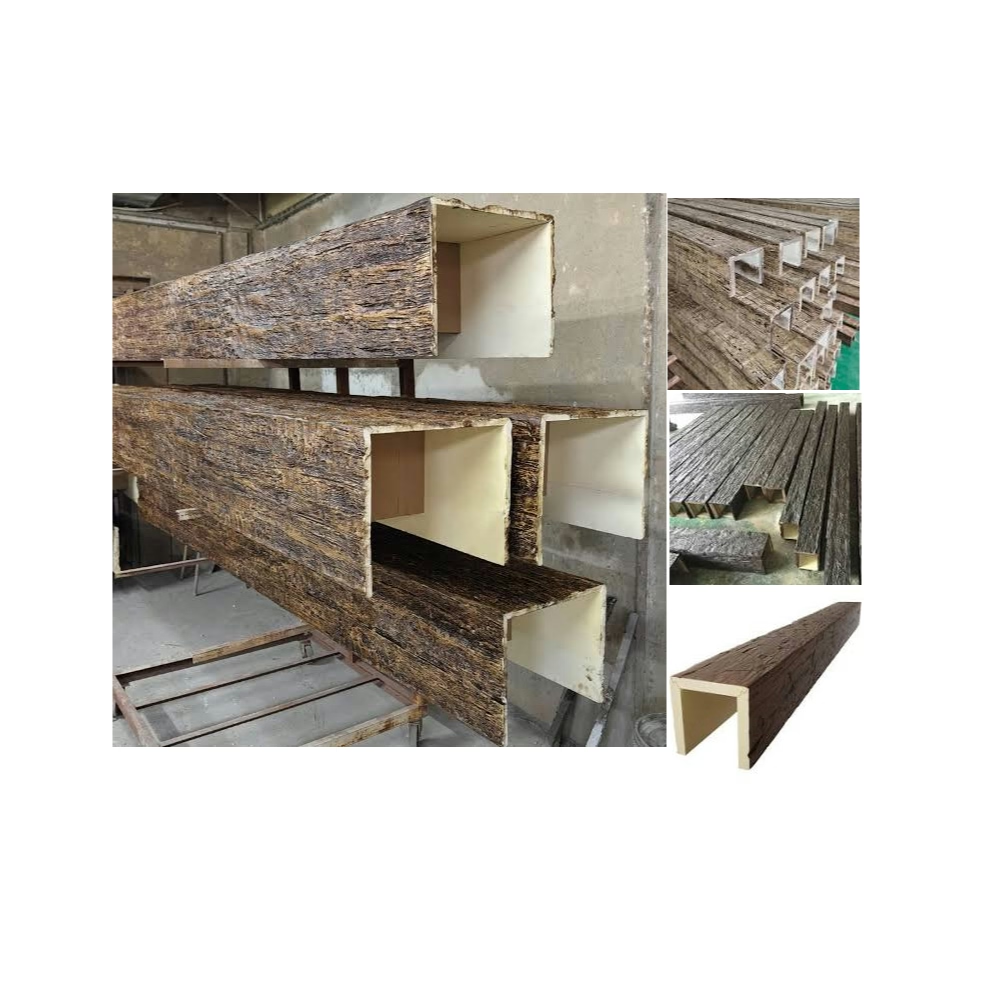
Request samples from multiple production batches rather than a single sample. This gives insight into quality consistency over time. Inspect samples carefully for surface quality, dimensional accuracy, color consistency, and structural integrity. Pay particular attention to the seam lines where molded sections join, as these are common locations for defects that can cause failure in the field.
Consider engaging a third-party quality inspection service for an initial factory audit. Companies like SGS, Bureau Veritas, and Asia Inspection offer pre-shipment inspection services that can verify production quality before goods leave the factory. The cost of these inspections—typically a few hundred dollars per day plus expenses—is trivial compared to the cost of receiving defective or non-compliant goods.
Understanding Pricing and Negotiation
Pricing for faux wood beams from Chinese manufacturers typically includes several components: the unit cost of the beams, custom packaging, factory loading, inland transportation to the port of export, export documentation fees, ocean freight or air freight, destination port handling, customs clearance, and inland transportation to the final warehouse or project site.
Total landed cost is the figure that matters for budgeting purposes. The ex-factory price can be misleadingly attractive, but additional costs can add 30 to 50 percent or more to the total landed cost when shipping, duties, and inland transport are included. Build a comprehensive cost model before negotiating with suppliers, and ensure that quotes from different suppliers include the same scope of work for true comparison.
Negotiate pricing based on realistic order quantities. Small orders—less than a full container—typically command higher per-unit pricing due to fixed overhead costs being spread across fewer units. Most importers find that the sweet spot for cost efficiency is a full container load (typically 25 to 30 cubic meters), though larger quantities may qualify for additional volume discounts.
Payment terms should be structured to protect the importer while remaining acceptable to the supplier. The most common arrangement is a 30 percent deposit upon order confirmation with the balance paid against a copy of the bill of lading after production is complete and goods are loaded for shipment. Letters of credit provide additional security for larger orders but add cost and complexity. Avoid full advance payment unless working with a well-established supplier relationship.
Shipping Logistics and Container Loading
Most faux wood beam imports from China to the USA move via ocean freight in standard 20-foot or 40-foot shipping containers. The lightweight nature of polyurethane beams means that a 40-foot high-cube container can accommodate a substantial quantity—typically 2,000 to 3,000 linear meters of medium-profile beams, depending on packaging configuration.
Work with freight forwarders experienced in handling building materials. They can advise on optimal container types, packing configurations, and shipping routes. Major ports for US-bound shipments include Los Angeles/Long Beach on the West Coast and New York/New Jersey on the East Coast. Choice of port affects transit time and inland transportation costs.
Lead times are a critical consideration. Production at the Chinese factory typically takes 20 to 40 days depending on order size and complexity. Ocean transit adds another 14 to 25 days depending on the route, and inland delivery adds a week or more. Total time from order placement to receipt of goods is typically 45 to 75 days. Plan inventory and cash flow around these extended lead times.
Inspect goods before container loading. A pre-shipment inspection should verify that quality matches the approved samples, quantities are correct, packaging is adequate for ocean transit, and all required documentation is in order. Document any defects with photographs and require the supplier to correct them before loading.
Customs, Duties, and Regulatory Compliance
Customs procedures and regulatory requirements represent a significant component of the importing process. Errors here can result in shipment delays, unexpected costs, or even seizure of goods.
Faux wood beams manufactured from polyurethane typically classify under Harmonized Tariff Schedule code 3925.90 (other builders' ware of plastics). The current duty rate for this classification from China varies based on product category and trade actions in effect at the time of import. Verify the applicable duty rate with customs broker or trade database before importing, as rates can change.
Section 301 tariffs on goods imported from China can apply additional duties beyond the standard MFN rate. As of 2026, certain product categories face additional duties. Consult with a customs broker familiar with current tariff schedules to understand the full duty burden before quoting landed costs to customers.
Fire safety compliance is essential for any architectural product shipped to the USA. Beams intended for commercial or residential interior use should be tested to ASTM E84 or UL 723 standards, with documentation confirming the fire performance classification. Beams intended for exterior use should have documentation supporting their UV and weather resistance claims.
Some states and municipalities have additional regulatory requirements. California Proposition 65 compliance, for example, requires that products containing certain chemicals be labeled appropriately. Confirm with your supplier that all materials, finishes, and packaging components comply with the requirements of the destination state.
Quality Control on Receipt
Quality control does not end when goods arrive at the warehouse. A thorough receiving inspection protects against damage in transit and verifies that delivered goods match the order specifications.
Begin by checking the exterior of containers and pallets for visible damage before opening. Document any damage with photographs and report it to the freight carrier and customs broker immediately. Claims for transit damage must typically be filed within a specified period after delivery.
Open a representative sample of packages and inspect the contents against the order specifications and approved sample. Check dimensional accuracy, surface quality, color consistency, and structural condition. Look for any signs of damage from packaging, moisture exposure during transit, or rough handling.
Document any defects systematically, including the number and type of defects found and the percentage of total units affected. Most suppliers agree to replace defective units at their cost, but the importer bears the responsibility for proving that defects are not the result of improper handling after arrival.
For ongoing orders, consider implementing a statistical sampling plan rather than inspecting every unit. Standard sampling plans such as ANSI/ASQ Z1.4 provide guidance on acceptable quality levels for different product categories and order sizes.
Importing faux wood beams from China to the USA is a well-established trade, and importers who approach it methodically—carefully qualifying suppliers, accurately modeling costs, planning lead times, complying with regulatory requirements, and implementing quality control procedures—can realize substantial cost advantages while maintaining the product quality their customers expect.
Technical References
ASTM standards cited in every specification
Test Data
Lab results from internal testing program
Updated 2026
Reviewed against current product specs


