There's a particular frustration that every contractor and dedicated DIYer knows: you've finalized the design, measured every dimension, and decided on the perfect beams for the project—and then you find out they're on backorder for six weeks. In-stock availability changes the entire equation. When the beams you need are ready to go, the gap between planning and installation shrinks to days rather than weeks, and your project timeline becomes something you control rather than something controlled by a warehouse across the country.
For polyurethane faux wood beams, local inventory availability is becoming increasingly common as distributors recognize the demand for fast-turnaround materials in both residential and commercial construction. Understanding how to identify in-stock items, what to verify before pickup, and how to prepare for transport can mean the difference between a project that starts on Monday and one that starts in a month.
The Value of Immediate Availability
In-stock availability matters for reasons beyond simple impatience. Construction projects operate on timelines that are often tightly integrated with other trades, material deliveries, and client expectations. When a beam installation is part of a broader renovation, delays in beam delivery can cascade through the entire project, affecting painters, electricians, floor installers, and furniture delivery schedules.
For rental property renovations, every day the property sits unfinished represents lost rental income. In-stock beams can be picked up the same day they're ordered, installed within days, and have the renovation completed and re-listed weeks ahead of a shipping-based timeline.
Retail and hospitality projects have similar urgency. A restaurant renovation that needs to be completed between service periods, a hotel lobby refresh with a hard opening date, or a retail space being prepared for a new tenant all benefit from materials that are available immediately. Beams are often a late-stage installation in these projects—added after the ceiling structure is complete but before final lighting and furnishings are installed. In-stock availability means the beam phase doesn't hold up the final countdown.
Verifying Stock Before You Plan Around It
Before you design your installation around in-stock items, confirm the availability directly. Online inventory systems are updated at intervals and may not reflect recent sales or transfers. A quick phone call to the local warehouse or showroom can confirm not only that the items are in stock but that the specific quantity you need is available—in-demand profiles and finishes sometimes have only one or two units on hand.
Ask about the beam dimensions in stock versus the dimensions you need. Many distributors carry popular sizes—eight-foot, ten-foot, and twelve-foot lengths are common—but if your project requires a non-standard length, you may need to special-order or modify a longer beam. Confirming stock dimensions before you commit to a pickup-based purchase prevents the disappointment of arriving to find that the beams are the wrong length for your installation.
Check the finish quality on in-stock items as well. While polyurethane beams are generally durable, units that have been sitting in a warehouse for an extended period may show minor finish wear, dust accumulation, or sun fading on exposed surfaces. Ask if you can inspect the specific units before loading them, and negotiate a return or exchange policy for any items that don't meet your standards.
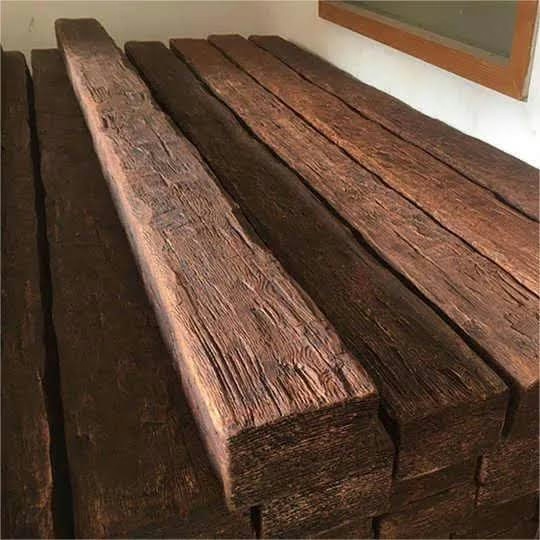
Preparing for Pickup and Transport
Proper transport preparation is essential for beam pickup. Polyurethane beams are surprisingly fragile along their edges and corners despite being lightweight, and an inadequately secured load can result in damaged beams before they ever reach the installation site.
For most passenger vehicles, full-length beams—anything over eight feet—require a truck or trailer. Confirm your vehicle's capacity before planning the pickup. If you don't have access to a truck, many hardware stores and lumber yards rent trailers by the day at modest cost. Some distributors offer delivery for a fee, which may be worthwhile if the beam quantity is large or the beams are particularly long.
Protect the beams during transport by laying them flat on a padded surface—a moving blanket, foam padding, or carpet scraps. Avoid stacking heavy objects on top of beams, and secure them with straps rather than rope, which can mar the finish when cinched tight. If you're transporting multiple beams, place cardboard or foam between them to prevent surface contact that could scratch the finish.
For beams longer than your vehicle bed, use a trailer with a side rail or a bed extension. Secure the beams to the trailer using multiple tie-down points—at the front, middle, and rear—to prevent the load from shifting during transport. A beam that shifts in transit and falls out of a trailer is not only a lost product but a safety hazard.
What to Inspect Upon Arrival
Before leaving the pickup location, inspect each beam for the issues that are most likely to occur during storage and handling: surface scratches, dented or crushed corners on hollow beams, finish inconsistencies, and warping. For hollow beams, gently tap on the sides to confirm the hollow core is intact—a dull thud rather than a hollow sound may indicate internal crushing that will affect the beam's structural performance.
Check the end caps on hollow beams. These are the most vulnerable points during storage and transport. Make sure they're fully seated and not cracked or partially detached. If an end cap is loose upon pickup, address it immediately at the warehouse—don't assume you can re-secure it later without risk to the beam's appearance.
Document any damage with photos before leaving the pickup location. Most distributors have a clear claims process for damage discovered at pickup, but the claim must typically be filed within a short window. Having photographic evidence of the condition at pickup strengthens your position if a damage claim becomes necessary.
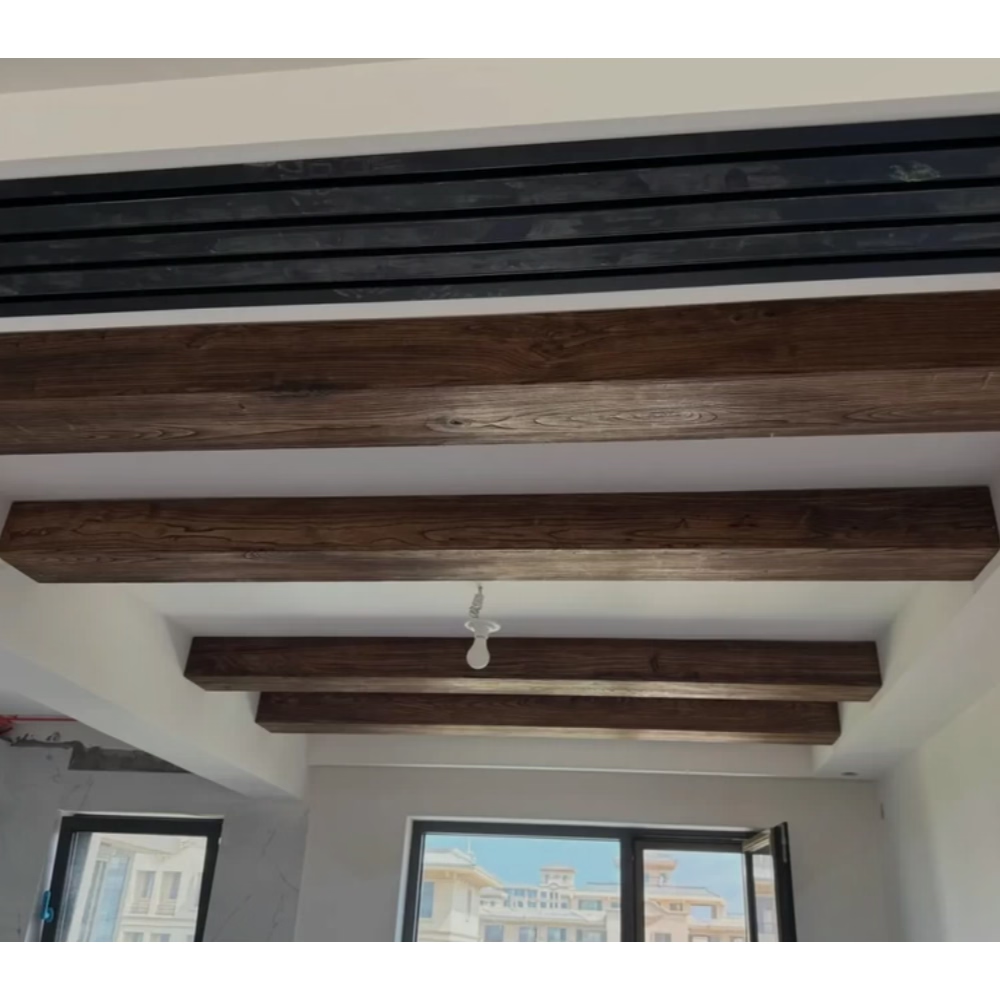
Planning Your Installation Around the Pickup
Once you have the beams in hand, move the installation timeline forward immediately. Don't let beams sit in your garage or job site for an extended period before installing them—the longer they sit, the more opportunity for damage, dust accumulation, or accidental modification. Ideally, plan the pickup for the same day or the day before the installation will begin.
Before installation, acclimate the beams to the job site's temperature and humidity for at least twenty-four hours. This is especially important if the beams were stored in a climate-controlled warehouse but the job site is an unfinished space with variable temperature and humidity. Allowing the beams to stabilize in the environment where they'll be installed prevents any minor dimensional changes that could affect the fit during installation.
With in-stock beams and a well-organized pickup process, your project can move from design decision to finished installation in a matter of days rather than weeks. The immediacy of local availability is one of the practical advantages of working with polyurethane faux beams, and leveraging it effectively is a skill that benefits any contractor or serious DIY installer.

In-stock polyurethane faux wood beams with local pickup options represent the fastest, most reliable path to starting your beam installation project. By verifying availability, preparing for proper transport, and inspecting items before leaving the warehouse, you can ensure that the beams arrive at your project site in perfect condition and ready for installation.
Technical References
ASTM standards cited in every specification
Test Data
Lab results from internal testing program
Updated 2026
Reviewed against current product specs


