Every renovation project has a critical path—the sequence of tasks that determines how quickly the project can be completed. When ceiling beams are part of that sequence, material availability becomes a critical path item. A beam that arrives on Tuesday can be installed on Wednesday. A beam that arrives in six weeks pushes the entire project timeline forward by six weeks. In-stock ready-to-ship PU faux wood beams exist to keep the critical path moving, eliminating material availability as a variable that delays your project.
The distinction between "in-stock" and "ready-to-ship" is important for project planning. In-stock means the item is physically in a warehouse somewhere. Ready-to-ship means the item is in stock and configured for immediate dispatch—with packaging, labeling, and shipping paperwork prepared so that the moment the order is placed, the beam is on its way. Understanding this distinction helps you evaluate whether a supplier's inventory claims represent genuine fast delivery or just optimistic marketing.
The Project Planning Advantage of Ready-to-Ship Inventory
When you design a project around ready-to-ship inventory, you gain the ability to plan with precision. Because the material arrives within days of ordering rather than weeks, you can sequence your tasks more tightly. The beam installation team can be scheduled to arrive shortly after materials, rather than holding them on standby for weeks waiting for the beams to arrive.
This tighter sequencing has cascading benefits. If the beam installation must precede electrical work, painting, or furniture installation, the faster material availability compresses the entire project schedule. For contractors managing multiple projects simultaneously, ready-to-ship inventory means inventory capital isn't tied up in materials sitting in a warehouse waiting for their scheduled installation date.
For retail and commercial tenants working with hard opening dates, ready-to-ship inventory is often the difference between opening on time and paying for delayed opening. A restaurant that opens two weeks late loses two weeks of revenue and may face penalty clauses in its lease. Beams that ship the day after ordering and arrive within a week are a manageable variable. Beams on a six-week backorder are a crisis.
Evaluating Supplier Inventory Claims
Not all suppliers who claim to have in-stock inventory are equally reliable. The gap between a warehouse count and a ready-to-ship status can be significant. Here's how to evaluate a supplier's inventory claims before committing to an order.
Ask for the specific warehouse location of the in-stock items. If the supplier lists multiple warehouses, ask which one has your items in stock and how far it is from your project site. An item listed as in-stock in a warehouse three thousand miles away isn't ready-to-ship in any practical sense.
Ask about order cut-off times. Many distributors process orders once or twice daily rather than continuously. If you place an order after the daily cut-off, it won't ship until the next processing day, adding a day to your timeline.
Ask about packaging and transit time. Some suppliers have ready-to-ship inventory but use transit times of seven to ten days for ground shipping. If you need beams in three days, a supplier with three-day in-stock availability but ten-day ground shipping isn't helping you. Look for suppliers with regional distribution centers that can reach your project site within your required timeframe.
Standard Profiles and Custom Needs
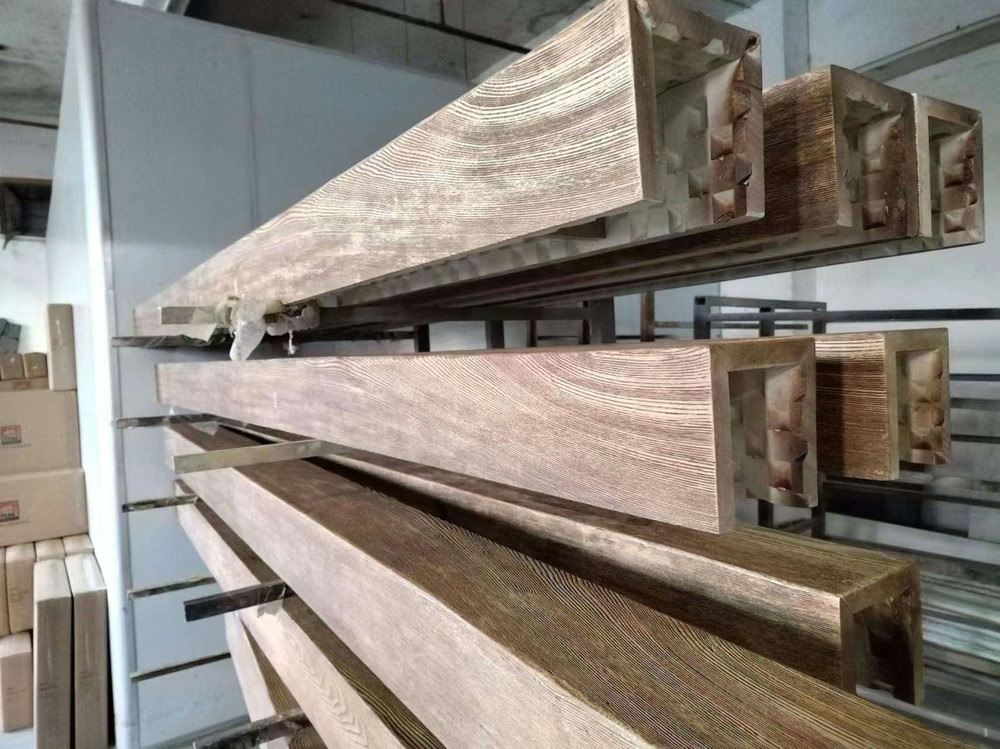
Ready-to-ship inventory naturally gravitates toward the most commonly ordered items. Standard beam profiles—the rectangular, trapezoidal, and simple curved profiles that work across the widest range of installations—make up the bulk of ready-to-ship inventory. Specialty profiles, unusual dimensions, or custom finishes may not be available from ready-to-ship stock.
If your project requires standard profiles and finishes, you'll find ready-to-ship availability across most distributors. If your project requires a specific profile or finish that isn't commonly stocked, you have two choices: adapt your design to use what's available in ready-to-ship inventory, or accept the lead time for a custom order.
For most residential applications, the available ready-to-ship inventory covers the spectrum of commonly used profiles and finishes. The key is to check availability early in the design phase, before you've committed to a specific product that may not be in stock. Designing around available inventory is far easier than redesigning after discovering your chosen beam is on backorder.
Ordering Strategies for Guaranteed Timelines
When your project has a hard deadline, take extra steps to protect your material timeline. Order a few days earlier than the minimum you'd calculate based on shipping time, building in a buffer for unexpected delays like weather, carrier missed deliveries, or order processing issues.
Confirm the order with the supplier before the expected ship date. A quick email or phone call verifying that your order is queued for processing and that the items are confirmed in stock eliminates the risk of discovering a stock discrepancy after your expected ship date passes.
Track the shipment actively. Most carriers provide tracking information that lets you monitor the beam's progress toward your site. If a shipment appears delayed, you can contact the carrier immediately to investigate rather than discovering the delay when the scheduled delivery window passes without a delivery.
Have a contingency plan. Even with ready-to-ship inventory and careful planning, delays happen. Know what you'd do if beams arrive a few days late—can the installation team flex their schedule? Can other tasks be reordered to fill the gap? Having a contingency plan prevents a minor delay from becoming a project crisis.

The Cost-Benefit of Fast Delivery
Ready-to-ship inventory typically costs slightly more than custom-ordered equivalents. The premium reflects the value of having materials available immediately rather than waiting in the production queue. For projects with time value—commercial projects with opening dates, rental properties generating no income while under renovation, or client projects where delay damages reputation—the premium is often worth paying.
Calculate the true cost of delay before deciding between ready-to-ship and custom-order inventory. A rental property generating one thousand dollars per month in rental income, delayed by four weeks, loses roughly one thousand dollars in income. If ready-to-ship inventory adds two hundred dollars to the material cost, the net benefit of faster delivery is eight hundred dollars—excluding any penalty clauses in the lease that could increase that figure substantially.
For contractors, the calculation includes reputation and client relationships. Delivering a project on time builds trust and generates referrals. Consistently delivering projects late—even for reasons outside your control, like supplier delays—damages your professional reputation.

Ready-to-ship PU faux wood beams are a practical resource for anyone managing a time-sensitive project. By sourcing from verified ready-to-ship inventory, planning orders strategically, and building contingency time into your schedule, you can rely on fast material delivery as a consistent element of your project management rather than an unpredictable variable. The combination of in-stock availability and fast dispatch makes these beams a cornerstone of successful project scheduling.
Technical References
ASTM standards cited in every specification
Test Data
Lab results from internal testing program
Updated 2026
Reviewed against current product specs


