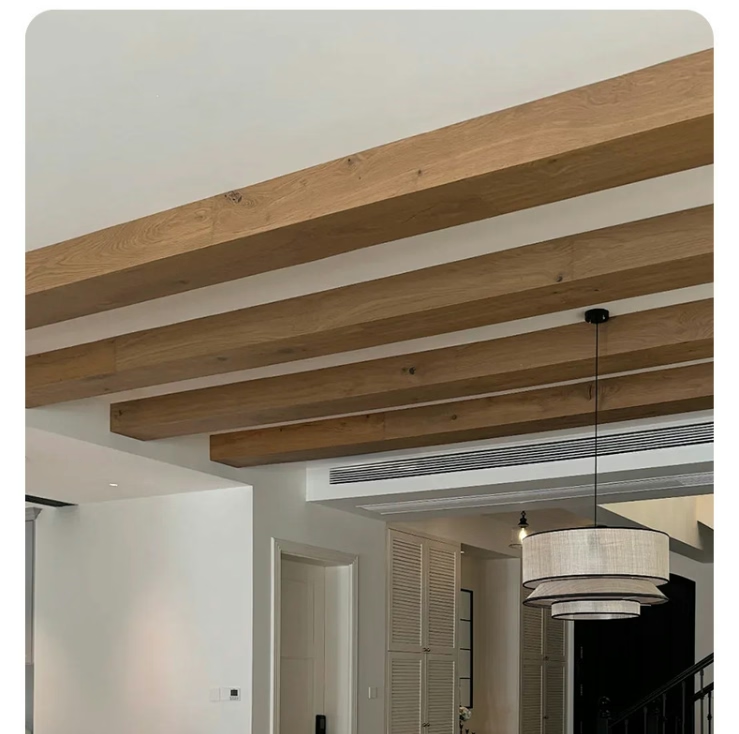
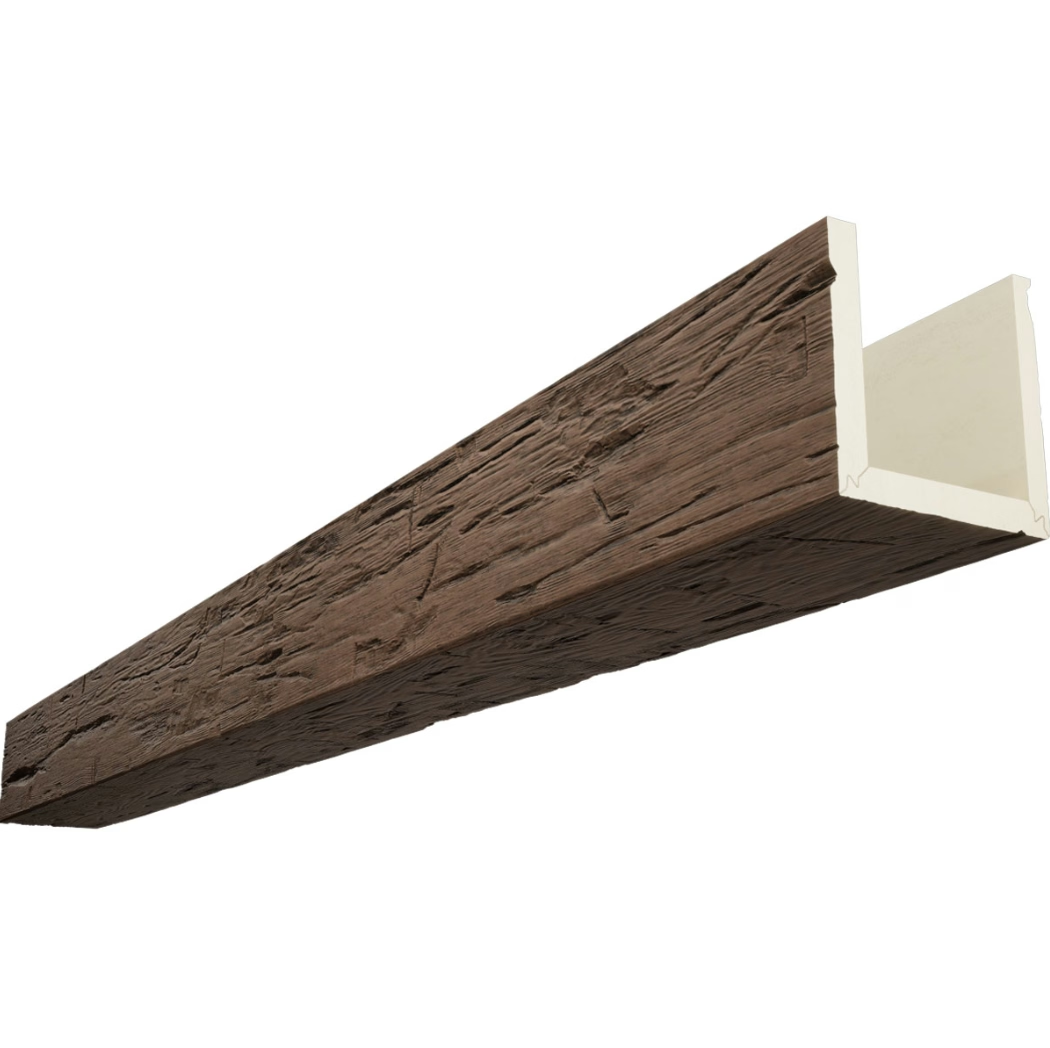
Commercial interior design operates within regulatory frameworks that residential design doesn't face. Building codes, fire safety requirements, and occupancy classifications all influence acceptable material selections. For ceiling beams in commercial applications, fire performance often represents a critical consideration that affects product eligibility.
Fire retardant polyurethane faux beams address these regulatory requirements while maintaining the aesthetic qualities that make beams desirable. Understanding fire performance characteristics, testing standards, and code implications helps ensure that beam selections meet both safety requirements and design objectives.
The intersection of safety and aesthetics represents one of the most important developments in contemporary beam manufacturing. Products that successfully combine fire performance with authentic appearance open applications that conventional materials cannot serve.
Understanding Fire Performance Requirements
Building codes establish fire performance requirements based on occupancy type, building construction, and intended use. Understanding these requirements helps navigate product selection for commercial applications.
Fire resistance ratings measure how building elements perform in fire conditions. These ratings—expressed in hours—indicate how long elements maintain structural integrity and fire containment when exposed to standard fire exposure. Ceiling beams in some commercial applications must meet specific fire resistance requirements.
Flame spread ratings measure how quickly flames spread across surface materials. These ratings—expressed as numbers on a standardized scale—indicate relative fire performance. Lower ratings indicate slower flame spread and better performance. Most commercial occupancies require specific maximum flame spread ratings.
Smoke development ratings measure how much smoke materials produce when burning. Even materials with good flame spread ratings may produce dangerous smoke levels. Codes often establish maximum smoke development requirements alongside flame spread limits.
Combination requirements address multiple fire performance characteristics simultaneously. Building codes may require products that meet both flame spread and smoke development limits, or that achieve specific fire resistance ratings.
Fire Retardant Polyurethane Technology
Fire retardant technology in polyurethane products involves chemical additives that alter combustion behavior. Understanding these technologies helps explain how fire retardant beams achieve their performance.
Chemical flame inhibitors interrupt combustion chemistry at various stages. Some additives release water when heated, cooling the material and slowing combustion. Others create char layers that insulate underlying material. Still others interfere with chemical reactions that sustain burning.
Formulation approaches vary between manufacturers. Some add flame retardant chemicals during production; others use inherently fire-resistant polymer formulations. Both approaches can achieve meaningful fire performance, but performance characteristics differ.
Testing and certification verify that formulations meet specified performance standards. Independent testing laboratories conduct standardized fire tests and certify results. Products without independent certification may not perform as claimed.
Performance classifications indicate which applications products are approved for. Products rated for residential use may not meet commercial requirements. Products approved for exposed installation may not be acceptable for concealed applications. Understanding specific application requirements helps ensure appropriate selection.
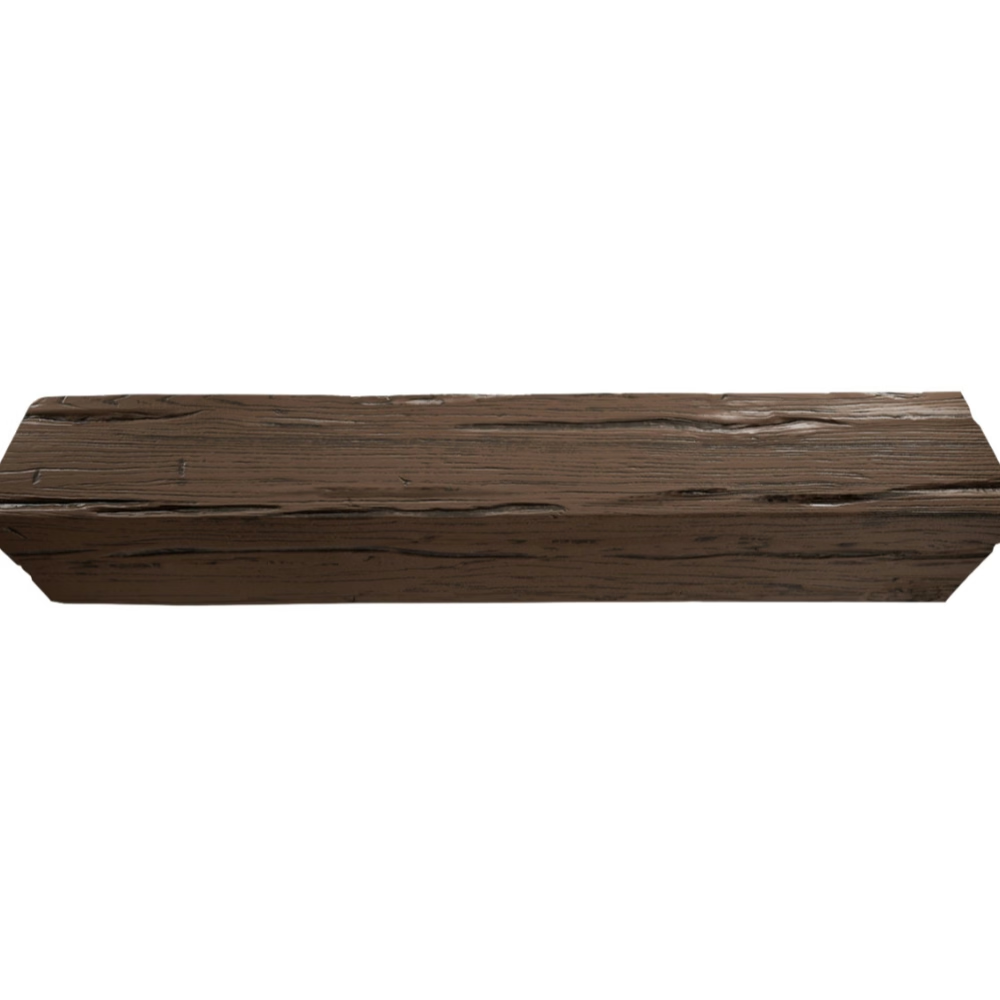
Commercial Applications Requiring Fire Retardant Beams
Several commercial applications commonly require fire retardant ceiling treatment. Understanding these applications helps anticipate when fire retardant products become necessary.
Hospitality occupancies—restaurants, hotels, bars—typically face stringent fire safety requirements. Cooking activities, crowded conditions, and late-night operation all increase fire risk and code scrutiny. Fire retardant beams address these requirements while supporting the aesthetic character these spaces demand.
Assembly occupancies—venues, theaters, event spaces—bring large numbers of people together in configurations that complicate emergency evacuation. Code requirements for these occupancies often exceed other commercial categories. Fire retardant materials throughout these spaces support occupant safety.
Educational occupancies—schools, daycare facilities—require fire performance that protects vulnerable populations. Beam selection in these applications must meet education occupancy requirements while creating environments appropriate for learning.
Healthcare occupancies—clinics, hospitals, medical offices—face unique fire safety requirements related to patient mobility and evacuation challenges. Fire retardant beam products support these specialized requirements.
Selecting Fire Retardant Beams for Commercial Projects
Product selection for commercial applications requires attention to documentation, certification, and code compliance. Several factors ensure appropriate selection.
Documentation review confirms that products meet specific requirements. Product data sheets should clearly state fire performance ratings. Independent test reports should verify performance claims. Certification marks from recognized testing agencies indicate verified performance.
Application compatibility ensures that selected products suit intended uses. Products rated for certain occupancy types or installation configurations may not be approved for all applications. Understanding specific application requirements prevents costly selection errors.
Code compliance verification confirms that selected products meet local requirements. Building codes vary by jurisdiction, and what satisfies one code may not meet another. Local authority having jurisdiction (AHJ) confirmation ensures that selected products will be accepted.
Installation requirements may differ for fire retardant products. Some fire-rated assemblies require specific installation approaches to maintain performance. Understanding these requirements before purchase prevents installation problems.
Benefits Beyond Code Compliance
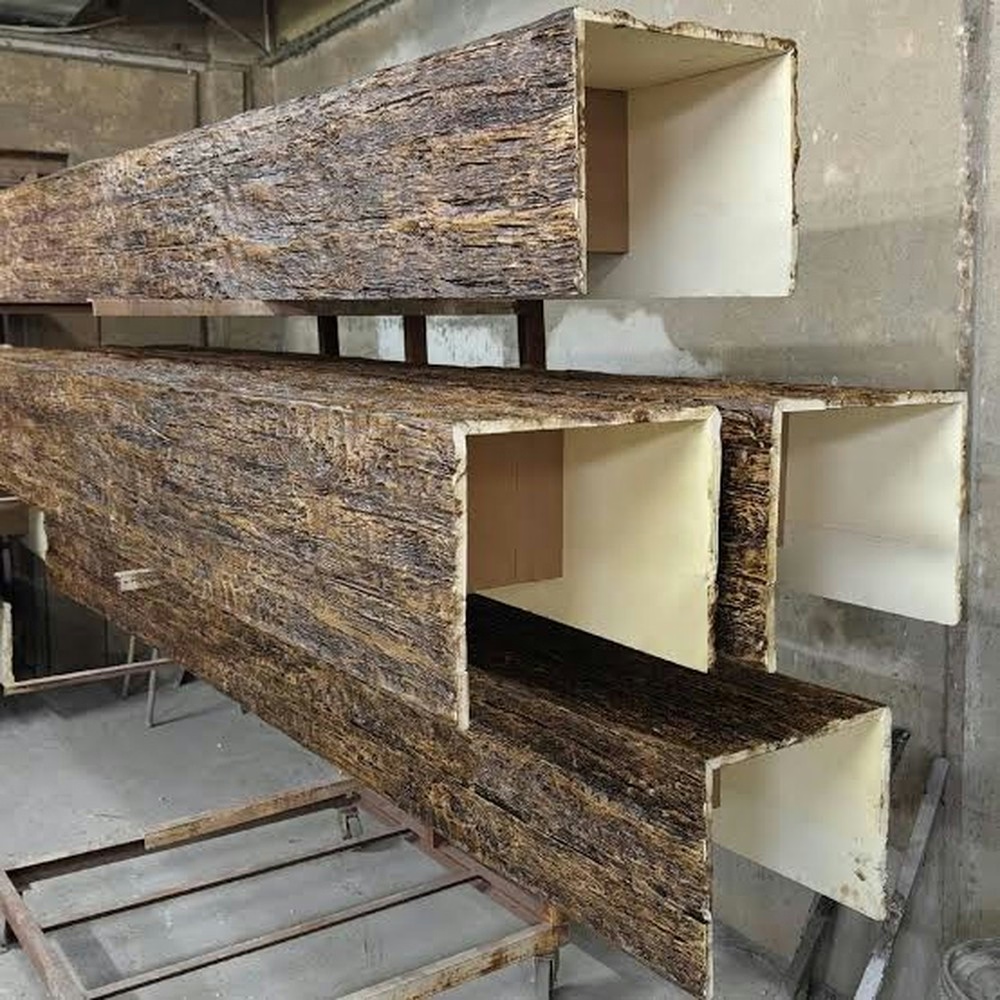
Fire retardant polyurethane beams offer benefits beyond basic safety compliance. Understanding these benefits helps evaluate overall value for commercial applications.
Aesthetic consistency allows fire retardant products to match non-rated alternatives. Manufacturers often produce fire retardant versions of their standard products, enabling consistent appearance across fire-rated and non-rated applications. This consistency supports design continuity.
Durability characteristics of fire retardant formulations often match or exceed standard products. The same properties that improve fire performance—chemical stability, thermal resistance—benefit long-term durability. Fire retardant products often demonstrate excellent service life.
Maintenance simplicity supports commercial operations. Fire retardant polyurethane beams require the same minimal maintenance as standard products—occasional cleaning without specialized treatment. This maintenance simplicity aligns with commercial operational expectations.
Risk management benefits from fire retardant specification. Beyond code compliance, using fire-rated products demonstrates prudent material selection. This documentation of thoughtful specification supports insurance positioning and liability management.
The combination of safety performance, aesthetic quality, and practical benefits makes fire retardant polyurethane beams the appropriate choice for commercial applications where fire performance matters. Understanding these products helps ensure that code requirements and design objectives both receive proper attention.
Technical References
ASTM standards cited in every specification
Test Data
Lab results from internal testing program
Updated 2026
Reviewed against current product specs