When developers transformed the historic textile mill into a mixed-use entertainment complex, they faced a familiar challenge: achieving authentic rustic charm without compromising on durability. The solution came in the form of industrial-grade heavy-duty PU faux wood beams, which now span the main atrium and support the mezzanine level while delivering the warm character guests expect from a reclaimed wood aesthetic.
Heavy-duty polyurethane beams represent a significant advancement over traditional materials when applications demand both strength and visual appeal. These engineered products undergo specialized manufacturing processes that produce density levels far exceeding standard decorative beams, making them suitable for applications where structural considerations, though not load-bearing, require meaningful weight tolerance and resistance to impact.
Understanding Heavy-Duty PU Beam Construction
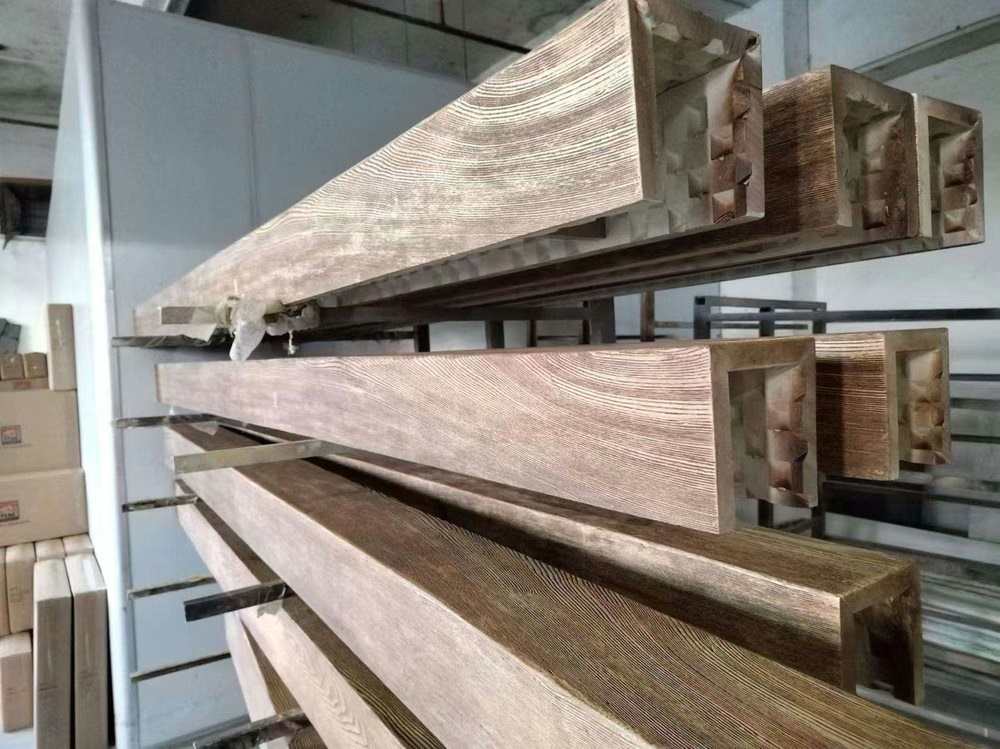
The manufacturing process for industrial-grade PU beams differs substantially from lighter decorative alternatives. Producers incorporate higher concentrations of polyurethane resin alongside reinforced internal cores, often featuring steel or aluminum structural inserts that provide exceptional rigidity without the weight penalty of solid timber. This construction method allows beams to maintain their shape under significant stress while remaining light enough for practical installation.
The foam density in heavy-duty formulations typically ranges from 180 to 240 kilograms per cubic meter, compared to 120 to 150 kg/m³ for standard decorative beams. This increased density translates directly into improved impact resistance and dimensional stability across temperature fluctuations, making these beams appropriate for environments with HVAC systems cycling regularly or exterior applications subject to seasonal changes.
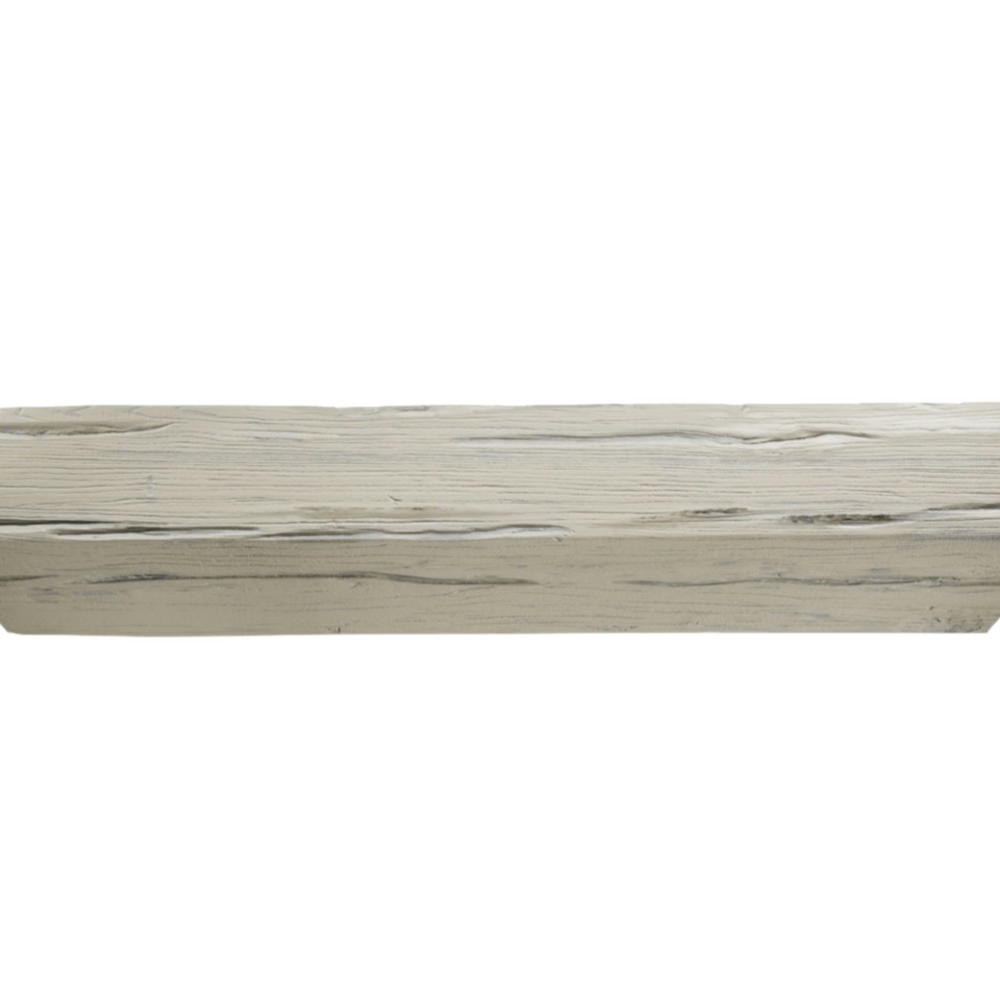
Surface textures in heavy-duty products often feature deeper, more pronounced grain patterns that simulate weathered barn wood or reclaimed beams with natural character. The polyurethane material accepts these textures without the inconsistencies found in natural wood, where grain density varies based on growth conditions and cutting orientation. Manufacturers can achieve consistent quality across production runs, ensuring that beams ordered months apart will match when installed side by side.

Weight Tolerance and Load Considerations
One of the primary advantages of industrial-grade PU beams lies in their impressive weight tolerance relative to their mass. While these beams cannot serve as structural supports in most jurisdictions—they require proper engineering certification for load-bearing applications—they handle incidental stresses admirably. A heavy-duty beam can support the weight of multiple installers climbing on scaffolding, the occasional impact from moving equipment, and sustained loads from suspended decorations without deformation.
For applications requiring actual load-bearing capacity, manufacturers offer beams with integrated steel I-beam cores that can support meaningful weight while maintaining the appearance of rustic timber. These hybrid products feature a polyurethane shell molded to encase the structural steel, creating a beam that satisfies both engineering requirements and aesthetic goals. The steel core handles loads while the polyurethane exterior provides the warm, natural appearance that architects specify.
Commercial interior projects frequently specify heavy-duty beams for suspended installations where ceiling conditions or architectural features prevent mounting directly to structural elements. The beams themselves must support their own weight plus any additional loads from lighting fixtures, signage, or decorative elements, making the enhanced durability of industrial-grade products essential for long-term performance.
Applications in Demanding Environments
Hospitality venues place extraordinary demands on interior finishes. Hotel lobbies experience constant foot traffic and luggage movement, while restaurants contend with furniture repositioning and occasional collisions from serving carts. Industrial-grade PU beams maintain their appearance through these daily challenges, resisting dents and scratches that would mar natural wood alternatives.
The entertainment industry has embraced heavy-duty faux wood beams for themed environments, from sports bar chain renovations to casino floor redesigns. These installations often involve suspended beam arrangements that create intimate zones within large spaces, and the durability of PU construction ensures that routine maintenance and occasional reconfiguration do not compromise the visual impact.
Educational and healthcare facilities benefit equally from industrial-grade products, particularly in areas where infection control protocols require frequent cleaning with chemical agents. PU beams resist the degradation that affects natural wood when exposed to repeated sanitation, maintaining their appearance through years of maintenance cycles that would require refinishing or replacement with organic materials.

Installation Methods for Commercial Projects
Proper installation of heavy-duty beams requires attention to mounting hardware and attachment methods suited to the increased mass. Standard decorative beam brackets often lack the capacity for industrial products, necessitating heavy-duty steel mounting systems with adequate load ratings. Engineering specifications should guide bracket selection based on beam length, installation angle, and anticipated loads.
Continuous backing installations provide the most secure mounting for heavy-duty applications. This technique involves installing a structural support framework—typically steel channels or engineered wood—across the ceiling plane, to which beams attach using multiple connection points spaced at regular intervals. The distributed load reduces stress on any single attachment while providing alignment guidance for accurate beam positioning.
Commercial projects often incorporate accessibility requirements that influence beam installation height. The Americans with Disabilities Act and similar international standards may affect suspended beam configurations in public spaces, requiring careful coordination between design intent and regulatory compliance. Industrial-grade beams, with their superior dimensional stability, maintain consistent appearance even when installed at heights that complicate routine maintenance access.
Maintenance and Long-Term Performance
The maintenance requirements for industrial-grade PU beams differ substantially from natural wood. Unlike organic materials that require periodic sealing, staining, or refinishing, polyurethane surfaces maintain their appearance with routine cleaning using standard commercial cleaning products. This characteristic proves particularly valuable in hard-to-access installations where maintenance crews must work from lifts or scaffolding.
UV resistance represents a critical consideration for any product exposed to natural light. Quality industrial-grade beams incorporate UV stabilizers in their formulation, protecting against the yellowing and surface degradation that affects untreated polyurethane. For installations near skylights or exterior windows, manufacturers often recommend UV-resistant topcoats that extend the product's lifespan under prolonged sun exposure.
The expected service life for industrial-grade PU beams typically exceeds fifteen years under normal interior conditions, with many manufacturers offering warranties ranging from five to ten years for commercial applications. This longevity, combined with minimal maintenance requirements, often results in lower total cost of ownership compared to natural wood alternatives that demand regular refinishing and occasional replacement of damaged sections.
Cost Analysis for Commercial Specifications
When specifying heavy-duty beams for commercial projects, architects and developers should consider total project cost rather than unit price alone. While industrial-grade products carry higher initial costs than standard decorative beams, the reduced maintenance requirements and extended service life frequently produce favorable lifecycle cost comparisons. Natural wood beams in commercial applications may require professional refinishing every three to five years, a recurring expense that compounds significantly over a building's operational lifespan.
Freight and handling costs also merit consideration, as industrial-grade beams' increased density affects shipping weights. However, these costs typically remain manageable for projects specifying standard lengths, and the superior durability often eliminates damage-related replacement expenses that affect lighter alternatives during transport and installation.
For large-scale commercial projects, manufacturers can provide custom color matching and texture development services that ensure beams integrate seamlessly with other design elements. This capability proves particularly valuable in renovation projects where new beams must match existing millwork or coordinate with brand standards established during previous construction phases.
Technical References
ASTM standards cited in every specification
Test Data
Lab results from internal testing program
Updated 2026
Reviewed against current product specs


