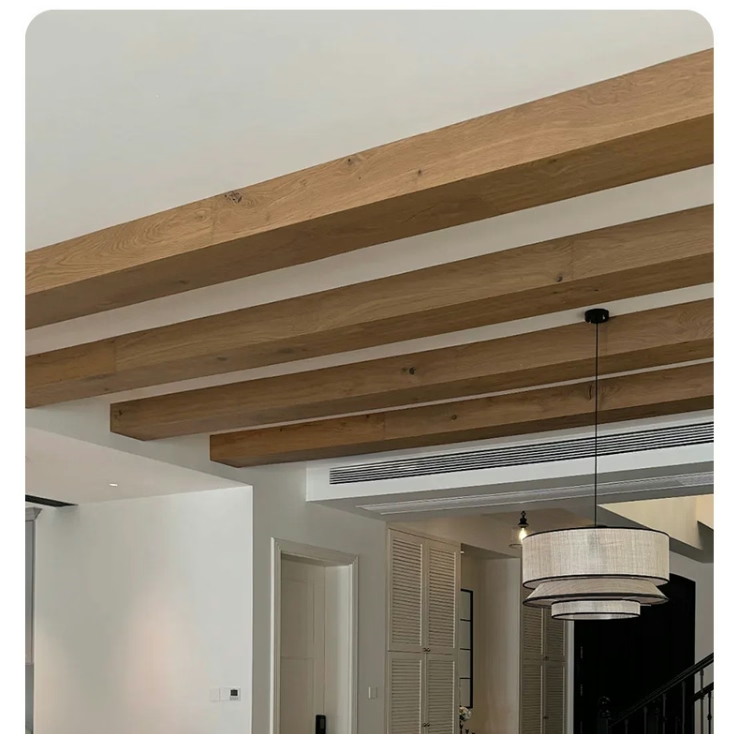
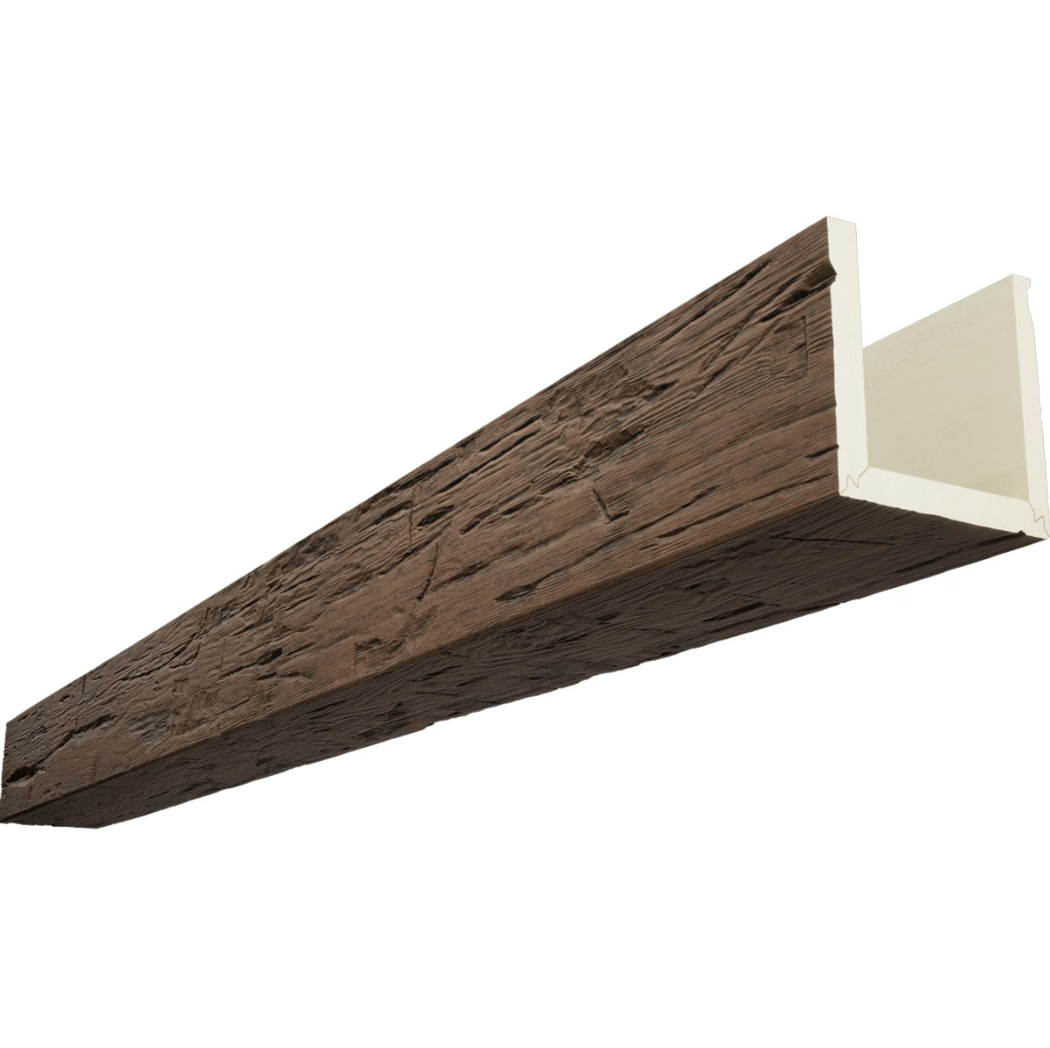
The hotel general manager walked through the lobby during final inspections, her eyes tracing the ceiling where reclaimed timber beams appeared to support the structure above. She pressed her hand against one beam, surprised by the smoothness beneath her palm. "I assumed these were real timber," she admitted. "The installer told me they're polyurethane, but I didn't believe it until now." This moment—where engineered materials achieve indistinguishable authenticity—represents the current state of commercial beam technology.
Commercial projects operate under different pressures than residential installations. Budget constraints matter more when projects involve millions rather than thousands. Durability requirements intensify when hundreds or thousands of people interact with materials daily. Maintenance considerations compound when professional cleaning crews work around the clock. And design impact must justify itself not just to homeowners but to architects, interior designers, franchise operators, and corporate executives with specific brand visions.
Industrial grade polyurethane faux beams address these commercial realities directly, providing the aesthetic impact of architectural timber with the practical advantages that professional project management demands.
Why Commercial Spaces Choose Polyurethane Beams
Authentic timber beams carry romantic appeal that architects and designers appreciate. Yet that romanticism often collides with commercial reality when projects move from concept to completion. Real reclaimed timber beams present challenges that make them unsuitable for many professional applications.
Weight creates immediate structural concerns. A commercial lobby with twenty beams—quite modest for a large hospitality space—might involve several thousand pounds of additional ceiling load. Engineering assessments become necessary, structural reinforcement may be required, and mounting hardware costs escalate accordingly. Polyurethane beams weighing a fraction of equivalent timber eliminate these concerns entirely.
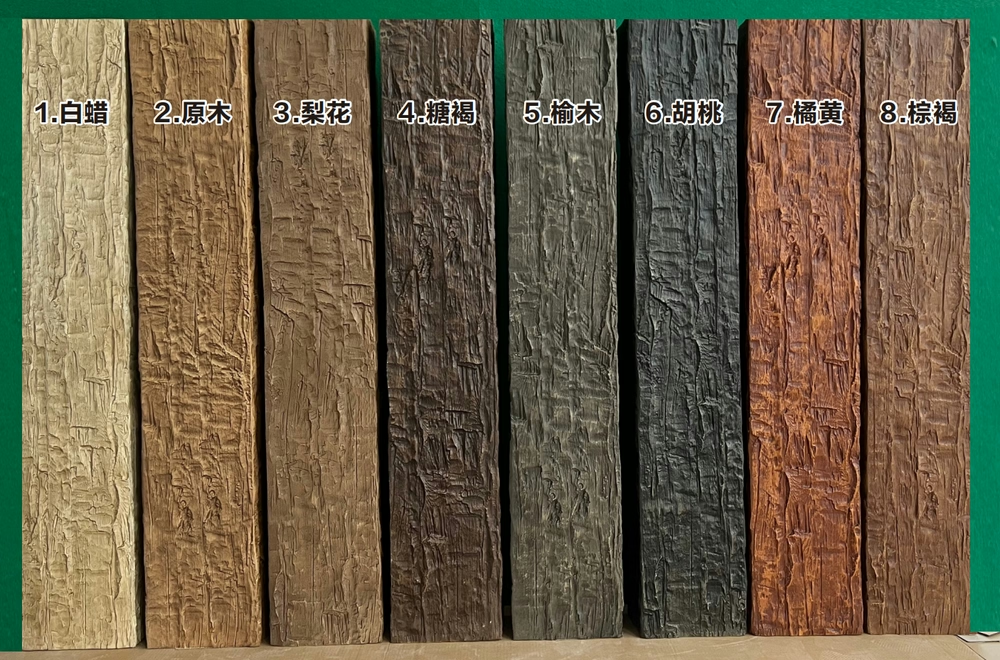
Consistency presents another challenge. Reclaimed timber, by definition, comes from diverse sources with varied characteristics. Commercial projects typically require uniform appearance across all installations, matching color, texture, and profile dimensions throughout a space. Polyurethane manufacturing allows precise control over every dimension and finish characteristic, ensuring every beam in a large installation matches specifications exactly.
Moisture sensitivity becomes critical in commercial environments. Hospitality spaces experience humidity fluctuations as heating and cooling systems cycle. Restaurant kitchens generate significant steam. Swimming pool areas maintain consistently high humidity. Real wood absorbs this moisture, potentially warping, cracking, or developing mold. Polyurethane's resistance to moisture absorption means beams maintain their shape and appearance regardless of environmental conditions.
Fire Safety and Code Compliance
Commercial buildings face stringent fire safety regulations that vary by occupancy type, building height, and local jurisdiction. Many building codes require or recommend fire-resistant materials in commercial applications, particularly for ceiling installations in public spaces.
Polyurethane faux beams manufactured for commercial use often incorporate fire-retardant additives that reduce flame spread and smoke development. These treatments allow beams to meet Class A fire ratings—the highest classification for building materials—without compromising appearance or structural properties.
When specifying beams for commercial projects, always verify that products meet applicable fire safety standards for your jurisdiction. Request documentation from manufacturers confirming fire rating classifications, and ensure these align with local building code requirements. This due diligence protects both project approval and ongoing regulatory compliance.
Application Across Commercial Sectors
Hospitality Installations
Hotels, restaurants, and entertainment venues lead commercial adoption of polyurethane beam technology. These spaces benefit enormously from beams that create atmospheric warmth while meeting the practical demands of high-traffic environments.
Hotel lobbies and corridors use beam installations to establish brand identity and design coherence. The entrance experience sets expectations for everything that follows, and ceiling beams provide immediate visual impact that photographs well and generates social media sharing. Marriott, Hilton, and numerous boutique chains have incorporated beam elements into recent renovation programs.
Restaurant design increasingly emphasizes authenticity and craft, with reclaimed wood aesthetics serving as shorthand for quality and attention to detail. Chain operators face particular pressure to achieve this artisanal feel consistently across hundreds of locations while maintaining cost controls that authentic materials cannot provide. Polyurethane beams offer the aesthetic at a predictable price point with installation times measured in hours rather than days.
Casino floors and entertainment venues face unique challenges with their 24-hour operations and constant foot traffic. Polyurethane beams provide visual interest that helps wayfinding and space definition without generating the maintenance burden that real wood would require in these always-occupied environments.
Retail Environments
Retail spaces compete fiercely for customer attention, and distinctive ceiling design creates memorable shopping experiences that differentiate brands from competitors. Department stores, specialty retailers, and lifestyle centers all employ beam installations to create atmosphere and define merchandise zones.
The fashion industry has embraced industrial aesthetics, making ceiling beams particularly appropriate for contemporary clothing retailers. The juxtaposition of raw structural elements against carefully curated merchandise creates visual tension that keeps customers engaged as they navigate the space.
Electronics retailers and home improvement stores—environments not traditionally associated with wood aesthetics—have discovered that strategic beam installations create warmer, more inviting spaces that encourage longer visits and more relaxed shopping behavior. Customer dwell time directly correlates with purchase volume, making these atmospheric investments commercially defensible.
Office and Corporate Spaces
Corporate design has evolved dramatically from cubicle farms toward collaborative, amenity-rich environments that attract talent and promote well-being. Ceiling beams contribute to this transformation by introducing organic warmth into spaces that might otherwise feel sterile or institutional.
Co-working spaces and startup incubators use beam installations to communicate creative culture and break from corporate conventions. The choice to include rustic timber aesthetics signals a casual, innovative environment that differs from traditional office expectations.
Executive boardrooms and corporate hospitality spaces benefit from the gravitas that substantial ceiling beams provide. The visual weight of beams suggests permanence and stability, reinforcing brand messaging about company values and long-term perspective.

Specifications for Commercial Projects
Commercial specification differs from residential purchasing in important ways. Architects and project managers require documentation, certifications, and performance data that residential buyers rarely request.
Technical Documentation Requirements
Product data sheets should include full dimensional specifications, material composition, weight per linear foot, fire ratings, and recommended installation methods. For projects requiring architect stamps or engineer approval, additional documentation regarding structural loads and mounting recommendations may be necessary.
Material safety data sheets verify that products meet volatile organic compound (VOC) emission standards important for indoor air quality in enclosed commercial spaces. Green building certification programs like LEED often require documentation of material contents and emissions, making this information essential for specification.
Warranty documentation becomes contractual in commercial contexts. Residential warranties typically cover manufacturing defects for limited periods; commercial warranties may need to address installation labor, removal and replacement costs, and extended coverage terms that align with building lease durations.
Performance Testing and Certifications
Third-party testing provides independent verification of manufacturer claims. Look for testing by recognized laboratories such as Underwriters Laboratories (UL), Intertek, or similar organizations whose certifications carry industry acceptance.
Acoustic testing demonstrates how beam installations affect room acoustics—important information for restaurants, theaters, and office environments where sound management impacts functionality. Some manufacturers provide acoustic data showing sound absorption coefficients at various frequencies.
Structural testing verifies load capacity and connection performance. For beams that will support lighting fixtures, signage, or other suspended elements, confirm that load ratings accommodate anticipated weights with appropriate safety margins.
Cost Considerations for Commercial Projects
While polyurethane beams generally cost less than authentic timber alternatives, commercial projects involve numerous cost factors beyond material unit prices.
Installation labor represents a significant portion of total project cost. Polyurethane's lightweight nature reduces labor time dramatically compared to timber installation—crews can handle longer beams without specialized equipment, and simpler mounting systems require less installation expertise. For large projects with dozens or hundreds of beams, these labor savings compound substantially.
Transportation and logistics costs favor polyurethane for geographically distributed projects. Lighter weight reduces shipping expenses, and consistent dimensions allow more efficient packing and loading. Projects requiring delivery to multiple locations—chain restaurants, retail stores, or hotel properties across different regions—benefit particularly from these advantages.
Maintenance costs over the building's lifetime favor polyurethane's durability. Real wood requires periodic refinishing, repair of water damage, and replacement of deteriorated sections. Polyurethane maintains appearance without these interventions, translating maintenance budgets from ongoing care to reserves for other building needs.
Partnering with Manufacturers for Commercial Success
Large commercial projects benefit from early manufacturer involvement during design development. Manufacturers can provide specification guidance, sample installation photos from similar projects, and value engineering suggestions that reduce costs without compromising appearance.
Volume pricing structures typically apply to commercial orders, with discounts scaling based on project scope. When multiple properties require similar specifications, coordinating orders across projects can unlock additional savings while ensuring consistency across the portfolio.
Lead times for commercial orders often exceed residential timelines due to production scheduling and potential custom finishing requirements. Early engagement allows adequate production time while maintaining project schedules. Rush orders typically incur premium pricing, making advance planning financially advantageous.
The general manager who couldn't distinguish polyurethane from timber in her hotel lobby now specifies these beams for every property renovation. The authentic appearance, reduced structural requirements, and minimal maintenance convinced even the most skeptical facilities director. Her experience demonstrates what commercial project teams across industries have discovered: industrial grade polyurethane faux beams deliver genuine design impact at commercially viable costs.
Technical References
ASTM standards cited in every specification
Test Data
Lab results from internal testing program
Updated 2026
Reviewed against current product specs