
The designer's brief was deceptively simple: "Create a space that feels both contemporary and connected to the building's history." The apartment occupied the fifth floor of a 1920s warehouse in Brooklyn, with eighteen-foot ceilings and original exposed columns that no renovation had ever concealed. What the space needed was architectural context—something overhead that acknowledged the building's industrial past without becoming a museum piece.
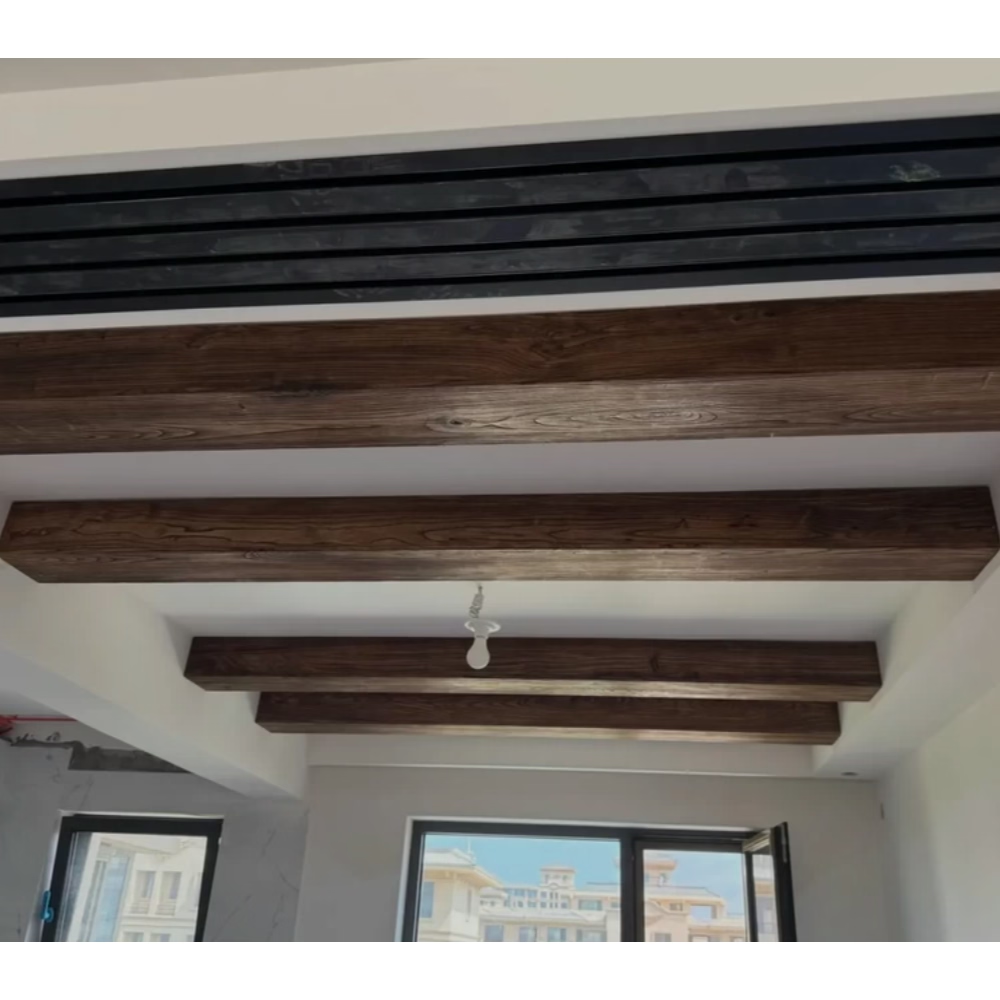
The solution involved polyurethane beams in a finish that matched neither the original timber's age-blackened patina nor contemporary clean-line aesthetics. Instead, the beams read as a thoughtful interpretation—wood that suggested history without mimicking decay, substantial without overwhelming, modern without abandoning the warehouse bones that made the space desirable in the first place.
Modern urban decor occupies a specific position in the design spectrum. It balances industrial heritage against contemporary sensibility, embracing authenticity while maintaining the clean livability that city dwellers require. Beams in these spaces must serve this balance, contributing to the aesthetic without overwhelming the refined simplicity that modern urban residents prefer.
Defining Modern Urban Aesthetic
Understanding what distinguishes modern urban decor from pure industrial or rustic approaches helps inform beam selection and installation.
The Urban Sophistication Factor
City living demands efficiency, and modern urban residents expect their spaces to function flawlessly. The aesthetic embraces this functionality, finding beauty in practical solutions rather than ornament applied for its own sake.
Beams in modern urban spaces should feel chosen rather than inherited. They contribute because they work—creating visual structure, adding warmth, defining zones—rather than simply existing as historical accident.
Refined Material Palette
Modern urban decor typically employs a curated material palette. Concrete, steel, glass, and carefully selected wood tones create environments that feel considered. Each material serves purpose; nothing appears by accident or convention.
Beam selection must align with this curation. The wood tone, grain intensity, and finish quality should match the refinement evident in other material selections. Beams that read as overly rustic or distressed would clash with the sophisticated choices throughout the rest of the space.
Integration with Contemporary Furnishings
Modern urban interiors often feature contemporary furniture with clean lines, geometric forms, and premium materials. Sectional sofas, minimalist dining tables, and sculptural lighting fixtures populate these spaces.
Beams should complement rather than compete with these furnishings. The overhead architecture should feel like part of the same design intention—contemporary sensibility expressed through traditional means.
Beam Selection for Urban Context
Choosing beams for modern urban spaces requires balancing several considerations that differ from pure industrial or rustic applications.
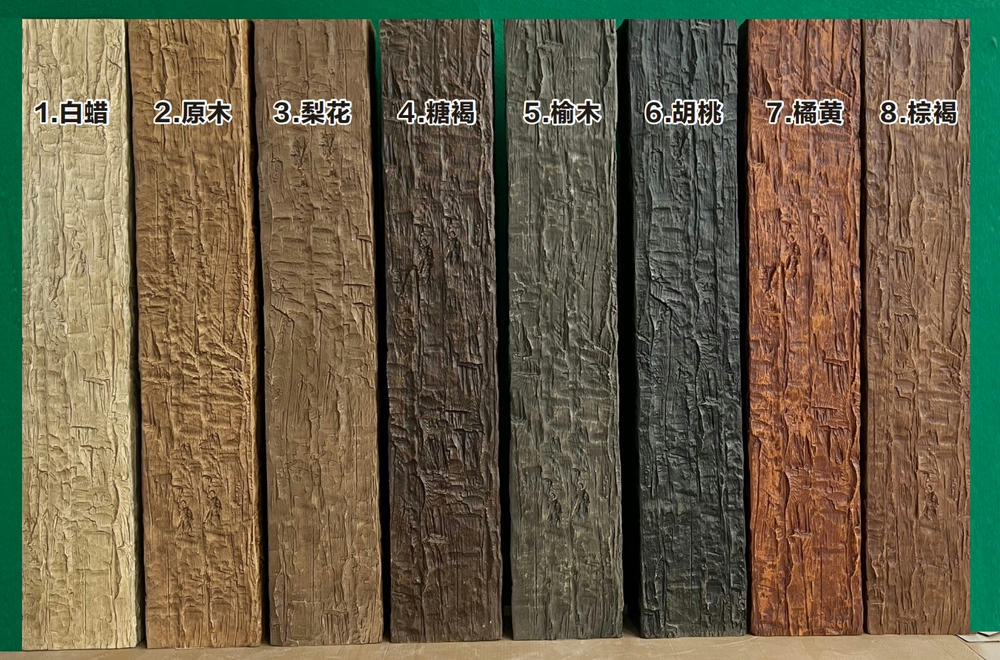
Finish Refinement
The beam finish deserves particular attention in refined urban spaces. While rustic applications might embrace pronounced texture and varied coloration, modern urban decor typically benefits from more controlled presentation.
Consider beams with subtle grain patterns rather than dramatic wood character. The wood should read as warm and organic without overwhelming the other design elements competing for attention.
Scale Appropriateness
Urban apartments rarely feature the vast scale of converted warehouses or industrial lofts. Ceilings may be high but not cavernous; spaces may be open but not empty.
Beam dimensions should relate appropriately to the space. Oversized beams in a modestly scaled apartment would feel theatrical rather than architectural. Appropriately sized beams enhance the space without demanding all attention.
Color Coordination
Modern urban palettes often employ neutrals—grays, taupes, and off-whites—with strategic color accents. Beams should coordinate with these foundations rather than introducing unexpected warmth or color that disrupts the planned effect.
Consider existing color temperature in the space. Cool-toned interiors might benefit from cooler wood tones; warmer palettes accommodate honey or amber beams that reinforce the existing warmth.
Installation Approaches for Urban Spaces
The practical realities of urban apartments affect beam installation approaches.
Working with Partial Ceilings
Many urban apartments feature partial ceilings—some areas exposed, some enclosed—based on original building design or subsequent renovations. Beam installation might address these partial ceilings, creating consistency across otherwise varied overhead conditions.
Consider whether beams should terminate against walls, disappear into enclosed ceiling areas, or connect to existing exposed structure. Each approach creates different visual effects that should align with overall design intentions.
Managing Limited Space
Urban apartments often lack the storage and staging areas available in houses or commercial spaces. Materials arrive as needed rather than accumulating on-site.
Plan delivery and installation sequencing carefully. Have mounting hardware, adhesive, and finishing products available before beams arrive. Minimize time that beams spend in the apartment before installation.
Noise Considerations
Urban living means shared walls, neighboring units, and varying noise levels. Beam installation should consider how the process might affect neighbors and whether acoustic isolation might be appropriate.
Some mounting approaches create vibration transmission pathways that might amplify building sounds. Consider adhesive mounting in sensitive locations to dampen potential transmission.
Combining Beams with Urban Design Elements
Urban interiors feature specific elements that beam installations should coordinate with.
Windows and Natural Light
Urban apartments often feature substantial windows that flood spaces with natural light. Beam positioning should consider how light will fall across surfaces throughout the day.
Beams perpendicular to windows create interesting light and shadow patterns as sun tracks across the space. Parallel installation might create more uniform illumination without dramatic shadows.
Metal Accents
Black metal window frames, stair rails, and furniture elements appear frequently in urban interiors. These metal accents should coordinate with beam selection to create cohesive material palette.
Match metal finishes to beam tones. Cool-toned metals pair with cooler wood; warmer metals support warmer beam selections.
Concrete Elements
Polished concrete floors and concrete accent walls create neutral foundations common in urban design. These concrete surfaces provide neutral backdrop that allows beams to serve as primary visual interest.
Consider how concrete texture and color relate to beam selection. Smooth, refined concrete might benefit from beams with more character; heavily textured concrete might pair better with subtler wood presentations.

Budget Considerations for Urban Projects
Urban renovation budgets often face pressure from high real estate costs, limited space, and the premium that city living commands. Beam investments should align with these economic realities.
Cost-Effective Approaches
Strategic limited installation can achieve significant impact without complete ceiling coverage. A few carefully positioned beams create architectural interest while maintaining budget for other priorities.
Consider accent beams over specific zones—dining areas, living spaces, or primary focal points—rather than uniform coverage throughout.
Quality Versus Quantity
When budget constrains scope, prioritize quality over quantity. Better beams in fewer locations typically create more impact than lesser-quality beams throughout.
The beam investment should feel intentional and premium, not compromised or cheap-looking. Even limited installation can succeed when every beam present is excellent.
Long-Term Value
Consider beam installation as long-term investment rather than temporary treatment. Quality beams that outlast trends and remain appealing through multiple furnishing changes provide better value than lower-cost alternatives requiring replacement.
The Brooklyn apartment with beams installed five years ago continues to satisfy the client who worried about choosing manufactured beams over authentic timber. "People who visit always assume the ceiling is original," she reports. "When I explain that some beams are polyurethane, they're genuinely surprised. The authenticity isn't about material authenticity—it's about whether the design works." Her perspective captures what modern urban decor demands: not historical accuracy for its own sake, but design solutions that serve contemporary living while honoring the spaces they inhabit.
Technical References
ASTM standards cited in every specification
Test Data
Lab results from internal testing program
Updated 2026
Reviewed against current product specs


