
The SoHo loft had been photographed for countless magazine spreads, but its current resident had lived there for fifteen years before we spoke. "Everyone assumes it's original," she said, running her hand along one of the ceiling beams. "But when we renovated in 2008, the original timbers were beyond saving. These are polyurethane. I've never regretted the choice." Her assessment captured what longtime loft dwellers understand intuitively: authenticity lives in how spaces feel, not in whether every component dates to the building's original construction.
New York lofts represent a specific chapter in design history—buildings converted from industrial to residential use in neighborhoods like SoHo, TriBeCa, and the Meatpacking District during the 1960s and 1970s. These spaces defined a new way of urban living that prioritized volume, light, and authentic materials over conventional domestic conventions. The aesthetic they created has been endlessly replicated, interpreted, and reimagined in buildings that never housed a single factory worker.
The Authentic New York Loft Character
Understanding what distinguishes authentic New York loft character from its reproductions helps inform beam selection and installation.
Architectural Authenticity
Original New York lofts featured genuine industrial architecture: cast iron columns, heavy timber or steel beams, brick walls, and concrete floors. These elements weren't decorative choices but functional requirements of the buildings' original purposes.
Reproductions capture this authenticity through careful material selection. The goal isn't mimicking industrial aesthetics but achieving the genuine article through whatever means available. Polyurethane beams contribute to this authenticity when selected and installed appropriately.
Light and Volume
The iconic New York loft photographs show light-filled spaces with dramatic shadows and visible grain. These effects emerge from the interplay between large windows, high ceilings, and exposed structural elements that catch and modulate incoming light.
Beams play crucial roles in this light play, creating shadows at different times of day and providing visual interest that pure flat ceilings cannot achieve. The beam's three-dimensional profile generates shadows that flat paint cannot replicate.
Patina and History
Original lofts accumulated patina over decades of industrial use. Stains, weathering, and wear created surfaces with genuine history written into them. This patina distinguished authentic lofts from newly constructed imitations.
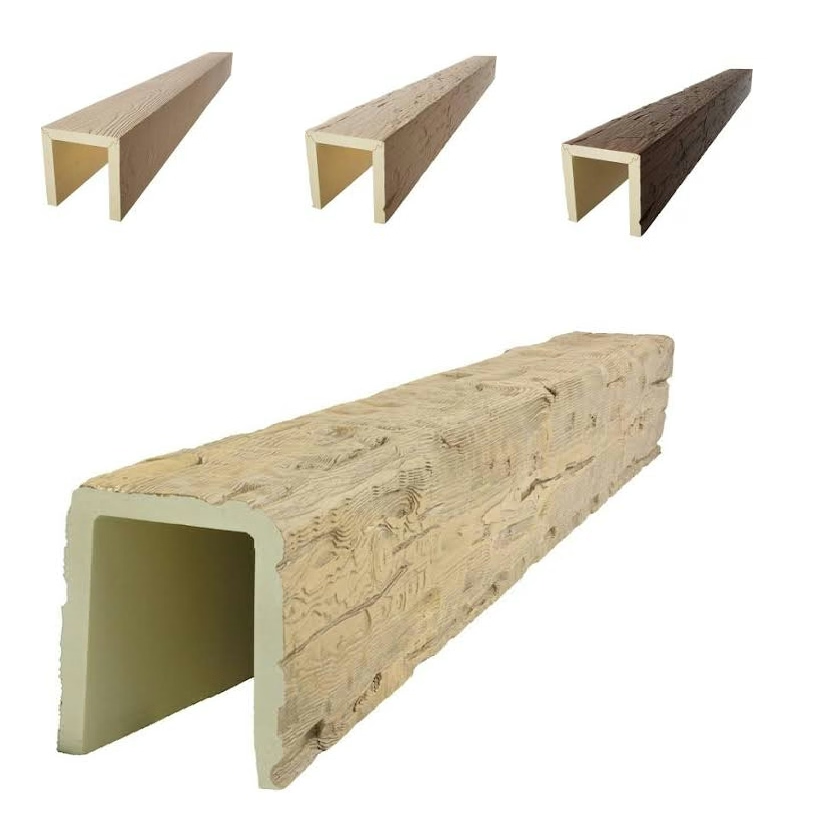
Manufactured beams can suggest patina without fabricating damage. Wire-brushed textures, varied coloration, and appropriately applied finishes create surfaces that read as aged without requiring actual deterioration.
Characteristics of New York Loft Beams
Original New York loft beams shared specific characteristics that reproductions should emulate.
Substantial Dimensions
The buildings that became lofts were designed for industrial loads. Roof structures featured beams sized for this purpose—often twelve inches or more in their smallest dimension.
Reproduction beams should match this substantial scale. Small or delicate beams would read as insufficient for the space, failing to provide the visual weight that authentic lofts possess.
Visible Structural Character
New York loft beams were never meant to be decorative. Their structural function remained apparent: connections visible, grain patterns structural rather than ornamental, dimensions determined by engineering rather than aesthetics.
Manufactured beams should suggest this structural honesty. Avoid overly refined finishes or decorative profiles that read as purely ornamental.
Darkened Surfaces
Decades of accumulated soot, smoke, and dust darkened original timber surfaces. The blackened patina became a defining characteristic of authentic loft aesthetics.
Manufactured beams can achieve similar effects through appropriate finish selection. Dark stains, gray weathering, or blackened treatments create the appearance of aged timber without requiring actual deterioration.
Creating the Sophisticated Industrial Effect
New York loft style balances industrial rawness with sophisticated refinement. The goal isn't creating decrepit industrial spaces but refined environments that honor industrial heritage.
Material Restraint
Authentic New York lofts often featured restrained material palettes. Industrial materials—brick, concrete, timber, steel—provided visual interest without decorative embellishment.
Beam installations should maintain this restraint. The beams themselves provide sufficient visual interest; competing treatments on walls or floors might undermine the sophisticated simplicity that characterizes the best loft spaces.
Quality Over Quantity
New York loft style emerged from spaces with genuine structural elements, not from decorative treatments. The authenticity lies in the presence of real structure, not in maximum visual density.
Consider fewer, more substantial beams rather than many smaller elements. A few well-chosen beams make stronger statements than numerous trivial ones.
Lighting Sophistication
Lighting in sophisticated loft spaces balances functional illumination with atmospheric effect. Recessed fixtures provide ambient light; pendant fixtures add visual interest and task illumination.
Coordinate beam placement with lighting design. Beams can support fixtures, create shadow patterns, or frame lighting elements in ways that enhance overall sophistication.
Coordinating with Other Loft Elements
Beams exist within complete spaces that include other defining elements.
Exposed Brick Walls
Brick remains the quintessential loft wall material. Its warm tones and textural complexity provide perfect counterpoint to timber beams overhead.
Coordinate beam finish with brick color. Red brick supports honey or amber beam tones; brown brick accommodates darker walnut or espresso finishes.
Concrete Floors
Polished concrete floors appear in many loft spaces, providing neutral foundation that complements both brick walls and timber beams.
The concrete's color affects beam selection. Cool gray concrete pairs with cooler beam tones; warm gray concrete accommodates warmer wood finishes.
Metal Accents
Black metal appears throughout authentic loft spaces: stair rails, column covers, furniture, and lighting fixtures. These metal elements should coordinate with beam selection.
Match metal finishes—matte black, brushed steel, bronze—to beam tones for cohesive material palette.

Application in Contemporary Buildings
New York loft style appears far beyond Manhattan in buildings that never housed a factory. Understanding how to apply this style in contemporary contexts helps achieve authentic results.
New Construction Adaptations
New buildings with loft-style layouts can incorporate authentic loft elements through beam installation. These installations should respect the architectural context rather than awkwardly imposing loft aesthetics on inappropriate structures.
Consider ceiling height and structural capacity when planning beam installations. Beams that read as undersized or installations that overwhelm the architecture undermine the sophisticated effect.
Historic Building Conversions
Buildings with genuine industrial heritage might retain original structural elements while requiring supplement or replacement. Polyurethane beams can extend authentic timber treatment into areas where original elements couldn't be preserved.
The goal is creating unified appearance where authentic and manufactured elements appear as one continuous design. Careful finish matching and proportion coordination help achieve this unity.
Boutique Commercial Spaces
Restaurants, hotels, and retail environments increasingly adopt New York loft style. These commercial applications often require faster installation and more consistent results than authentic materials can provide.
Polyurethane beams serve these commercial needs while maintaining aesthetic standards. Quality installations are indistinguishable from authentic timber in most lighting conditions and viewing distances.
The SoHo resident's fifteen-year satisfaction with her polyurethane beams reflects broader reality: the manufactured elements have served exactly as intended, creating authentic loft character without requiring the maintenance, weight, or cost of genuine timber. "The beams do what they're supposed to do," she concluded. "They make the ceiling interesting, they match the industrial feel, and they require nothing from me except occasional dusting. That's exactly what I wanted." Her pragmatic assessment captures what many loft dwellers discover: authenticity of experience matters more than authenticity of materials, and well-chosen manufactured elements can achieve exactly the effects that define spaces worth inhabiting.
Technical References
ASTM standards cited in every specification
Test Data
Lab results from internal testing program
Updated 2026
Reviewed against current product specs

