The smell of freshly ground coffee beans mingles with the ambient hum of conversation in countless cafes around the world. What many customers don't realize is how carefully the interior design contributes to that feeling of comfort and authenticity. Ceiling beams play a surprisingly significant role in establishing the atmosphere, and industrial rustic PU faux beams have emerged as an ideal solution for cafe owners seeking to balance aesthetics with practical considerations.
When you walk into a coffee shop with exposed structural elements and warm wooden accents overhead, something shifts in your perception of the space. The ceiling suddenly feels intentional rather than bare, and the industrial elements ground the room in a tactile reality that complements the handcrafted beverages being served. These design choices aren't accidents—they're calculated decisions made by designers who understand that texture and material honesty create memorable environments.

The Appeal of Industrial Rustic Design in Cafe Spaces
Industrial rustic design emerged as a response to the cold minimalism that dominated commercial interiors in the early 2000s. This aesthetic movement celebrates raw materials, visible construction methods, and the patina of age and use. For cafes, which often serve as third places between home and work, this approach creates environments that feel both contemporary and deeply rooted in craftsmanship traditions.
The industrial component brings honesty and structure. Exposed ductwork, visible electrical conduit, and metal fixtures all speak to a space that doesn't hide its functionality. Meanwhile, rustic elements—weathered wood textures, natural color variations, and organic forms—soften that industrial edge and introduce warmth. Together, these opposing forces create dynamic tension that makes spaces feel alive rather than sterile.
Rustic industrial cafes often feature communal tables made from reclaimed timber, metal industrial lighting fixtures, and brick or concrete walls. Adding beams to this composition completes the picture by addressing the fifth wall—often overlooked but crucial to spatial perception. When beams run across the ceiling, they draw the eye upward and make the room feel more substantial and grounded.
The challenge historically has been that genuine reclaimed timber beams present significant obstacles for commercial applications. They add substantial weight to ceiling structures, require specialized installation expertise, and present challenges around moisture resistance and pest concerns. These practical realities pushed designers to seek alternatives that could capture the aesthetic without the associated headaches.
Why Polyurethane Faux Beams Suit Commercial Environments
Polyurethane faux beams solve many of the problems that plague natural wood in commercial settings. The material itself is remarkably stable, resisting the moisture fluctuations that cause real wood to warp, crack, or cup over time. For cafes, where humidity levels can fluctuate significantly with opening and closing procedures and where steam from espresso machines constantly enters the environment, this stability represents a meaningful advantage.
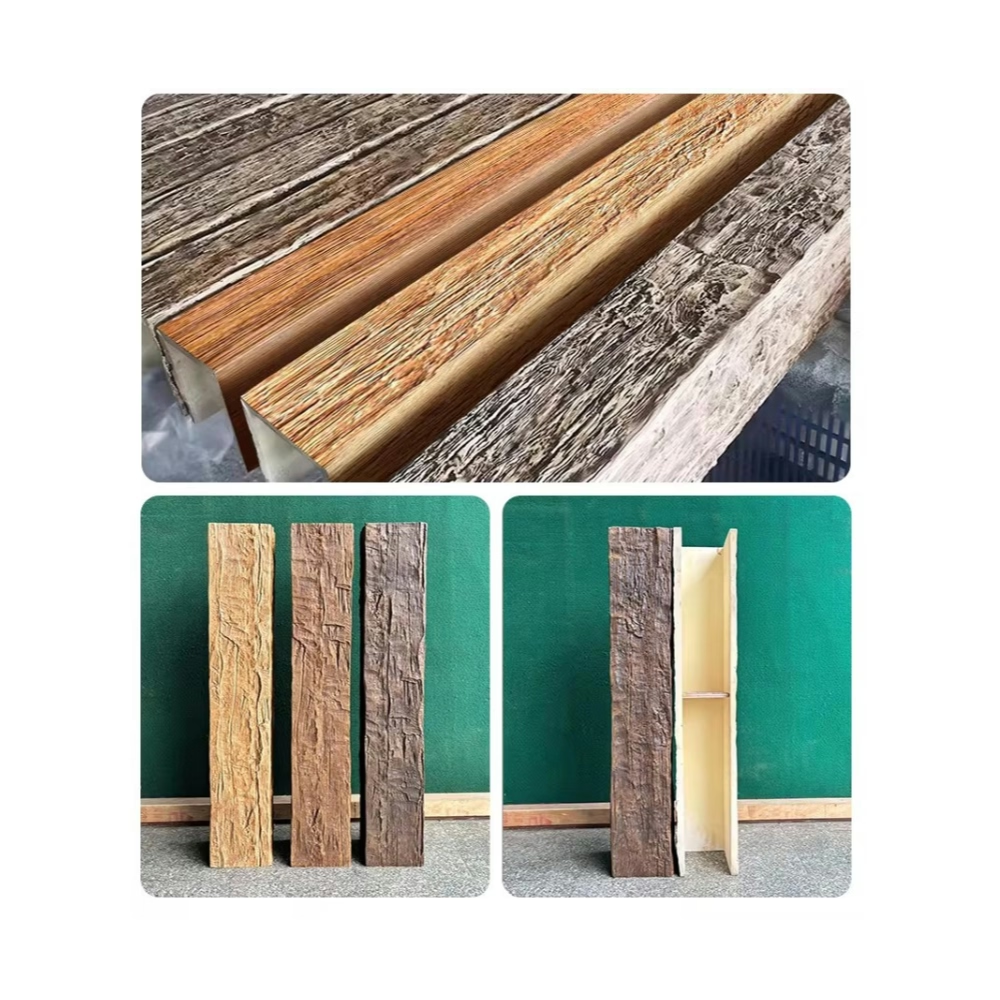
The lightweight nature of polyurethane—approximately 85% lighter than natural wood of equivalent volume—transforms installation requirements. A single installer can handle beams that would previously have required multiple workers and structural reinforcement. This efficiency translates directly to cost savings on installation labor, and it means that beams can be added to spaces where ceiling structure simply wouldn't support the weight of genuine timber.
From a design perspective, polyurethane allows for remarkable detail reproduction. Manufacturers create molds from authentic reclaimed beams, capturing every knot, grain pattern, and weathering mark. The result is a product that looks genuinely aged and character-rich, not manufactured or uniform. When installed alongside genuine reclaimed elements like barn door tables or vintage signage, polyurethane beams blend seamlessly with their natural counterparts.
Maintenance considerations also favor polyurethane in commercial applications. The surface can be wiped clean with standard cleaning products, and unlike natural wood, it doesn't require periodic sealing or refinishing. Cafes can maintain their aesthetic investment without specialized care protocols or ongoing treatment costs.
Design Considerations for Cafe Applications
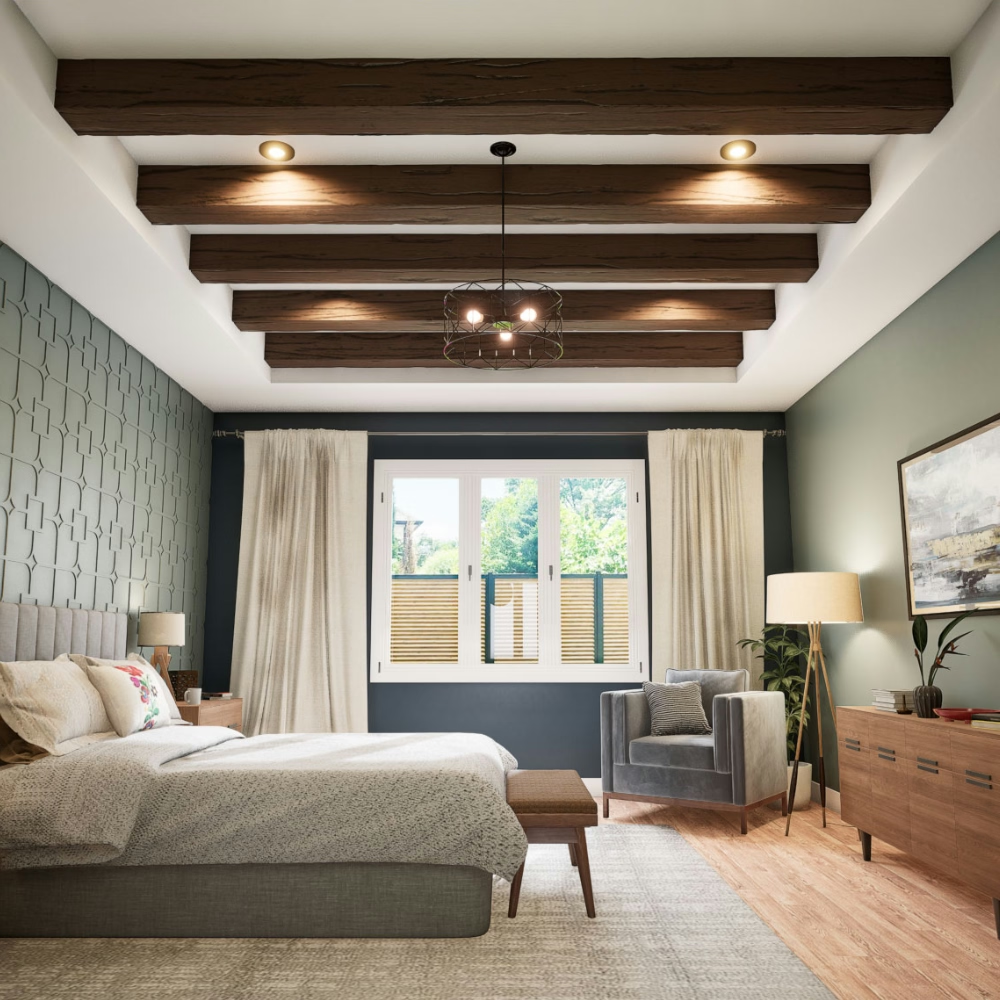
Successful integration of faux beams in cafe spaces requires attention to several key factors. Scale plays a crucial role—beams that overwhelm a small space create visual heaviness, while beams that are too modest fail to make the intended design statement. A experienced designer will consider ceiling height, room dimensions, and the overall furniture scale when selecting beam profiles.
Color matching requires similar careful consideration. Industrial rustic aesthetics typically favor warm tones—honey ambers, tobacco browns, and weathered grays. However, the specific shade should complement rather than clash with existing color palettes. Some cafe operators prefer beams that contrast sharply with ceiling color to maximize visual impact, while others seek more subtle integration.
Beam placement patterns offer another layer of creative opportunity. Parallel beams create formal rhythm, ideal for narrow rectangular spaces. Perpendicular crossing patterns can define distinct functional zones within larger open areas. Some designers opt for asymmetrical arrangements that add visual interest without strict geometric regularity.
Lighting integration deserves particular attention. Industrial fixtures—conical pendants, cage-style bulbs, adjustable track lighting—pair naturally with rustic beams. The beams can serve as mounting surfaces for pendant lights, eliminating the need for additional ceiling canopy installations. This synergy between lighting and structural elements reinforces the industrial aesthetic while serving practical purposes.
Installation Approaches for Various Cafe Layouts
Installers typically employ one of several methods depending on ceiling construction and beam configuration. For suspended ceiling systems, mounting blocks or ledger boards create secure attachment points that distribute weight appropriately. The faux beam then slides over or clips onto these supports, with concealed fasteners maintaining clean lines.
Direct attachment works well when ceiling joists or structural beams are accessible. In these cases, installers can secure mounting hardware directly to the structural elements, creating rock-solid installations that will last for decades. The process requires careful measurement and marking to ensure proper alignment, especially when multiple beams must align in parallel or crossing patterns.
For spaces with limited ceiling access or where drilling into structure isn't desirable, adhesive mounting offers an alternative. Modern construction adhesives designed for polyurethane products provide substantial holding power when properly applied to clean, dry surfaces. This approach works best for lighter beam profiles and requires careful surface preparation to ensure lasting bond.
Whatever installation method is chosen, professional assessment of ceiling structure and weight requirements remains essential. A qualified contractor can evaluate load-bearing capacity and recommend appropriate mounting solutions for specific cafe configurations.
Long-Term Value and Client Satisfaction
Investing in quality faux beams for cafe interiors pays dividends beyond initial aesthetic improvement. The durability of polyurethane means that the visual impact remains consistent over years of use, without the weathering, discoloration, or structural degradation that affects natural wood in challenging environments.
Customer response to well-designed cafe interiors tends to be immediately positive and enduring. Spaces that feel carefully considered and authentic encourage longer visits, repeat business, and positive word-of-mouth recommendations. The ceiling treatment, often invisible in design conversations but deeply felt in spatial experience, contributes significantly to this overall impression.
For cafe owners considering renovation or new construction, faux beams represent an accessible entry point into industrial rustic aesthetics. The combination of visual impact, practical durability, and reasonable cost makes them an attractive option for spaces where budget must be balanced against design ambition.
The decision ultimately serves both business and aesthetic goals—a rare combination that explains the growing popularity of polyurethane faux beams in contemporary cafe design.
Technical References
ASTM standards cited in every specification
Test Data
Lab results from internal testing program
Updated 2026
Reviewed against current product specs


