The convergence of creative work and industrial aesthetics has reshaped how we think about productive spaces. Workshops, studios, and maker spaces increasingly embrace design vocabularies once reserved for commercial architecture. Understanding this convergence helps explain why ceiling treatment has become an important element in these functional environments.
Loft workshops occupy a particular niche—spaces that serve both creative and functional purposes. These rooms might host woodworking, metalworking, digital fabrication, or craft production. They might serve as artist studios, photographer workspaces, or maker labs. Common to all is the need for environments that support extended focused work while inspiring creative engagement.
Ceiling treatment in these spaces must serve multiple masters. Practical requirements—adequate lighting, clean air, proper ventilation—interact with aesthetic aspirations that make spaces feel inspiring rather than merely functional. Industrial style faux beams offer solutions that address both practical and aesthetic needs.
The Evolution of Workshop Design
Workshop design has evolved significantly from the utilitarian models of previous generations. While functionality remains paramount—proper lighting, adequate ventilation, appropriate surfaces—the recognition that environment affects productivity has elevated aesthetic considerations.
Research consistently demonstrates that workspace environment influences worker mood, creativity, and output quality. Spaces that feel inspiring rather than oppressive support sustained engagement and creative risk-taking. This research has driven designers and workspace planners toward environments that support psychological as well as physical needs.
Industrial aesthetics emerged as a natural vocabulary for these evolved workspaces. The raw materials, visible construction, and honest functionality of industrial spaces resonate with maker culture values. Making—creating things with hands and tools—aligns naturally with environments that celebrate material honesty and functional beauty.
Ceiling treatment in this evolution lagged behind walls and floors. While work surfaces and storage systems received attention, ceilings often remained afterthoughts. The ceiling plane represents significant visual surface area, however, and treating it contributes meaningfully to overall workspace character.
Benefits of Faux Beams in Workshop Environments
Polyurethane faux beams offer specific advantages for workshop applications. These practical benefits support the functional requirements that workshop environments demand.
Durability in demanding conditions matters significantly. Workshops generate vibrations from machinery, temperature fluctuations from heating and cooling, and occasional chemical exposure from materials and cleaning. Beams that can withstand these conditions without degradation provide long-term value that fragile materials cannot match.
The lightweight nature of polyurethane simplifies installation in ceiling applications. Workshop ceilings often feature exposed structure—joists, trusses, or ceiling decks—that may not support substantial additional loads. Polyurethane beams, weighing a fraction of equivalent timber, allow beam installation without structural reinforcement in most cases.
Maintenance simplicity supports workshop operations. Functional workspaces cannot afford the disruption of frequent maintenance activities. Polyurethane beams require only occasional dusting or wiping—cleaning that doesn't interrupt ongoing work. This maintenance simplicity represents meaningful practical advantage.
Acoustic benefits accrue from beam installation in workshop contexts. The textured surfaces of faux beams help break up sound reflections, and the dimensional presence creates acoustic complexity that improves sound quality. These acoustic improvements matter in spaces where communication, music, or concentration are important.
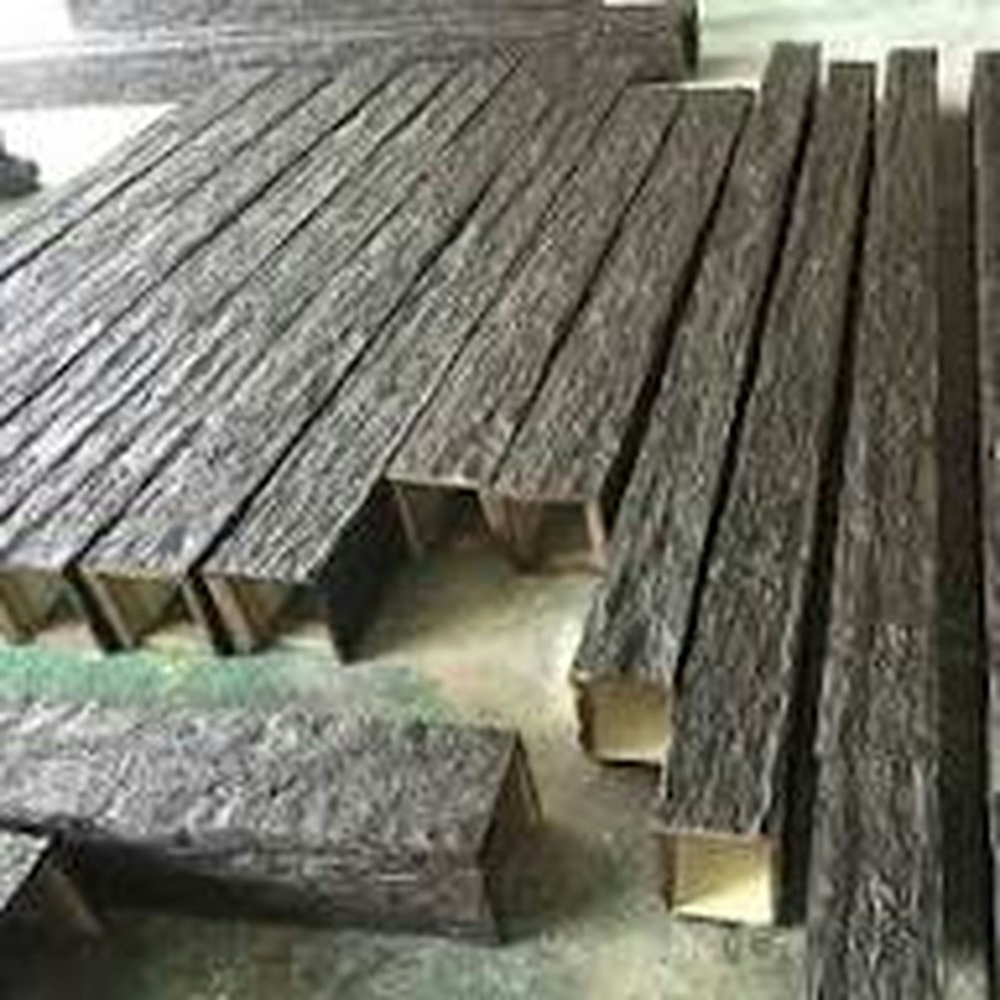
Design Approaches for Workshop Ceilings
Workshop ceiling design should balance functional and aesthetic considerations. Several approaches have proven effective across diverse workshop applications.
Systematic installation involves installing beams across the entire ceiling plane, creating consistent treatment throughout the space. This approach works well in larger workshops where uniform ceiling treatment maintains visual coherence. Beam spacing should relate to ceiling structure and lighting placement.
Zone-based treatment applies beams to specific functional areas within larger workshops. The area above a primary workbench, for instance, might receive beam treatment while peripheral areas remain exposed. This selective approach adds character where it matters most without comprehensive coverage.
Structural wrapping encloses existing ceiling elements with faux beam products. Ductwork, exposed joists, or utility runs that might otherwise create visual clutter become intentional design features when wrapped with beam material. This approach transforms existing structure rather than adding new elements.
Accent installation uses single beams or small groupings as focal points. A substantial beam crossing above the primary work area, for instance, can anchor the entire workshop composition while leaving other ceiling areas untreated.
Lighting Integration in Workshop Spaces
Workshop lighting requirements are specific and demanding. Proper illumination for detailed work, reduced eye strain, and visual comfort all demand careful lighting design. Beam installation should support rather than compromise these lighting requirements.
Pendant lighting integrates naturally with beam installation. Fixtures mounted from beams provide task illumination exactly where needed while adding the industrial character that complements faux beams. Multiple pendants can be positioned along beam lengths, providing flexible lighting arrangements.
Track lighting runs between beams or attaches to beam faces, offering adjustable illumination that serves changing workshop needs. The industrial aesthetic of track systems complements beam vocabulary while providing functional flexibility.
Utility lighting—fluorescent strips, industrial fixtures, LED panels—may also be integrated with beam installation. Recessed fixtures positioned between beams, surface-mounted fixtures on beam faces, or fixtures mounted on beam ends all offer options for specific lighting requirements.
The interaction between beams and lighting creates layered illumination effects. Direct task lighting serves work areas; indirect illumination bouncing off beams creates ambient light that softens shadows and reduces contrast glare.

Creating Inspiring Workshop Environments
The ultimate objective of workshop ceiling treatment is creating environments that support productive, inspired work. Beams contribute to this objective by establishing atmosphere, adding warmth, and creating visual interest that prevents workspaces from feeling sterile.
The industrial aesthetic that beams introduce supports maker culture values. The honesty, functionality, and material authenticity of rustic beams align with how makers think about their work. This alignment creates spaces where the environment reinforces rather than contradicts workshop purpose.
The investment in quality beam installation returns value through enhanced workspace satisfaction, improved productivity, and increased property value. Workshop users who spend extended time in their spaces particularly appreciate environments that feel inspiring rather than merely functional.
Technical References
ASTM standards cited in every specification
Test Data
Lab results from internal testing program
Updated 2026
Reviewed against current product specs


