The overlap between loft living and workshop functionality represents a significant trend in contemporary interior design. Spaces that serve dual purposes—as homes and as places of production, creation, and work—require design approaches that honor both functions without compromising either. Ceiling treatment plays an important role in establishing environments that support this dual-use lifestyle.
Understanding how beams serve these related but distinct applications helps designers and homeowners create spaces that work effectively across multiple functions. The same beam products that make a loft apartment feel warm and residential can make a workshop feel inspiring and professional.
The Dual-Purpose Space Phenomenon
The emergence of dual-purpose loft-workshop spaces reflects broader changes in how people live and work. Remote work, independent making, creative entrepreneurship, and the maker movement have all contributed to spaces that blur traditional boundaries between domestic and professional.
These hybrid spaces must serve contradictory needs simultaneously. They should feel comfortable and residential during off-hours while maintaining professional credibility during work activities. They must accommodate tools and materials while preserving livability. They must project the authenticity of industrial heritage while maintaining domestic warmth.
This contradiction creates design challenges that conventional approaches can't address. Standard residential treatments—smooth ceilings, refined finishes, soft furnishings—undermine the professional credibility that workshop functions require. Standard industrial treatments—exposed utilitarian structure, harsh lighting, minimal finish—compromise the residential comfort that makes spaces habitable.
The resolution lies in treatments that bridge these opposites—industrial in vocabulary but warm in effect, authentic in character but refined in execution. Ceiling beams, properly selected and installed, fulfill this bridging function effectively.
Beams as Design Bridge Elements
Ceiling beams occupy a unique position in the design vocabulary of dual-purpose spaces. They reference industrial heritage through their material character and construction associations while contributing warmth and refinement that serve residential needs.
The industrial reference comes from beam form and finish. Beams have been used in construction for millennia, and their association with structural function is deeply embedded in architectural understanding. Exposed beams communicate honesty and authenticity—the same values that industrial aesthetics celebrate.
The residential contribution comes from wood's inherent warmth. Unlike steel, concrete, or glass—all materials that industrial design embraces—wood carries biological associations that humanize industrial harshness. Timber grain, natural color variation, and organic texture create visual warmth that steel and concrete cannot match.
The combination of industrial form and residential material makes beams uniquely suited to bridging dual-purpose requirements. They say "this is a serious space where things get made" while simultaneously saying "this is a comfortable space where people live."
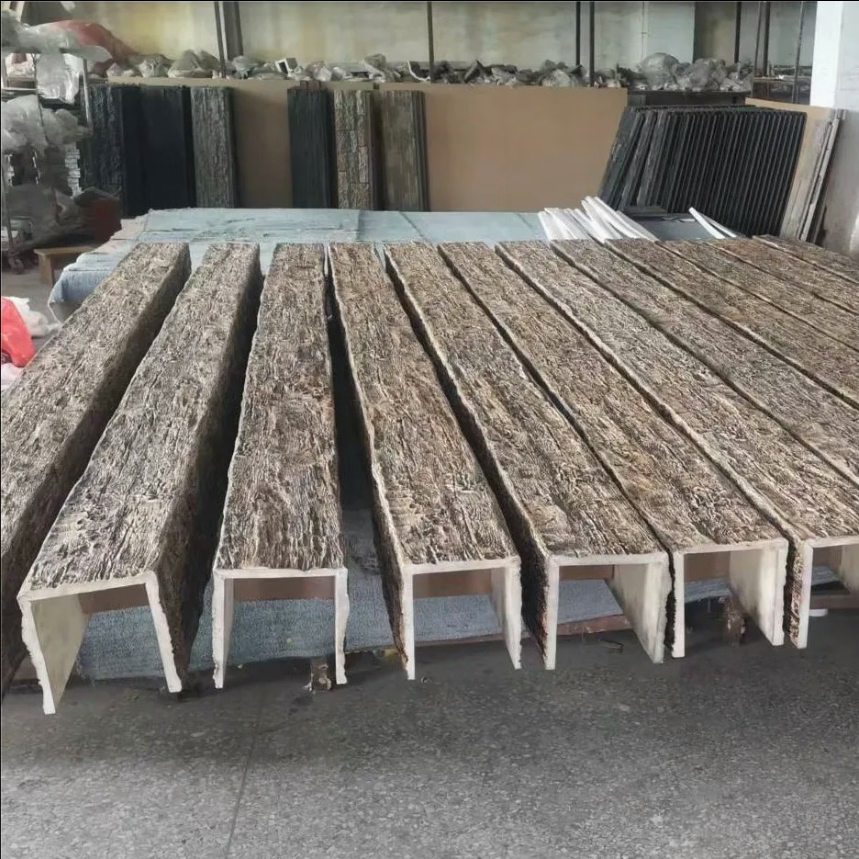
Selecting Beams for Dual-Purpose Applications
Beam selection for loft-workshop applications requires balancing considerations from both categories. Several factors deserve attention during the selection process.
Scale relationships should err toward generosity. Workshop credibility requires visual weight that modest decorative elements cannot provide. Beams that appear substantial—appropriate to the industrial vocabulary—read as authentic rather than decorative. Undersized beams may feel residential without establishing the professional character that workshop functions require.
Finish selection affects both industrial and residential perception. Weathered finishes with authentic character reinforce industrial credibility. Smooth or overly refined finishes may feel too residential for workshop applications. The goal is finish quality that suggests genuine timber without appearing either raw or manufactured.
Profile characteristics influence aesthetic balance. Classic timber profiles—rectangular beams with visible dimensional depth—establish industrial authenticity. Contemporary profiles with cleaner lines suit more modern dual-purpose spaces. The existing architecture and furniture should inform profile selection.
Color coordination with both industrial and residential elements matters. Beams should complement workshop equipment and tools while harmonizing with living area furnishings. Neutral industrial tones—warm grays, tobacco browns, honey ambers—work across both contexts more effectively than colors with strong associations in either direction.
Installation Strategies for Hybrid Spaces
Installation approach affects how successfully beams serve dual-purpose requirements. Several strategies help achieve installations that work across the full range of space functions.
Comprehensive treatment—beams installed across the entire ceiling plane—creates consistent industrial character throughout the space. This unified approach works well when the entire loft functions as both living and working area. The ceiling becomes a continuous design element that establishes vocabulary for the entire space.
Zoned treatment applies different approaches to different areas. Work zones might receive more substantial beam treatment that establishes professional character; living zones might receive lighter treatment that emphasizes residential warmth. This differentiated approach acknowledges the distinct functions while maintaining overall design unity.
Focal treatment concentrates beams around key functional areas. A substantial beam crossing above the primary work area, for instance, establishes workshop identity for that zone while allowing other areas to remain less treated. This approach works well when work activities occupy specific areas rather than the entire space.
Structural integration with existing building elements reinforces industrial character. Beams that wrap existing columns or run perpendicular to exposed joists feel authentically structural rather than merely decorative. This integration strengthens the bridge between industrial vocabulary and dual-purpose function.
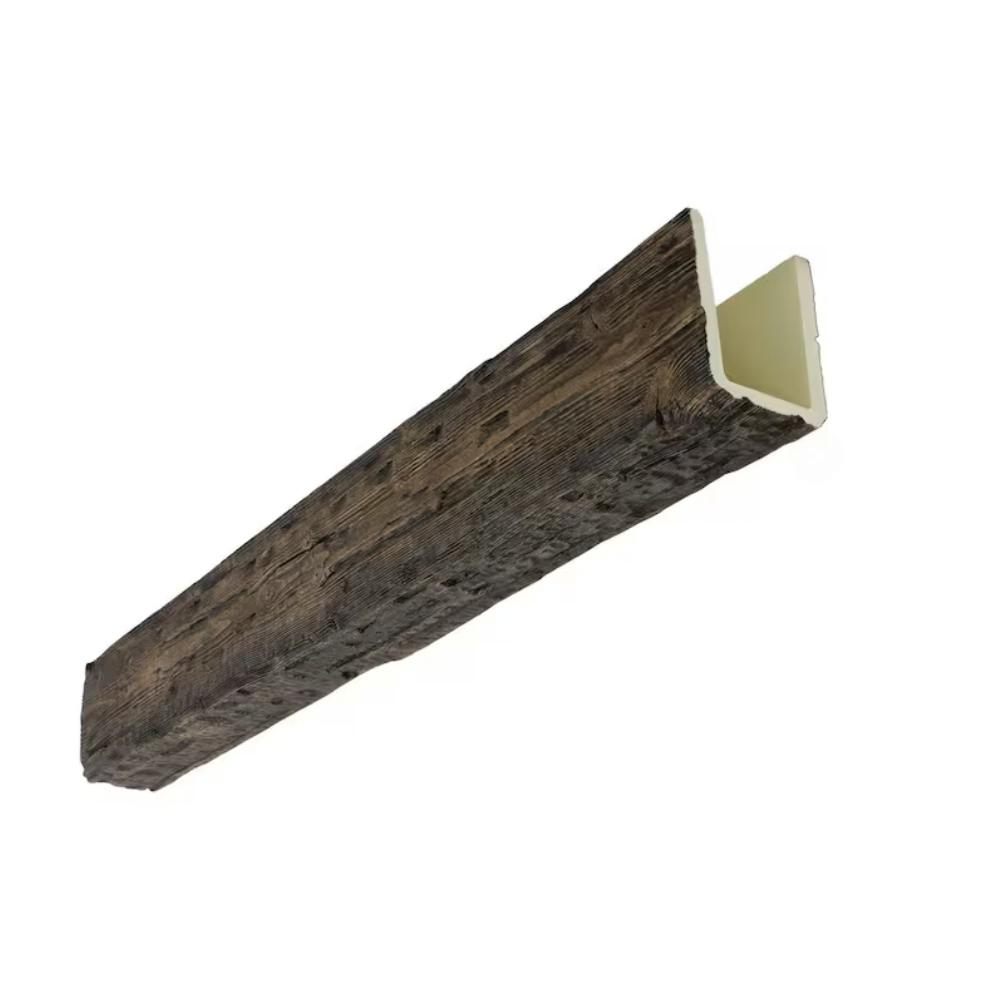
Creating Unified Environments
The ultimate goal of beam installation in dual-purpose spaces is creating environments that support both living and working without compromise. This requires attention to factors beyond the beams themselves.
Lighting design must serve both functions. Work areas need task illumination; living areas need ambient comfort. The beam installation should support this layered lighting without forcing compromise between functional and atmospheric requirements.
Material coordination ensures that beams feel part of a unified composition. Workshop materials—metal storage, industrial equipment, tool displays—should complement beam aesthetics. Residential materials—upholstered furniture, soft textiles, personal accessories—should also harmonize with the industrial rustic vocabulary.
Flexibility considerations acknowledge that dual-purpose spaces change over time. Work activities may expand or contract. Living patterns may shift. Beams that support this flexibility—through adaptable fixture mounting, reconfigurable storage integration, or spatial zoning that can evolve—serve long-term needs better than rigid installations.
The success of dual-purpose design lies in creating spaces that feel neither purely industrial nor purely residential but authentically hybrid. Beams that successfully bridge this divide contribute significantly to the unique character that these productive living spaces require.
Technical References
ASTM standards cited in every specification
Test Data
Lab results from internal testing program
Updated 2026
Reviewed against current product specs


