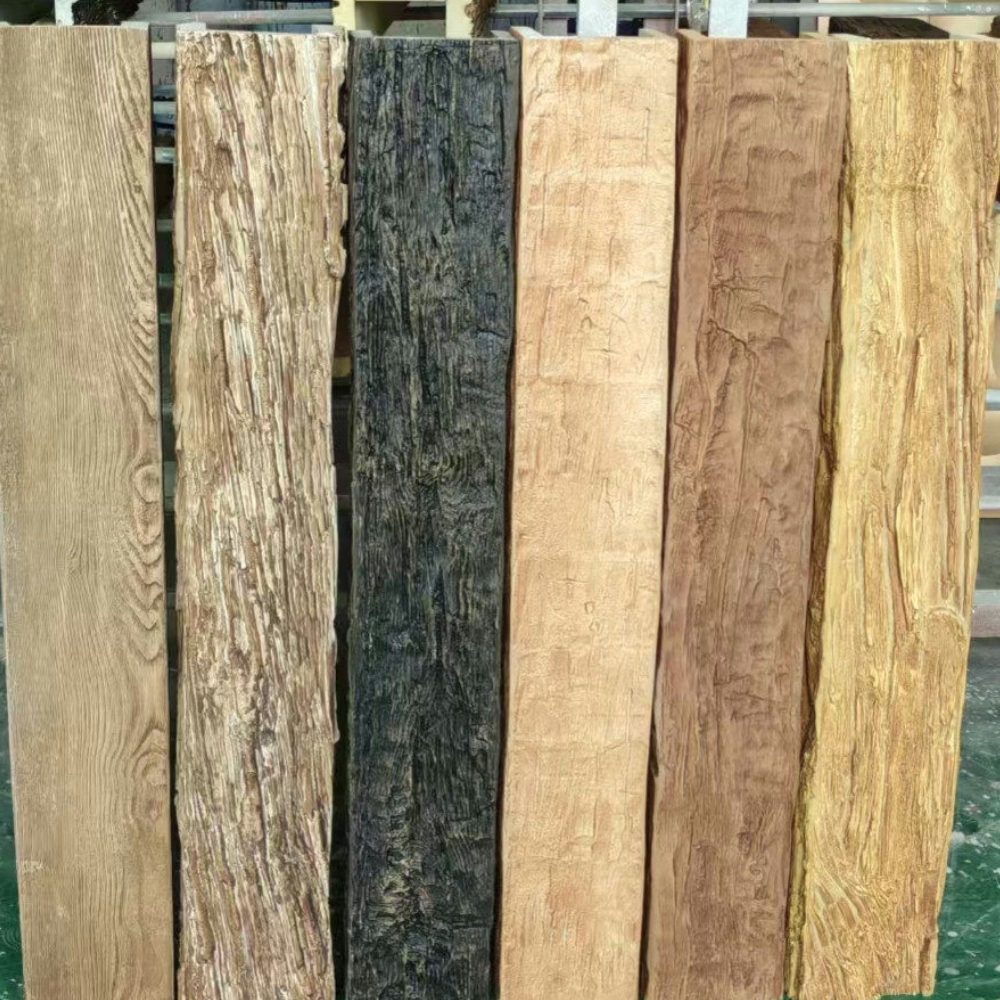
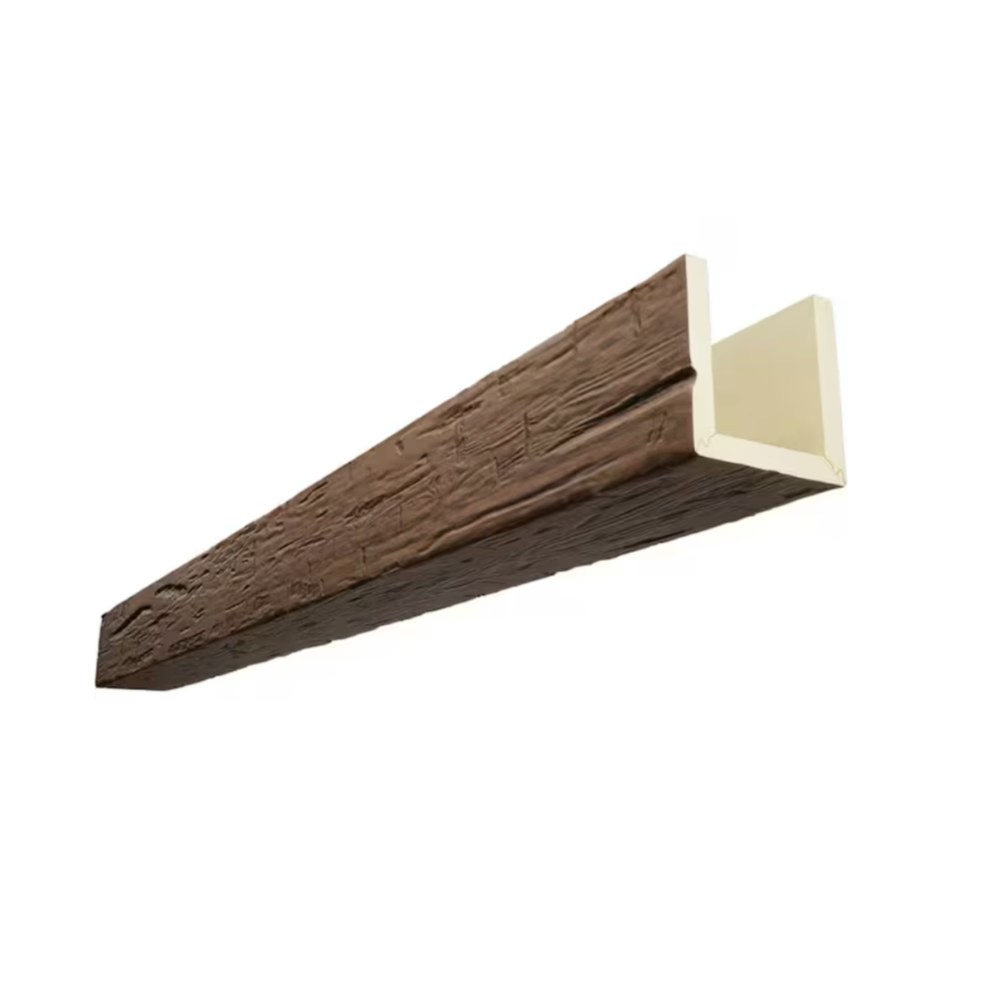
The evolution of faux wood beam manufacturing has produced products that challenge even expert observation to distinguish from genuine timber. This advancement has transformed possibilities for industrial themed interiors, enabling design visions that once required salvaged timber or specialized custom fabrication. Understanding how these high-simulation products achieve their convincing authenticity helps explain their growing adoption.
High-simulation refers to manufacturing processes that capture genuine timber characteristics with unusual accuracy. Rather than approximating wood appearance, these processes reproduce specific authentic features—grain patterns, weathering effects, dimensional irregularity—that create convincing visual experience.
For industrial themed interiors, where authenticity directly affects design success, this simulation quality matters significantly. Spaces where beams appear obviously artificial undermine the industrial honesty that the aesthetic celebrates. Beams that convincingly replicate timber support rather than compromise the design intent.
The Science of Authentic Simulation
High-simulation faux beam production involves several technical processes that contribute to convincing authenticity. Understanding these processes helps explain why some products succeed while others fail.
Mold creation from genuine timber establishes the foundation for authentic surface reproduction. Craftsmen select authentic beams with desirable characteristics—interesting grain, authentic weathering, distinctive knots—and create molds that capture these features precisely. Every variation, imperfection, and character mark transfers to the mold and subsequently to each production beam.
Multi-stage finishing processes build up authentic appearance through sequential applications. Rather than single-coat finishes that produce uniform color, high-simulation production uses multiple color applications that create tonal variation. Darker areas near knots, lighter clear-grain sections, and weathered patina all build up through controlled application processes.
Surface texturing adds dimensional authenticity beyond visual appearance. Real timber surfaces aren't perfectly smooth; they show saw marks, weathering patterns, and age-related texture. High-simulation products incorporate these textural elements, creating surfaces that feel as authentic as they look.
Dimensional irregularity distinguishes quality products from cheap alternatives. Natural timber isn't perfectly straight or uniformly thick. High-simulation beams incorporate slight variations that echo natural timber irregularity, avoiding the manufactured perfection that signals artificial origin.
Industrial Themed Interior Design
Industrial themed interiors demand authenticity that supports the aesthetic's core values. Understanding these requirements helps explain why simulation quality directly affects design success.
Honesty and authenticity define industrial aesthetic values. The style emerged from appreciation for genuine industrial character—the visible construction, honest materials, and functional beauty of working spaces. Elements that appear obviously fake or manufactured contradict these values and undermine the aesthetic.
Credibility affects how spaces are perceived. Industrial themed interiors that convincingly replicate timber contribute to overall credibility. Spaces where visitors notice artificial elements lose the authentic character they seek to establish. Beams that achieve convincing authenticity support rather than compromise overall credibility.
Longevity of design intent depends on authentic appearance retention. Industrial themes that rely on obvious faux elements may appear dated as simulation technology improves. Spaces using high-simulation products maintain design integrity as the standard for authenticity evolves.
The economic case for high-simulation products strengthens over time. While initial costs may exceed lower-quality alternatives, the authentic appearance and lasting performance of quality products often produce favorable lifecycle economics.
Applications in Demanding Environments
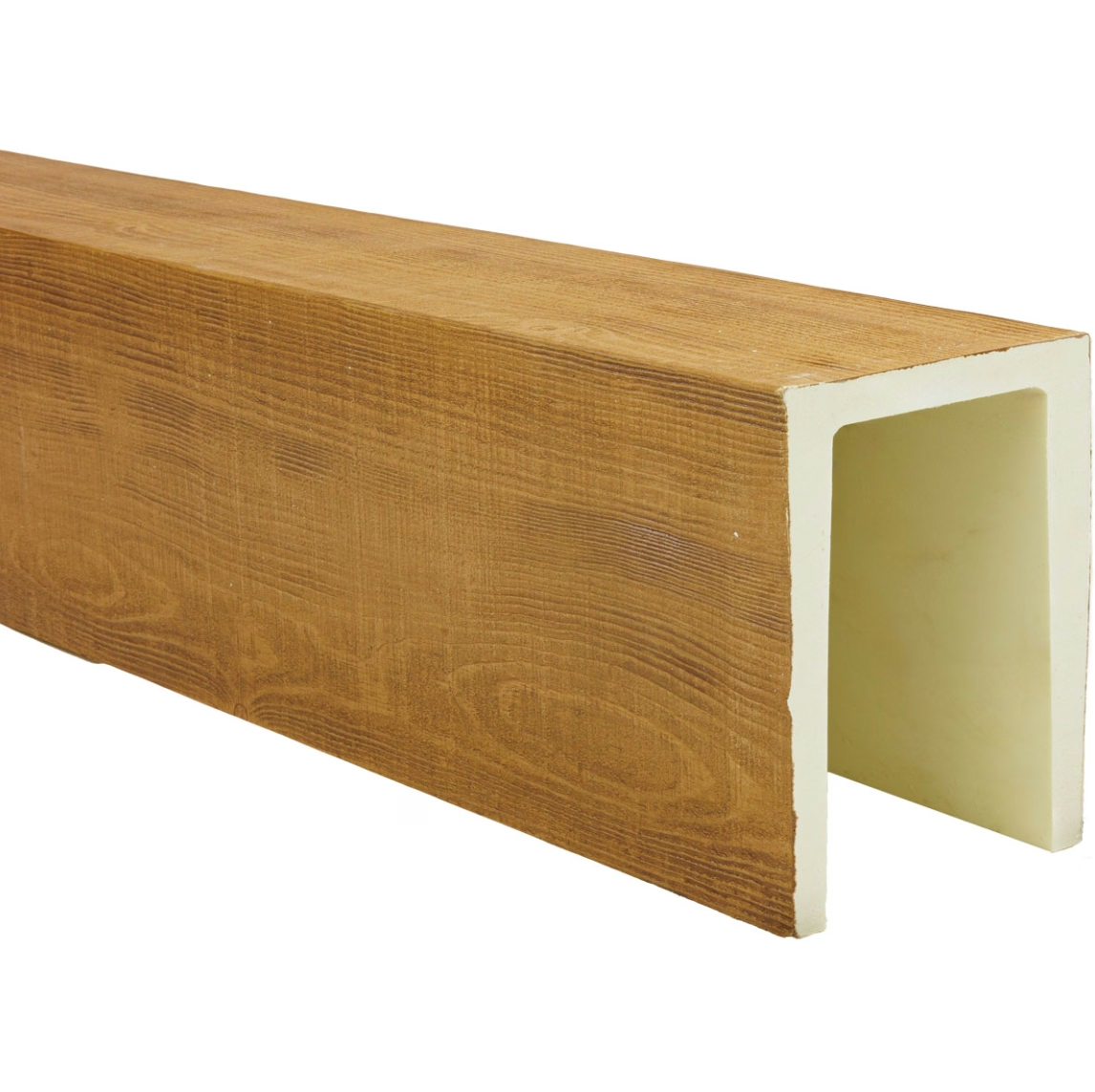
High-simulation faux beams serve challenging applications where authentic appearance matters most. The simulation quality proves particularly valuable in specific contexts.
Commercial hospitality spaces present demanding authenticity requirements. Customers evaluating cafes, restaurants, and bars notice details that undermine credibility. High-simulation beams that convincingly replicate timber withstand scrutiny that lesser products cannot survive.
Design-conscious residential clients often possess refined aesthetic sensibilities. These clients notice the subtle differences between authentic and artificial appearance. High-simulation products meet their expectations while providing practical benefits that natural timber cannot match.
Photography and social media contexts amplify authenticity requirements. Images that look convincing on camera may reveal flaws when examined closely. High-simulation beams photograph well while withstanding close inspection.
High-end projects with significant design investment require products that protect this investment. Beams that undermine design quality through obvious artificiality represent false economy. High-simulation products support rather than compromise premium design execution.
Evaluating High-Simulation Products
Product selection significantly affects outcomes with high-simulation faux beams. Several factors help identify quality products that will achieve intended authenticity.
Manufacturer reputation provides initial quality indication. Established producers with track records of successful installations have demonstrated their ability to deliver authentic products. Newer or unknown manufacturers may offer lower prices but often cannot match the simulation quality of established producers.
Sample inspection allows direct evaluation of simulation quality. Requesting samples before purchase enables examination of surface detail, color variation, and textural authenticity. Samples also allow testing of physical characteristics—weight, rigidity, surface hardness—that affect performance.
Warranty terms indicate manufacturer confidence in product quality. Products backed by meaningful warranties demonstrate manufacturer belief in simulation longevity. Products without warranty protection may indicate quality concerns.
Installation support from manufacturers suggests commitment to successful outcomes. Quality producers often provide installation guidance, technical support, and troubleshooting assistance. This support proves valuable when navigating challenging installation situations.
The Future of Faux Beam Technology
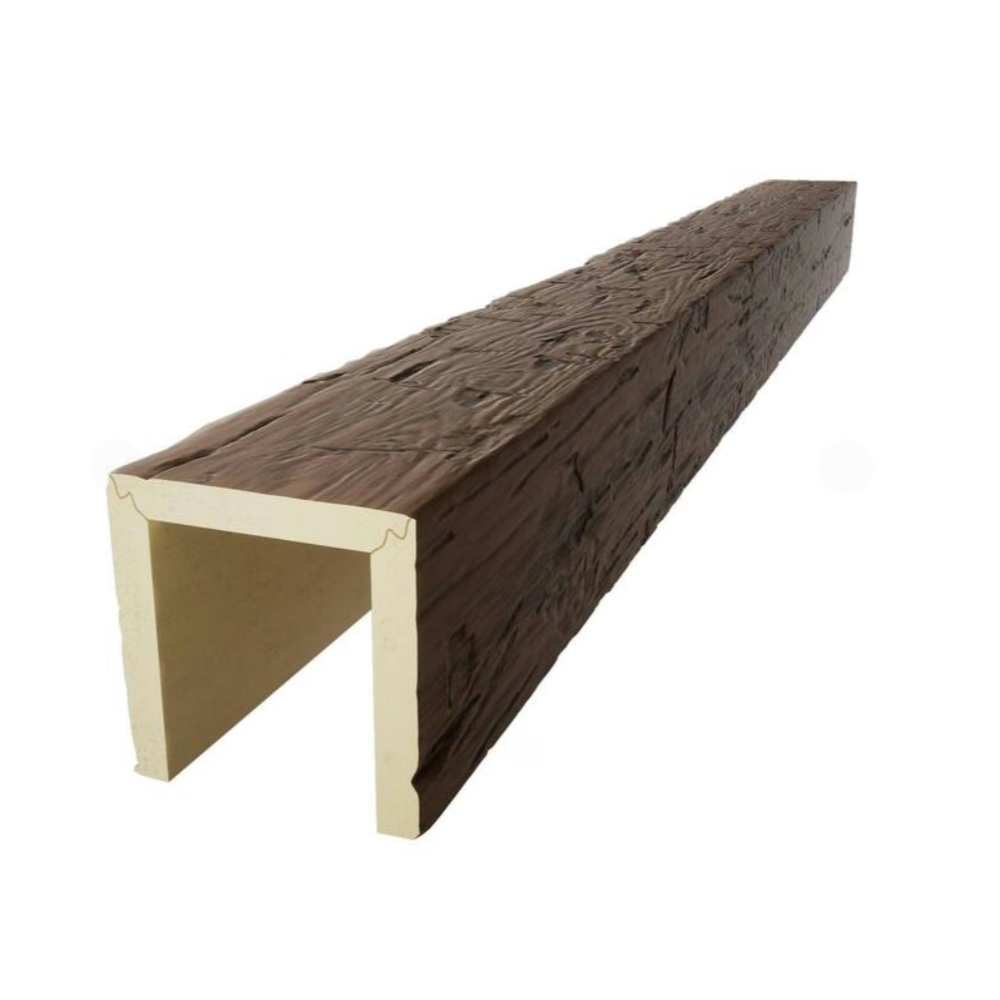
Faux beam manufacturing continues advancing as technology improves. Understanding development directions helps anticipate future possibilities.
Material innovations may introduce new formulations that improve performance characteristics. Fire resistance, UV stability, and environmental sustainability represent active development areas.
Simulation accuracy will likely continue improving as mold-making and finishing processes advance. Future products may achieve authenticity indistinguishable from natural timber even under close inspection.
Application techniques are expanding the possibilities for faux beam installation. New mounting systems, integration solutions, and finish options extend what designers can achieve with these products.
The growing market for high-simulation faux beams reflects demonstrated value in demanding applications. As more designers and clients experience quality products, adoption will likely continue expanding across both commercial and residential contexts.
Technical References
ASTM standards cited in every specification
Test Data
Lab results from internal testing program
Updated 2026
Reviewed against current product specs