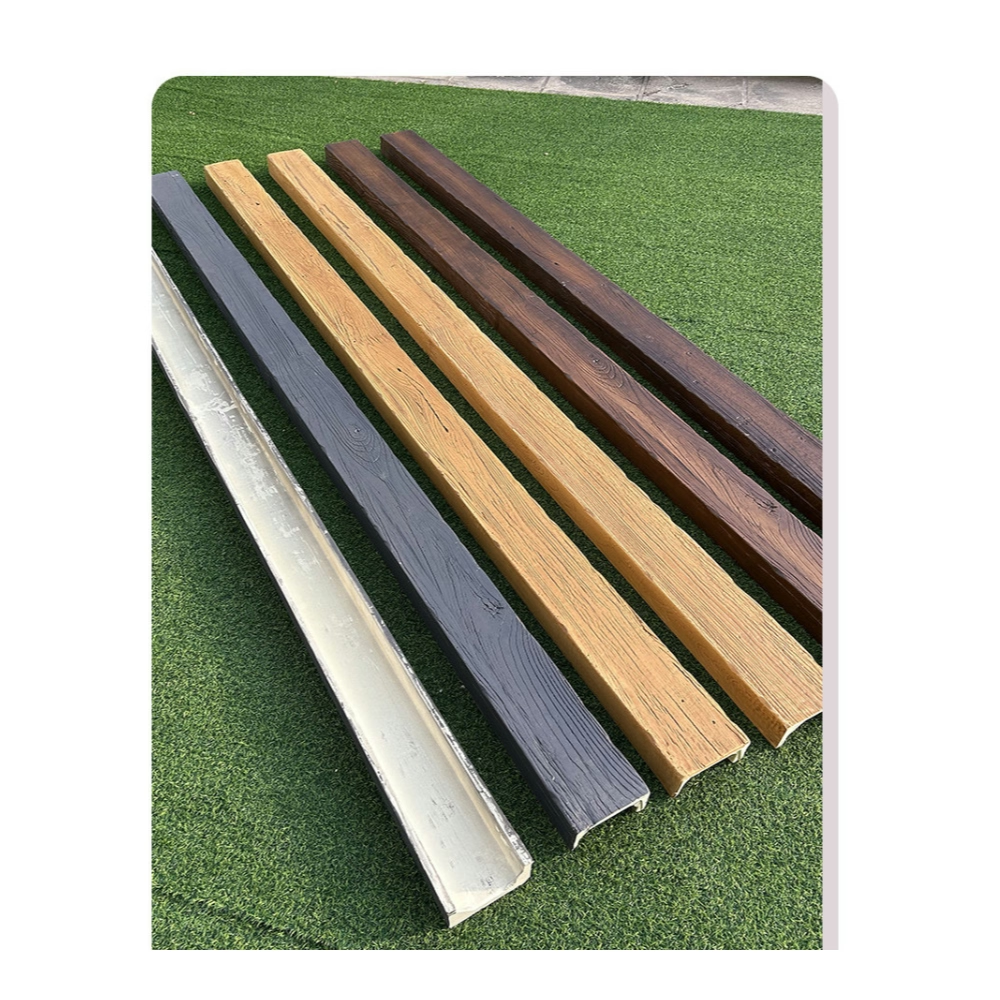
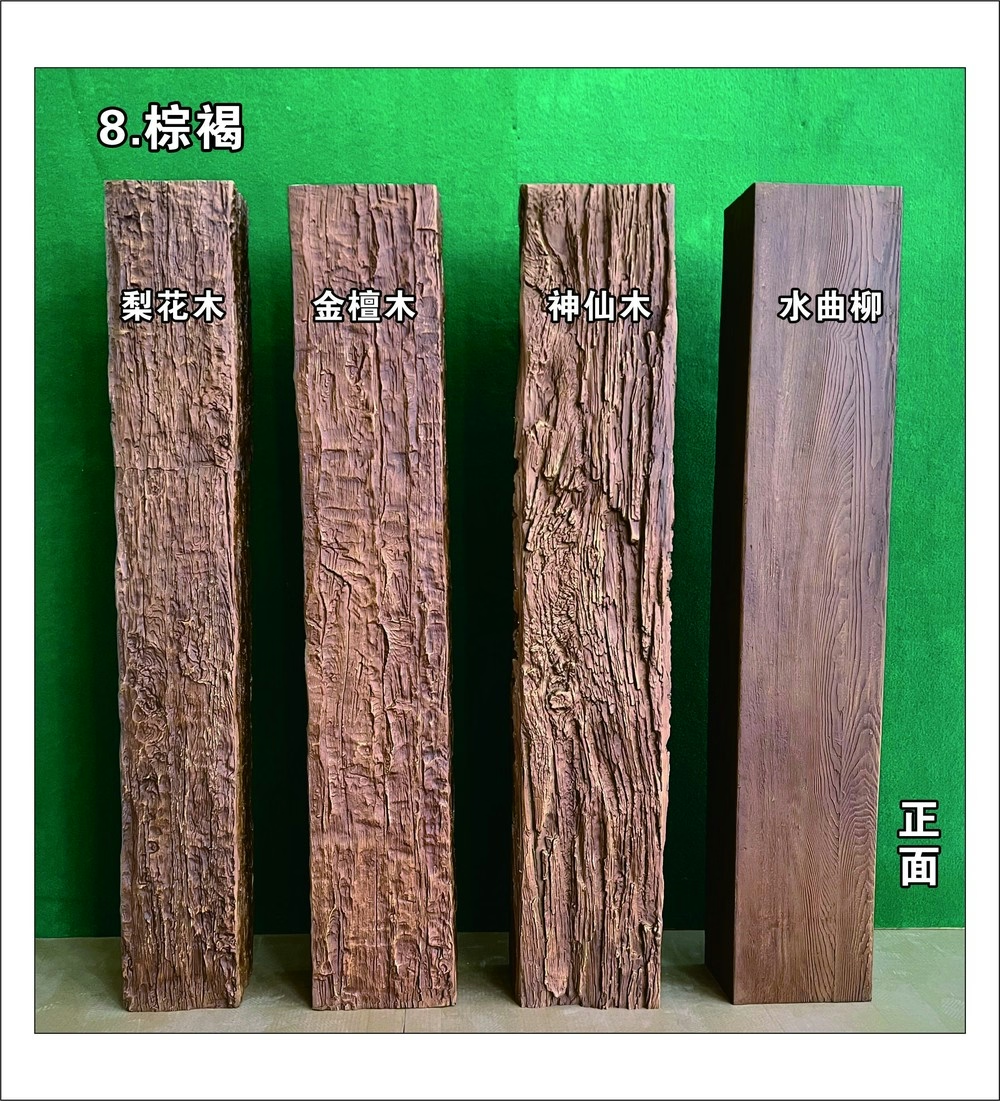
When Robert Chen decided to add rustic ceiling beams to his mid-century modern living room, the prospect of hoisting heavy timber beams overhead gave him pause. His contractor mentioned that natural wood beams of the size required would weigh forty pounds or more per linear foot—potentially requiring scaffolding, additional labor, and structural reinforcement. The lightweight polyurethane alternative Robert ultimately selected weighed under three pounds per linear foot, transforming a challenging project into a weekend accomplishment.
The weight advantage of polyurethane faux wood beams represents one of the most significant practical benefits driving their adoption across residential and commercial applications. Understanding the mechanics behind this weight reduction and its implications for installation planning helps homeowners and professionals alike make informed specification decisions.
The Physics of Polyurethane Lightness
Polyurethane foam consists primarily of gas-filled cells distributed throughout a polymer matrix, creating a material substantially less dense than solid plastics or wood products. The cellular structure traps air within millions of tiny chambers, providing insulation value while dramatically reducing mass. A cubic foot of quality polyurethane beam material weighs between seven and fifteen pounds, compared to thirty-five to fifty-five pounds for comparable solid wood products.
The manufacturing process allows producers to control foam density, creating products ranging from lightweight insulation formulations to structural foams with enhanced density and durability. Beam manufacturers have optimized their formulations to balance weight reduction against the impact resistance and surface durability that installations require. The result: beams that feel solid and substantial while remaining easily manageable.
Some manufacturers incorporate reinforcement strategies that enhance structural properties without adding significant weight. Internal webs of higher-density foam, strategic placement of structural inserts, and optimized cross-sectional geometry all contribute to beam performance without the mass penalties of solid materials. These engineering approaches enable longer spans and heavier load tolerances than unfilled foam alone would support.
The lightweight characteristic proves consistent across different beam sizes and profiles. While a twelve-inch square beam naturally weighs more than a six-inch beam of equal length, the weight-to-strength ratio remains favorable compared to natural wood equivalents. This consistency simplifies installation planning, as crews can estimate handling requirements based on beam length and profile without accounting for density variations between products.
Comparing Beam Weights Across Materials
Concrete beams, often specified for commercial applications requiring fire resistance and durability, exemplify the heavy end of the spectrum. A modest eight-foot concrete beam might weigh several hundred pounds, requiring crane placement, specialized mounting systems, and significant structural support. The installation costs often exceed the material costs by substantial margins.
Natural solid wood beams present moderate weight challenges. Douglas fir and similar construction-grade timbers weigh approximately forty pounds per cubic foot, while denser species like oak can exceed sixty pounds per cubic foot. An eight-foot section of six-by-eight oak beam—the size commonly specified for rustic residential installations—would weigh over two hundred pounds. Moving such pieces requires multiple workers and careful positioning to prevent injury or property damage.
Engineered wood products like laminated veneer lumber (LVL) and parallel strand lumber (PSL) offer improved strength-to-weight ratios compared to solid timber, but still weigh substantially more than polyurethane alternatives. LVL beams weighing twenty-five to thirty-five pounds per linear foot remain common in residential construction, though they offer the advantage of predictable structural performance.
Polyurethane faux wood beams typically weigh between two and five pounds per linear foot depending on profile dimensions and density formulation. A substantial twelve-foot beam might weigh thirty to forty pounds total—manageable by a single person or a two-person team without mechanical assistance. This weight reduction transforms installation requirements, enabling projects that would otherwise require professional installation to proceed as homeowner projects.

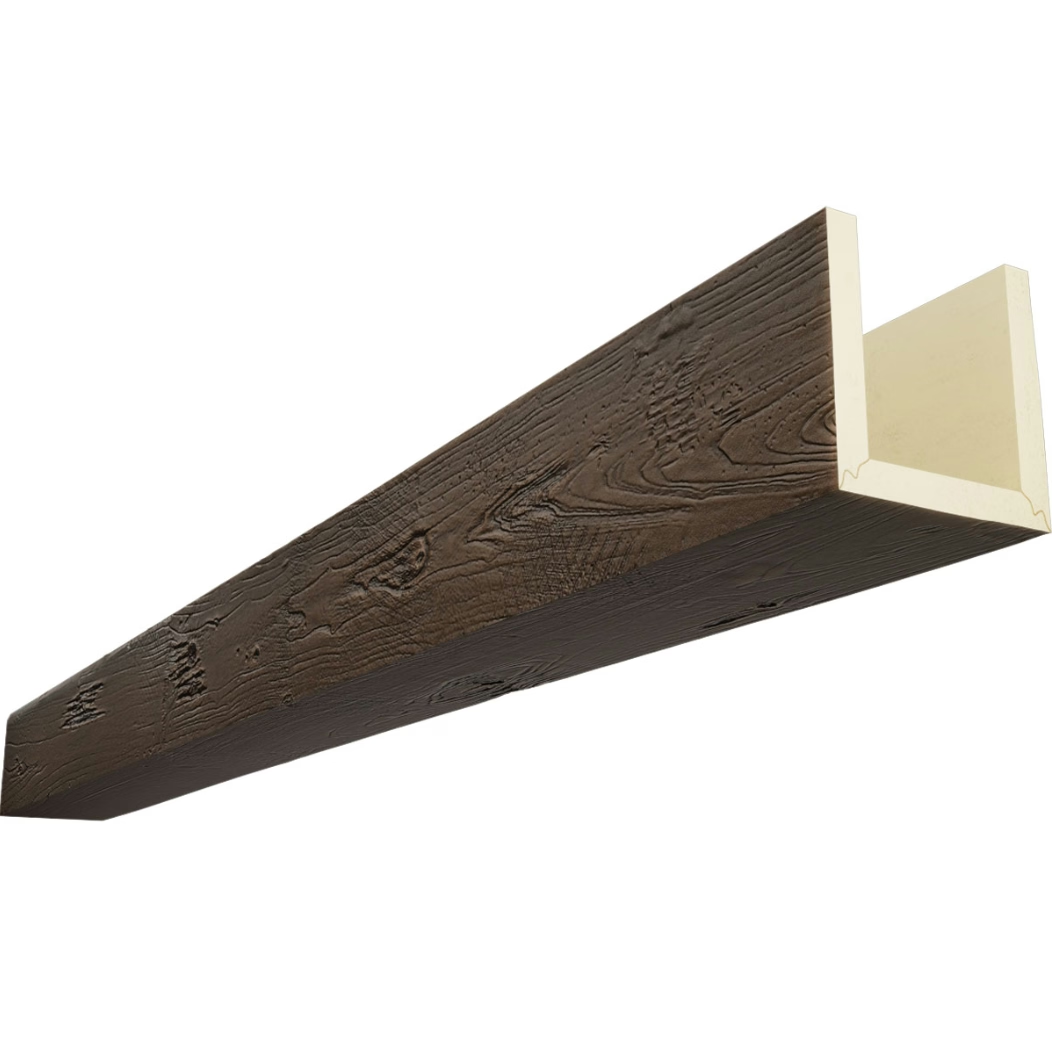
Installation Safety Benefits
The reduced weight of polyurethane beams translates directly to improved safety throughout the installation process. Manual handling injuries—strains, sprains, and musculoskeletal disorders—represent a significant percentage of construction workplace injuries. Lightweight materials reduce the physical demands on installers, decreasing injury risk while improving productivity.
Overhead work amplifies the risks associated with heavy materials. Lifting overhead while maintaining balance places unique stresses on the spine and shoulder complex, particularly when the load's center of mass extends beyond the handler's body. Polyurethane beams' manageable weight enables installers to position pieces accurately without rushing due to fatigue or struggling to maintain control during placement.
The stability of lightweight beams during installation proves advantageous for quality outcomes. Heavy timbers can shift or swing unexpectedly during mounting, potentially causing impacts that damage surfaces or injure workers. Lightweight beams respond predictably to adjustment, allowing fine-tuning of position before final attachment without the momentum that complicates handling heavy materials.
Reduced equipment requirements represent another safety dimension. Scaffolding rated for heavy timber loads must meet stringent requirements, while lightweight beam installations often proceed safely from ladders or rolling work platforms. The equipment cost savings compound with safety benefits, making lightweight options attractive for budget-conscious projects prioritizing safe working conditions.
Techniques for Solo Installation
The manageable weight of polyurethane beams enables installation approaches impossible with heavier materials. Single-person installation becomes practical for most residential beam sizes, allowing projects to proceed without coordinating helper schedules or paying for additional labor. Understanding techniques optimized for solo installers helps homeowners achieve professional results independently.
Starting with a center reference line ensures that beam positioning remains accurate throughout installation. Marking the ceiling centerline and measuring equal distances to proposed beam edges provides alignment guidance that prevents cumulative positioning errors. This approach works whether installing a single beam or multiple parallel pieces.
Temporary support systems hold beams in position while installers complete mounting steps. Adjustable ceiling hooks, removable adhesive hooks, and temporary braces all serve this purpose. The goal involves freeing both hands for accurate bracket installation and secure fastening without rushing to prevent the beam from falling.
Installing mounting brackets before lifting the beam simplifies the process. Attaching all required hardware while the beam rests safely at ground level eliminates awkward overhead work and reduces installation time. When the beam rises, installers simply engage pre-installed mounting points rather than fumbling with hardware while supporting the load.

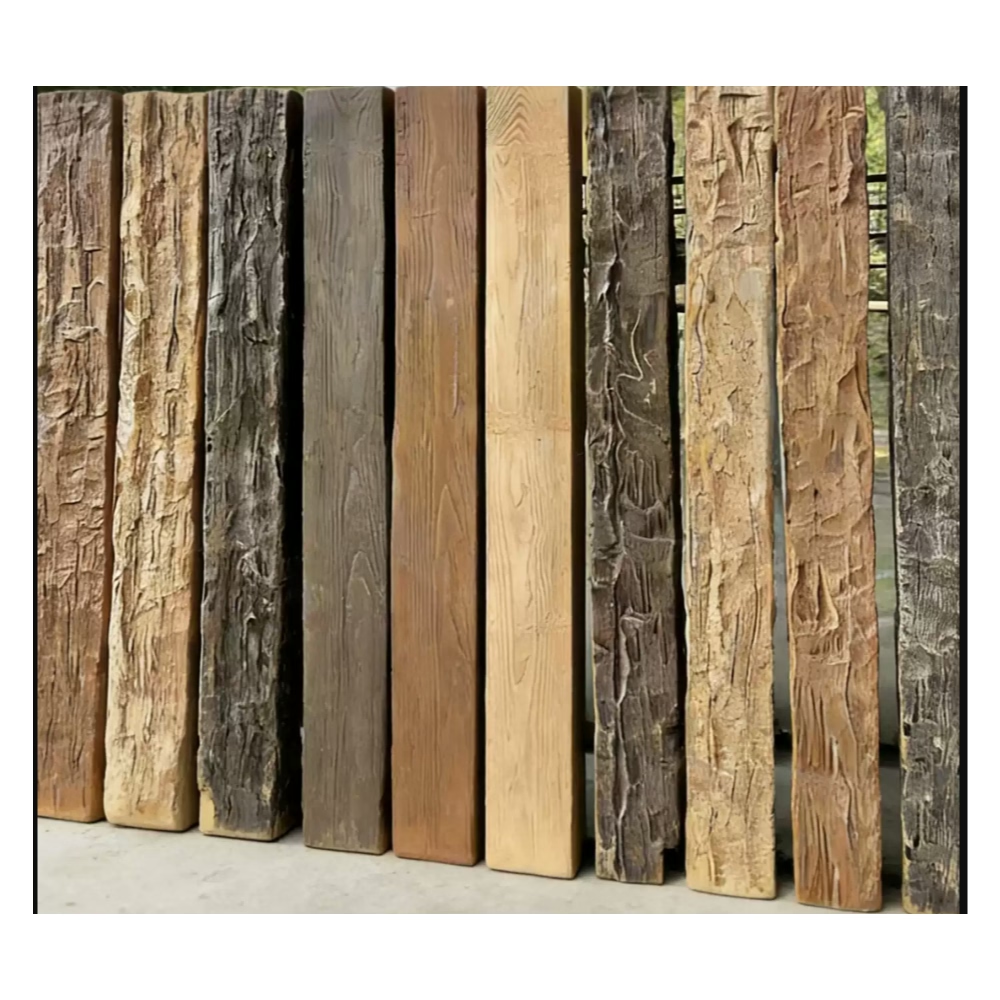
Tools and Equipment Considerations
Lightweight beam installation requires fewer specialized tools than traditional timber work. Standard carpentry tools—measuring tape, level, drill/driver, saw for cutting—suffice for most residential installations. The polyurethane material cuts cleanly using standard woodworking blades without carbide tips or specialized equipment.
Drilling requirements differ from wood installation due to polyurethane's different material properties. The foam material drills easily without splitting, but may compress around drill bits if pressure exceeds recommendations. Using sharp bits and moderate feed rates produces clean holes for mounting hardware without the tear-out that affects natural wood.
Adhesive selection matters for installations involving contact surfaces or gap-filling. Polyurethane-compatible adhesives create bonds that remain flexible while providing strong attachment. Water-based construction adhesives work well for most installations, while solvent-based products may require careful surface preparation and adequate ventilation during curing.
Safety equipment for lightweight installation still includes essential protections. Eye protection during cutting and drilling prevents debris injury, while dust masks reduce inhalation exposure during sanding or trimming operations. Work gloves protect hands during material handling, though the reduced weight decreases friction-related hand fatigue compared to heavy timber work.
Load Considerations and Structural Limitations
Despite their practical advantages, lightweight beams carry important structural limitations that installers must respect. Polyurethane faux beams are decorative elements, not structural supports. They cannot replace load-bearing members or serve as primary structural elements in most building configurations. Understanding this distinction prevents overloading that could damage the beams or create safety hazards.
Recommended load limits for polyurethane beams vary by product and manufacturer, but generally exclude supporting any meaningful weight beyond the beam's own mass and any integrated lighting fixtures rated for beam mounting. Hanging heavy objects from beams—chandeliers, speakers, ceiling fans—requires separate support systems anchored to structural ceiling elements.
The mounting system must transfer beam weight and any incidental loads directly to structural building elements. Lightweight beams alone cannot support the dynamic loads that occur when people accidentally bump suspended fixtures or when wind loads affect exterior installations. Proper installation engineering ensures that mounting hardware and structural connections handle all anticipated loads safely.
For applications requiring meaningful load-bearing capacity, manufacturers offer hybrid products combining polyurethane shells with internal steel or engineered wood structural cores. These reinforced beams weigh more than unfilled polyurethane alternatives but remain lighter than equivalent solid timber, while providing the structural capacity that certain applications demand.
Technical References
ASTM standards cited in every specification
Test Data
Lab results from internal testing program
Updated 2026
Reviewed against current product specs