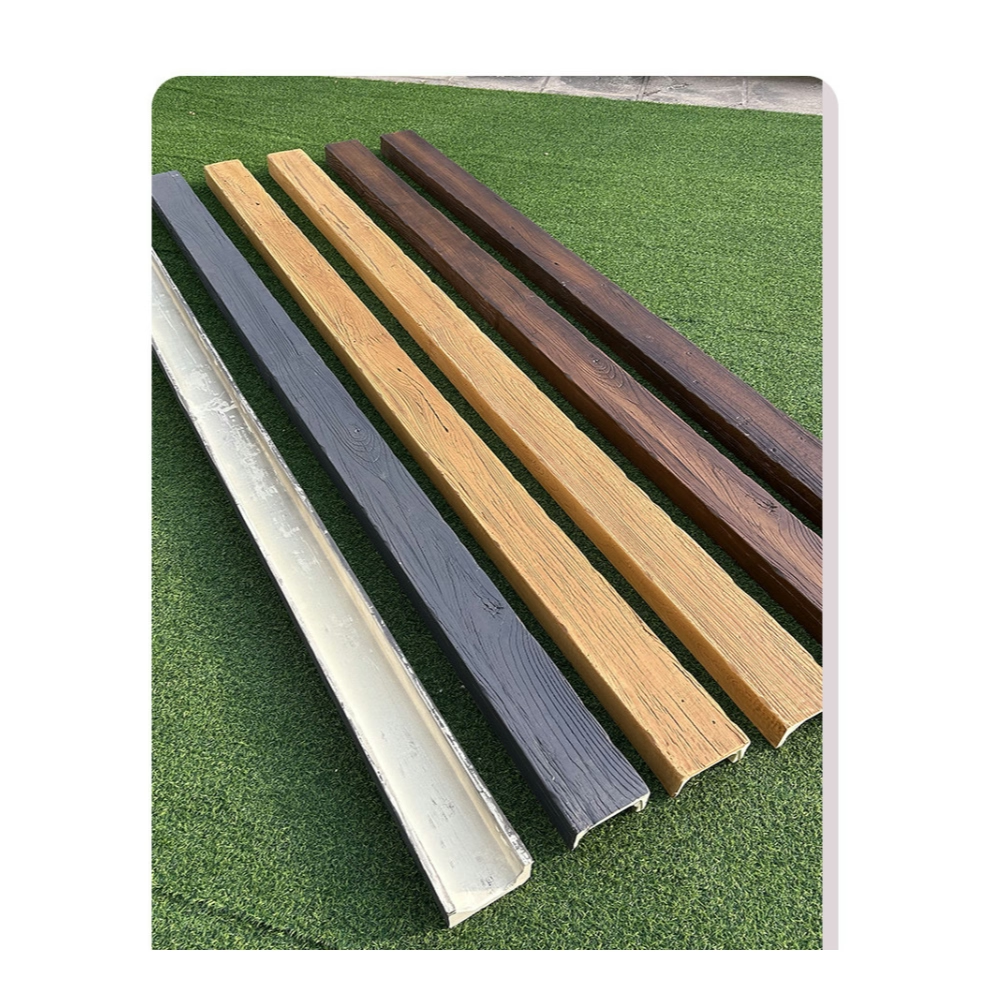
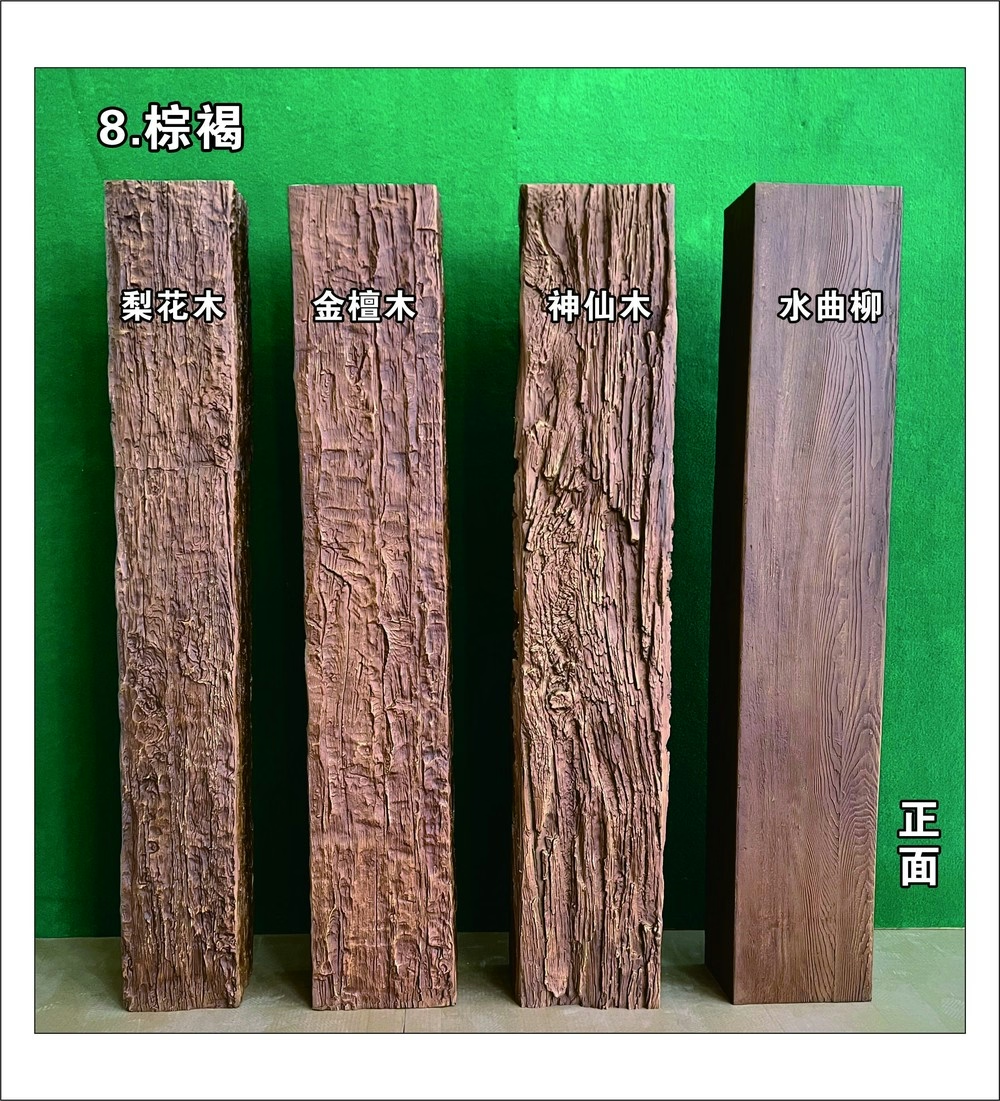
The exposed steel moment frame that had once read as industrial honesty now simply felt cold and utilitarian. When the architectural firm began planning the adaptive reuse of this former warehouse, they recognized that the steel structure—architecturally significant and too expensive to remove—needed to become part of the warm, inviting atmosphere the renovation sought to create. The solution involved wrapping each visible steel beam with polyurethane covers that transformed industrial steel into the warm timber aesthetic the space required.
Wrapping steel beams with polyurethane covers enables architects and builders to preserve structural steel while achieving aesthetic goals that exposed steel cannot satisfy. This technique has become increasingly common as adaptive reuse projects and industrial-chic interiors have gained popularity, offering a practical approach to reconciling structural requirements with design aspirations.
Assessment and Planning
Successful steel beam wrapping begins with thorough assessment of existing conditions and careful planning that anticipates installation challenges. Understanding the structural elements involved ensures that wrapping enhances rather than interferes with building performance.
Measuring existing steel beams determines what cover dimensions will be required. The measurement must capture all relevant dimensions: overall beam depth, flange width, web thickness, and any connection details that affect cover design. These measurements guide cover specification, whether standard products will fit or custom fabrication is necessary.
Structural clearance assessment verifies that wrapping will not interfere with beam function or building systems. Steel beams require clearance for thermal movement, vibration, and connection to other structural elements. Wraps that restrict this movement could create structural problems, making clearance verification essential before proceeding.
Connection and penetration identification catalogs any items attached to or penetrating the steel beam that covers must accommodate. Bracing connections, safety cable attachments, and mechanical penetrations all require provisions in cover design. Failing to account for these elements creates installation problems that might require costly redesign.
Condition assessment evaluates existing steel for corrosion, damage, or other issues that should be addressed before covering. The cover will conceal these conditions, potentially allowing problems to worsen if they are not remediated first. Addressing steel condition before wrapping ensures that structural elements will perform adequately throughout the service life of the cover installation.
Cover System Options
Several cover configurations accommodate different steel beam types and aesthetic requirements. Selecting the appropriate system for the specific application ensures that installations achieve both functional and visual objectives.
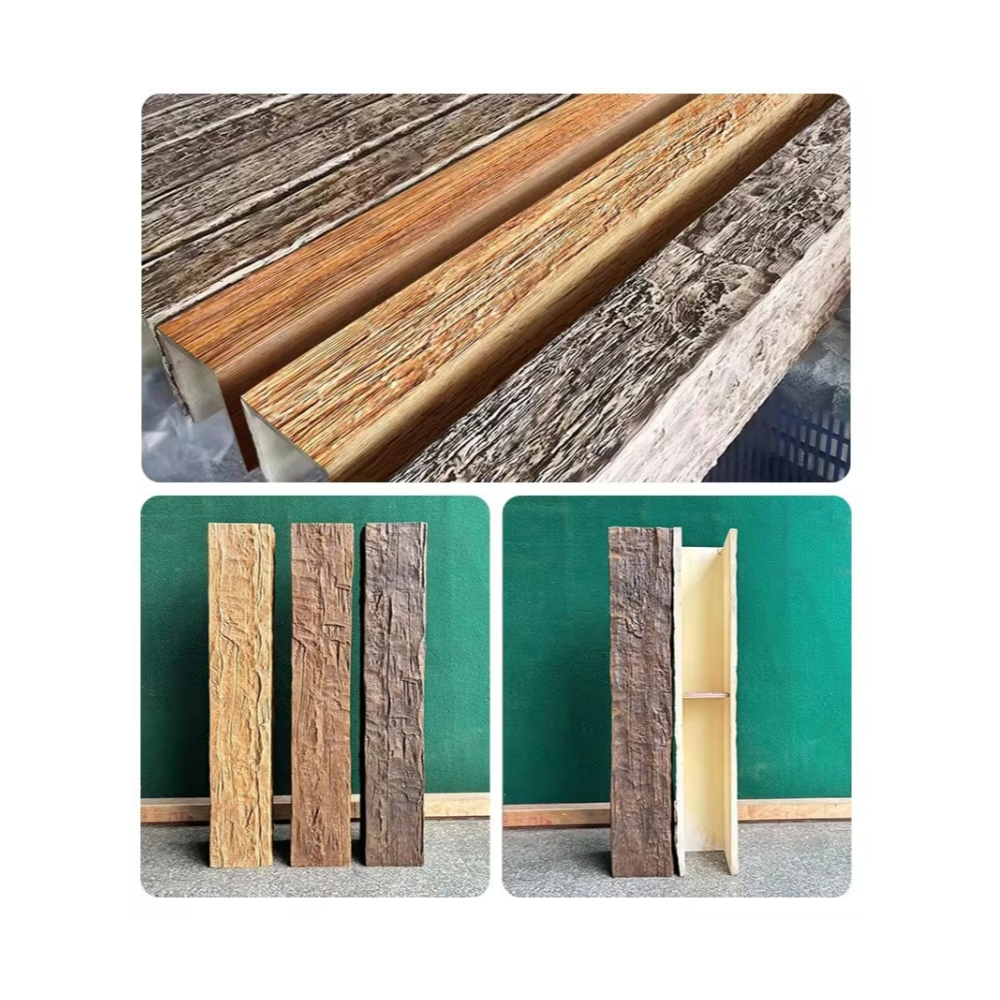
Full-enclosure wraps surround the steel beam completely, creating the appearance of solid timber from all viewing angles. This approach works well for beams visible from multiple directions and provides the most dramatic transformation. The cover must be sized to accommodate steel dimensions plus any clearance requirements.
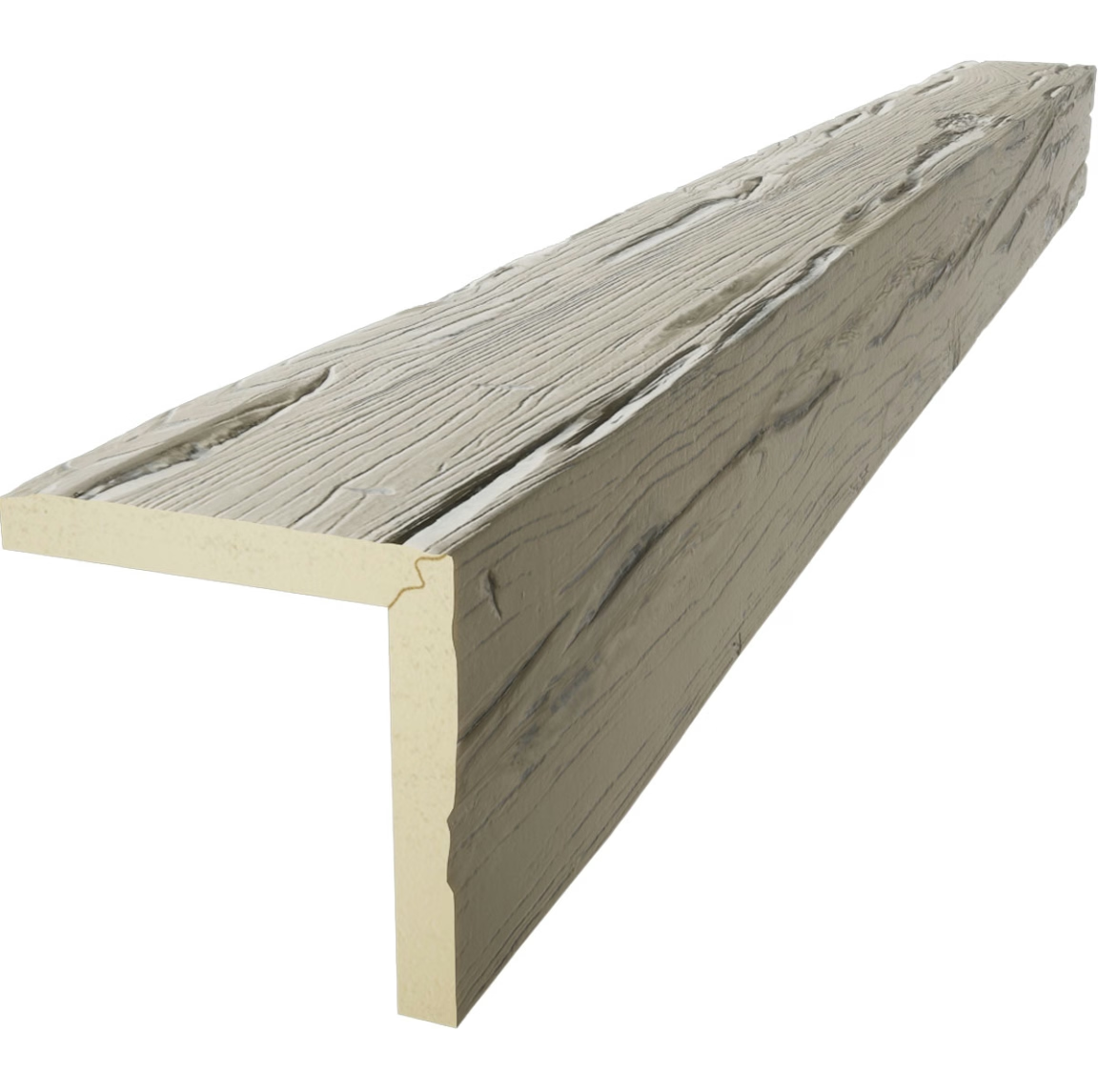
Face-wrap systems cover only the visible faces of steel beams while leaving flanges exposed or concealed behind returns. This approach suits situations where complete enclosure is impractical or where the steel profile contributes to the desired aesthetic. Face-wrap systems require less material than full enclosures but create different visual effects.
TrUSS-style covers create the appearance of timber trusses using steel members as the structural core. These systems typically involve multiple cover pieces that transform individual steel members into truss components. The resulting appearance suggests heavy timber construction while actually comprising steel hidden behind polyurethane covers.
Column covers address vertical steel elements differently than horizontal beams. Column wrapping requires understanding of column functions—moment transfer, axial load bearing—and ensuring that covers do not interfere with structural performance. Column wraps often incorporate bases and capitals that create classical or contemporary column aesthetics.
Preparation of Steel Substrate
Proper steel preparation ensures that cover installations attach securely and that steel remains protected from corrosion throughout the service life of the installation. Taking time to prepare the steel properly prevents problems that would be difficult to address after covering.
Cleaning removes rust, scale, mill finish residues, and other contamination that could affect coating adhesion or accelerate corrosion beneath covers. The cleaning method depends on steel condition—light surface contamination might require only solvent wiping, while heavy rust may require grinding or sandblasting. The goal involves clean, dry steel surfaces ready for protective treatment.
Corrosion treatment addresses any rust that cleaning reveals. For minor surface rust, mechanical removal followed by protective primer may suffice. For more significant corrosion, additional treatment may be necessary before proceeding. The extent of corrosion treatment affects both immediate preparation requirements and long-term performance expectations.
Protective coating application creates a barrier between steel and environmental conditions that might cause future corrosion. Primer, intermediate coats, and topcoats appropriate for the specific conditions—interior dry, interior humid, exterior—protect steel beneath covers. Even though covers will conceal the coating, the protection it provides ensures structural integrity.
Surface profile development may be necessary for proper coating adhesion. Some protective coatings require roughened surfaces that mechanical abrading provides. The specific profile requirement depends on coating selection, with some systems requiring only轻度 surface preparation while others need more extensive profile development.
Measurement and Template Development
Accurate measurement and careful template development prevent the fitting problems that would otherwise emerge during installation. Taking time to create accurate templates pays dividends through simplified installation.
Field measurement verification confirms that shop measurements match actual conditions. Construction tolerances and field conditions create variations that shop measurements might not capture. A final field measurement pass before cover fabrication ensures that covers will fit actual steel dimensions.
Template development creates patterns that guide cover fabrication. For simple rectangular beams, dimensional measurement may suffice. For complex profiles or irregular conditions, actual templates—either physical patterns or digital scans—ensure accurate fabrication. The template approach depends on fabrication method and cover complexity.
Allowance consideration accounts for clearance and adjustment requirements. Covers must fit over steel without forcing, requiring dimensional allowances that ensure proper fit. The specific allowance depends on steel dimensions, cover system design, and installation method, but typically ranges from one-quarter to one-half inch total clearance.
Fabrication coordination ensures that covers will arrive ready for installation without requiring extensive field modification. Sending templates or dimensions clearly, with notes about any unusual conditions, helps fabricators produce accurate pieces. Clarifying expectations about fit tolerance and any field adjustment provisions prevents misunderstandings.
Installation Techniques
Cover installation follows techniques appropriate for the specific cover system and steel conditions. Proper installation ensures that covers attach securely while maintaining the appearance that justifies the covering approach.
Dry-fitting before permanent attachment identifies any fitting issues before adhesive or fasteners commit the installation. This test fit reveals clearance problems, alignment issues, or dimensional discrepancies that correction requires. Discovering these issues during dry-fit rather than after fastening saves time and prevents damage from forced corrections.
Mechanical fastening provides primary attachment in many cover installations. Screws or bolts engaging both cover and steel create connections that resist the shear and withdrawal forces that covers experience. The fastener pattern must be adequate for the loads while remaining concealed within cover geometry.
Adhesive bonding supplements mechanical fastening, creating composite attachment that combines the reliability of mechanical connections with the gap-filling benefits of adhesive. Adhesive selection must be compatible with both cover material and steel substrate, with flexibility accommodating the thermal movement that steel experiences.
Sealing at edges and penetrations prevents moisture intrusion that could affect steel and cover materials. Flexible sealant compounds create weatherstripping-like barriers at cover perimeters, while structural sealant addresses any gaps or joints. This sealing represents the primary defense against moisture infiltration.
Finishing and Detailing
Finishing creates the unified appearance that transforms wrapped steel into convincing timber. Attention to joints, transitions, and surface preparation ensures that finished installations achieve the aesthetic goals that motivated the covering approach.
Joint treatment addresses how cover pieces meet at corners, beam intersections, and field splices. These locations require careful finishing to maintain the appearance of continuous timber. The specific treatment depends on joint configuration, with options including mitered joints, butt joints with cover plates, or concealed joint configurations.
Edge finishing ensures that cover edges present clean, finished appearances. Any exposed edges—whether at beam ends or where covers terminate—should appear as timber would rather than revealing cover construction. Edge finishing techniques might include applying matching trim, routing profiled edges, or applying finish materials that blend with cover surfaces.
Texture matching between covers and any field-modified surfaces ensures consistent appearance throughout. Cut ends, drilled holes, and other field work may require texturing that matches factory surfaces. Products designed for field touch-up enable this matching, with application technique determining how successfully field work disappears.
Surface finishing protects covers while achieving desired appearance. Pre-finished covers may require only cleaning after installation, while site-finished covers need the full finishing process. Understanding finish requirements during specification ensures that appropriate products are selected and that finishing can proceed efficiently.
Special Considerations for Exposed Conditions
Some steel beam wrapping applications involve conditions that require additional attention. Understanding these special considerations ensures that installations perform adequately despite challenging circumstances.
Fire resistance requirements may affect cover specifications for certain occupancies. Steel maintains structural capacity at temperatures well above what wood can withstand, and covering steel with combustible material might compromise this fire resistance. Fire-rated cover systems address this concern while still providing timber aesthetics.
Impact resistance becomes more important in high-traffic areas where incidental contact might damage covers. Cover thickness, material density, and reinforcement all affect impact resistance. Specifying appropriate systems for the specific exposure ensures that covers will withstand the conditions they will experience.
Thermal bridging occurs when covers create paths for heat transfer between interior and exterior environments. Steel conducts heat readily, potentially creating thermal bridges that affect energy performance. Thermal break materials between steel and covers address this concern in critical applications.
Maintenance access requirements affect cover design in applications where steel inspection or service is periodically necessary. Removable cover sections or access panels enable inspection without complete cover removal. Planning for these requirements during initial design prevents difficulties when access becomes necessary.
Technical References
ASTM standards cited in every specification
Test Data
Lab results from internal testing program
Updated 2026
Reviewed against current product specs