The word "modern" in interior design carries specific associations—clean lines, understated elegance, and a preference for engineered solutions over traditional materials. Modern design doesn't reject warmth or texture, but it integrates them with precision and intentionality. Modern faux wood beams fit this sensibility perfectly: they're made from advanced polyurethane technology, finished with contemporary precision, and designed to deliver architectural impact without the visual noise of a purely rustic treatment.
What makes modern faux beams distinct from their rustic counterparts is a combination of profile, finish, and placement philosophy. Where rustic beams emphasize depth, texture, and visible age, modern beams favor clean profiles, consistent finishes, and placements that feel deliberate and geometric. The result is a ceiling treatment that enhances contemporary interiors without clashing with their minimalist sensibilities.
The Modern Beam Aesthetic
Modern faux beams are defined by their restraint. The profiles tend to be simpler—rectangular, trapezoidal, or with minimal routed detailing—rather than the deeply carved, heavily textured profiles associated with traditional timber. This simplicity is not a limitation; it's a design choice that allows the beams to integrate with the overall architecture rather than dominating it.
The finishes on modern beams reflect contemporary color trends: warm whites, soft greys, natural blondes, and cool charcoals are all commonly available. These finishes avoid the heavily weathered, distressed, or artificially aged appearances of rustic beams in favor of colors that feel naturally present in the wood without appearing artificially applied. A modern beam in a warm white finish can blend with a white ceiling so subtly that the beams read as architectural planes rather than wood elements—a clean, modern effect.
Placement in modern interiors tends to be more geometric and less decorative than in rustic settings. Rather than the organic, irregular spacing that characterizes farmhouse beam installations, modern beam layouts follow precise mathematical relationships. Equal spacing, symmetric placement, and alignment with other architectural elements create a sense of order that resonates with modern design principles.
Lightweight Technology, Heavy Visual Impact
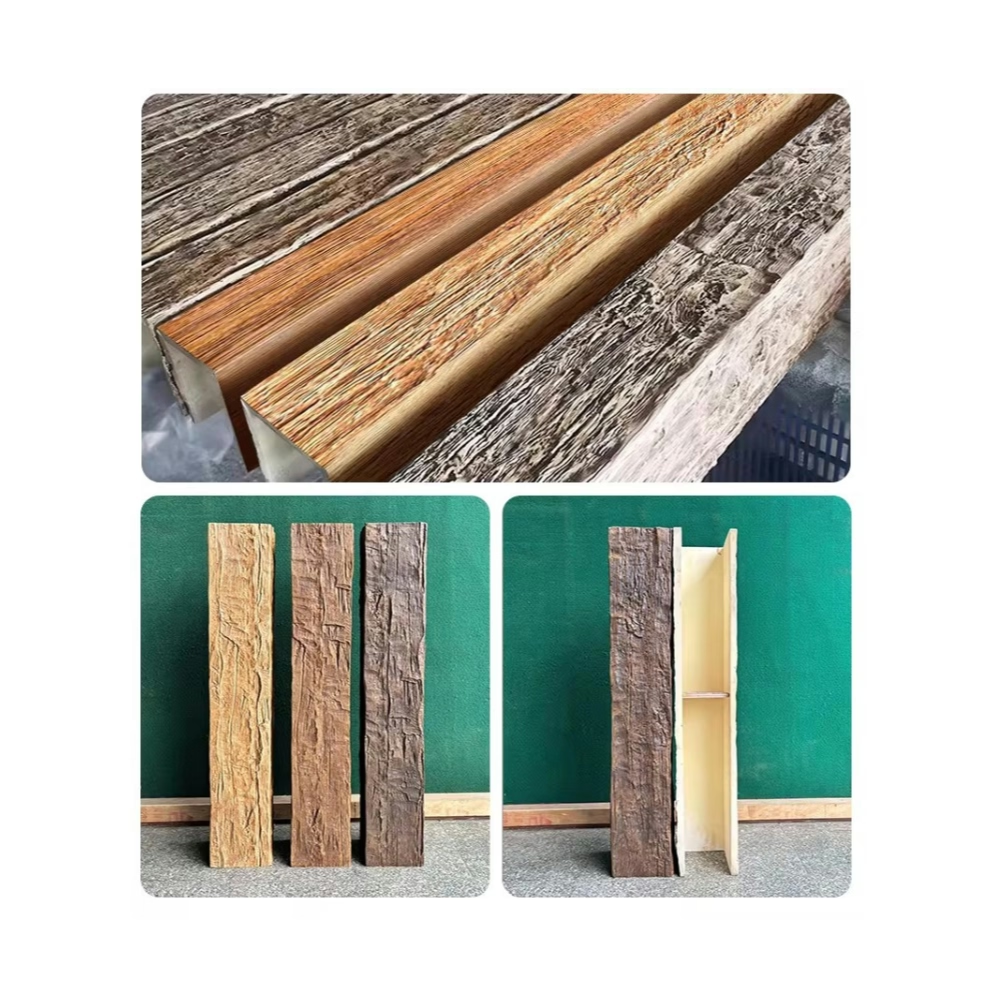
The material science behind polyurethane faux beams enables design possibilities that simply aren't available with real timber. Because polyurethane can be molded with precision, modern beam profiles can include integrated features that would be impossible or prohibitively expensive to produce in real wood—continuous grooves, tapered profiles, and hollow-core construction that reduces weight without sacrificing visual depth.
This manufacturing precision means that modern beams arrive at the installation site with consistent dimensions and finish quality across the entire length of each beam. Real timber, by contrast, varies in width, depth, and surface character from end to end. For a modern interior where consistency and precision are valued, this predictability is a significant advantage.
The hollow-core construction of many modern faux beams—achieved naturally in polyurethane manufacturing—is particularly beneficial in contemporary homes, where ceiling heights are often standard and the structural capacity for heavy ceiling loads may be limited. A hollow-core polyurethane beam can achieve the visual depth of a solid timber beam while weighing a fraction as much, making it suitable for ceiling mounting in any home without structural reinforcement.
Modern Beams in Different Contemporary Settings
Open-plan living spaces are among the most rewarding applications for modern beams. These spaces often suffer from a visual challenge: the ceiling feels disconnected from the living areas below because there are no walls to define zones. Beams solve this problem by introducing a ceiling framework that organizes the open space without enclosing it. In a modern open-plan living area, a series of parallel beams running across the ceiling at equal intervals creates a subtle grid that the eye uses to parse the space into usable zones.
Loft apartments and converted industrial spaces benefit from the textural contrast that modern beams provide. These spaces typically feature exposed ductwork, concrete floors, and large windows—all hard, smooth, industrial materials. A set of warm-toned modern beams across the ceiling introduces organic texture that balances the industrial character without undermining it. The result is a space that feels warm and human rather than cold and mechanical.
Minimalist interiors—homes where the design philosophy centers on reduction and restraint—pose a unique challenge for ceiling treatments. In these spaces, anything added must justify its presence through function or essential beauty. Modern beams in minimalist settings should be used sparingly: perhaps a single beam crossing the ceiling at its midpoint, or a pair of parallel beams that frame the main living area without overwhelming the clean lines of the space. The beams add warmth and interest precisely because they are restrained in number.
Mid-century modern interiors present an opportunity for a more stylized beam application. The mid-century aesthetic embraced wood as a material and incorporated beams, paneling, and other wood elements as design features. Modern beams in mid-century finishes—walnut, teak, honey oak—integrate seamlessly with this aesthetic, adding the warmth and texture that mid-century design values while maintaining the clean, geometric quality that defines the style.
Pairing Modern Beams with Lighting
One of the most effective ways to maximize the impact of modern beams is to integrate lighting into the installation. The geometry of a beam creates natural opportunities for recessed lighting, LED strip lighting, and surface-mounted fixtures that enhance the beam's architectural presence.
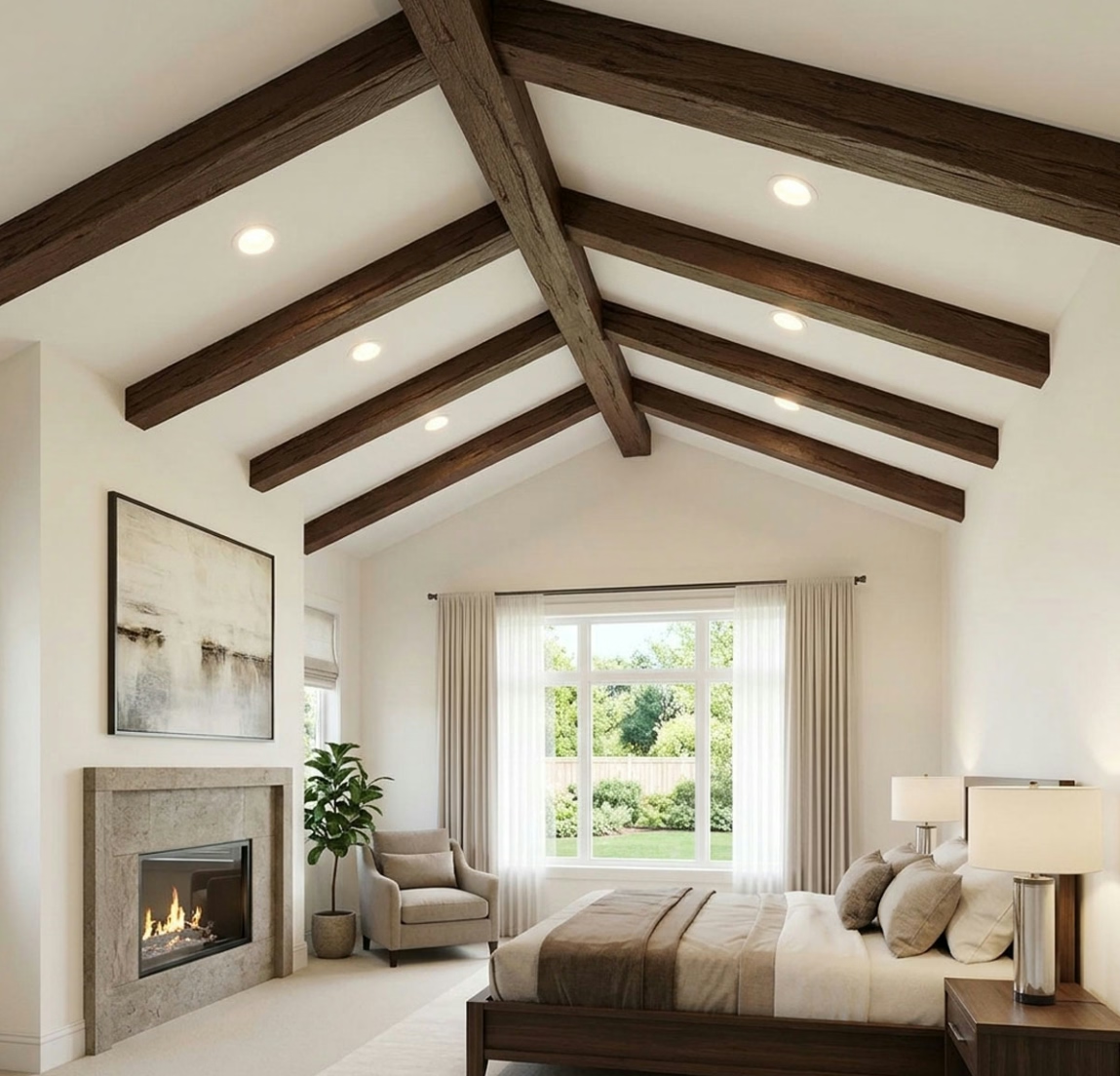
Recessed downlights installed between beams provide general illumination without competing with the beam design. The space between the beams becomes the light source area, while the beams themselves remain clean and uncluttered. This approach works particularly well in modern interiors, where recessed lighting is already a common ceiling treatment.
LED strip lighting installed along the top edge of the beam—where the beam meets the ceiling—creates a continuous line of light that emphasizes the beam's profile and enhances the sense of depth. This is an especially powerful effect with suspended beams, where the LED strip illuminates the shadow gap between the beam and the ceiling, making the beam appear to float. Many modern beam installations incorporate this lighting from the start, with the LED housing built into the beam's design during manufacturing.
Track lighting mounted on the ceiling between beams is another contemporary option. Track systems offer flexibility—the fixtures can be repositioned as the room's function changes—and their industrial aesthetic complements the clean lines of modern beams.
Maintaining a Modern Aesthetic Long-Term
Modern interiors benefit from the low-maintenance qualities of polyurethane beams. Because the finish is applied at the factory under controlled conditions, the beams arrive with a consistent, durable surface that resists fading, chipping, and moisture damage. Unlike real wood beams, which may require periodic refinishing or sealing to maintain their appearance, modern faux beams need only occasional dusting and occasional cleaning with a damp cloth.
This maintenance simplicity is particularly valuable in modern interiors, where the design philosophy often emphasizes ease of living and clean, uncluttered spaces. A ceiling treatment that requires no ongoing attention—beyond its initial installation—aligns with the modern value of efficiency in both design and maintenance.
For homeowners who like to update their interiors periodically, modern beams also offer flexibility. Because they're available in a wide range of finishes and can be painted with standard latex paints, beams can be updated to reflect new color trends or design directions without replacement. A beam finished in a warm grey can be repainted to a soft white, or vice versa, with minimal effort and cost.

Modern faux wood beams represent a convergence of technological innovation and design sophistication that delivers immediate, lasting upgrades to any space. Their clean aesthetics, lightweight construction, and minimal maintenance requirements make them ideally suited to contemporary interiors, while their versatility ensures they adapt gracefully to a wide range of design contexts. For homeowners and designers seeking an instant, high-impact ceiling upgrade, modern beams are a compelling choice that rewards both the initial investment and the years of living that follow.
Technical References
ASTM standards cited in every specification
Test Data
Lab results from internal testing program
Updated 2026
Reviewed against current product specs


