
Sophisticated interiors often layer materials to create visual depth and tactile interest. The contrast between manufactured precision and organic imperfection produces a richness that uniform materials simply cannot achieve. When it comes to ceiling treatment, combining genuine structural timber with polyurethane faux beams opens up compelling design possibilities that neither material achieves alone.
The approach requires thoughtful execution. Random mixing without intention produces confusion rather than sophistication. But when designers thoughtfully combine real and faux wood elements, the results can be genuinely striking—authentic warmth supported by practical affordability, genuine craftsmanship enhanced by design flexibility.
Understanding Material Characteristics
Before attempting to combine these materials effectively, it helps to understand what each brings to the design conversation. Real timber beams carry inherent character that cannot be manufactured: growth patterns, natural color variations, checking and cracking that develop over time, the subtle irregularity of hand-hewn or band-sawn surfaces. These qualities read as honest and material-authentic, creating the kind of warmth that has made wood ceiling treatment enduringly popular.
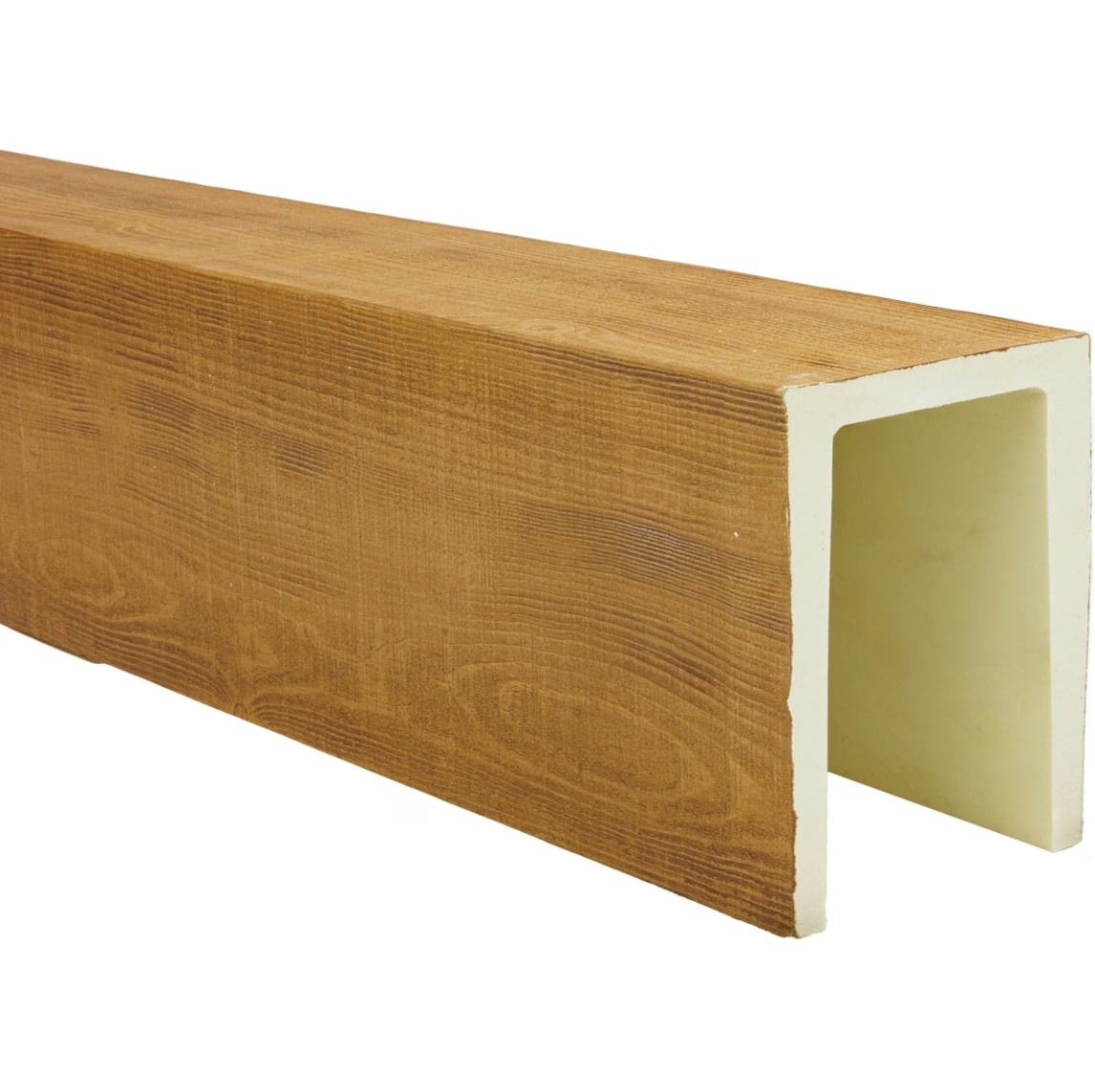
Polyurethane faux beams offer different advantages. They resist moisture, warping, and insect damage that can affect real timber. They install more easily with lighter weight and simpler mounting requirements. They provide consistent quality without the variables that natural materials introduce. And they can achieve profiles and finishes that would be prohibitively expensive or structurally impossible with real timber.
The design opportunity lies in leveraging each material's strengths while mitigating their respective limitations. Real timber where authenticity and organic character matter most. Faux beams where practical considerations or design requirements exceed what natural materials can efficiently provide.
The Hierarchy Approach to Material Distribution
One effective strategy establishes a clear material hierarchy, using real and faux beams for different functional roles in the same space. Real timber handles the most visible, structurally-significant positions where its authenticity creates maximum impact. Faux beams fill supporting roles or span areas where practical considerations favor the manufactured alternative.
A vaulted great room might feature genuine timber beams as the primary structural expression—perhaps two substantial beams crossing the space at right angles, creating the main visual event overhead. Polyurethane faux beams then support secondary roles: smaller accent beams perpendicular to the main spans, decorative beam panels on flat ceiling sections, or beam trim around room perimeters. The real timber establishes authenticity and visual anchor while faux elements extend the design vocabulary economically.
This hierarchy approach works particularly well in spaces where budget constraints would force compromise between authentic timber throughout versus no timber treatment at all. Strategic placement of real timber at focal points, supported by faux elements in surrounding areas, provides the best of both approaches.

Creating Contrast Through Material Dissonance
Sometimes the most effective mixing strategy doesn't try to harmonize the materials but instead celebrates their differences. Real timber's organic irregularity contrasted against faux beam's manufactured precision creates visual tension that contemporary and industrial-influenced interiors often embrace.
Picture exposed ceiling structure where real timber joists carry authentic character while crisp, perfectly-formed faux beams run perpendicular at regular intervals. The organic warmth of the natural timber plays against the controlled geometry of the manufactured beams, creating a composition that feels curated rather than accidental. This approach suits spaces where some industrial influence or curated eclecticism defines the overall design character.
The key to success with contrast-based mixing is maintaining clear distinction between materials rather than blurring them together. If beams are meant to contrast, don't select finishes that make real and faux elements difficult to distinguish. Let each material read clearly for what it is, and the intentional contrast becomes a design feature rather than an inconsistency.
Coordinating Color and Finish Between Materials
When combining real and faux timber, finish relationships significantly influence whether the combination succeeds. Options include matching finishes so materials appear similar, complementary finishes that harmonize without matching, and deliberately contrasting finishes that emphasize material differences.
Matching finishes require selecting faux beam colors that authentically coordinate with the real timber's current appearance. This works best when real timber has relatively uniform coloration and when the faux beams will age alongside the real elements in similar lighting conditions. Over time, natural timber changes with light exposure and environmental factors while faux beams maintain their original color, which can eventually reveal the combination's artificiality.
Complementary finishes—perhaps warm honey on real timber paired with golden wheat on faux beams—create visual harmony while maintaining clear distinction between materials. This approach ages more gracefully than close matching, as both materials can shift slightly without appearing mismatched.
Contrasting finishes work when the materials are meant to be read separately. A dark espresso real beam paired with white faux beams makes no attempt at harmonization, instead presenting two different ceiling treatments that coexist through their shared vertical space rather than through any visual relationship.

Profile Coordination and Scale Relationships
Even when materials differ, profile relationships should feel intentional. Real timber beams typically show their structural nature through proportions that make sense for load-bearing—deeper profiles, dimensional lumber proportions. Faux beams can echo these proportions or deliberately counter them.
Echoing real timber proportions creates cohesive design language. If the authentic beams are substantial eight-by-eight posts, selecting faux beams with similar dimensional relationships maintains visual consistency even if the materials differ. The overall vocabulary reads as consistent heavy timber treatment with some elements genuine and others manufactured.
Countering real timber proportions can also work, particularly in contemporary or transitional spaces. Perhaps the real timber beams are narrow and linear—five inches deep by four inches wide—while the faux beams are flat panels or wider, shallower profiles. The difference in proportional language prevents visual monotony while keeping both materials in conversation through shared wood-toned coloring or complementary placement.
Scale relationships matter as well. If real beams are the dominant overhead presence, faux beams should probably be smaller or more restrained to avoid competing. If real beams are relatively modest, faux beams might provide the dramatic overhead presence while the authentic timber serves more subtle authentication purposes.
Installation Considerations for Mixed Systems
Combining materials requires coordinating installation approaches that differ significantly. Real timber requires structural support appropriate to its weight and load characteristics. Faux polyurethane beams mount through much lighter mounting systems without structural requirements.
The junction between real and faux elements deserves particular attention. Where faux beams meet real beams, walls, or each other, the connection should feel designed rather than accidental. Real timber might expose hardware and joinery as authentic details; faux beams typically benefit from clean, concealed mounting systems. The transition between these different approaches should either be obvious and intentional or seamlessly unified depending on the overall design intent.
Consider whether real and faux beams will intersect or merely parallel each other. Intersecting beams create visual nodes where materials meet—these junctions require careful design attention to ensure they read as intentional rather than awkward. Parallel beams that never touch are simpler to execute but still benefit from consistent spacing and dimensional relationships.
Maintenance and Longevity Planning
Real and faux timber have different maintenance requirements that should inform their placement and treatment. Real timber may require periodic refinishing, monitoring for moisture issues, and attention to any insect or decay concerns. Faux polyurethane requires essentially no maintenance beyond occasional dusting or cleaning.
Placement decisions can account for these differences. Real timber in visible, accessible positions allows for maintenance attention while also showcasing its authentic qualities. Faux beams in harder-to-reach positions eliminate maintenance concerns while still providing design impact. This practical distribution complements the aesthetic hierarchy approach mentioned earlier.
Consider also how the materials will age differently. Real timber develops character over time—potentially darkening, lightening, or developing surface patina. Faux beams maintain their original appearance indefinitely. A combination that looks perfectly balanced when installed may drift apart visually as the real timber ages. This isn't necessarily a problem—aging timber often becomes more beautiful—but it should be an intentional choice rather than a surprise.
When to Choose Each Material
The real-versus-faux decision ultimately serves specific functional and aesthetic purposes. Real timber makes sense when the space demands genuine structural expression, when organic character and natural variation align with the design intent, when budget accommodates authentic materials, and when the maintenance requirements are acceptable.
Faux beams make sense when structural requirements don't justify real timber weight and expense, when consistent quality and color are priorities, when moisture or pest concerns exist, when installation access makes heavy materials impractical, and when budget constraints require stretching design impact further.
The most thoughtful approach doesn't treat this as an either-or decision but rather considers how both materials can serve the overall project. Strategic real timber where its authenticity matters most. Faux beams where practical or economic considerations favor the manufactured alternative. The combination, thoughtfully executed, produces interiors richer than either material achieves alone.
Technical References
ASTM standards cited in every specification
Test Data
Lab results from internal testing program
Updated 2026
Reviewed against current product specs


