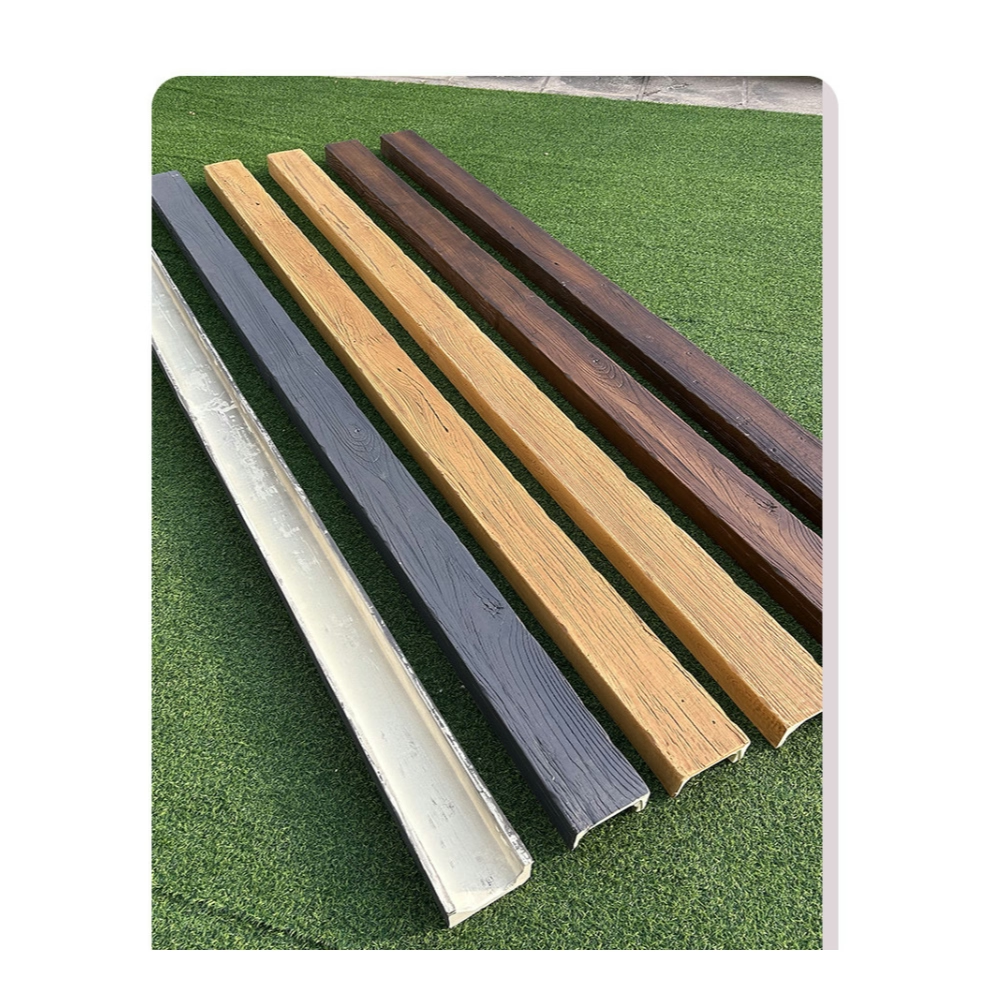
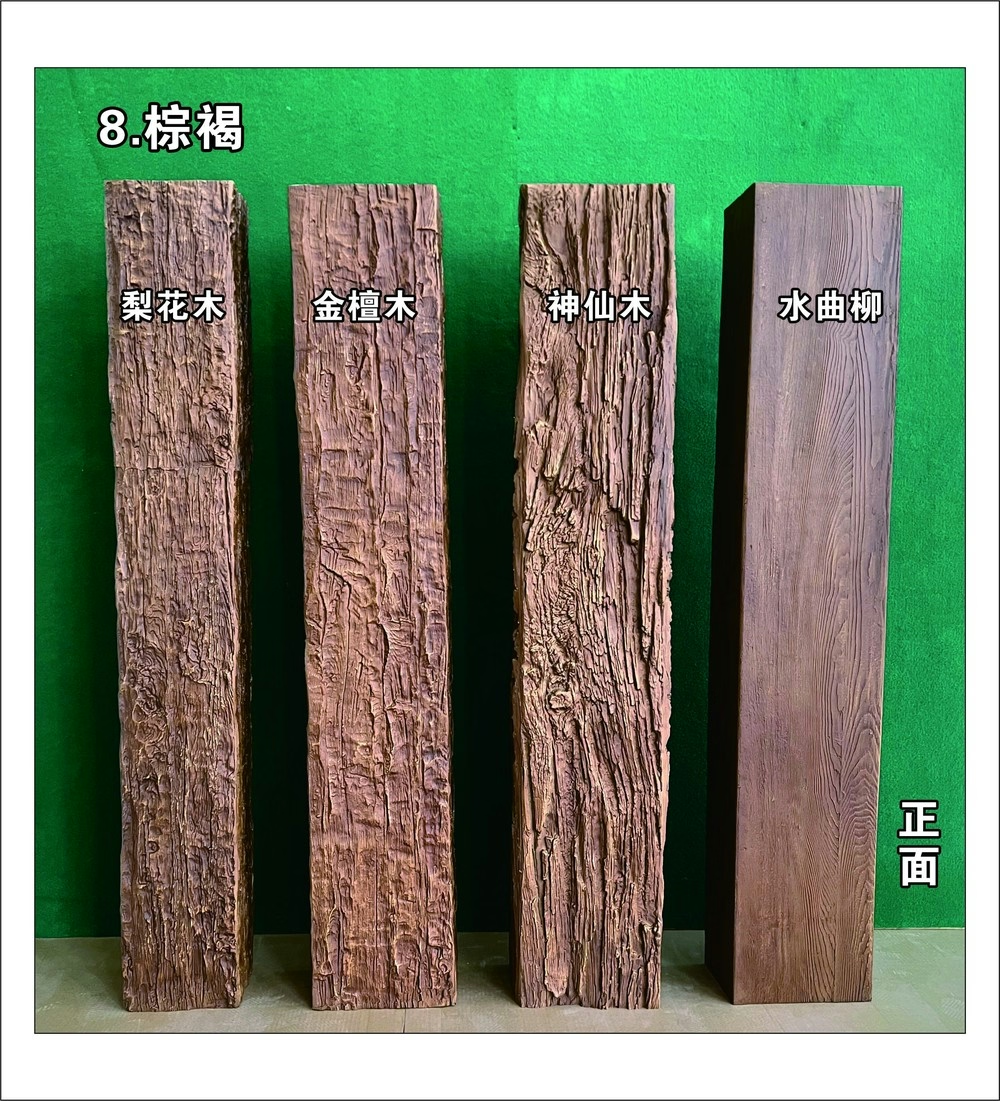
When architects and interior designers tackle large open-concept spaces, they often face a persistent challenge: how do you create the warmth of exposed timber beams without disrupting the visual flow with unsightly seams and joints? The answer lies in interlocking design PU faux wood beams, a sophisticated engineering solution that has transformed how we approach expansive ceiling installations in both residential and commercial settings.
The fundamental problem with traditional beam installation becomes immediately apparent when working with rooms that exceed standard beam lengths. A cathedral ceiling in a mountain lodge, a sprawling restaurant dining hall, or a contemporary open-plan home with a 40-foot run—these spaces demand visual continuity that butt joints simply cannot provide. Even the most skilled craftsman cannot make two pieces of wood appear as one continuous beam when placed end-to-end. The grain pattern breaks, the color shifts slightly, and the seam itself becomes a focal point that draws the eye rather than disappearing into the overall design. Interlocking PU faux wood beams solve this problem at the structural level, creating runs that appear to be single continuous pieces from wall to wall or corner to corner.
Understanding Interlocking Technology
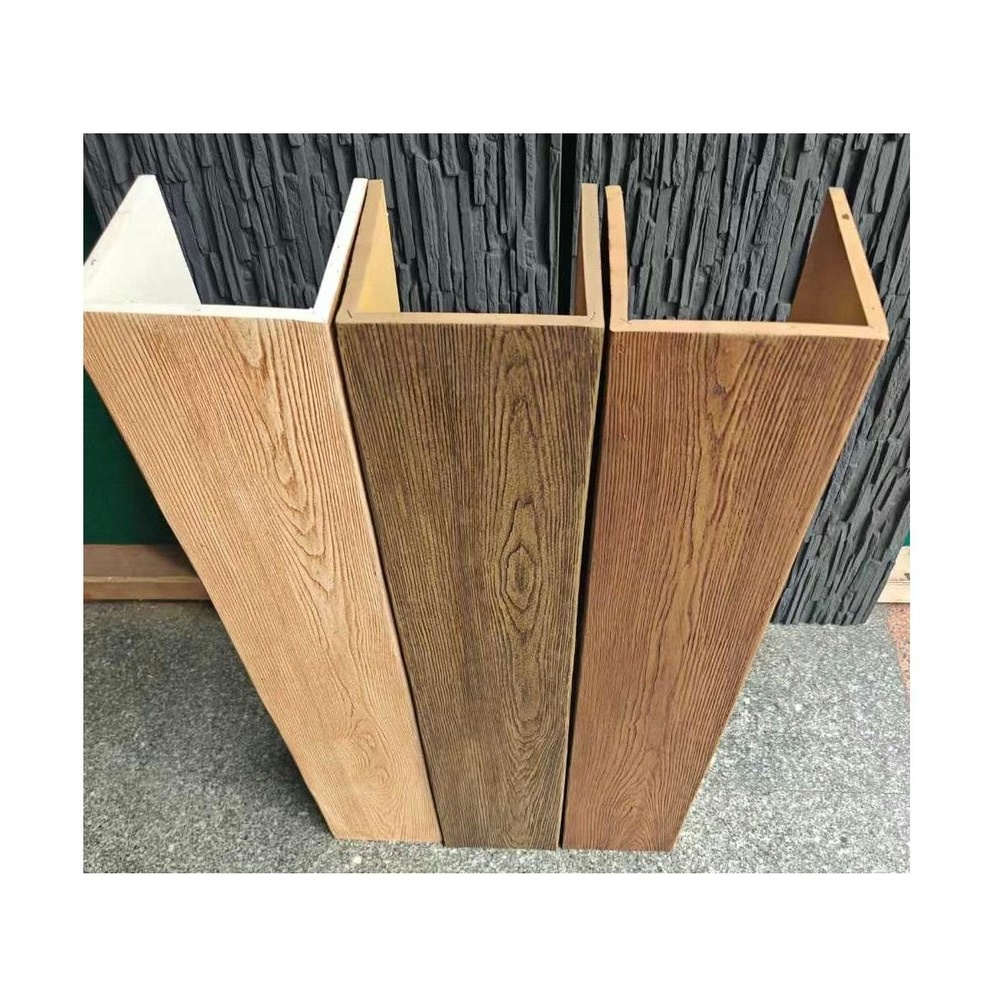
The interlocking system employed in premium PU faux wood beams represents a significant departure from conventional joining methods. Rather than relying on external connectors, adhesive bonding, or mechanical fasteners that would create visible interruptions, interlocking beams feature precision-engineered male and female connectors along their longitudinal edges. These connectors are molded directly into the beam profiles during the manufacturing process, ensuring dimensional consistency that simply cannot be achieved with field-cut or field-joined components.
The male profile typically extends along one longitudinal edge of each beam section, while the female profile runs along the opposite edge. When two beam sections are brought together, these profiles interlock with tolerances measured in fractions of a millimeter. This precision serves two critical purposes: it ensures structural integrity by creating a load-sharing connection between adjacent sections, and it guarantees visual continuity by eliminating any gap or offset at the joint line. The result is a beam run that appears to be a single, monolithic piece of crafted timber spanning the entire distance.
The geometry of these interlocking profiles varies among manufacturers, with some employing simple tongue-and-groove configurations while others use more complex interlocking geometries that provide additional mechanical strength. The most advanced systems incorporate self-aligning features that guide the installer toward the correct position as the beams are joined, making the connection process intuitive rather than requiring specialized skills or tools.

Engineering for Structural Integrity
A common misconception about faux wood beams concerns their structural capacity when used in long-span applications. Some installers and designers worry that the interlocking joints might become weak points under load or over time. Premium PU faux wood beam manufacturers address these concerns through careful engineering of the interlocking geometry and selection of high-density polyurethane formulations that provide exceptional dimensional stability.
The interlocking connection in properly designed systems actually exceeds the beam body in terms of strength per linear inch. This is achieved through several design strategies. First, the interlocking profiles typically feature enlarged contact surfaces that distribute any stress across a broader area. Second, the geometry often incorporates mechanical interlocks—features like undercuts or shoulders—that resist separation forces even if the adhesive bond between sections were to weaken. Third, the beam material itself is formulated to bond exceptionally well with compatible adhesives, creating molecular-level adhesion when construction adhesive is applied to the joint surfaces before joining.
In practice, the interlocking joint becomes the strongest point in the entire beam run. It resists the tension and compression forces that occur when beams are installed in ceiling applications, handling the differential thermal movement that occurs as the material expands and contracts with temperature changes. This is particularly important in regions with significant seasonal temperature variation, where dissimilar materials expanding at different rates can place substantial stress on joints and connections.
Installation Best Practices
Successful installation of interlocking PU faux wood beams for long-span applications requires attention to several key factors that influence both the visual outcome and the long-term performance of the installation. Understanding these factors helps ensure results that meet or exceed expectations on every project.
The mounting substrate must be properly prepared before beam installation begins. This means verifying that ceiling joists or structural supports are level, securely fastened, and capable of supporting the weight of the beam installation. For very long runs, slight variations in the substrate can accumulate, potentially creating alignment issues at the interlocking joints. Professional installers often use laser levels or string lines to identify and address any substrate irregularities before beginning beam placement.
Proper sequencing of the installation proves essential for achieving seamless results. Most installers begin at one end of the run and work systematically toward the other, test-fitting each joint before applying adhesive and making the final connection. This approach allows any adjustments to be made early in the process rather than discovering alignment issues after several beams have been permanently installed. Some installers prefer to lay out all the beam sections in their approximate final positions before applying adhesive, allowing them to optimize the placement of any non-standard cuts or special pieces.
Adhesive selection and application significantly influence joint performance. The manufacturer-specified adhesive should be used consistently throughout the installation, as these products are formulated specifically for the PU material and the interlocking geometry of the particular beam system. Adhesive should be applied generously to both joint surfaces, ensuring complete coverage without gaps. The beams should be joined promptly after adhesive application while the material is still workable, and the joint should be held securely until the adhesive achieves initial cure.
Design Applications and Aesthetic Considerations
Interlocking PU faux wood beams open up design possibilities that would be impractical or impossible with traditional timber or non-interlocking faux products. The ability to create truly continuous beam runs transforms how designers approach ceiling treatment in a wide variety of project types.
In residential applications, interlocking beams excel in great rooms, vaulted ceilings, and open floor plans where the eye naturally travels across extended spaces. A continuous beam run can emphasize the length of a space, creating a sense of grandeur and architectural intentionality. Alternatively, designers sometimes use interlocking beams to create dramatic cross-beam patterns where perpendicular runs meet and interlock at their intersections, a technique that would be extremely difficult to execute convincingly with butt-jointed beams.
Commercial spaces benefit equally from interlocking technology. Restaurants, hotels, retail showrooms, and corporate offices frequently feature long sight lines that demand uninterrupted visual elements. The seamless appearance of interlocking faux wood beams allows these spaces to achieve the warmth and character of timber construction without the maintenance concerns or installation challenges associated with real wood. The consistency of the PU material also ensures that the beams will maintain their appearance over time without the checking, splitting, or discoloration that can occur with natural timber.
Perhaps most importantly, interlocking beams enable designers to specify beam lengths that precisely match their project requirements rather than accepting the constraints of standard lumber dimensions. Whether the design calls for a 32-foot run, a 45-foot run, or any other dimension, the interlocking system can accommodate it with the same visual continuity and structural integrity.
Maintenance and Longevity
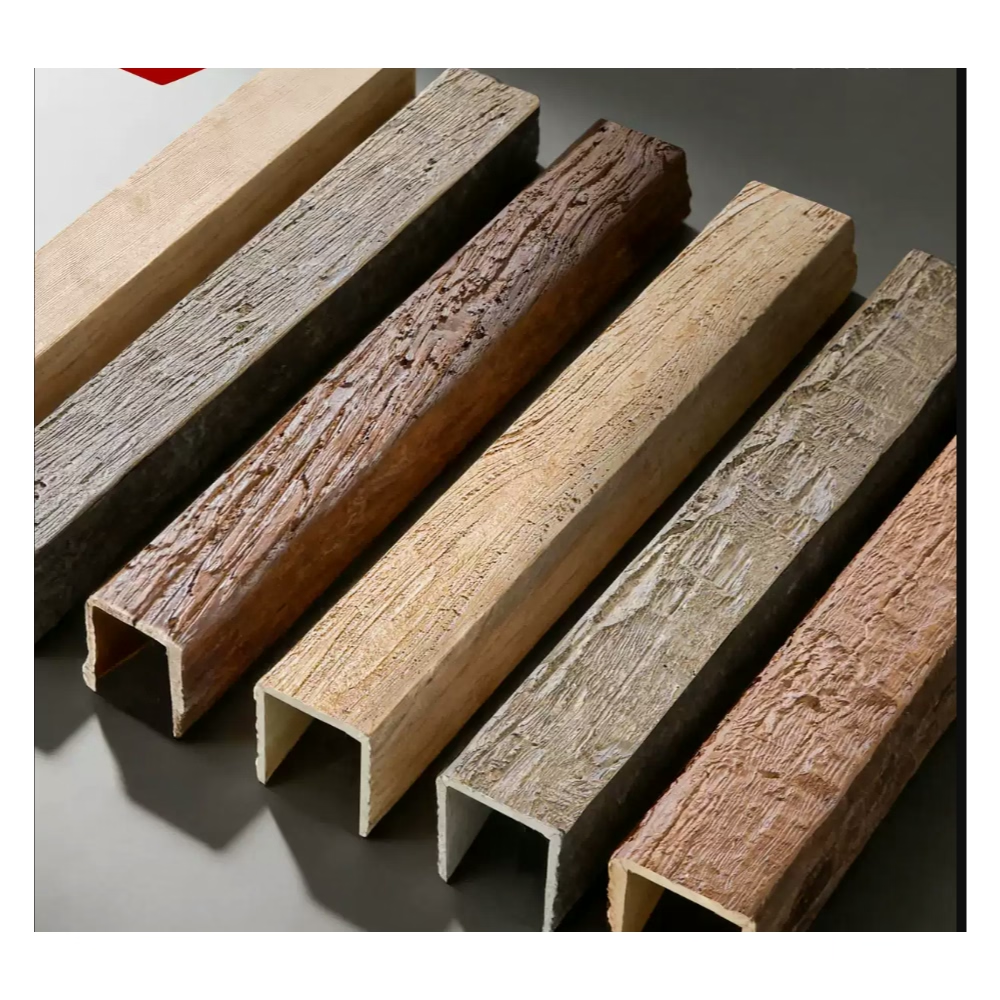
One of the significant advantages of interlocking PU faux wood beams over natural timber is their exceptional resistance to the environmental factors that typically degrade wood over time. The polyurethane composition does not absorb moisture, which eliminates the swelling, warping, and rot concerns that plague natural timber in humid environments. It does not provide a food source for insects, so termite or beetle damage is simply not a concern. And it maintains its dimensional stability across a wide temperature range without the seasonal expansion and contraction that can eventually compromise natural timber joints.
The interlocking joints themselves require no special maintenance beyond what is appropriate for the rest of the beam surface. Regular dusting and occasional cleaning with mild soap and water keep the beams looking their best. The UV-stable finishes used on quality faux wood beams resist fading and discoloration, maintaining their appearance even in rooms with substantial natural light exposure.
Should any individual beam section ever require replacement due to damage or staining, the interlocking system actually facilitates this process. Unlike butt joints that might require cutting and patching, an interlocking joint can be disassembled by reversing the installation process, allowing a single section to be removed and replaced without disturbing the surrounding beam run.
The combination of engineering precision, structural reliability, and design flexibility makes interlocking PU faux wood beams the clear choice for projects demanding seamless, continuous beam appearances across extended spans. This technology has matured significantly in recent years, and today's products offer performance characteristics that exceed the expectations established by earlier generations of faux beam systems.
Technical References
ASTM standards cited in every specification
Test Data
Lab results from internal testing program
Updated 2026
Reviewed against current product specs